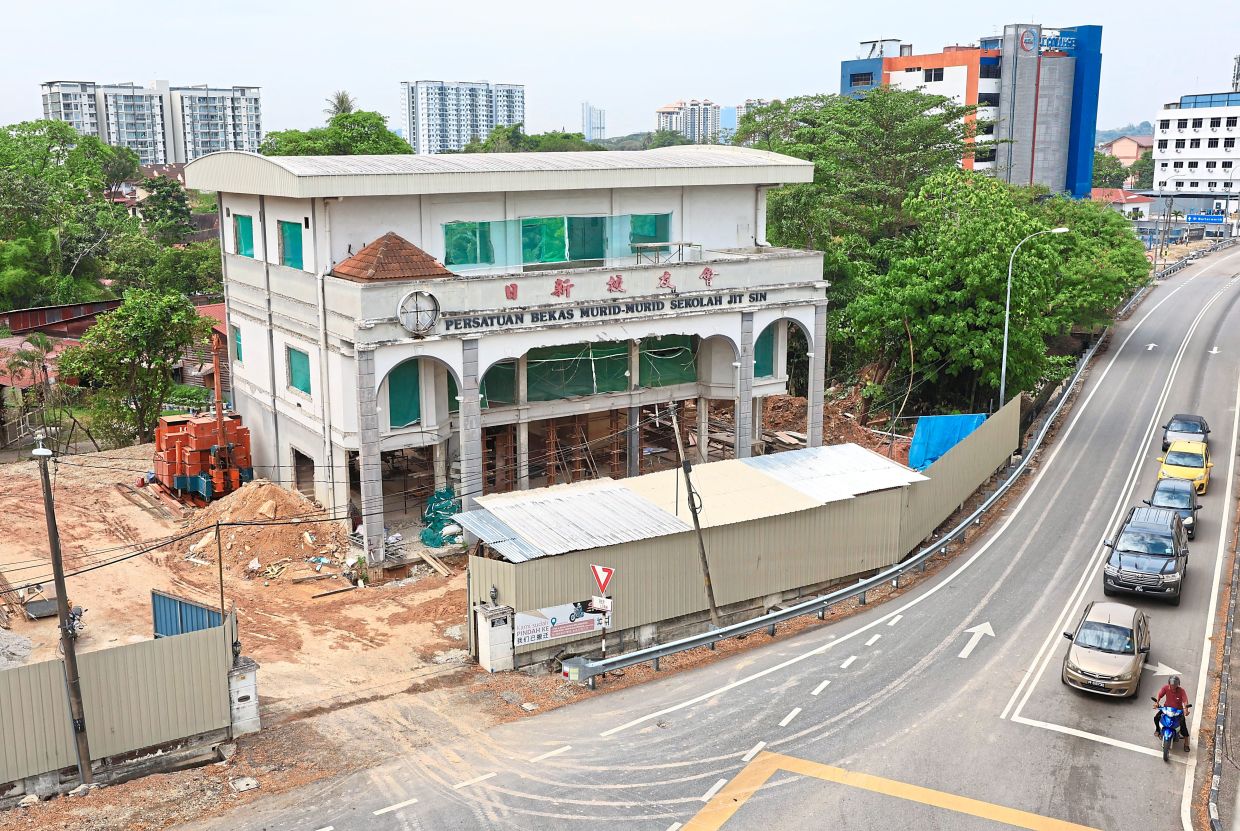
THE sixth Penang Digital Library, costing RM6.5mil, is rapidly taking shape at a three-storey building in Jalan Sri Bukit, Bukit Mertajam.
The project, known as the Jit Sin Union Bukit Mertajam Digital Library, is spearheaded by the Jit Sin School Union.
The library is set for completion by the third quarter of this year.
Upon completion, it will be the first digital library established by a Chinese educational institution in Penang.
Jit Sin School Union chairman Datuk Ng Wah Sim, who performed the project’s groundbreaking in May 2023, highlighted the initiative’s significance towards promoting Chinese education and making learning platforms accessible to all.
He said the building renovation would involve a major makeover, including interior designs and integration of technological features.
“Our school’s alumni association has produced numerous outstanding graduates. We are committed to supporting the underprivileged in their educational pursuits.
“Converting the alumni building into a digital library will grant them better access to knowledge,” added Ng.
Beyond providing reading materials in electronic format, the digital library will also serve as a hub for training sessions and collaborative initiatives aimed at enhancing educational experiences.
“The library will feature a modern reading space with online resources as well as workspaces designed for collaboration and knowledge-sharing.
“The facility will include a multipurpose hall, a conference room and dedicated sections for leisure activities, further enriching the learning environment,” he added.
Educational revolution
The concept of the state digital library was first proposed in November 2015, with Chief Minister of Penang Incorporated taking the helm of the project.
The initiative gained strong support from prominent partners like Keysight Technologies, Eastern & Oriental Bhd and Time Dotcom Bhd, all of whom played a crucial role in bringing the project to fruition.
The first digital library at the former building of Penang Wives of Civil Servants and Women Civil Servants Association (Puspanita) in Jalan Masjid Negeri on the island was identified in February 2016.
The decision marked a significant milestone for the project, with an initial investment of RM2.5mil allocated for its development.
Renovation work on the building began two months later, transforming the space into a cutting-edge digital library.
This was launched in October 2016 by the then Penang Chief Minister Lim Guan Eng.
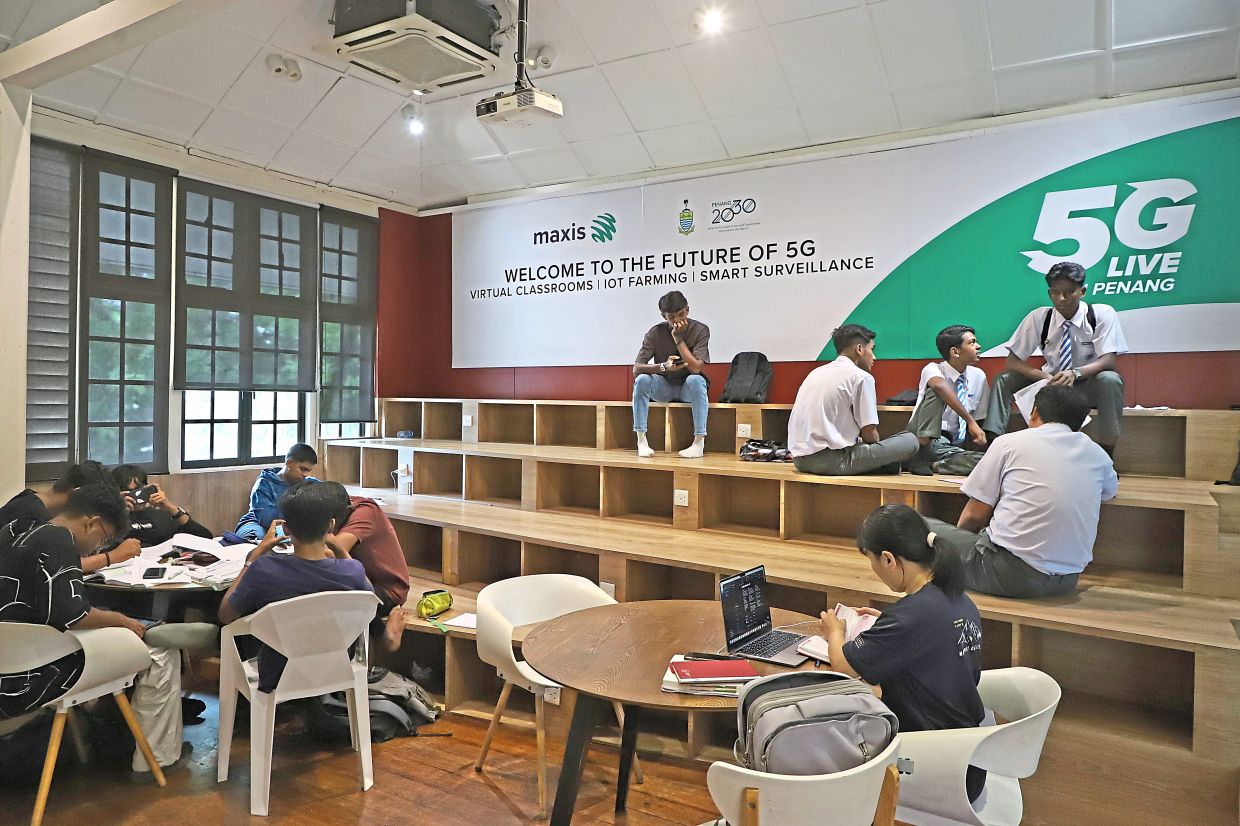
It features an amphitheatre, community hall and multiple air-conditioned rooms to provide cosy working spaces in the digital era without physical books.
In January 2019, the digital library expanded its reach with the transformation of an old bungalow across the road, marking the second digital library also known as Phase II.
The second phase was designed with an innovative “Library in the Park” concept, blending the digital library experience with a serene and natural environment.
With an investment of RM10.8mil, the phase aimed to provide a unique educational space that seamlessly integrated technology with outdoor elements, offering visitors a tranquil yet modern setting for learning and collaboration.
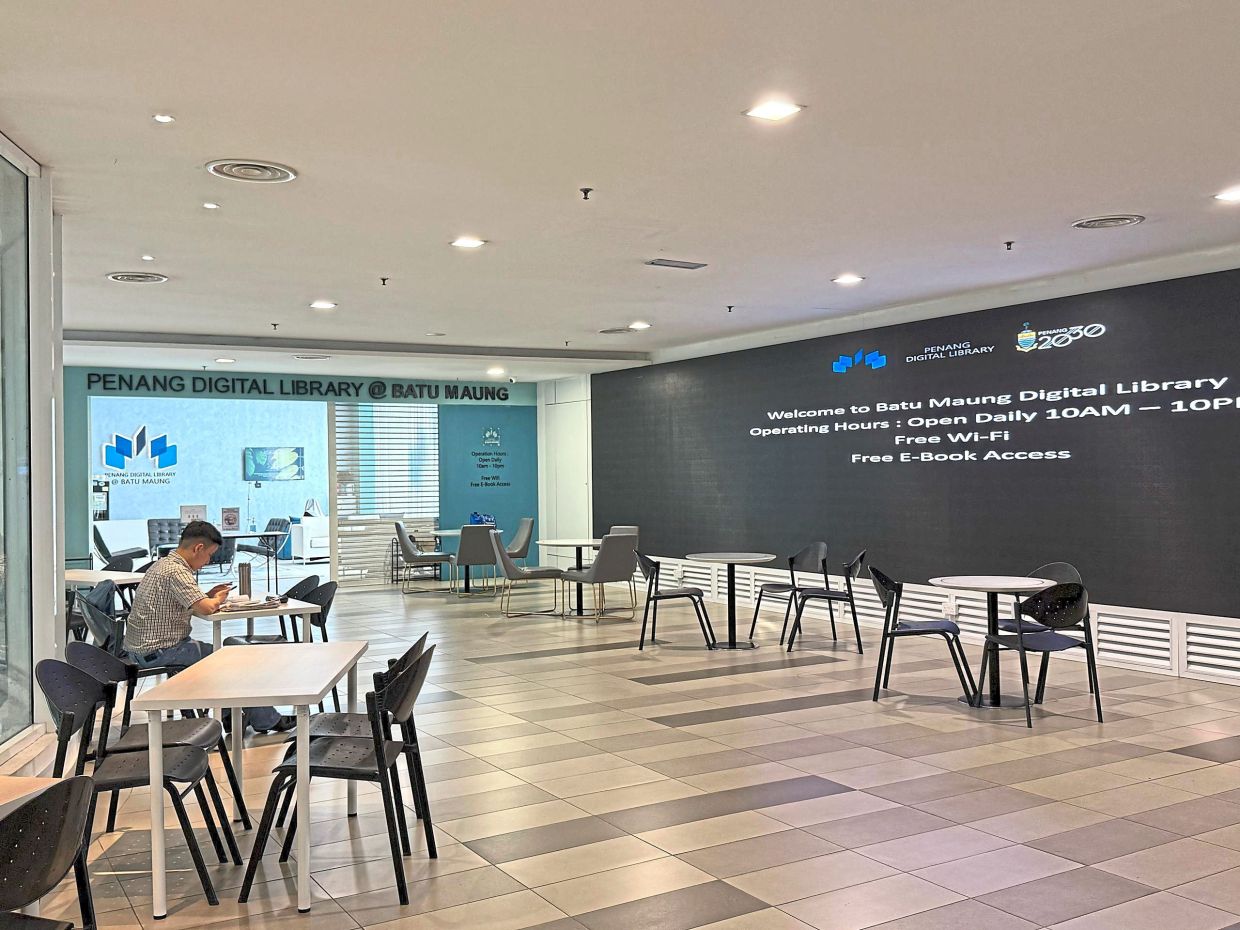
In November the same year, the third Penang Digital Library opened its doors at Southbay Plaza in Batu Maung.
The library was equipped with public WiFi connection, laptops and tablets as well as a few smart televisions for displaying e-books and other relevant information for knowledge sharing.
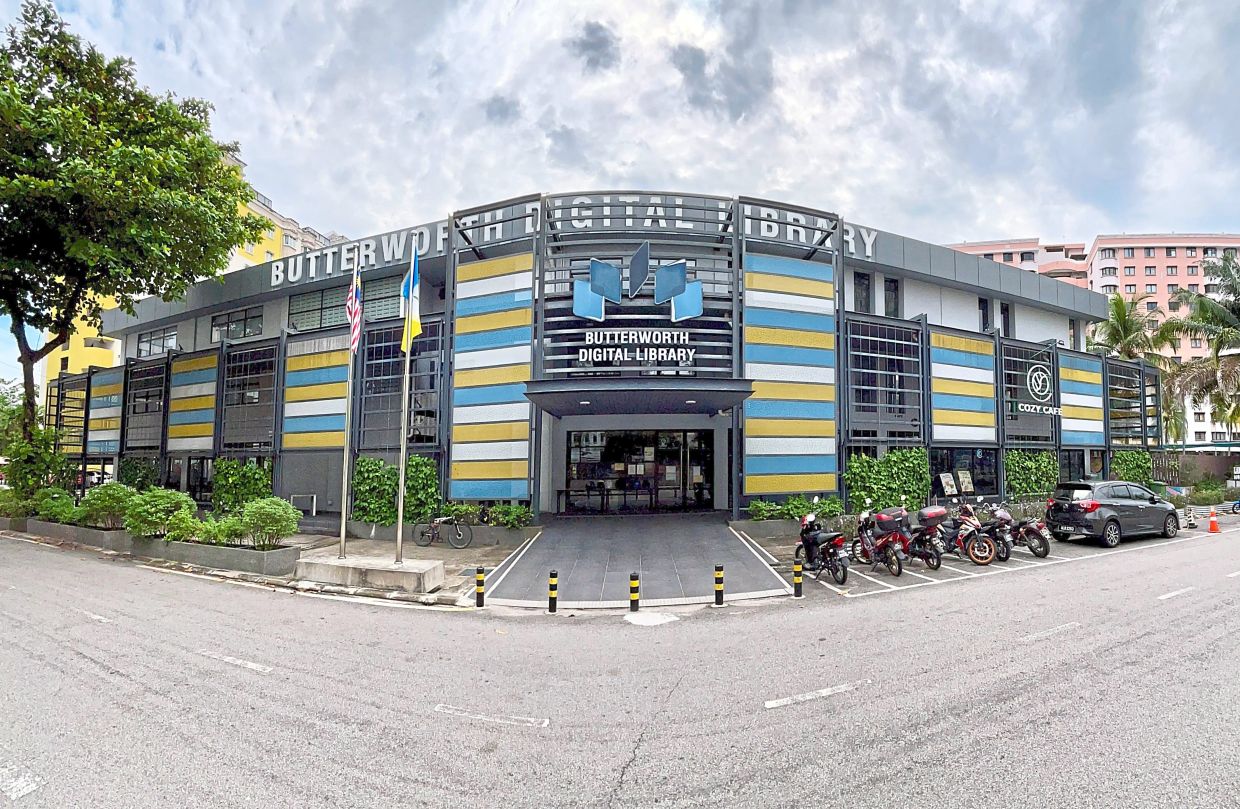
To address the growing demand for accessible digital learning spaces on the mainland, the fourth digital library was opened in Kampung Benggali, Butterworth, in July 2020.
The expansion offered a modern, technology-driven learning environment to residents in the area.
By extending its reach to the mainland, the digital library further strengthened its mission of providing inclusive educational resources to the Penang community, regardless of geographical location.
Building on the success of previous phases, the fifth digital library was inaugurated in November 2021 at MakerSpace in Balik Pulau.
The new branch added another dimension to the digital library network, fostering creativity, innovation and hands-on learning.
Learning and collaboration
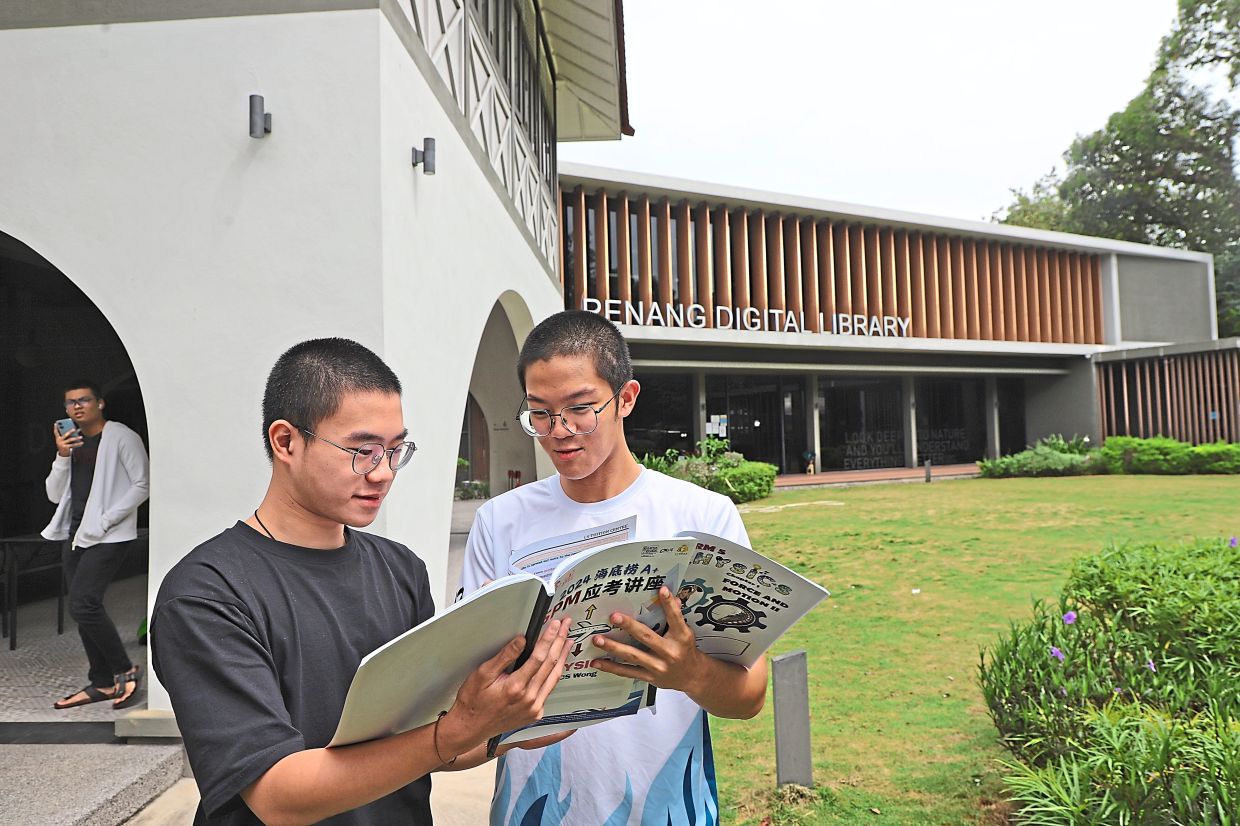
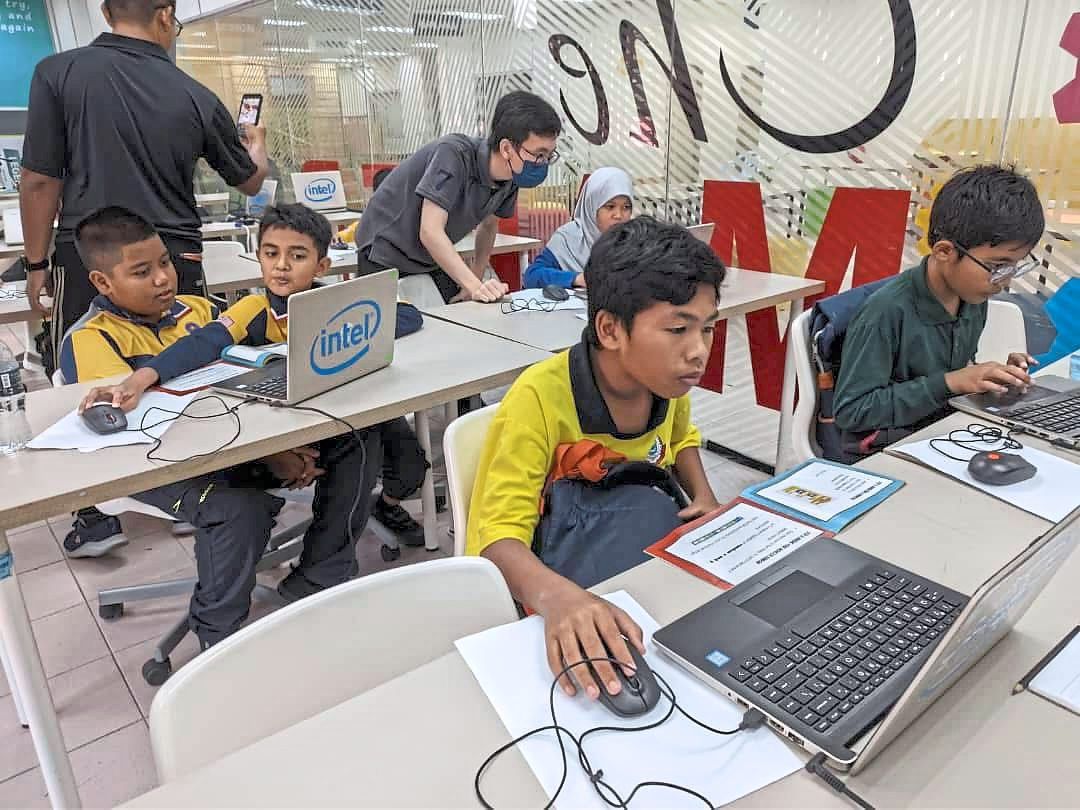
Students make up the largest group of users at the digital library, with many seeking a dedicated space for focused study and collaboration on assignments with their peers.
Some also used the venue for a variety of activities, such as group discussions, workshops and meet-ups.
The libraries’ modern, tech- enhanced environment fostered not only academic work but also a vibrant community of learners who exchanged ideas, shared knowledge and engaged in creative collaborations.
Among them was St Xavier’s Institution student Justin Yeoh, 17, who spent about half a day once a week at the Jalan Masjid Negeri digital library.
“I live just nearby and the space in the library offers a quiet environment that is conducive for studies.
“There is no unnecessary distraction here unlike at cafes or at home.
“Furthermore, it is free,” said Yeoh.
Undergraduates also went to the premises to seek out space to complete their academic assignments.
Alif Danial, 21, from Universiti Malaysia Kelantan, returned home for holidays and took advantage of the library’s facilities to complete his coursework.
“It can get quite crowded indoors, especially during exam periods when many students gather to revise together.
“But outdoors, there is free WiFi and ample shaded space.
“With rising demand for such spaces among students, I think they should consider improving facilities such as adding fans or power plugs in the open spaces,”added Alif.
Apart from a cafe at the second library, there is also a restaurant at the first one.
A 55-year-old patron, who preferred to be identified only as Khoo, hoped the digital library would be equipped with more accessible features for individuals with disabilities to support their mobility needs.
“I often come to the restaurant here for lunch because it’s peaceful and affordable.
“There’s even a designated parking area for wheelchair users close to the building,” she said, adding that the access to both the library and the restaurant was obstructed as there were no ramps available.
“I hope those in charge will address this and make the space more inclusive,” she said.
The restaurant supervisor Ang Shih Theng, 21, said they received about five customers using wheelchairs each month.
“We have windows in the restaurant that allow us to view the parking lot.
“If any of these customers need assistance, our staff are always prepared to go out and help them personally,” she said.
Libraries’ growing impact
Chief Minister of Penang Incorporated general manager Datin S. Bharathi said the state’s digital library initiative had benefitted a vast segment of people for access to knowledge and information.
Citing an example, she said over 500,000 people had checked-in at the first two libraries in Jalan Masjid Negeri.
“We continue to record high number of users to Phase I and Phase II.
“In 2016, a total of 5,579 users were recorded at Phase I. The number then increased to 31,309 (2017) and 49,082 (2018).
“With the opening of Phase II, both library buildings recorded 180,831 users in 2019 and 70,286 users in 2020.
“They were then followed by 8,389 (2021); 46,542 (2022) and 99,815 (2023).
“Up to November last year, both digital libraries have recorded 82,962 users,” she said.
Bharathi said the drop in visitors in 2020 and 2021 was due to the movement control order during the Covid-19 pandemic.
She said Chief Minister of Penang Incorporated was open to working with industry leaders interested in running science, technology, engineering and mathematics (STEM) programmes in the libraries.
Empowering digital education
Penang Deputy Chief Minister I Datuk Dr Mohamad Abdul Hamid said the digital libraries allowed students to access educational information and curate knowledge digitally.
“Penang Digital Library aims to re-engineer how information is curated and consumed in today’s digitally-driven world and to bring back the ‘human’ aspect of social collaboration.
“It provides users, especially students, with structured access to information and knowledge via over 3,000 specially curated e-books, e-magazines and reference journals.
“By reducing interaction barriers, it could bring the ‘human touch’ back into collaborations,” he said.
Mohamad Abdul, who is also Penang Islamic development, education, higher education and national unity committee chairman, said Penang Digital Library would remain relevant and evolve to needs.
“The evolution of the digital library will be on STEM development.
“I believe the digital library evolution will create an environment that will complement the more traditional methods of teaching and learning to elevate the education experience to be on par with today’s technological landscape.
“The state government is promoting STEM among youths and this includes collaborations and support through the digital libraries.
“Students should take the opportunity to leverage various interactive informative displays with the freshest content and latest gadgets to help them turn their creative and innovative ideas into reality,” he said.
He added that the digital library, being a nucleus for collaborators to get connected, encouraged people especially students to drive more emphatic connections through infrastructure design, encouraging face-to-face discussions, sharing sessions and cross-discipline engagements.