Cave temple representatives in Perak’s Kinta Valley are hoping to resolve the issue of safety at their premises with the relevant authorities.
Safety concerns were raised last month when the Fire and Rescue Department said that several structures in the limestone caves were unsafe.
Eviction notices were then served to the managements of 19 temples on Jan 7.
“All the temple representatives agree that safety must come first.
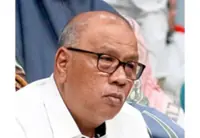
“They are willing to cooperate and invite the state government to conduct risk assessments at their premises and provide professional opinion for safety awareness purposes,” said Perak MCA ethnic relations and religious affairs bureau chief Cally Ting.
“We also believe that the eviction notices have to be cancelled.”
She said this was the sentiment shared by cave temple representatives in their recent meeting with Perak MCA chief Datuk Dr Mah Hang Soon.

Ting believes that a standard set of conditions cannot be applied to all temples as each has a different situation.
“It makes more sense for the cave temples to remain open, but with certain measures in place by the state government.
“These include evacuation plans as recommended by the Fire and Rescue Department or a limit imposed on the number of visitors allowed at any one time,” she added.
The 19 cave temples that were given notices to vacate within 30 days are located in Gunung Rapat, Simpang Pulai, Bercham and Tambun.
The cave temples are Persatuan Penganut Agama Buddha Chinaraj Ipoh, Kwong Fook Ngan Buddhist Chinese Temple, Sri Siva Subramaniam Temple, Persatuan Penganut Erawan Shrine Kinta, Persatuan Penganut Agama Buddha Jubaoyan, Persatuan Kek Look Seah, Persatuan Meditasi Simpang Pulai, Taishang Laojun Temple, Persatuan Penganut Buddha Dewi Loon Tau San Ipoh, Tokong Dewa Jingang Jing She, Pusat Meditasi Buddhist Tung Wah Tong, Persatuan Penganut Buddha Guan Yin Dan Ba Xian Tong, Ling Sen Tong Temple, Nam Thean Tong Temple, Sam Poh Tong Temple, Wat Thumcitta Vipassana, Huat Tian Keong Temple, Pertubuhan Meditasi Sukhavana Kinta and Fook Cheong Khoong Temple.
On Jan 10, Dr Mah led representatives of the affected cave temples to meet with the Perak Land and Mines Department and a verbal agreement was reached to revoke the eviction notices.
However, two days later, Perak Mentri Besar Datuk Seri Saarani Mohamad said the eviction notices were still valid as it was a matter of safety.
The state government then decided to set up a special committee to determine the status of all temples located on government-owned land either through the reservation method, issuance of a Temporary Occupancy Licence or a reserve land lease.
But at the end of last month, Saarani indicated that the special committee was still being set up by the Perak Land and Mines Department.

“We want it to be formed as soon as possible.
“Once it has been formed, we will call for a meeting.
“I am confident that department director Datuk Mohamad Fariz Mohamad Hanip is working on it,” he said, adding that the committee would involve various agencies, including the police, Minerals and Geoscience Department, Public Works Department, National Security Council and other technical departments.
“I have also recommended that the director include representatives of parties from the Opposition and also the Government.”
On the eviction notice, Saarani said it could not simply be revoked.
“If it is cancelled, it would mean there are no issues any more.
“The notice is to call the cave temple representatives to be involved in the committee so discussions can be held on what can and cannot be done,” he added.
It was also reported that the Perak Fire and Rescue Department would hold a safety training course for cave temple committee members and security guards this year.
Over the years, there have been a few major incidents resulting in deaths near hills.
One of the earliest known incidents is a rockslide at Gunung Cheroh back in 1973 that caused 42 deaths.
In 2009, a Perak Cave Temple security guard was crushed by boulders following a rockfall there.
In November 2020, two people were killed during a landslide near a limestone hill at the Banjaran Hotsprings Retreat.
Nevertheless, not all cave temples have recorded such incidents.
Pusat Meditasi Buddhist Tung Wah Tong chairman Alan Kok said there had been no untoward incidents at Tung Wah Cave Temple in Tambun since it was established 151 years ago.
“We have not had or heard from our elders about any landslide or rockslide.
“We did some renovations at the temple but prevented the work from affecting the cave walls.

“Our premises is safe. The only issue we have is a troupe of monkeys constantly messing with our water taps, causing water wastage,” he added.
He said the temple could continue to remain closed as it had been shut for nearly two years because of the Covid-19 pandemic and subsequent movement control order.
“Our devotees, including some from abroad, have also contacted us and they understand our situation as they read about the matter in the media,” Kok said.
“We can always pray on their behalf and hold our activities elsewhere,” he explained, adding that it was important to work with the state government on all safety measures.
“We just hope the mentri besar will consider our cases properly and allow us to continue operating,” he added.
Meanwhile, Nam Thean Tong Temple trustee chairman Chan Kwai Hoong said its premises would continue to be open to tourists.
He emphasised that it would comply with the standard operating procedures set by the government.
“We will also limit the number of visitors to our premises,” he said.
Chan said there had been no major untoward incidents at the temple in its 155-year history.
“Some small rocks would fall off sometimes, while tree branches would also break off during thunderstorms,” he said.
“We hope the state will send its experts to conduct a risk assessment as soon as possible.
“We also hope the state government will consider gazetting the land where our temple is situated for religious purposes.”
Likewise, Sahabat Alam Malaysia field officer Meor Razak Meor Abdul Rahman stressed on the need to preserve cave temples and ensure their safety.
He recommended that the state makes it mandatory for cave temples to be checked annually.
“It should be made compulsory that cave temples are evaluated every year by the relevant authorities before they are given the approval to operate,” he said, adding that this would highlight the importance of prioritising safety at these places.
Meor Razak also said decades-old cave temples needed to be preserved.
“Some of these cave temples have heritage value, like the Sam Poh Tong Temple, so they should be allowed to operate or maybe categorised as heritage sites.
“The newer ones that are being set up illegally are worrisome though,” he said.
He added that those who set up houses of worship without a permit were usually unaware about the geological value of the caves.
“They will start building and make modifications, impacting the structure of the cave.
“Limestone hills are known to be sensitive and renovation work could be risky,” he explained.
“I think the state government needs to be strict with new cave temples because if the state government does nothing, the caves will be continually damaged.”
Meor Razak said the state government should consider allocating land for houses of worship as this would prevent people from building temples in caves.
“For example, if there is a need for a temple in an area with a large number of Chinese people, the state should allocate a piece of land nearby for it.
“I believe some encroach into the caves to build temples because they could not get the approval to build in populated areas,” he said, adding that there should be land reserves for houses of worship for all religions.
“They probably feel that no one will interfere if they set up the temple far away, near caves.”
Already a subscriber? Log in
Get 20% OFF The Star Digital Access
Cancel anytime. Ad-free. Unlimited access with perks.