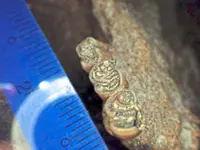
IPOH: A fossil, believed to be that of a porcupine dating back 10,000 years, previously embedded in a cave wall at Gua Matsoorat near here, has gone missing, raising concerns about the protection of geological heritage sites.
Experienced guide, volunteer, explorer, and rock climber, Mohd Zairis Abdul Rani said in August last year that he, together with the limestone hill conservation group Kinta Valley Watch, discovered the fossilised teeth and jawbone of the mammal.
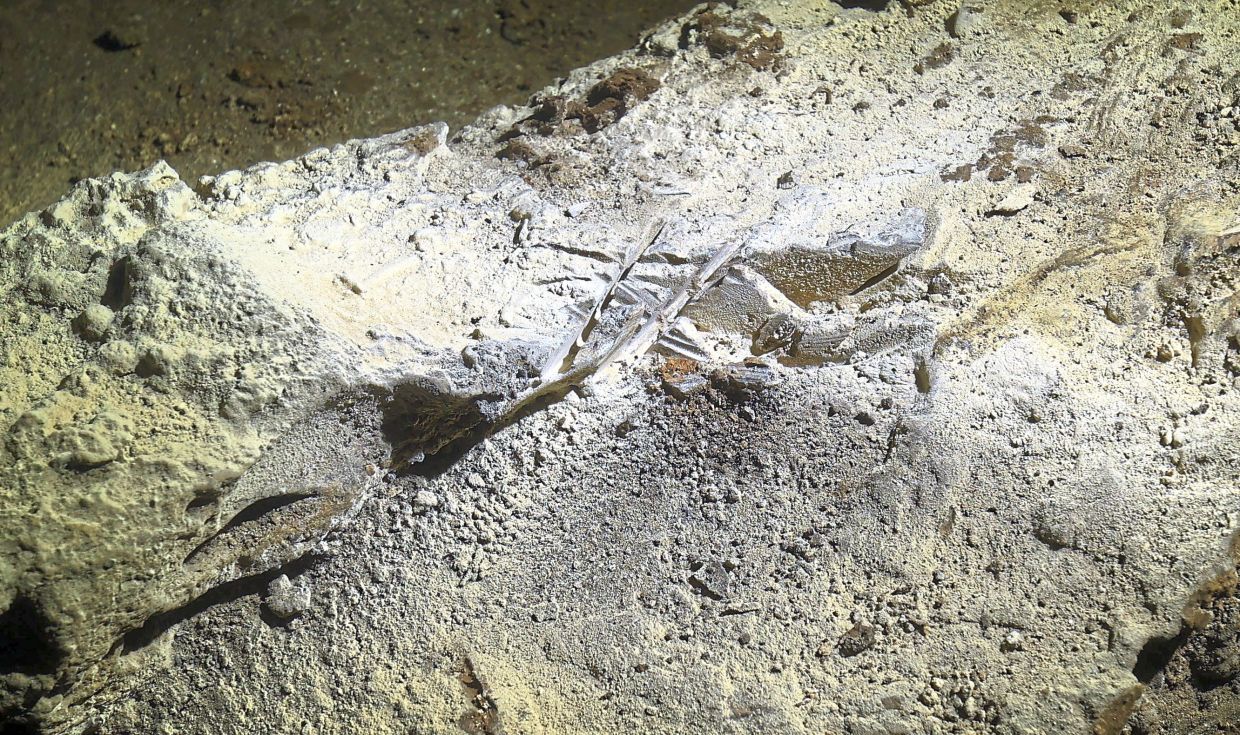
However, Mohd Zairis said that when he entered the cave passage at the end of January, he found the fossil, located at two separate locations, had been cut, probably using a battery-operated grinder.
“The fossil was gone when we returned. It is usually very difficult to find a fossil complete with the teeth and jawbone.
“That’s what made it special,” he said.
Gua Matsoorat is part of the Kinta Valley Geopark site.
Mohd Zairis said the cave is known for both fossils and ancient rock art, where several herbivorous mammal fossils have been found, embedded in cave walls or on fallen rocks.
He often brings researchers, university students and professors to Gua Matsoorat for expeditions, and he works closely with Kinta Valley Watch.
He believes someone with experience carried out the removal.
Ching Boon Tat, the spokesman for Kinta Valley Watch, said as an environmental activist, the group’s role is primarily to monitor and record activities at such ecological heritage sites.
“Our job is just to observe, to record. But if a fossil suddenly disappears, the appropriate authority or department should investigate.
“There is a need for better coordination and management to step in to prevent further damage,” he said.
Ching said ongoing concern reflects broader issues in Malaysia regarding the preservation of natural and cultural heritage, where unclear responsibility and limited oversight continue to put important sites at risk.
In 2020, Ching and his team had stumbled upon the fossil of an extinct elephant in a limestone cave in Gopeng.
With an estimated age of 30,000 to 80,000 years, it is said to be the country’s first discovery of a Stegodon fossil.
In 2019, Kinta Valley Watch, during an expedition near Gua Naga Mas in Simpang Pulai, found 107 fossils dating back 10,000 years.