Patience has become the guiding principle for a group of Semai indigenous villagers in Ulu Bekor, Perak, who have ventured into stingless bee honey (madu kelulut) production despite facing uncertain returns since its launch in 2024.
The project, managed by the Ulu Bekor Indigenous Village Development and Security Committee (JPKKOA), initially drew 16 participants.
However, interest waned over the months, leaving only seven committed members.
Project chairman Pandak Uda Bada, 62, said slow financial returns had discouraged many.
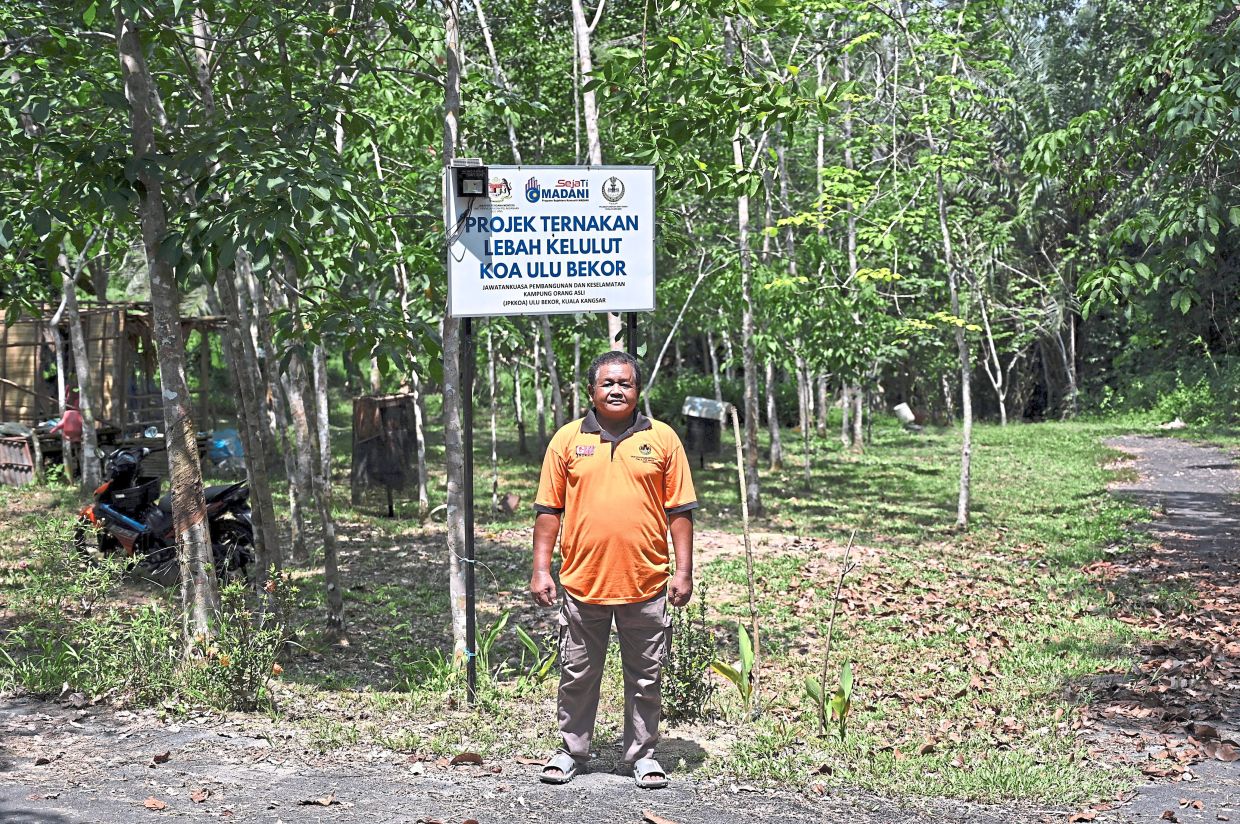
“Patience is essential because stingless bee farming takes time to generate income.
“Many gave up halfway because the returns were slow to come, and they moved on to other jobs or sought income elsewhere,” Pandak Uda told Bernama.
Located about 34km from Kuala Kangsar town, Ulu Bekor comprises two indigenous settlements – Kampung Orang Asli (KOA) Mendering and KOA Balang.
The joint initiative between the two villages was kick-started by a one-off RM100,000 grant under the Federal Government’s “Program Sejati Madani” in 2024.
Harnessing biodiversity
According to Pandak Uda, who is also the Tok Batin (village chief) of KOA Balang, the idea was first proposed by KOA Mendering Tok Batin Uda Awai Busu Kechek, 70, who saw the economic potential of the rich biodiversity of Ulu Bekor’s forests, the natural habitat of these native bee species.
“Since we started in August 2024, the project has generated a cumulative income of only RM20,250,” said Pandak Uda.
“On good months, we can earn up to RM2,000 in total, but it depends heavily on conditions.
“When the weather is bad and rain continues for days, like it did earlier last year, we cannot harvest honey, which means there is no income,” he explained.
He added that newly established bee colonies required around six months to develop honey pots before producing honey for harvest, with subsequent harvesting cycles taking place every 40 days.
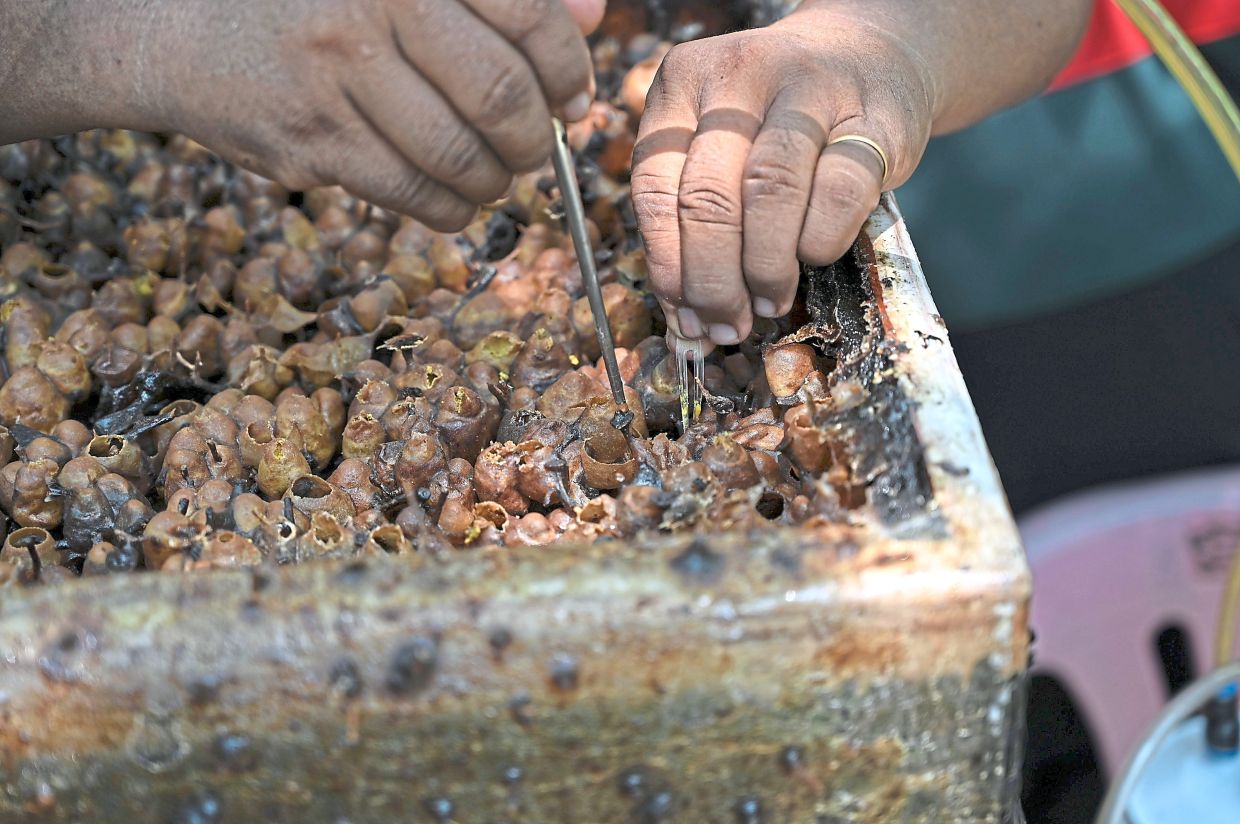
Despite these challenges, Pandak Uda, who has headed the JPKKOA for three terms, remains optimistic.
“I need to keep learning and find solutions to the problems we face on the farm.
“Although it is challenging, I genuinely enjoy caring for these stingless bees,” he said.
He highlighted that stingless bees preferred cooler, shaded conditions when foraging.
“During prolonged rainfall, they stop collecting nectar or will abandon their hives in search of safer locations, resulting in zero harvests between November and January.
“On top of that, we have to contend with pests such as monkeys, black soldier flies, hornets and beetles,” he said.
For Pandak Uda, the project also offers personal health benefits.
“I drink stingless bee honey mixed with lemon water every morning.
“Even at 62, I still have the energy to tap rubber at three locations before heading to the bee farm at 7am to clear the area and monitor threats,” he said.
Unique forest honey
Sejati Madani project coordinator Muhamad Fahmi Md Noor, 33, said the initiative spanned 2.02ha, with 1.21ha dedicated to intensive stingless bee farming within a shaded rubber plantation.
Muhamad Fahmi, who represents non-governmental organisation Pertubuhan Komuniti Muslim Ulu Bekor, acts as a facilitator for the area’s Muslim indigenous community.
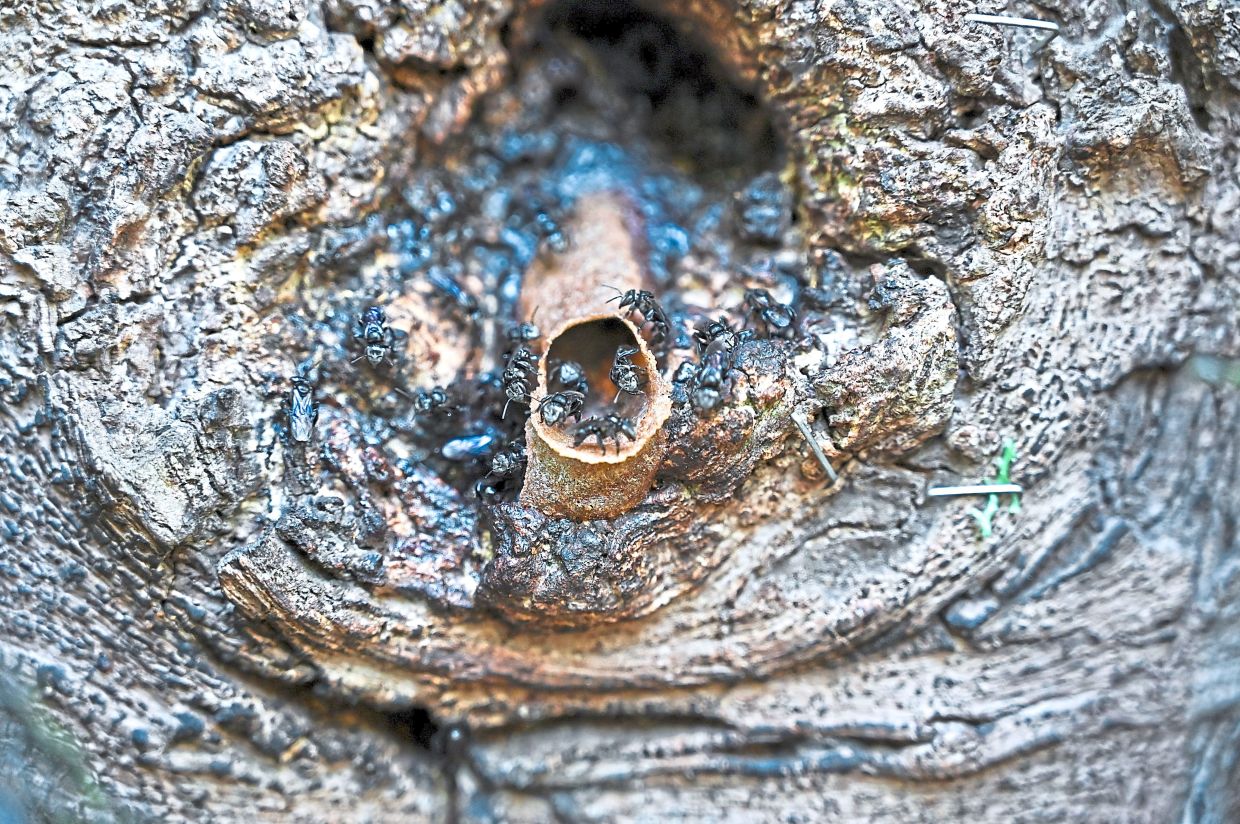
The farm currently manages 50 log hives made from forest timber, housing various species such as Heterotrigona itama (the main species), Geniotrigona thoracica (the largest and most valuable species), Lophotrigona canifrons (known for its aggressive nature), Fimbriata, Apicalis (resin-producing species) and Terminata (a smaller species).
Each natural log hive costs between RM200 and RM1,000, purchased directly from local residents.
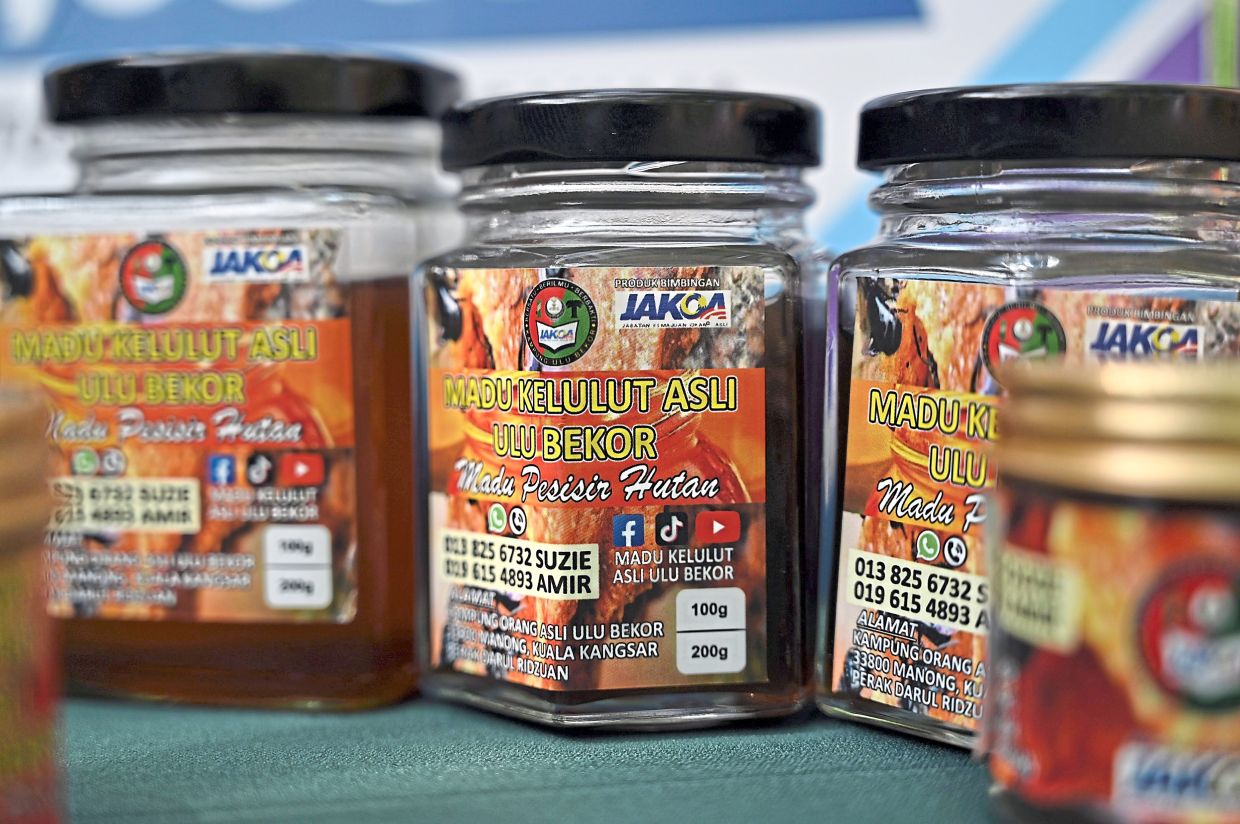
Muhamad Fahmi said the close proximity to the forest gave their honey a distinct character, inspiring the brand name “Madu Kelulut Pesisir Hutan”.
“We guarantee our honey is 100% pure.
“Our approach is to invite customers to visit the farm and taste the honey directly from the hive to build trust,” he said.
The honey is marketed in two forms: raw honey and dehydrated honey.
“Raw honey is stored in refrigerators to preserve its quality because its water content exceeds 20%.
“Dehydrated honey, on the other hand, is processed according to standards set under the Food Act 1983 and can be stored at room temperature,” he elaborated.
Prices range from RM10 for small bottles to RM300 for 1kg packs.
The community has also ventured into value-added products, producing bath soaps and facial soaps made from propolis and bee bread.
Vision for 2030
Looking ahead, Muhamad Fahmi said the group aimed to transform Ulu Bekor into Perak’s leading stingless bee honey production hub by 2030, targeting 900 hive logs.
“In the past, many Orang Asli simply supplied log hives to outside operators.
“Our aspiration is for them to become the caretakers and beneficiaries of their own forest resources.
“We are currently seeking strategic collaboration with the Rubber Industry Smallholders Development Authority (Risda) to expand market reach and obtain authenticity certification from agencies such as the Malaysian Agricultural Research and Development Institute (Mardi) to facilitate labelling under the Food Act 1983,” he said.
To support eco-tourism and improve accessibility to the farm, the Drainage and Irrigation Department constructed a 1km tarred road, enabling regular vehicles to reach the farm.
Muhamad Fahmi added that the Orang Asli Development Department (Jakoa) had committed to providing 30 additional hive logs this year and would assist with marketing at state and national entrepreneur exhibitions.