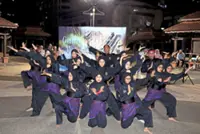
SILAT continues to thrive through efforts of young people who are finding fresh ways to showcase and preserve the traditional martial art.
Four-time Pencak Silat world champion Mohd Al-Jufferi Jamari said this showed that the younger generation could play a vital role in safeguarding cultural heritage, provided it was presented in a way that resonated with their interests and experiences.
Preserving silat was not about compelling young people to embrace the past, but rather about making the martial art relevant to contemporary lifestyles, he said during a forum at Universiti Teknologi Mara (UiTM) in Shah Alam, Selangor.
“The challenge is attracting the current generation.
“If we do not allow them to engage with silat in their own way, they may drift away from the path we hope to guide them towards,” he said.
The forum provided students an opportunity to discuss silat beyond its role as a form of self-defence and performance art, exploring its connections to identity, discipline, leadership and cultural preservation.
It formed part of the Gema Warisan programme organised by UiTM Public Relations students, which attracted over 400 participants and featured silat performances, demonstrations and “Silat in Motion” flash mob.
Mohd Al-Jufferi, who also serves as Pahang’s silat youth coach, said instructors must be willing to adapt their teaching methods while preserving the values and discipline that defined the martial art.
His training approach allows young practitioners a degree of self-expression while ensuring they remain grounded in a structured syllabus.
“The syllabus is not merely about kicking, punching, dodging and grappling.
“Within those movements are lessons in discipline and respect for one’s opponent,” said Mohd Al-Jufferi, who won gold medals in four consecutive SEA Games.
Competition, he said, had become one of the most effective ways of keeping silat relevant to younger generations, and was a constructive outlet for practitioners to apply their skills.
“In the past, rivalry between different gelanggang (courts) under different coaches could become unhealthy,” he said.
“If I simply teach them without giving them a platform to channel what they have learned, they may end up fighting in schools, universities or dormitories.
“That is why I encourage them to compete.”
Mohd Al-Jufferi also stressed the importance of understanding the environment in which young people are growing up, including their interest in online games and digital culture.
He often uses casual conversations about gaming to build rapport with his students.
“My principle is simple: if you cannot make things easier for people, do not make things more difficult for them.
“When we make life difficult for others, we lose their respect.”
Beyond technical skills, Mohd Al-Jufferi said silat should help shape young people into disciplined, respectful and humble individuals rather than aggressive ones.
He advised practitioners not to misuse their martial arts knowledge and cautioned against becoming overly preoccupied with mystical or spiritual elements sometimes associated with martial arts traditions.
“Learn silat, but do not let it consume you,” he said.
Parents, he added, also have a critical role to play in ensuring silat was passed on responsibly to future generations.
He urged families not to dismiss the martial art based solely on negative stories circulating on social media.