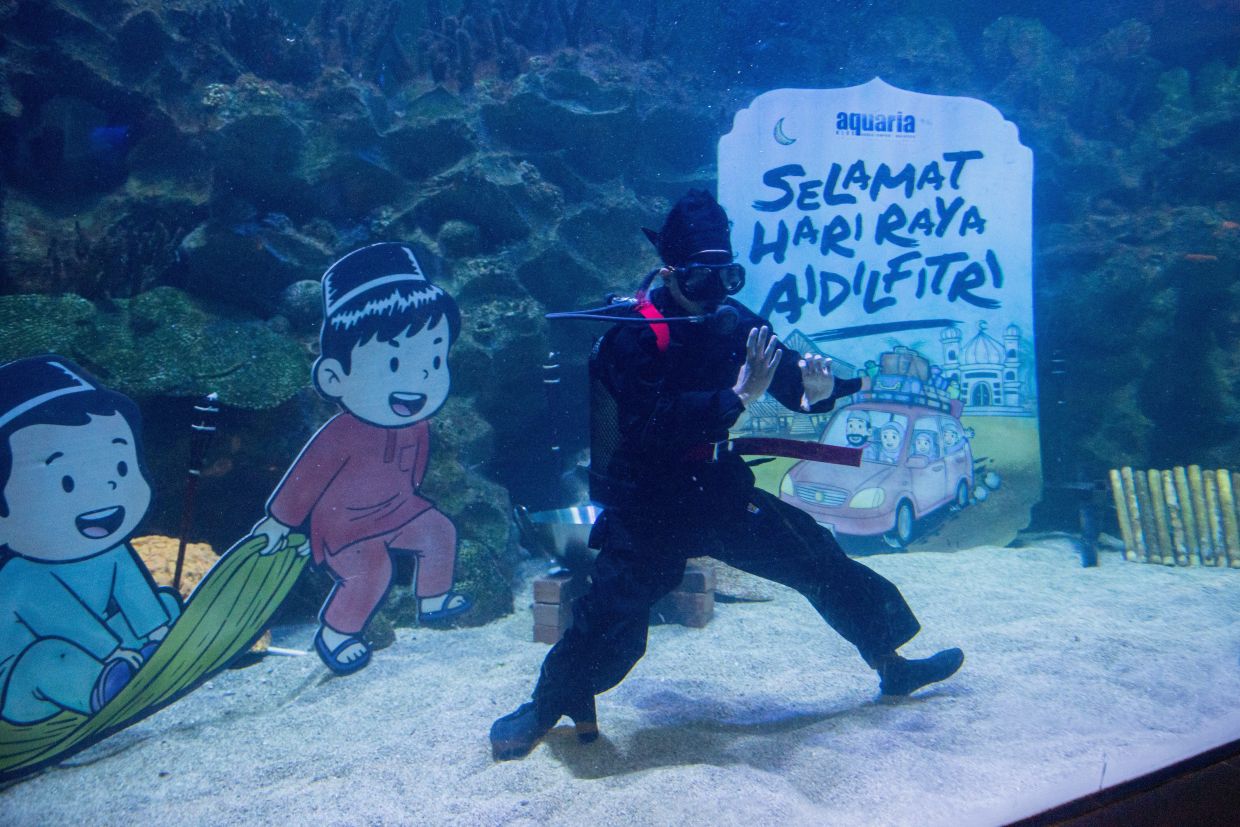
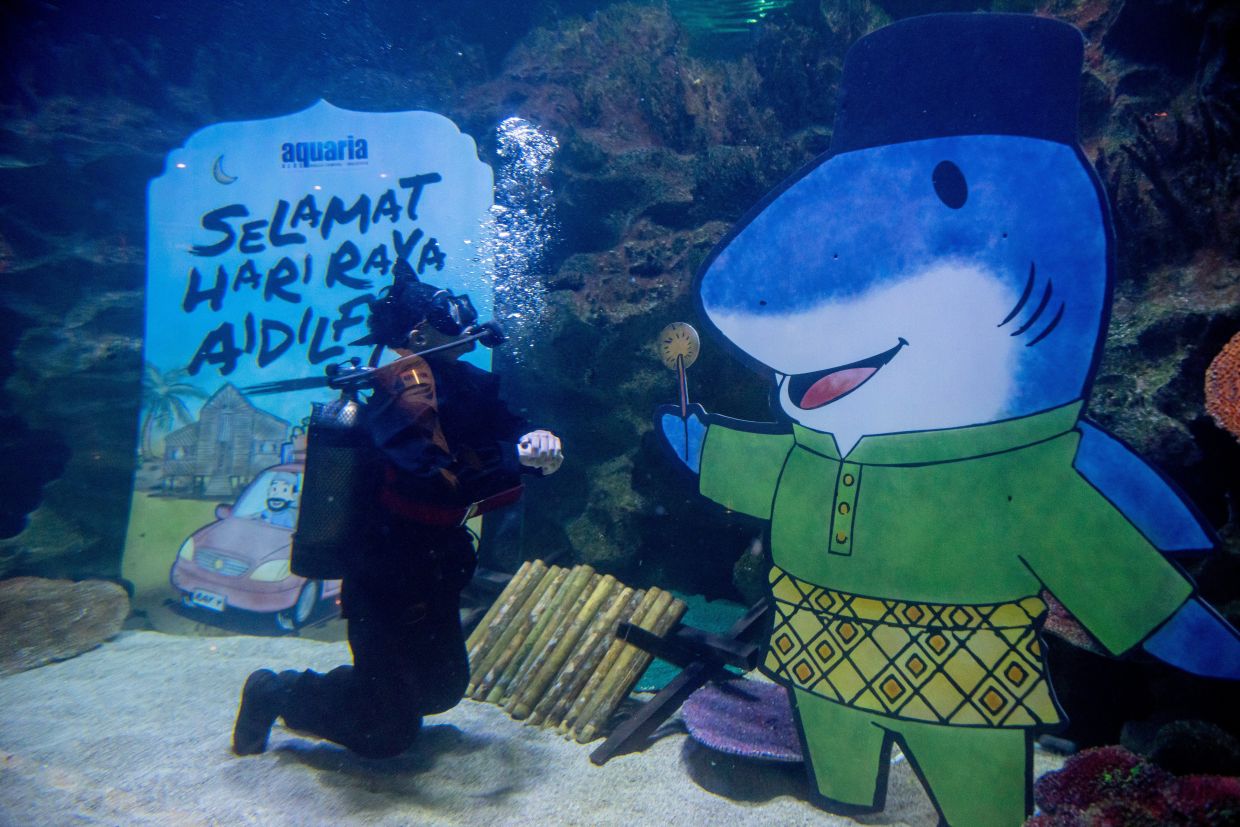
KUALA LUMPUR: Inside a 4.2-metre-deep aquarium filled with sharks, stingrays and thousands of other marine creatures, set against the backdrop of artwork by legendary cartoonist Datuk Lat, two divers step across the tank floor before beginning a silat performance.
Each step and swing of the arms appears almost in slow motion, yet this is precisely the challenge when the traditional Malay martial art is performed beneath the water’s surface.
The unique performance is among the main attractions of the Ombak Tradisi Raya campaign at Aquaria KLCC, which runs from March 4 to April 8, bringing the festive Aidilfitri atmosphere into the aquarium experience while highlighting elements of Malaysian tradition.
Behind the performance, professional diver Wan Hamizan Wan Roslan, who takes part in the underwater silat show, said every movement has to be adjusted to factors such as buoyancy, diving equipment and the attire used.
"Normally, our bodies tend to float easily, so we have to ensure the equipment we use is heavy enough to keep our movements stable underwater.
"If we float too much, it’s difficult even to walk, let alone perform silat movements,” he told Bernama after the launch of the campaign here recently.
Wan Hamizan, who does not have a background in silat, said that during the performance, they do not use diving fins as in typical diving activities.
Instead, they only wear a backplate and booties so they can walk along the aquarium floor.
"I actually don’t have a background in silat, so I asked friends who have experience in the martial art.
"However, I previously learned karate and taekwondo, so I have some basic movements that can be applied,” said the diver.
Another diver, Muhammad Amirul Haziq Mohd Yuzri, said the effect of gravity in water causes every movement to appear as if in slow motion compared to on land.
"On land, we can move much faster, but in water, everything looks like slow motion. Movements such as backflips or frontflips also appear slower,” he said.
Muhammad Amirul Haziq said from a safety perspective the performance does not pose concerns as impacts in water are lower, and a designated safety diver is present to monitor safety aspects.
"Although our training time in the water is limited, we repeat each session many times to adapt the silat movements to underwater conditions,” said the marine biology graduate from Universiti Malaysia Terengganu. — Bernama
More photos
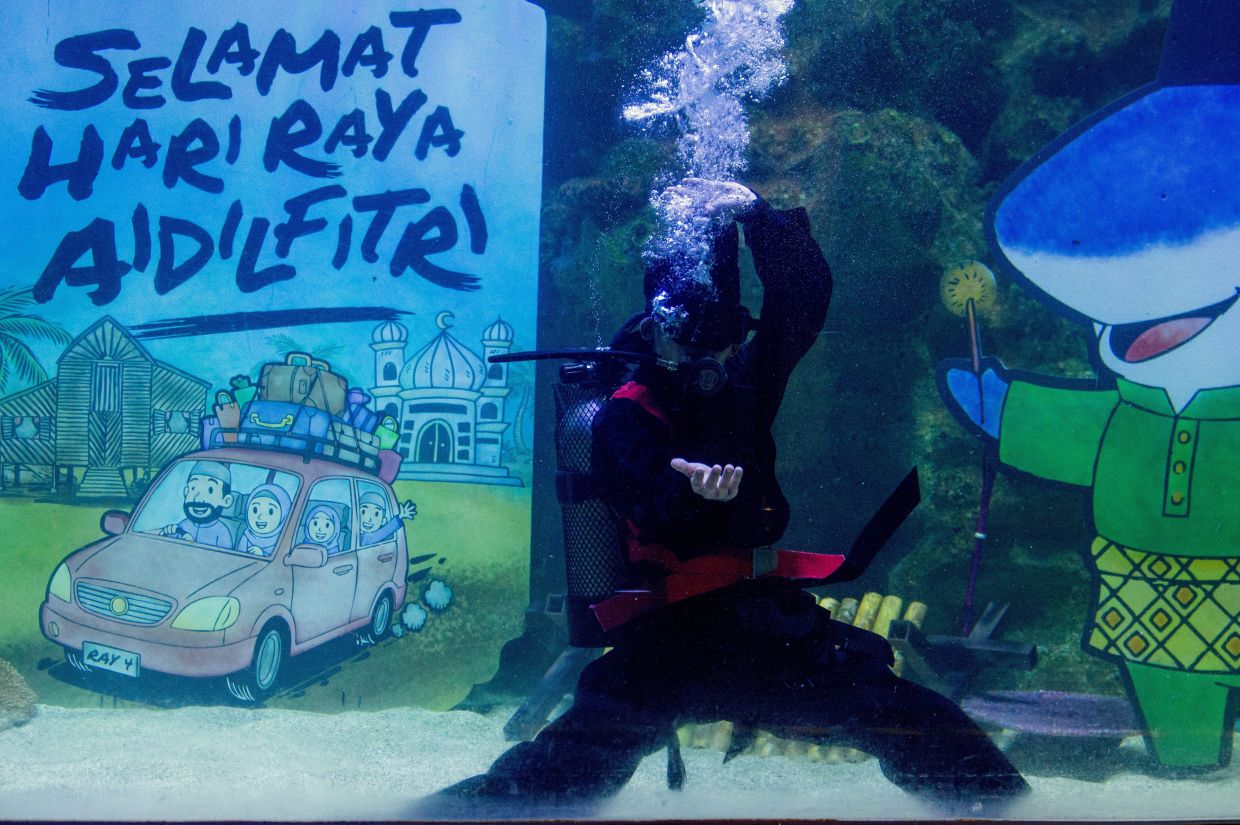
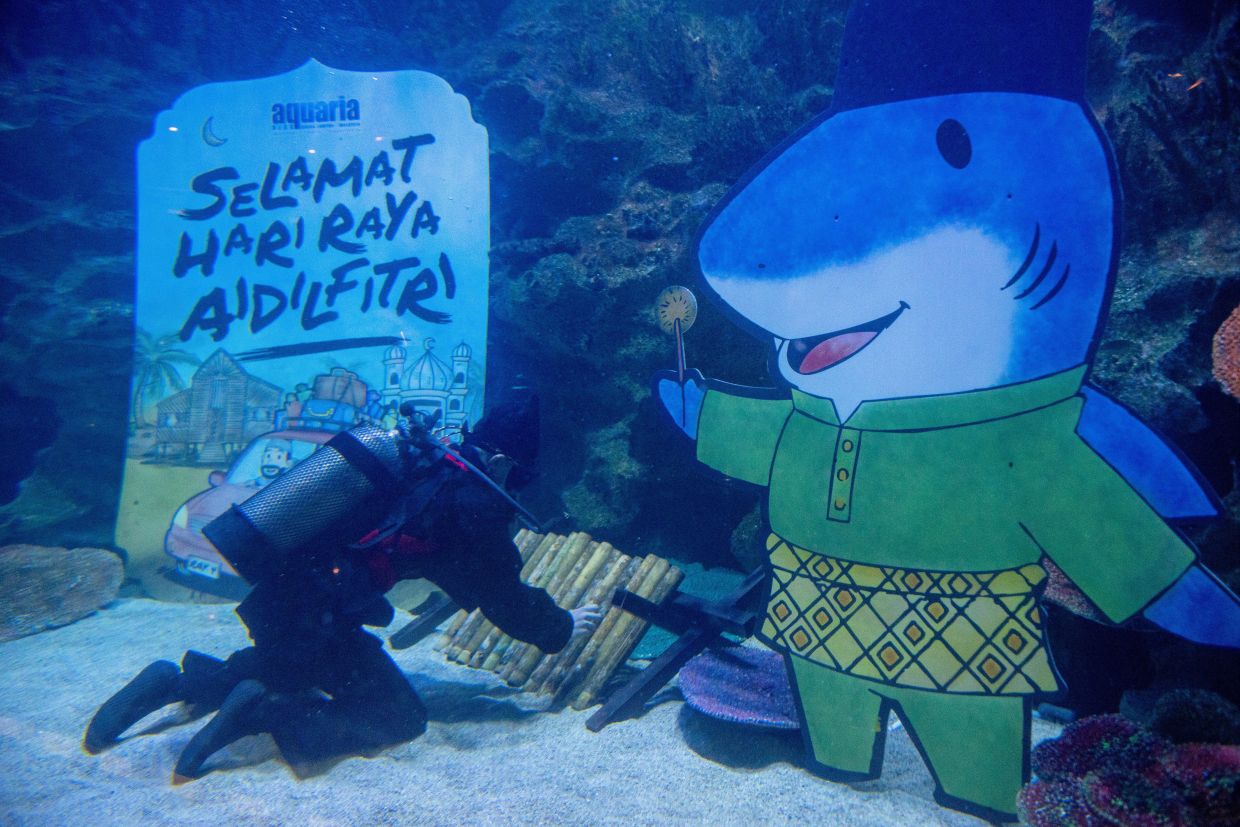
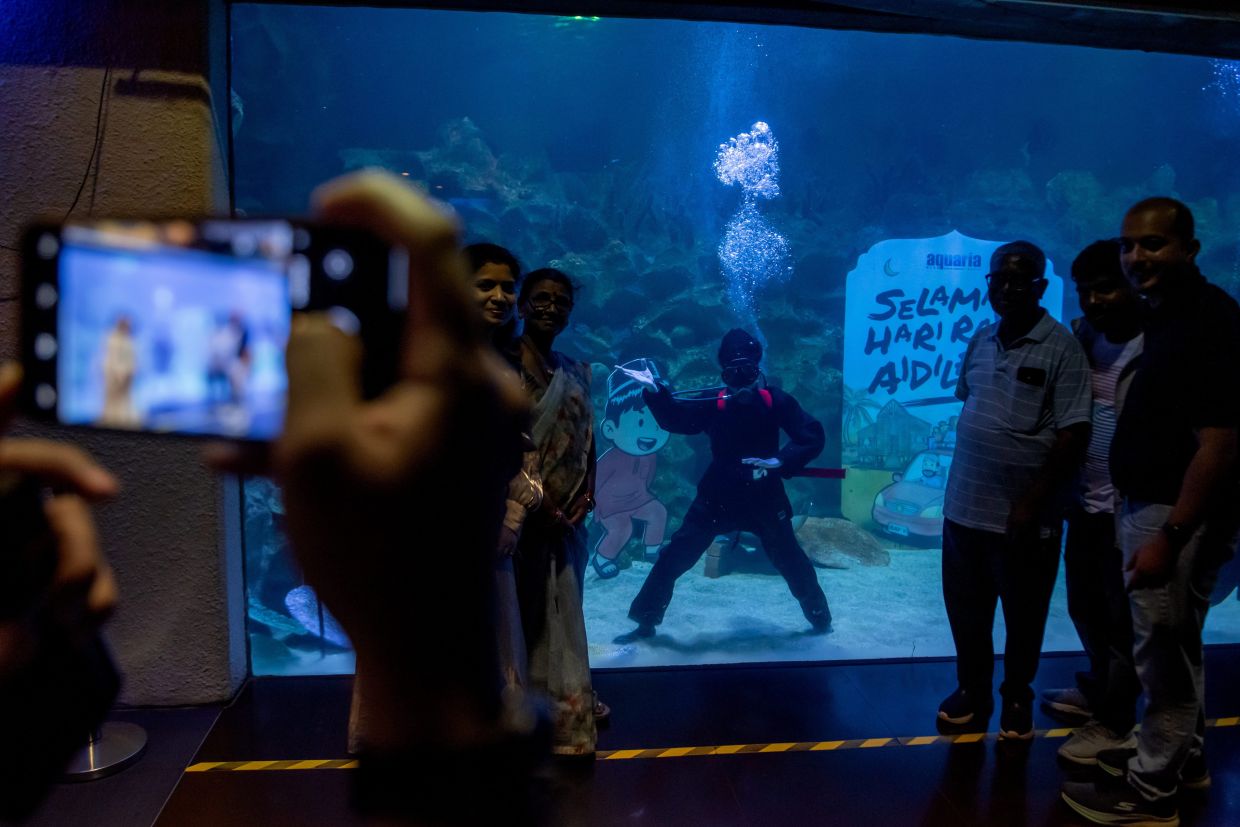
Each step and swing of the arms appears almost in slow motion, yet this is precisely the challenge when the traditional Malay martial art is performed beneath the water’s surface. — Bernama Pic
Each step and swing of the arms appears almost in slow motion, yet this is precisely the challenge when the traditional Malay martial art is performed beneath the water’s surface. — Bernama Pic
Each step and swing of the arms appears almost in slow motion, yet this is precisely the challenge when the traditional Malay martial art is performed beneath the water’s surface. — Bernama Pic
Each step and swing of the arms appears almost in slow motion, yet this is precisely the challenge when the traditional Malay martial art is performed beneath the water’s surface. — Bernama Pic
Each step and swing of the arms appears almost in slow motion, yet this is precisely the challenge when the traditional Malay martial art is performed beneath the water’s surface. — Bernama Pic