
The case of German backpacker Carolina Wilga, who spent 12 days lost in Western Australia’s Outback last year, is a sobering reminder of just how easy it is to lose your bearings in Australia’s vast interior.
But beyond the headlines, what is there to see here? We decide to find out on a road trip through Australia’s west, with around 2,500km and four days of driving through the Outback on the itinerary.
Surely there’s got to be something out there.
In Port Hedland, in the state’s north, we fill two large water containers, pick up a SIM card recommended by locals and pack warm clothes for nights in our rooftop tent. The warnings we’ve heard include patchy phone reception, expensive fuel, tricky roads and temperatures that can swing wildly. We feel reasonably prepared.
Google Maps is set up and downloaded for offline use. You never know when the Internet might decide to abandon us. “Continue straight for 280km, then turn right,” it tells us.
So far, the scenery is anything but boring. Reds, yellows and greens stretch to the horizon, and the landscape changes subtly as we roll along.
Before long, we’re behind a road train: one of those enormous lorries, up to 60m long, that haul freight across a country where conventional trains don’t reach everywhere. Ours is doing 90km per hour in a 110kmph zone. We prepare to overtake, but there’s a surprising amount of oncoming traffic for a road in the middle of nowhere.
To our surprise the road train flashes its right indicator. We take that to mean “all clear”. We pull out, pass the giant lorry and thank the driver with a flash of our hazard lights. It’s the Outback’s version of a wave, and we’ll be using it plenty.
One thing we notice straight away is the number of dead animals along the roadside. There are far more carcasses than live creatures, with cattle and kangaroos among the most common casualties. The scenery might be spectacular, but the bones, discarded tyres and abandoned cars are a reminder that these roads can be unforgiving.
Vehicles that break down are sometimes simply left where they are. Out here, a tow truck isn’t exactly around the corner.
At the first roadhouse, we follow one of the golden rules of Outback travel: fill up whenever you can. Diesel costs AU$3 a litre (RM8.30). Ouch.
Still, there’s something comforting about pulling into a service station. After hours in the car and mostly having the road to ourselves, we get to see other humans again. Our rather touristy outfits seem to give us away, and a few locals and truck drivers look us over with amusement.
Gorgeous gorges
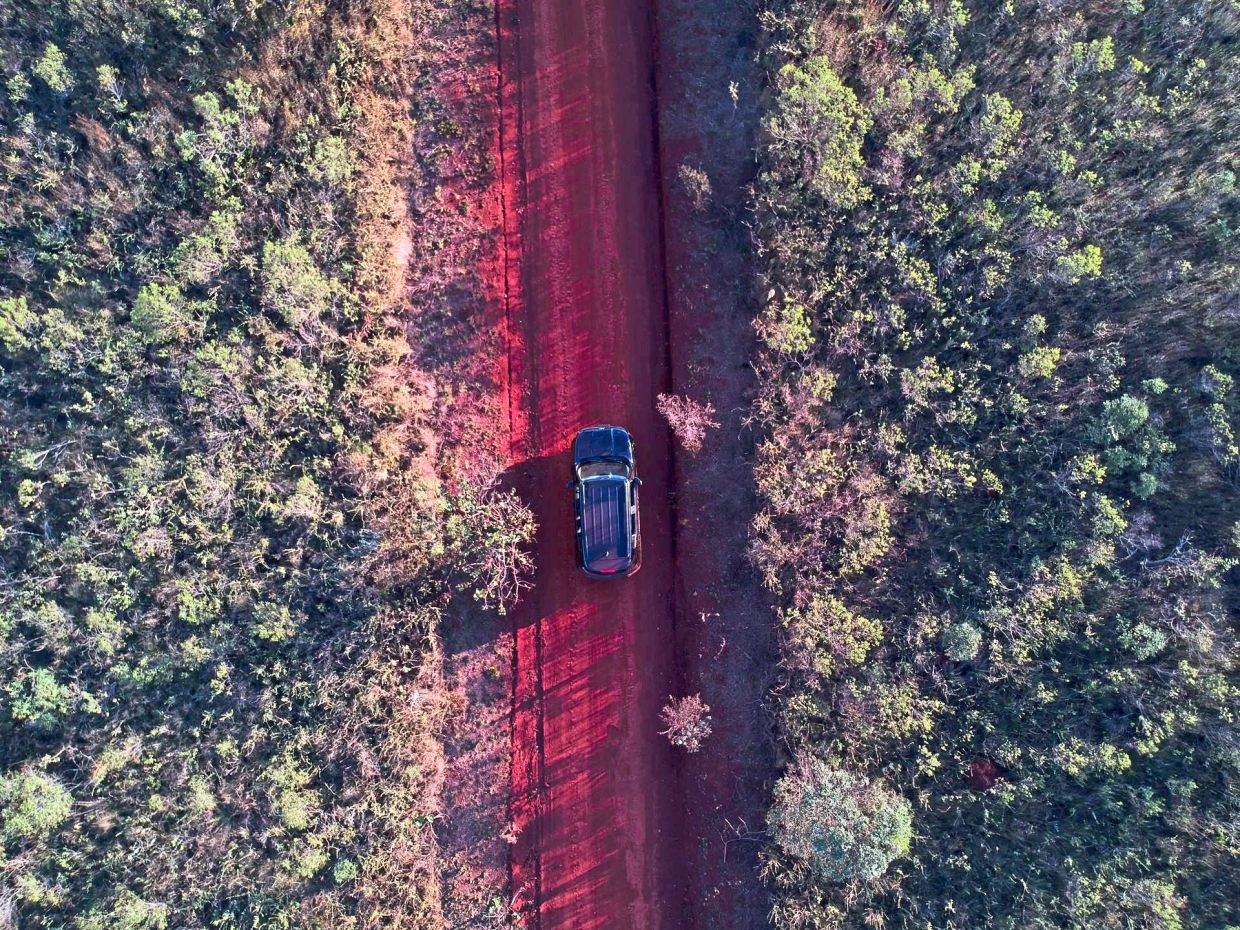
Our first destination is Karijini National Park, about 300km from Port Hedland. Getting to the campsite involves an hour of bumping along red, rocky tracks, with stones pinging off the car’s paintwork.
We’re prepared for rough terrain, but as it turns out, we won’t need the four-wheel drive at all during our entire Outback trip.
Once we’ve pitched our rooftop tent, we discover that we’re apparently hosting half of Australia’s fly population. Insect repellent, head nets and an anti-fly candle do little to improve the situation. Eventually, we abandon our game of Yahtzee and retreat into the tent. At least the freezing night we’ve been warned about fails to materialise. We drift off in a comfortable 25ºC.
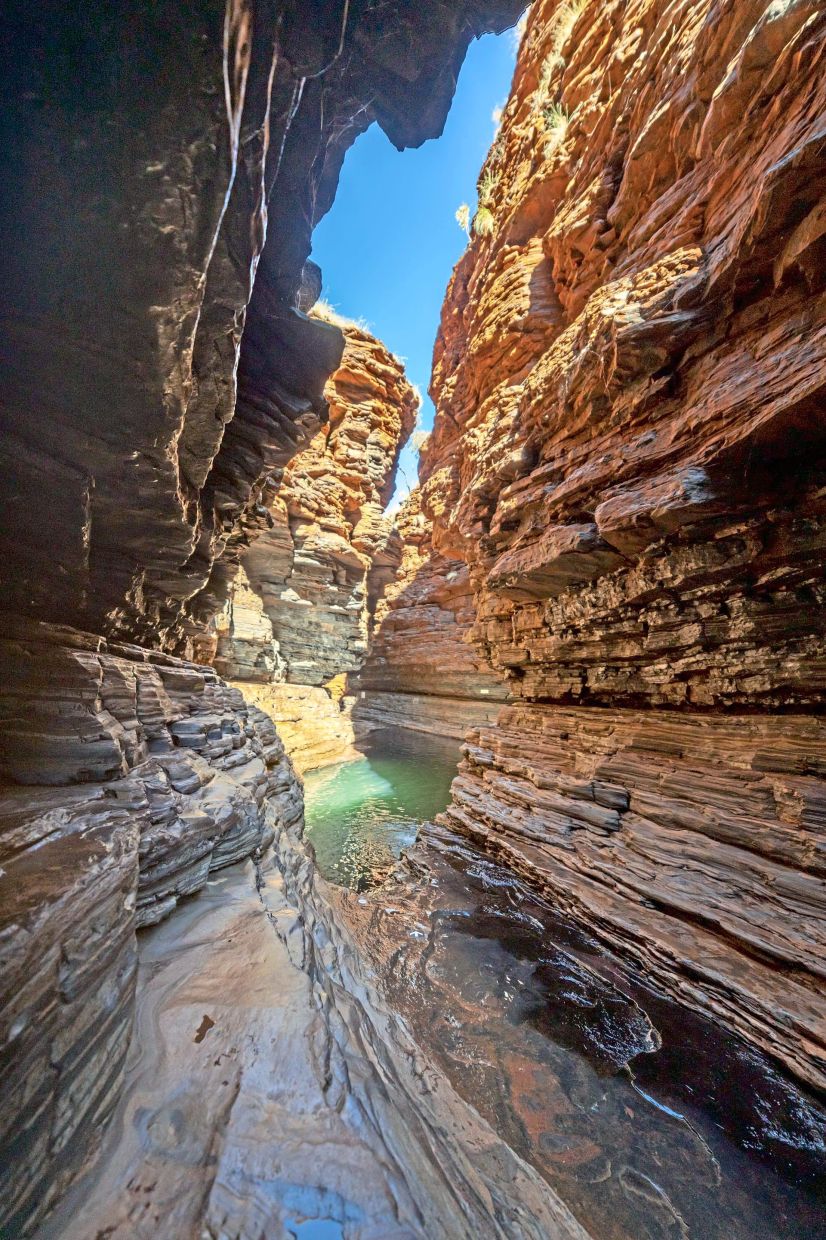
The next morning, we explore spectacular gorges and take a dip in natural waterholes. A quick Google check confirms that crocodiles haven’t made it this far inland, which is reassuring. Then it’s back on the road.
In Meekatharra, about 900km from Port Hedland, we stop at a supermarket and get talking to Darrel, who has lived in the area for years. He tells us about the close-knit community and how people look out for one another. “Everyone looks after each other. It’s completely different from the city,” he says.
Darrel knows about Carolina Wilga, too. “She went off the roads. If you leave the tracks and take your eyes off your surroundings, you can get lost pretty quickly.”
He also has a tip for a worst-case scenario: if conditions allow, puncture a spare tyre and set it alight – well away from anything that could catch fire. The black smoke can be seen for kilometres and may help rescuers locate you. It’s not the sort of travel tip you’ll find in every guidebook, but it’s a good reminder that the Outback requires a bit more thought than your average weekend getaway.
Darrel recommends we visit Cue, a town of around 200 people about 90 minutes away. In the Outback, that’s practically next door.
At the visitor centre, we meet Julie, who also speaks warmly about the strong sense of community when we ask why she lives somewhere so remote. She suggests a detour to Big Bell, a nearby ghost town established around a gold mine in 1936. When mining stopped in 1955, the residents moved on.
Today, the remains of a hotel and a church are among the few buildings left behind.
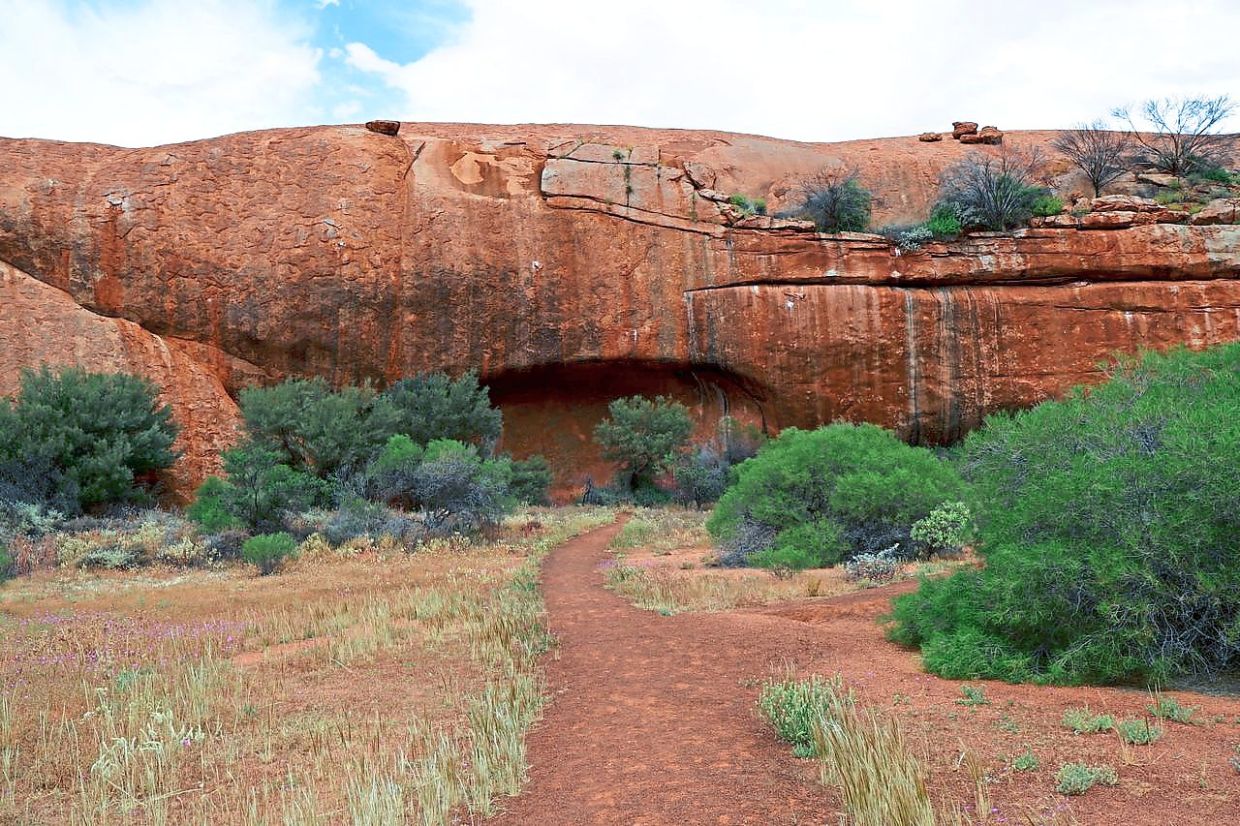
Julie’s other recommendation is Walga Rock, Australia’s second-largest monolith, though it’s considerably smaller than its superior, Uluru. After half an hour on an unsealed road, we arrive at the reddish-brown rock rising out of a landscape dotted with colourful grasses.
Beyond a gate, we find Aboriginal rock art, including handprints, a ship, arrows and other drawings. Unlike Uluru, Walga Rock can be climbed. Less than 15 minutes later, we’re at the top, looking out over the surrounding landscape.
It’s one of those places we might never have seen if we hadn’t stopped for some chats. Sometimes the best travel advice comes from someone you meet in a supermarket.
Rain and the mines
We had already spent four hours on the road, with another four to go before reaching our designated campsite. There aren’t endless alternatives out here, so we press on, our downloaded Spotify playlist now making its third lap.
After sunset, kangaroos start hopping onto the road. At 110kmph, avoiding them is a dangerous game so we slow down. However, an hour later, the rain sets in.
Our planned route is closed, along with several others. Suddenly, all those “Floodway” signs we’ve passed start to make sense. Water levels rise rapidly across the road, and we begin to worry about our car. It’s been lifted for rough terrain, but it wasn’t designed to double as a boat.
We reach a tiny town and decide we’re not willing to gamble and drive any further. Even with the windscreen wipers at full speed, visibility is next to nothing. There’s no campsite, so we pull into a makeshift parking spot beside a pub.
Wild camping isn’t technically allowed, but at this point we’re not about to argue with the weather. We climb the ladder into our rooftop tent and settle in to the sounds of a crowd enthusiastically singing along to Sweet Home Alabama.
We wake up to our last day in the Outback. The ground is still wet but we’re glad to see it at all.
We’d planned to take a road where camel sightings are relatively common. With Australia estimated to be home to between 300,000 and more than a million feral camels, we were rather hoping to spot one. Unfortunately, the animals only come out in dry weather to look for water near the road, and not only is there an abundance of water around, but our route is also still closed.
No camel, then.
Instead, we visit one of Australia’s largest open-pit gold mines in Kalgoorlie-Boulder, where around 14,000kg of gold are produced each year. It’s not quite the same as spotting a camel in the wild, but peering into a pit 650m deep is impressive in its own right.
Our final stop is Wave Rock, which we nearly leave off the itinerary because it sits a little out of the way. After another long day of driving, we arrive late and spend our last night at a basic rest area: essentially a big red patch of ground with a pile of abandoned tyres in the middle.
It’s also our first genuinely cool night, at around 16°C. Back in Port Hedland, daytime temperatures had reached 40°C.
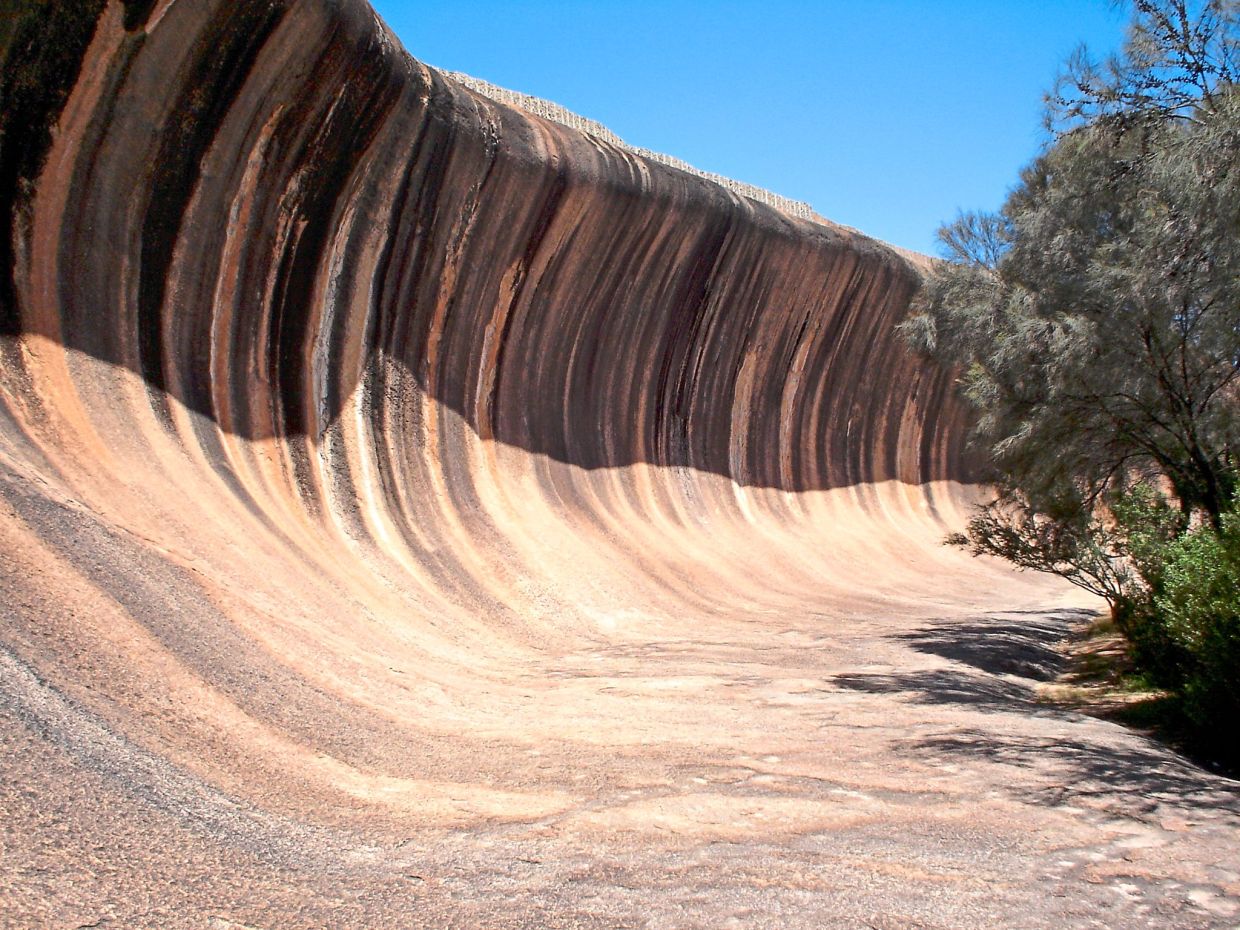
A short walk from the car park brings us to Wave Rock, a huge formation of black, yellow and beige stone that curls above us like a breaking wave. Water and weathering have spent millions of years shaping it into its distinctive form.
We sit there for about 20 minutes, doing very little beyond looking at it. This stop wasn’t even part of the original plan, yet it becomes one of our favourite places on the trip.
It’s not the first time we’ve been glad to take a detour.
By the end of our journey, we’ve learned that the Outback isn’t to be taken lightly, but nor is it just an endless stretch of nothing. The landscape shifts from enormous rock formations to forests and wide, colourful plains.
Road trains dominate the highways, old gold-rush towns offer glimpses into the region’s past, and the people we meet are often more than happy to point us towards places we’d never have found on our own.
There are a few practical lessons, too. Download maps, music and important locations before setting off, because mobile reception can be patchy, even if you use a Telstra SIM, which is your best shot of staying online.
Don’t blindly trust your navigation app either: a route that looks quicker on the screen might turn out to be a rocky dirt track that adds time rather than saving it. And keep an eye on the weather. A dry road can become a very different proposition when heavy rain hits.
But our biggest takeaway is less technical: Don’t be afraid to talk to the locals. Stop in a pub, ask for recommendations and give yourself time to explore. More than once, people offered not just advice but to show us a place themselves.
The Outback might look like the middle of nowhere on a map. Spend a few days there, though, and you’ll find there’s plenty going on – if you’re willing to slow down long enough to notice. – dpa