Nestled halfway between Ipoh and Kampar on the old trunk road in Perak is a small town which tourists often miss – Gopeng, an old mining town that refuses to die.
Unlike other mining towns which have been deserted with the demise of the tin industry in the state, Gopeng keeps re-inventing itself ... and survives.
It is a small town with two main streets lined with century-old shop-houses, but it has a long history, maybe even longer than Ipoh, the state capital.
It is surrounded by three new villages – notably Lawan Kuda, New Kopisan and Kampung Rawa, each boasting of its unique food and history, adding and contributing to Gopeng’s diversity and colour as a tourist destination.
There are many stories on how Gopeng got its name. One has it that it was named after a Chinese tin mine worker, Mao Bin, whose name morphed into Gopeng. Yet another says that when the Chinese migrants landed in Gopeng at the end of the Qing Dynasty, they cut off their pigtails. In Cantonese, “mo pian” means “no pigtail” and thus the Cantonese equivalent of Gopeng.
According to some local folks, not only does the town have a longer history than Ipoh but it also matched the city in its prosperity and vibrancy once upon a time.
For example, there were many shops, opium dens, brothels and a cinema in Gopeng back in the day when the tin industry was booming.
The famous Eu Yan Sang Medical Hall was founded in 1879 by prominent tin miner Eu Kong to cater to the needs of mine workers. Today, it has grown into a huge corporation with branches throughout the country, and overseas.
One of the main streets in Gopeng was named Jalan Eu Kong to honour the man.
Numerous clan associations still line the street today, a testimony to the thousands of migrant workers who poured into this small town in the old days. These clan associations were welfare and temporary homes for these workers back then.
There are two privately owned museums that recall the lifestyle of that bygone era. They house a good collection of photographs, mining tools, household utensils and ornaments. There are also books detailing the history of the tin mining activities and the lifestyle of the miners.
Dr Sun Yat Sen visited Gopeng between 1909 and 1911 to rally support and raise funds in his revolutionary campaign to overthrow the Qing Dynasty in China. Several youths followed him and died in the 1911 uprising.
Tourist attractions
The demise of the tin industry came in the mid-1980s and with it, the dismantling of all the mining-related foundries and workshops. Many people became jobless and went overseas to make a living.
If this was not bad enough, Gopeng was dealt another blow – it was totally bypassed by the newly built North-South Expressway in 1994.
Many expected Gopeng to be forgotten, just like the old mining towns before it. But locals kept things afloat and today, it has become an attractive eco-tourism destination, taking full advantage of its strategic location at the western foothill of the Titiwangsa range.
One of the first major projects is the 120ha Hoga Gaharu Tea Valley, a gaharu plantation opened in the early 1990s that’s open to visitors. You can go on an educational tour of the place, located just 4km from the town centre.
A panoramic view of the plantation rewards visitors at the hilltop. Various gaharu or agarwood products like its aromatic tea – and even ice cream – are available for visitors to buy.
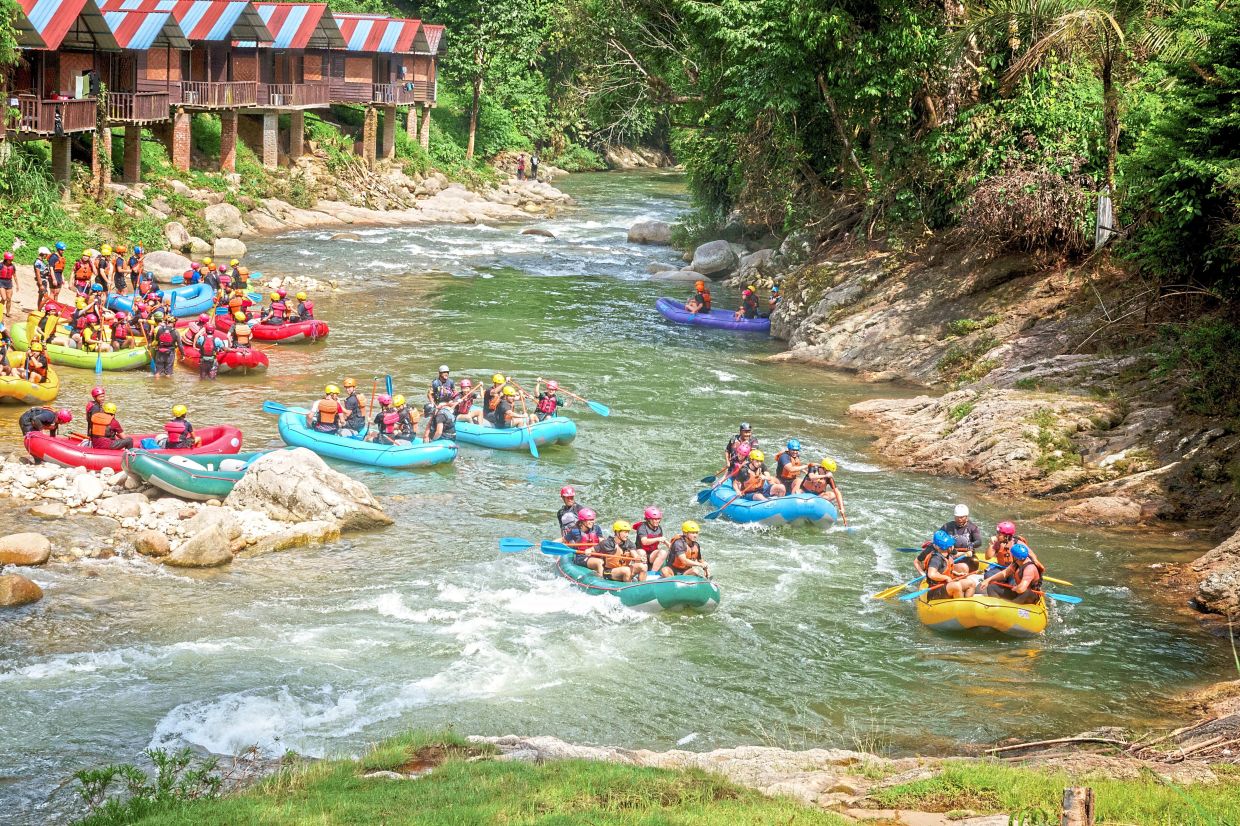
For the more adventurous, try your hand at white water rafting at Sungai Kampar.
Further up the mountain trail you can find the Agro-Tech Farm, a homestay with nature-based experiences, as well as a petting zoo and vineyard.
The latest “attraction” in Gopeng is the Youth Retirement Home, a long-stay retreat for young city folks who wish to take a break from the rat race and recharge themselves.
Of course, no story on Gopeng is complete without mentioning its most popular culinary delight – lai fun or rice noodles.
This Gopeng speciality is available at the food court next to the wet market as well as at a shop called New Kopisan, located on the fringes of the town. On the weekends and public holidays, hordes of tourists will be lining up to get their hands on this dish.
Gopeng is also known for its Hakka cuisine; head to Lawan Kuda to find some of the best Hakka dishes around.
For a deeper understanding of Gopeng’s history, visit the Gopeng Museum. The owner, Pang See Kong, would be happy to talk to you about the old mining industry, including stories on some of the towkays and the women workers who had equally contributed to the prosperity of the town.