
There's no one perfect way – or reason – to keep a travel journal. But no matter how or why you do it, future you will probably be happy you did. Writing things down gets the synapses firing on several fronts, including memory and engagement with your surroundings.
Even bad days can be good journal fodder, making for terrific dinner party stories, or just serving as a reminder of why it’s best never to take that train from Point A to B again.
And imagine the joy of looking up at your bookshelf in a decade: thick notebooks barely contained by their elastic bands, with tickets and other ephemera spilling out.
Inside, you can revisit details of days exploring neighbourhoods in Tokyo, Japan, a birding life list, maybe a messy inventory of the best burger spots recommended by that bartender in Boston, Massachusetts in the United States.
So, before setting out on your next trip, consider these tips for maintaining a travel journal you’ll page through for years to come.
Keep it light
Choose a notebook that fits in the bag you’re carrying or the pocket of the coat you’re wearing most often. If you prefer softcover notebooks, pop a pencil board inside so you’ll have a hard surface on the go. Refillable notebooks make it easy to add organiser inserts so you won’t lose important papers.
Bringing too many pens and coloured pencils could leave you overwhelmed when it comes time to write or draw. “Simplifying as much as possible decreases the barrier to entry,” said artist Kristin Link, author of Discover The Art Of Field Sketching.
Keep your tools together in a small kit so you won’t waste time searching for your pen. Pack intentionally, Link added. She fills the slots of a small case for art supplies with a pencil, two or three pens, measuring tools and a portable watercolour palette.
Be consistent
Overcome the fear of the blank page and get organised by starting every journal entry with some metadata, including the date, time, weather and location. (A note about your mood can help you later recall context for your mindset.)
The practice is a cornerstone of scientific field journaling. Once you finish an entry, consider adding page numbers to an index on the first two pages as well as the location and keywords like museum names or the food you ate.
While out on the town (or mountain or beach), write quick notes under the metadata as you go about your day. Take note of sounds and scents you might forget.
If you really want to relive a place once you’re back at home, put your phone’s recording app to work. “The sounds of a fish market, a crowded bus or a city sidewalk can often evoke a place even more vividly than a photograph,” said photographer Rob Stephenson, who writes The Neighborhoods, a Substack newsletter about New York City’s boroughs.
Save your recap of the full day’s experience for a 15-minute block each night. Set a timer. Write freely (and don’t edit) until it goes off. You’ll be surprised how much writing you can do in such a short time.

Get colourful
Use each trip as a chance to practise a new art skill. “Adding visuals to a journal helps me remember things in a specific way that writing might not,” Link said. Try sketching with just a few coloured pencils, or draw the view outside your hotel window every morning.
But if the thought of creating art is too much pressure, Link suggested adding diagrams and maps instead, or maybe a tiny landscape sketch.
“Keep your drawing really simple, but carefully observe the shape of things. Add a little bit of colour and some notes. Sometimes calling a drawing a diagram takes some of the pressure off,” she said.
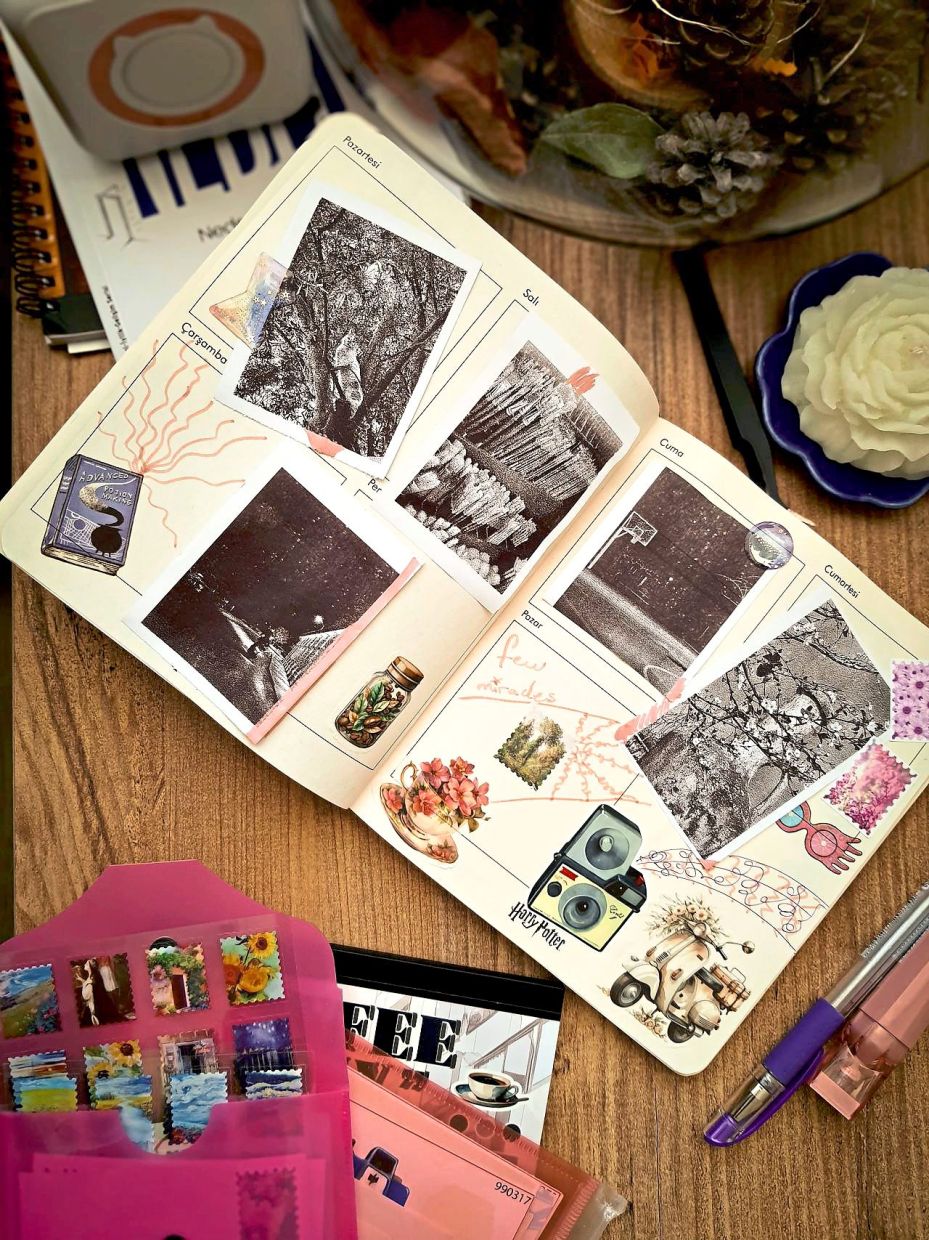
For a photo-only journal, think about the trip more thematically or snap photos capturing the small things that make a place special. “Rather than documenting specific monuments or events, I usually focus on everyday details that I find more effective at capturing the feeling of a place,” Stephenson said.
If you need more guidance, follow one or more of the prompts journalist and author Rob Walker suggests in his Substack newsletter, The Art Of Noticing. Searching for, say, flaws, fonts or pops of pink turns travel into a treasure hunt and encourages you to look at the world through a new filter.
That approach could make for a particularly energising way to look at a location you’ve returned to frequently, or when travelling with children.
Mark the best photos as favourites in your phone. Back home, print those shots and tape them into a blank notebook or order a photo book online, Stephenson suggested. Keep a running record of your daily itinerary so you can add that information to the entries.
And remember, don’t be shy. You never have to show anybody else your journal. It’s just for you. – JENNA SCHNUER/©2026 The New York Times
This article originally appeared in The New York Times.