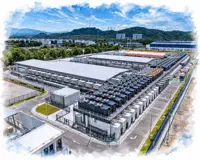
China's manufacturing prowess is not "stealing jobs" from the rest of the world but creating shared opportunities through localised production, technology transfers and complementary trade, business leaders and experts said.
They made the comments during the 2026 APEC Economic Leaders' Week in Shenzhen, Guangdong province, pushing back against the so-called "China Shock 2.0" narrative that portrays the country's industrial rise as a zero-sum threat to global employment.
Wang Chuanfu, chairman and president of Chinese electric vehicle maker BYD, said many people outside China have some misconceptions about the country's manufacturing capabilities.
Citing BYD's operations in Chile, Wang said the company purchases large quantities of copper and lithium there and supplies Chinese electric buses that help improve the local environment.
"Our trade is complementary," he said. "We not only export Chinese technology to the world but also bring jobs and tax revenue to local communities, achieving mutually beneficial cooperation and win-win outcomes."
He said that the company's plant in Thailand, with an annual production capacity of 150,000 new energy vehicles, employs nearly 6,000 workers, more than 95 percent of them Thai. He added that most components are sourced locally. Similar arrangements exist at BYD's plants in Indonesia and Brazil.
"We work with 12,000 suppliers globally and aim to benefit the world with Chinese technology through local procurement and research and development," Wang said.
Lei Jun, CEO and chairman of Xiaomi, said, "Asia-Pacific economies form the world's core industrial and supply chain region and the most promising consumer market with strong complementarity and cooperation potential despite their differences."
The company's cars and smartphones require thousands of components, which can only be completed through global supply chain collaboration, he said. "Xiaomi cars will officially enter overseas markets next year," Lei added.
Noting that the automotive industry is a pillar industry in many countries, Lei said cooperating with local supply chains will enable products to better serve local consumers. "We will maintain an open mindset and deepen cooperation with local enterprises," he said.
The European market, including Germany, is among Xiaomi cars' overseas destinations in 2027, and the automaker has already signed memorandums of understanding with eight leading German automotive dealer groups.
Wang Zhisheng, vice-president of the China Chamber of Commerce to the EU, said: "Chinese companies are well aware of the importance of localisation — moving from selling cars to Europe to building cars in Europe. We are creating abundant job opportunities for local communities."
BYD's Hungarian plant is set to begin mass production in the fourth quarter of 2026.
Liu Jincheng, founder and chairman of EVE Energy, a major Chinese lithium battery maker, said reaching consensus and co-construction are key aspects of Chinese companies going global.
EVE Energy has built a lithium battery plant in Malaysia and begun nickel resource operations in Indonesia, with nickel already in use in large quantities in luxury cars such as BMW. Its full-industry-chain project in Indonesia will bring electricity to more islands and villages, Liu said.
Pillar of stability
Li Jiaying, an associate research fellow at Renmin University of China's Chongyang Institute for Financial Studies, said China's real economy is not a source of crisis, but a pillar of global stability.
Describing the so-called "China Shock 2.0" as a deliberately crafted political narrative, Li said that it represents a self-preservation strategy adopted by certain countries confronting industrial disadvantages and domestic deindustrialisation. Such countries employ public opinion smears and trade barriers to divert attention from their internal pressures.
Jostein Hauge, a political economist at the University of Cambridge, said the "China Shock 2.0" narrative is steeped in double standards and hegemonic anxiety, while intentionally understating the vast benefits that China's integration into the global economy has delivered to the world. - China Daily/ANN