




The Kumano Kodo is a network of pilgrimage routes through the rugged, forested mountains of the Kii Peninsula in Japan.
For over a millennium, pilgrims from across the country have journeyed to the sacred shrines of Kumano, their arduous trek a testament to enduring devotion.
In April 2026, my wife Poh Koon and I finally mustered the courage to follow in their footsteps and embark on this spiritual journey.
Our hiking adventure began at Koyasan, a serene temple town perched 900m atop a mountain. Our guide, Noriko-san, was a sprightly woman in her 60s and the perfect companion as we followed the Nyonin Michi, or Women’s Pilgrimage Route.
Though the hike proved more demanding than expected, we relished the crisp mountain air and the towering pines, cedars and cypresses around us.
By noon, we reached the last remaining nyonin-do, a hall that once sheltered female pilgrims. There, we bade farewell to Noriko-san and continued by car to the Nakahechi route of the Kumano Kodo.
At Tsugizakura-oji, we met our second guide, Ueno-san. Following his lead, we bowed gently before crossing the torii gate, seeking the divine’s blessing as we began our pilgrimage.
The trail ascended through towering cedars draped in soft moss. Along the way, we encountered several oji, small Shinto shrines that offered respite and blessings to weary travellers. By around 5pm, noticing the fatigue on our faces, Ueno-san called it a day.
Day two proved our toughest stretch. We scaled two mountain passes, crossed creaking log bridges and followed stony riverbanks beneath a shifting tapestry of colours: deep green cedar and cypress, bursts of red azaleas and the luminous green of young maple leaves.
Over seven hours, my thoughts wandered freely. At first, I wondered why I had signed up for this. My mind then turned to difficult business decisions, unresolved personal matters and a gnawing anxiety over the children’s future.
At other moments, I was aware only of the steady rhythm of my heartbeat, my mind emptied by the solitude of the highland forest.
Somewhere in between, memories of conversations with my late father surfaced, opening a flood of regrets over words spoken and those that never were.
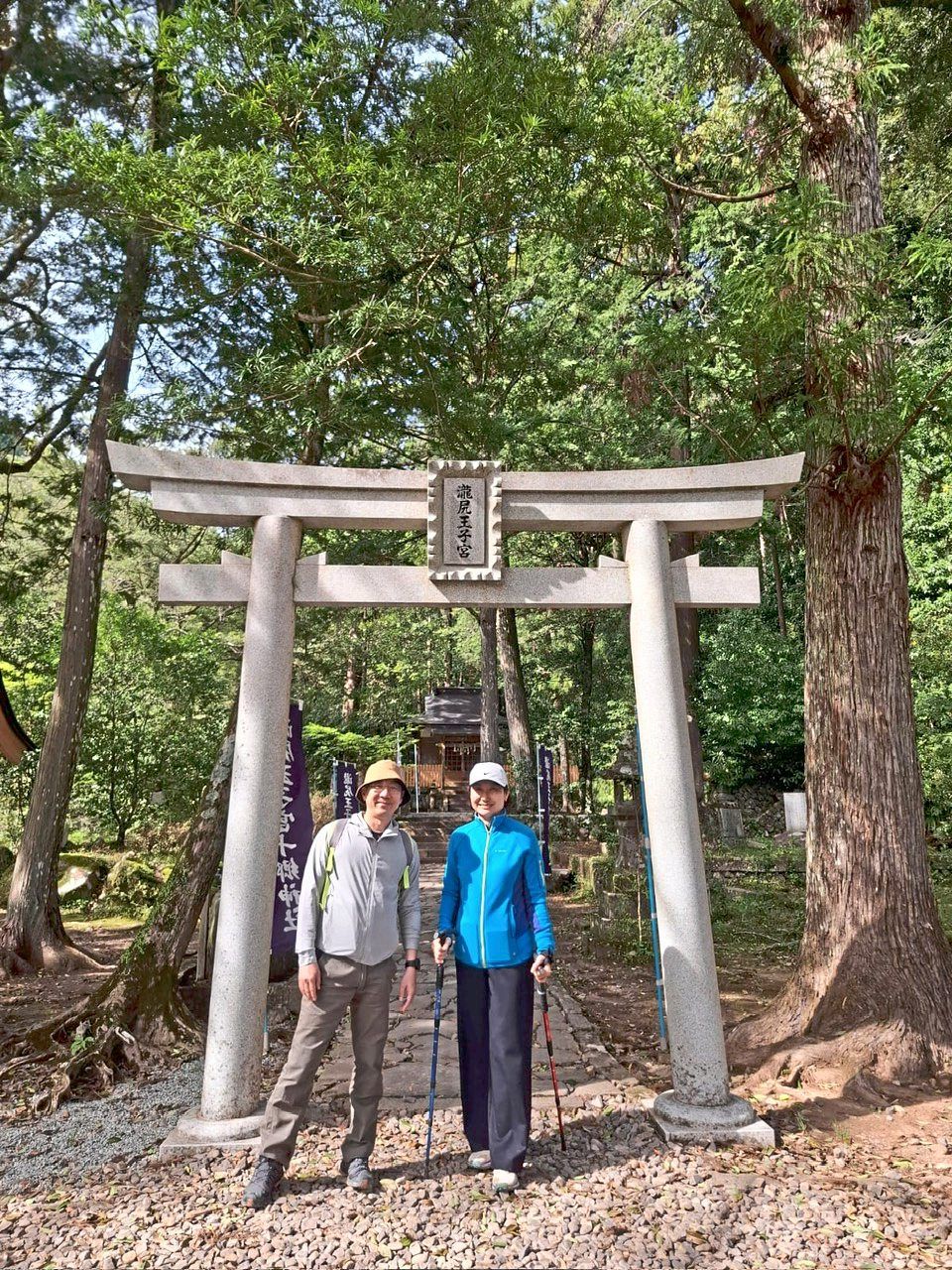
After a series of climbs and descents, we finally reached Hosshinmon-oji, where we offered our quiet prayers before returning gratefully to our onsen ryokan (traditional Japanese inn with natural hot spring baths) to soothe our tired bodies.
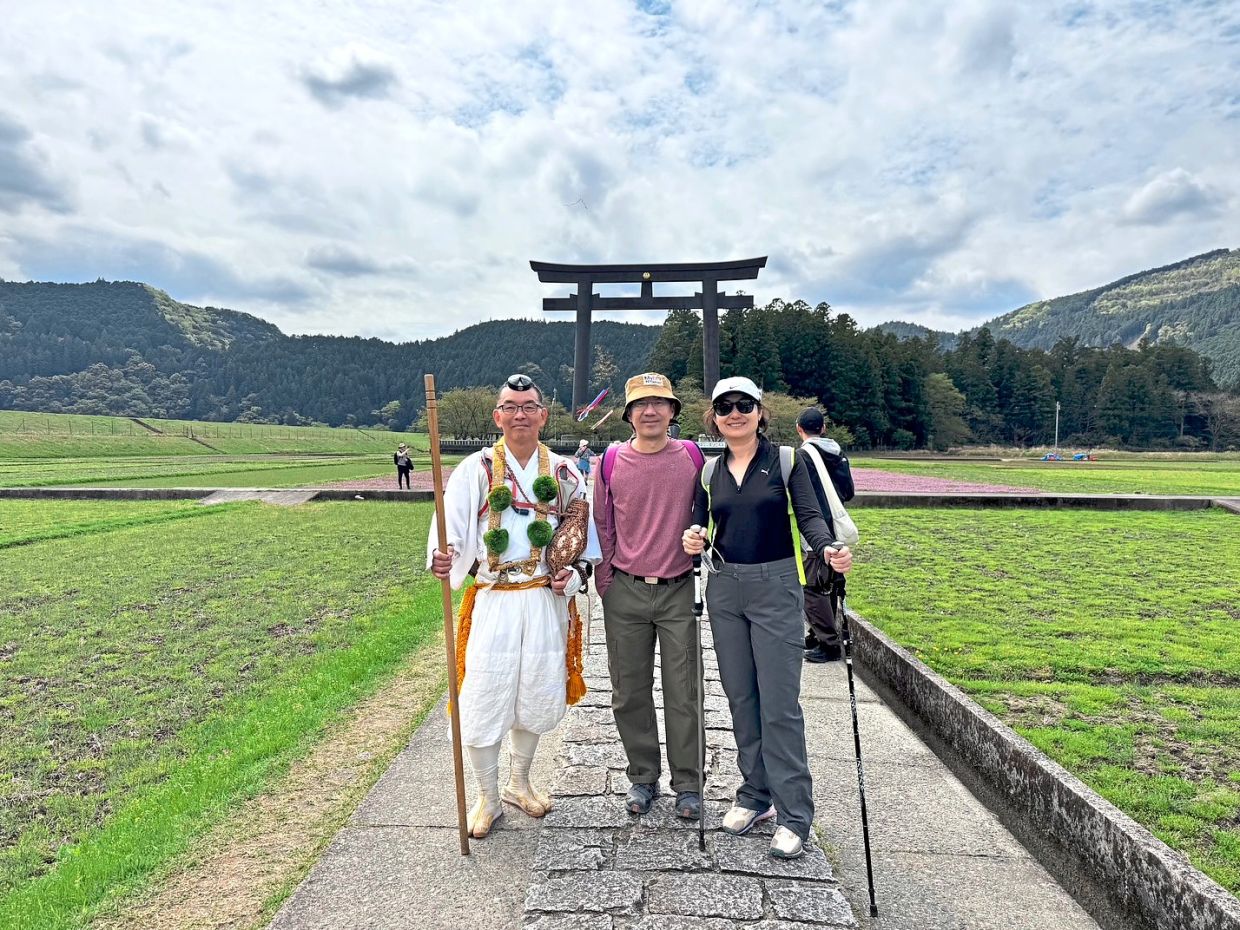
The third day marked the high point of our journey as we set out for two of Kumano’s three Grand Shrines, Hongu Taisha and Nachi Taisha. Ueno-san greeted us in a surprising transformation, dressed in full monk’s attire. He was, in fact, an ordained monk.
We passed through a quiet village lined with tea plantations and terraced fields before re-entering the forest. Our pace settled into a steady rhythm, accompanied by the soft, almost hypnotic chime of a bell hanging from Ueno-san’s backpack.
After two hours, we reached Fushiogami-oji, where Japan’s largest torii gate could be seen standing proudly on the sandbanks of Oyunohara below. Renewed by the sight, e descended towards Hongu Taisha, joining a steady stream of worshippers.
There, Poh Koon and I offered prayers for our family’s well-being.
We then continued to the foothills of Mount Nachi, where the cobbled staircase of Daimon-zaka rose steeply towards the shrine. One glance at the incline was enough.
Ueno-san, sensing our hesitation, suggested we take the car instead. We agreed without protest.
At the top, we were rewarded with the breathtaking sight of Nachi Falls, the tallest single-drop waterfall in Japan. Before us stood a vivid orange, four-tiered pagoda, rising with dignified modesty against the thunder of water cascading down a lush mountainside.
On our fourth and final day, the heavens opened, as though mourning the end of our journey. Before visiting Hayatama Taisha, the third Grand Shrine, Ueno-san surprised us with two gentle detours.
The first took us through a farming village, where rice terraces descended the slopes like green steps carved into the mountains. The second led to Dorokyo, a serene river gorge whose turquoise waters flowed between lush, rising ridges.
It felt like a carefully composed prelude before the final note.
At last, we arrived at Hayatama Taisha, once proclaimed the holiest of the Kumano shrines by Emperor Koken. There, we offered our prayers of thanks for safe passage and for a journey that had proved deeply fulfilling.
Our bodies ached after the long hours on the trail, but our spirits felt refreshed, lifted by the deep reflection that came from being enveloped in the tranquillity of unspoiled nature.
Hopefully, one day, we will return to follow another path along the Kumano Kodo and once again immerse body and spirit in its quiet ritual of contemplation and renewal.
The views expressed are entirely the writer’s own.


