Castles are among the top reasons tourists flock to Germany each year. Out of the 15,000 to 20,000 castles found across the country, one stands out the most: Neuschwanstein Castle.
Located in Bavaria, Germany’s largest state, the 19th-century marvel is perhaps more familiar to Disney fans as the “Cinderella castle”. Watch the 1950 animated Cinderella film and you’ll understand why.
In 1959, it once again appears in a Disney film, this time as King Stefan’s castle in Sleeping Beauty.
Reportedly, one of the reasons for this was that Walt Disney, the American animator whose legacy lives on through his now globally recognised namesake entertainment brand, was enchanted by the fairytale charm of Neuschwanstein.
In fact, it is said that Germany had the animator spellbound. For example, another location in Bavaria, namely the walled medieval town Rothenburg Ob der Tauber, inspired the backdrop for Pinocchio (1940).
According to the National Brands Index 2025, aside from castles, other words or thoughts that tourists associate with Germany the most are Berlin, beer, Oktoberfest, wurst (sausage), Black Forest and history.
We did not have the opportunity to experience all of these during our recent visit to several cities in Germany, but we did get to savour some beer and wurst and explore several historical sites.
Naturally, castles make recurring appearances throughout the trip.
Scenic Saarland
“Complicated” is one way to describe the history of Saarland, a small landlocked state in the southwest of Germany. Residents who lived in Saarland between the 1800s and 1950s went through multiple nationality switches.
Bordering France and Luxembourg, Saarland was at times a half-German, half-French territory, or fully under France. For a while it was also a quasi-independent state, before finally rejoining Germany in 1957.
Now, it is the country’s smallest non-city-state. (If counting city-states, then the “smallest state” title goes to Bremen.)
One sweltering day in June, our little group took a roughly three-hour bus journey from the city of Frankfurt am Main to the municipality of Perl in Saarland.
Frankfurt’s cityscape, with its towering skyscrapers and bustling traffic, gradually gave way to stretches of wheat fields and rolling hills. Windmills dotting the horizon occasionally mustered up the will to turn, given little motivation by the stagnant summer air.
How grateful we were for the crisp air-conditioning in our bus.
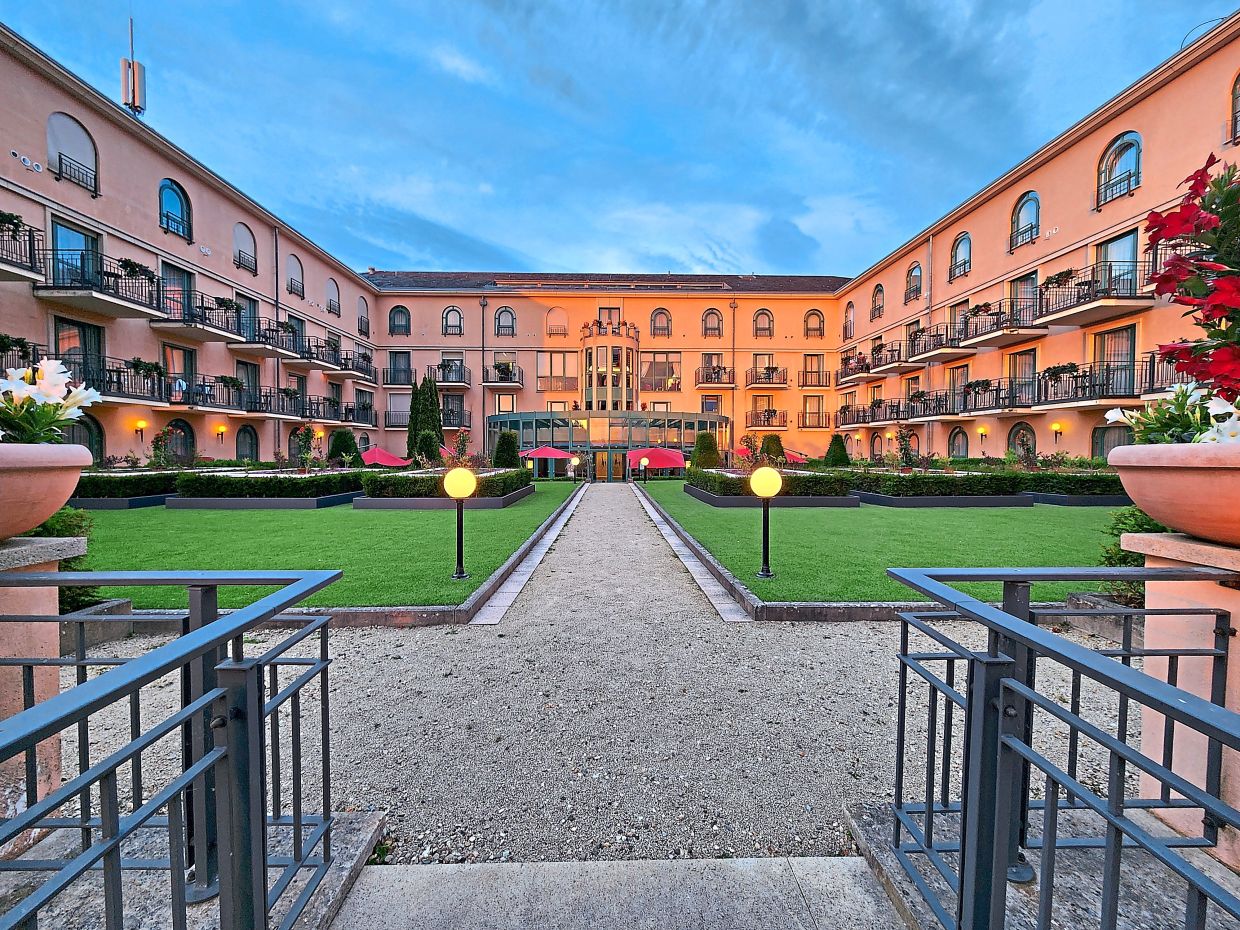
The roads narrowed, the windmills loomed closer. Soon, we headed down a left turn to Victor’s Residenz-Hotel Schloss Berg – our not-so-humble abode for the next three days.
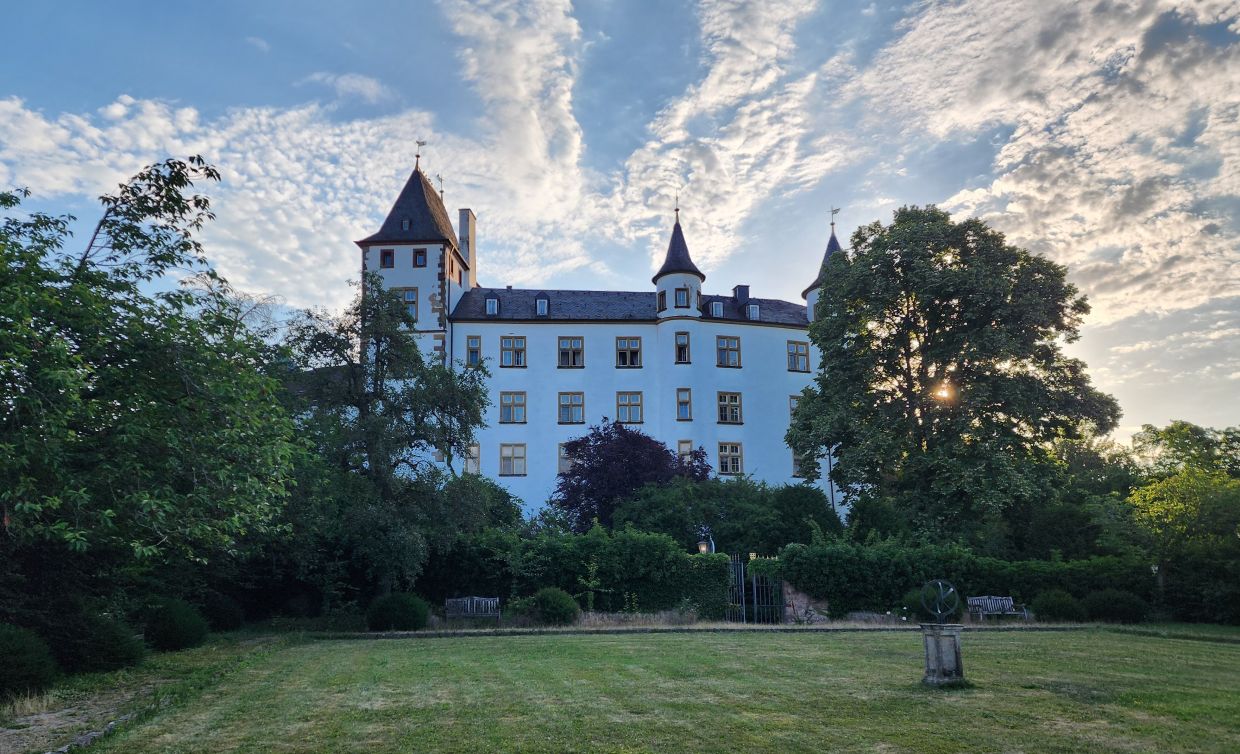
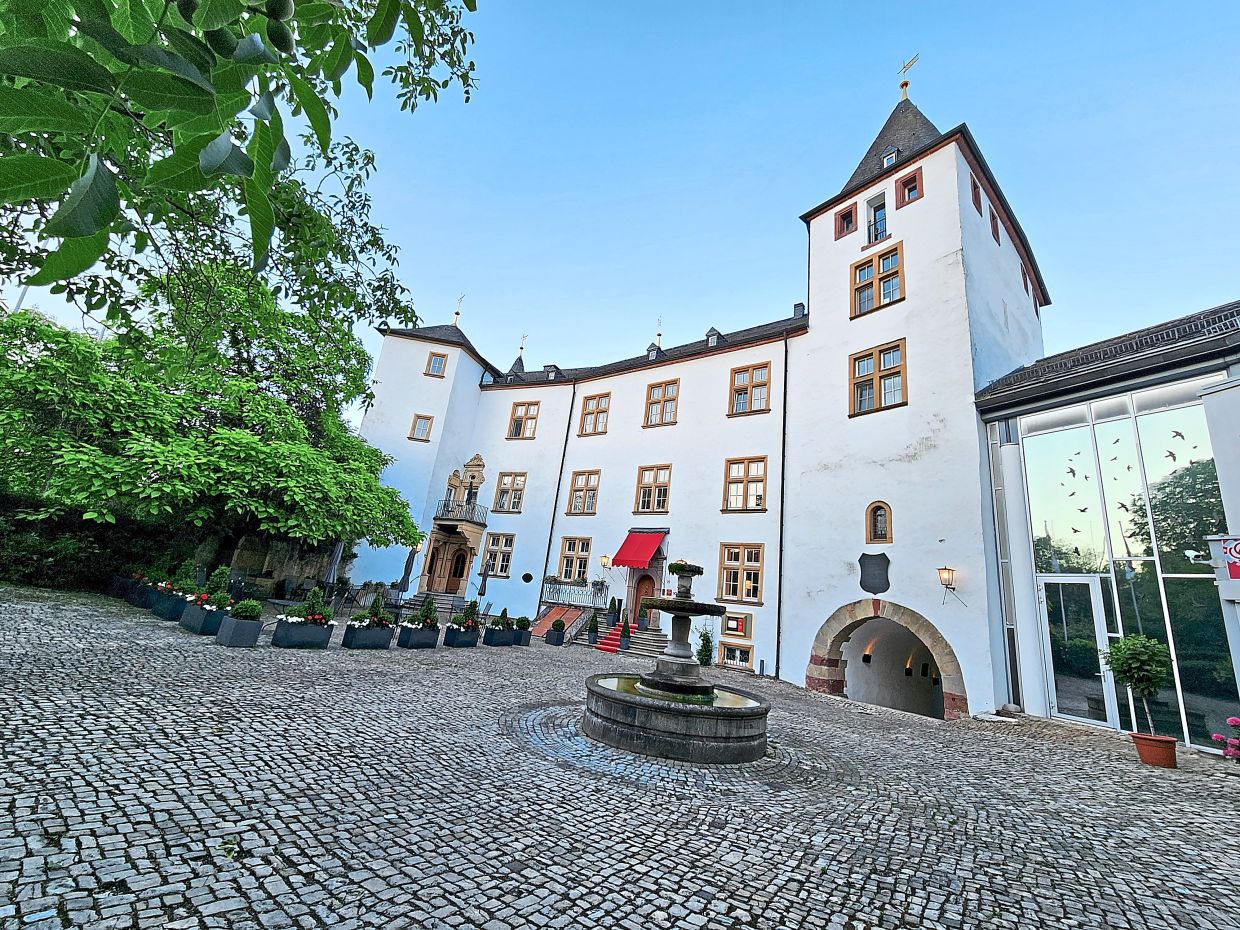
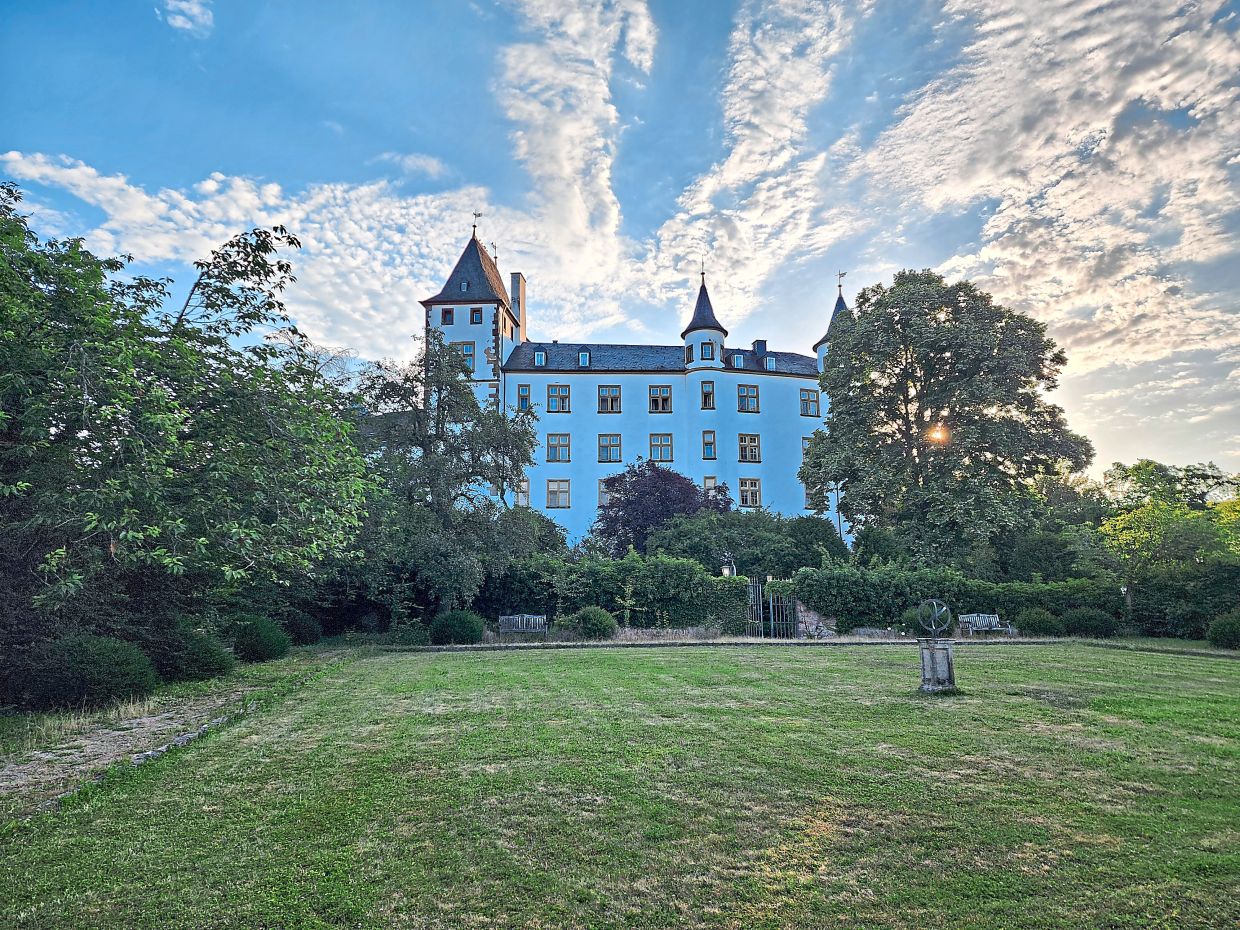
No, we did not get to spend our nights in a schloss (castle). But yes, a castle does stand on the hotel grounds. It has a Renaissance-era design that complements the Roman villa-esque style of the main hotel building.
Looking out the green-trimmed hotel windows, we were told that neighbouring Luxembourg was located just over the hill.
As Perl is situated not far from Metz (France) and Schengen (Luxembourg) – under an hour’s drive to either destination – anyone visiting this city can easily set foot in three countries in a single day.
Not that staying put at the hotel is a bad choice. Guests can savour wine from the neighbouring vineyards, dine at the on-site restaurants (which include the three Michelin-star Victor’s Fine Dining by Christian Bau) or ... gamble at the castle.
Technically, Casino Schloss Berg is not part of the castle, but the modern glass structure is physically attached to the latter.
Guests looking for a less high-stakes time can enjoy a little pampering instead at the hotel’s Roman bath-inspired spa.
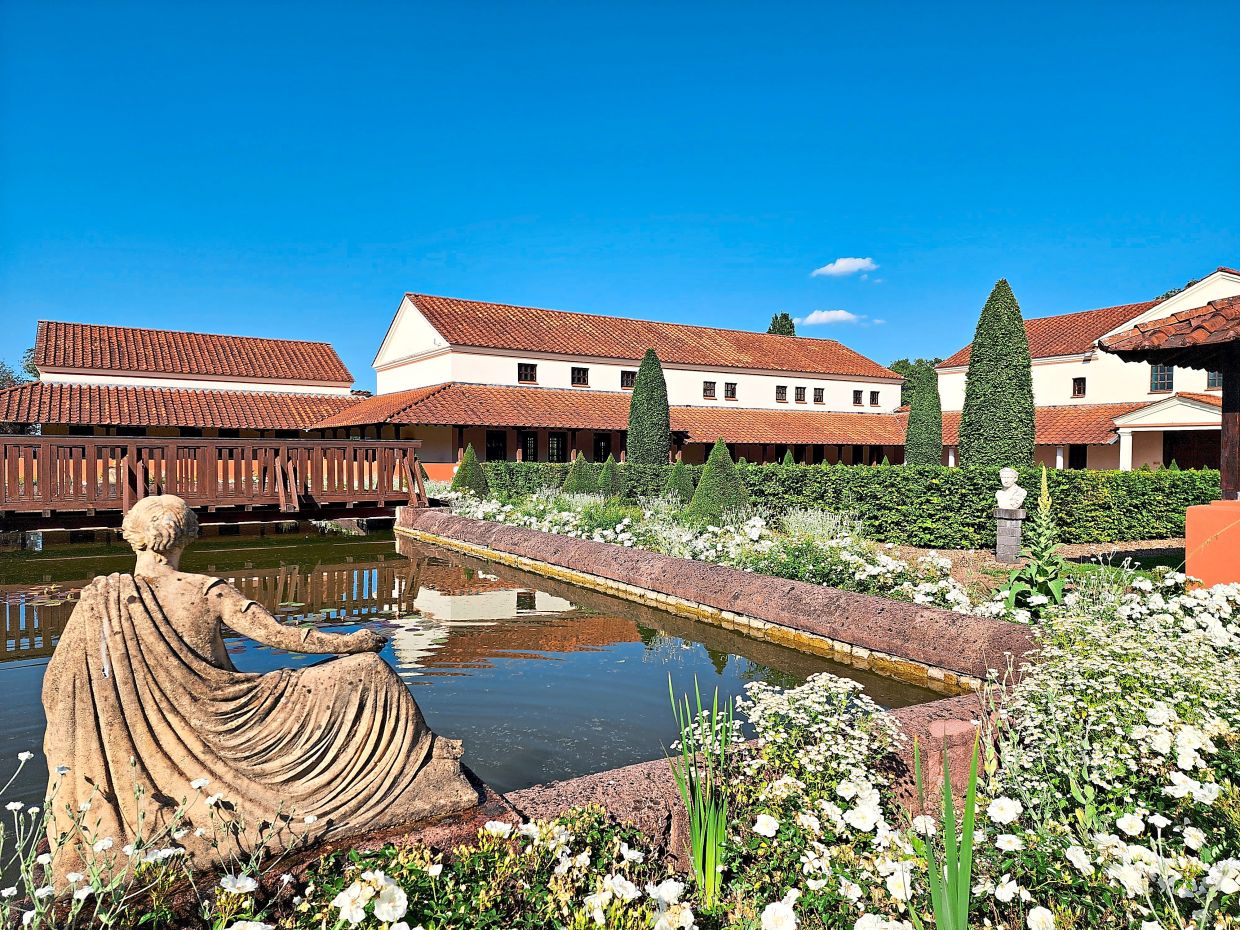
As Saarland was under Roman rule from the 1st century BCE to the 5th century CE, remnants of this part of its history can be found throughout the state.
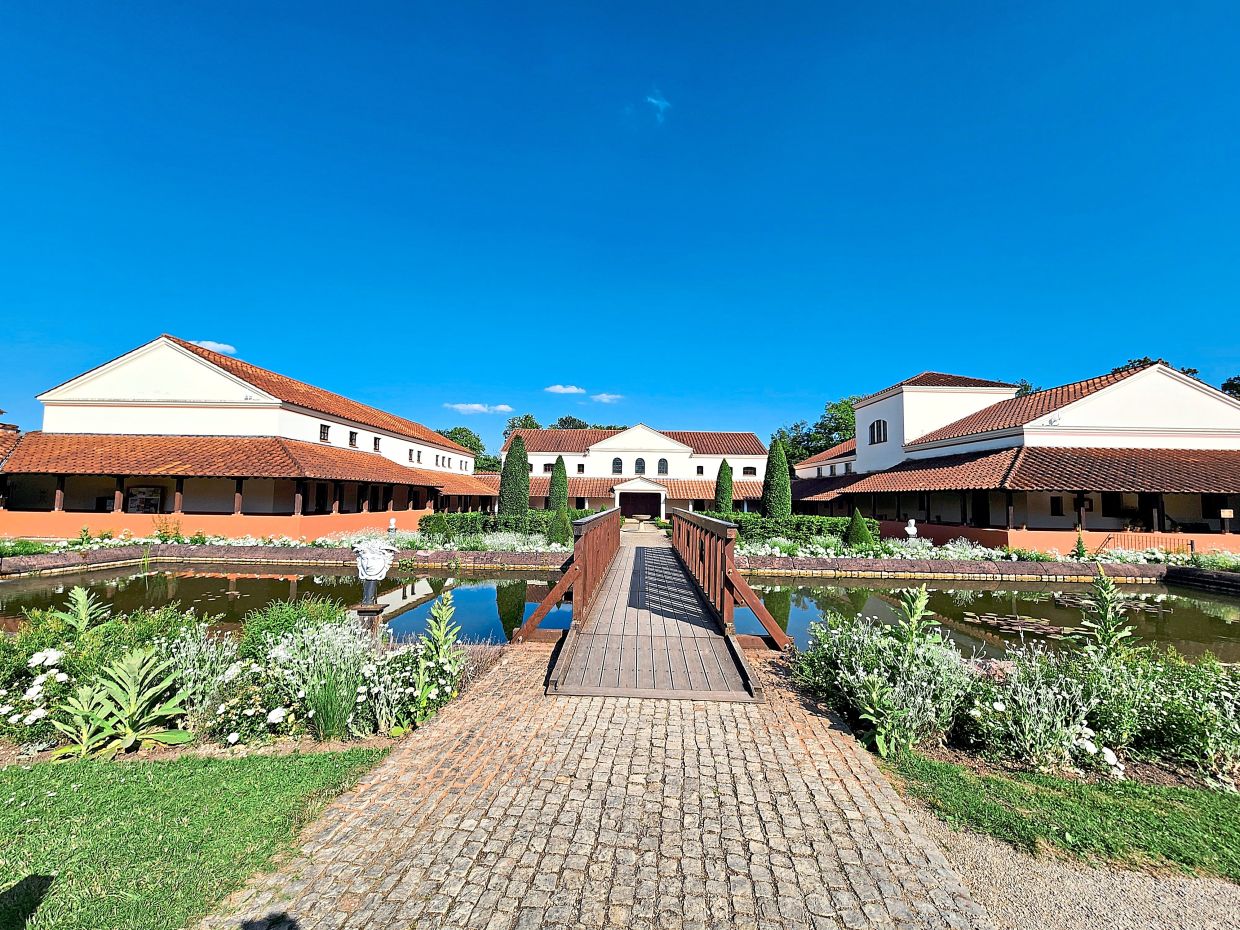
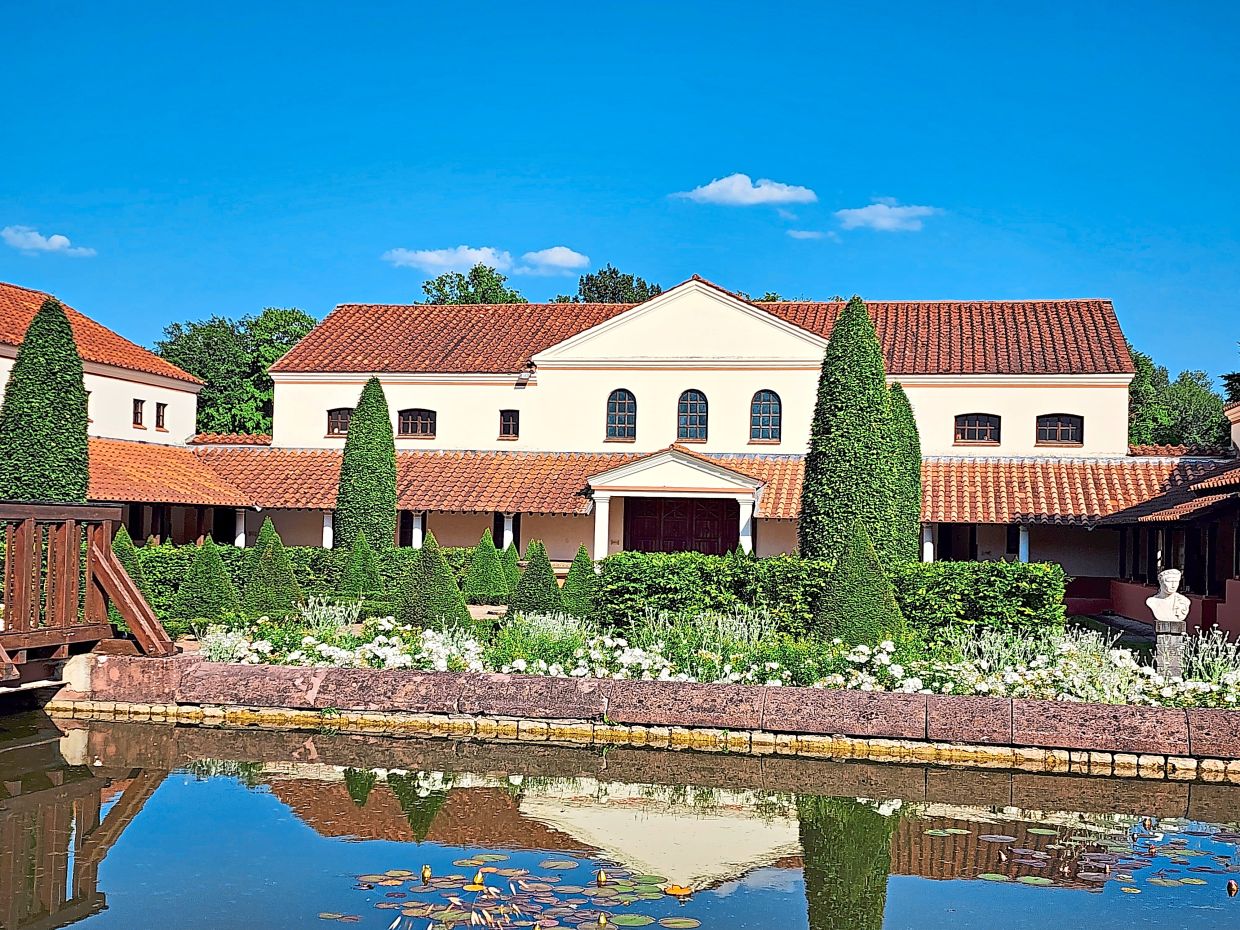
A renowned one is located just a short drive from the hotel. Roman Villa Borg, standing on its original foundations, is purportedly the world’s only Roman villa that has been fully reconstructed.
Guided tours here typically take three to four hours. Understandable, as there are various archaeological pieces to marvel at and historical facts to digest.
We regrettably did not get to spend long here, but our local guide, Timo Kohn, managed to give us an insightful tour of the original artefacts on display and the villa’s various spaces.
Visiting in early summer was an interesting experience temperature-wise.
As we ventured from room to room, the temperature fluctuated depending on the materials used for the interiors. Marble floors and walls in the bathhouses kept the air chilly, while clay walls in areas like the kitchen retained heat.
Fair warning: For us Malaysians who are used to having air-conditioning indoors, manage your expectations when it comes to European buildings. Most attractions and accommodations – like our luxurious Saarland hotel – have limited to no air-conditioners installed.
That said, if you were to visit Saarland, you’d likely be spending more time outdoors admiring its picturesque views.
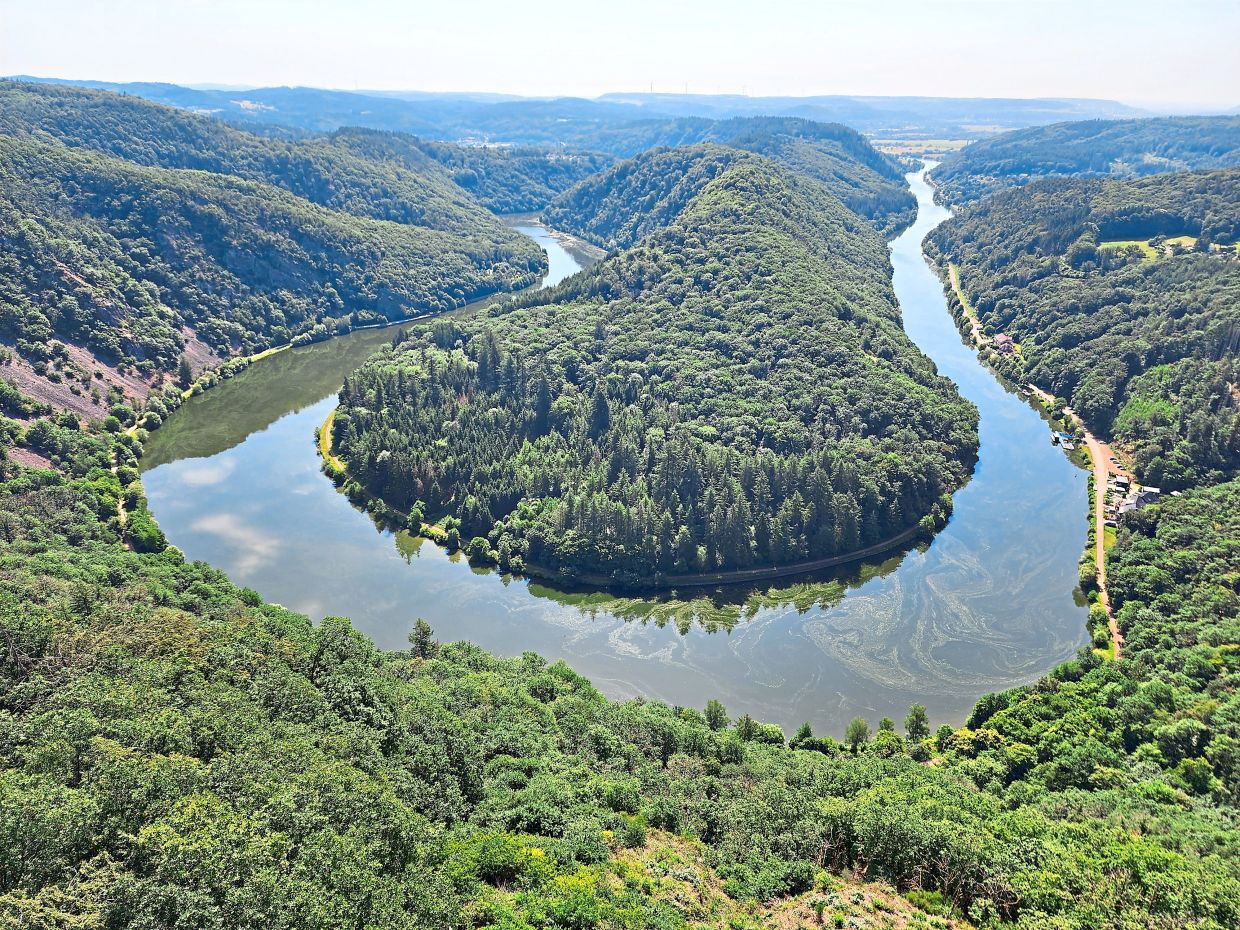
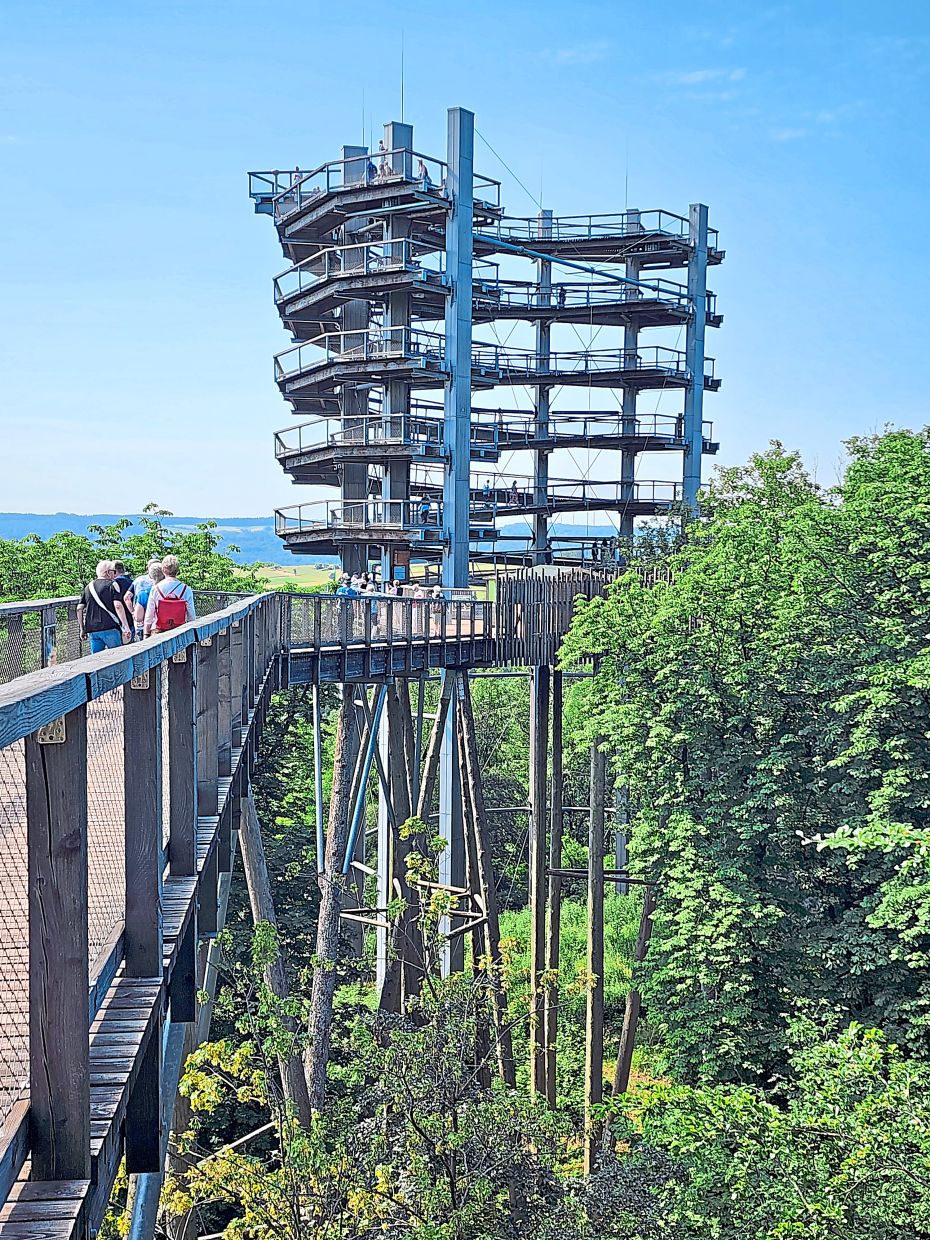
On our trip, one of the scenic sights of Saarland that we had the pleasure of admiring was the Saar River – as seen from the top of the 42m-high lookout tower at Treetop Walk Saarschleife.
The word “Saarschleife” translates to “Saar bend”, referencing the 180° loop or horseshoe-shaped bend that the river is known for.
For acrophobics (folks with a fear of heights), forgo climbing the tower as you can still bask in nature as you stroll along the 1,250m-long walkway that meanders through the mixed deciduous forest.
Growing appreciation
Appreciating Mother Nature transcends admiring scenic views; it includes mindfully using her bounty to craft exceptional culinary offerings.
Saarland is a model region for sustainability, highlighted by its eco-friendly agriculture and Unesco-inscribed Bliesgau Biosphere Reserve.
Located within this reserve is Bliesgau Olmuhle, a decentralised oil mill that focuses on cold-pressed speciality oils. Run by Jorg Hector and Patric Bies, the mill sources raw materials directly from farms around the reserve.
During our visit, Bies led us through the facilities where various types of oils are processed and bottled.
Products like camelina oil, poppy seed oil and hemp oil are sold online and at the mill’s on-site store, which additionally carries goods by other local makers.
A short walk from the mill is the artisan food manufacturer MaLi’s Delices/Gourmet-Manufaktur. Here, founders Christine Breyer and her son Yves create handmade gourmet food using fruits and vegetables sourced from the Bliesgau region.
Meanwhile, in Blieskastel, the capital of Bliesgau, nature is incorporated in a novel way. Here, the plants are “literally street food”, that’s how Gabor Kohler, the main tour guide who accompanied us throughout our Saarland trip, put it.
That’s because instead of food stalls lining the streets, here it’s rows of plants. Edible plants.
Nature and landscape guide Christian Engel told us that anyone, be it local residents or visiting tourists, can pluck these plants and consume them. That is the whole notion of an “edible city”.
“The idea is to plant fruits, crops and everything you can eat in public spaces,” Engel explained.
A decade since the sustainable concept was implemented, the city now thrives with greenery that serves both aesthetic and functional purposes.
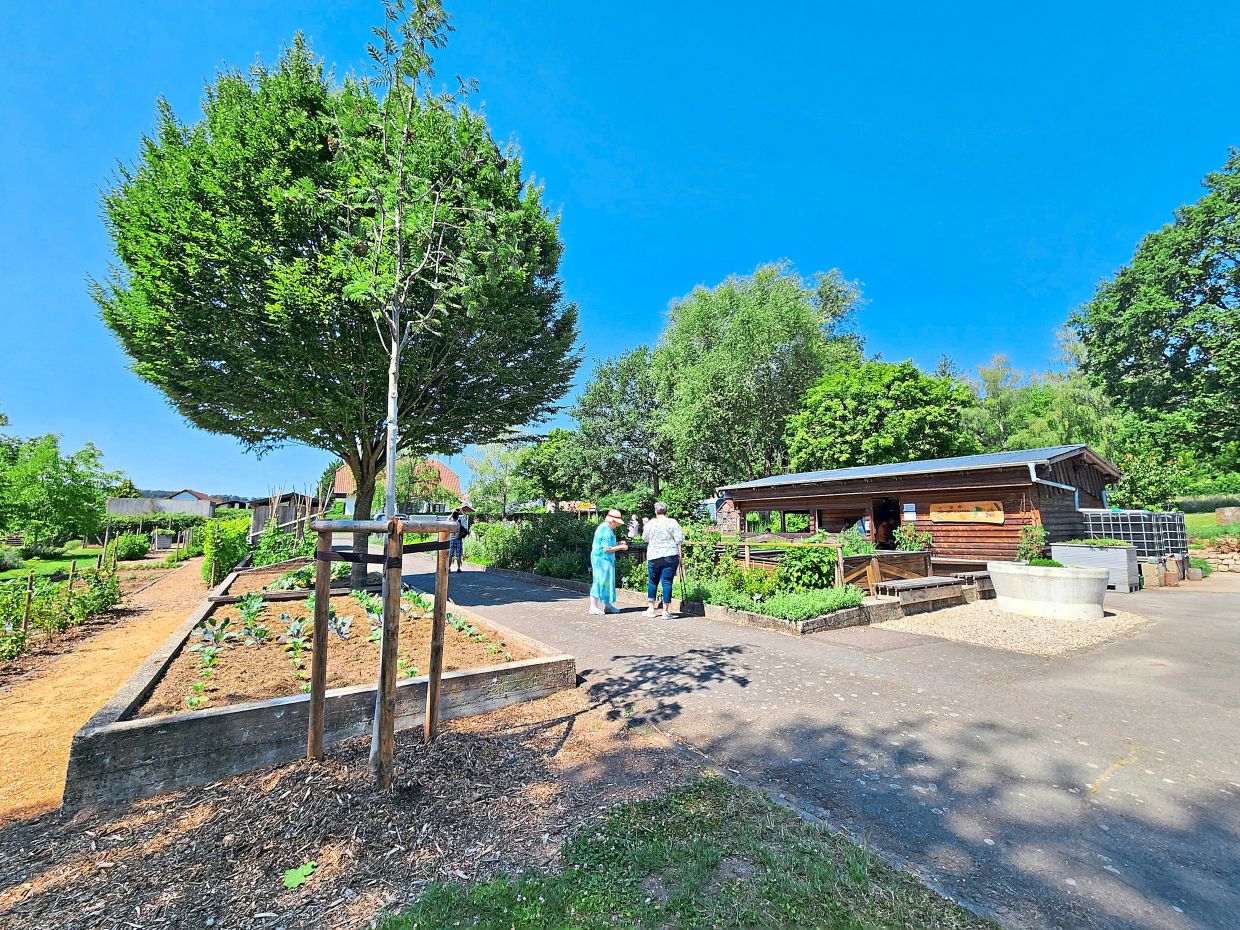
From lush raised beds and fragrant herb boxes to the sprawling Biosphere Town Garden on the Schlossberg hill, these easily turn a walk around Blieskastel into a botanical scavenger hunt. Each plant is easily identifiable with a quick scan using the Flora Incognita app.
Cities with histories
On our way down from Schlossberg, Engel pointed out Franziskanerkloster. The Franciscan monastery stands in a historic complex that traces back to the Baroque period.
The city’s golden age of Baroque was mainly shaped by the arrival of Count Franz Carl and Count Marianne von der Leyen in the 18th century. The counts ordered the construction of buildings like the Blieskastel Castle, Palace Church and Town Hall I.
Throughout the city’s old town, there still remain preserved squares, fountains and buildings reflecting its Baroque heritage.
About a half-hour drive from Blieskastel lies Saarbrucken, the capital city of Saarland.
Saarbrucken similarly features an elegant Baroque appeal, the legacy of Prince William Henry’s reign in the mid-18th century.
Romanticising life would sure be easy if everything were this aesthetically-pleasing.
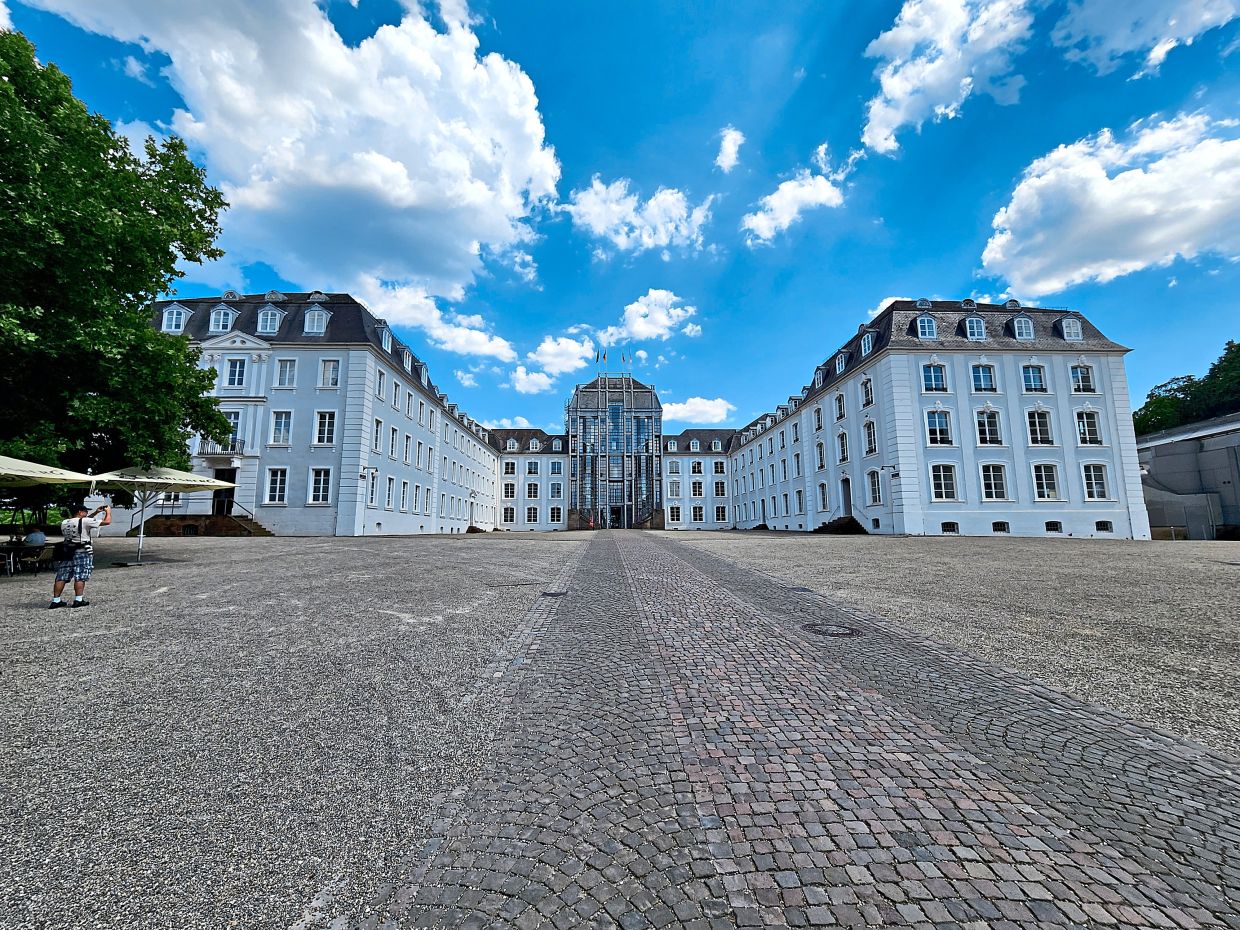
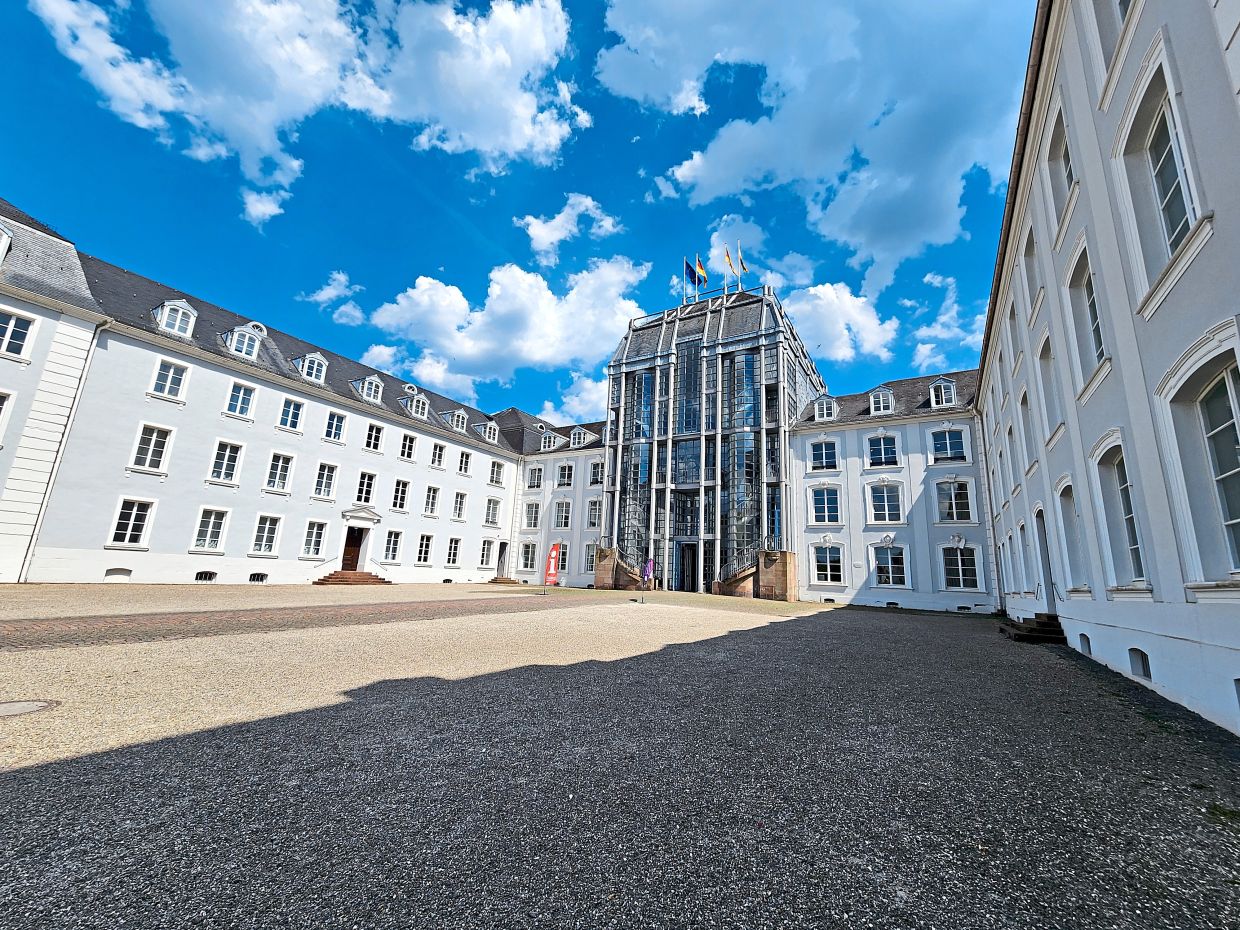
Our first stop in the city: Saarbrucken Castle. A resilient building that has been destroyed and reconstructed multiple times. Its current look is accentuated by a modern central block of steel and glass, installed during its 1989 renovation.
“The new middle part has a triple function,” said tour guide Felix Weyer. Firstly, it represented what it could’ve looked like if the whole building was demolished in the 1970s, as some people had wanted, and rebuilt with a completely new look.
Secondly, there are “old elements that have survived the war”, said Weyer, that would’ve been demolished in any other rebuilding plan. Now, they are safely protected underneath the glass construction.
Thirdly, it demonstrated how high the original palace was and how the floors were distributed. “You can see the disproportionately large top floor there, where they have rebuilt the Baroque ballroom with some modern elements in it,” he pointed out.
Our walking tour continued. We peered at the clear water of the Saar River; we were seeing it from a much closer distance now – from a bridge instead of a tower – as we crossed over to the Altstadt or “old town”.
Weyer informed us that the river water that flows between the source – Vosges Mountains in France – and the bridge we were on has been clean enough for drinking since 2011. We did not get to test the validity of his statement, so we’ll take his word for it.
At the time of our visit, Saarbrucken was hosting the grand closing ceremony of the Special Olympics National Games Saarland 2026. The crowds were dissipating by the time we were making our way to Altstadt, however.
We later wandered around the old town long enough to see St Johanner Markt transform from a sleepy square into a lively dining spot as evening fell.
Seeing the crowds of friends and families trickling in to fill up the tables and chairs, it’s easy to understand why locals affectionately call it “the city’s living room”.
The opposite rings true in the Neue Alstadt (new old town) of Frankfurt.
We had returned to Germany’s banking capital, and led by our city guide, Gabriele Spanuth, experienced a bit of its historical side.
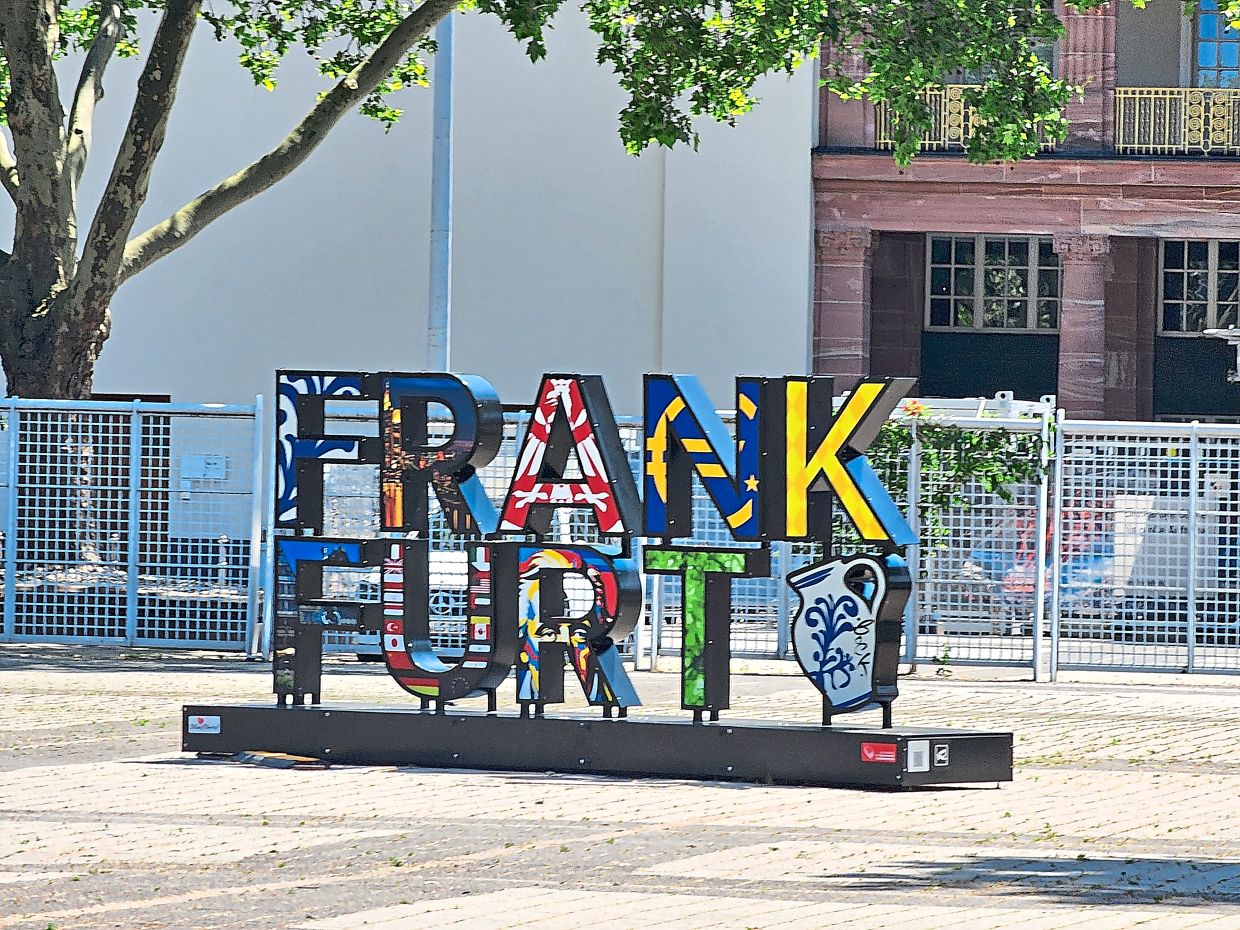
But first, we gawked over artsy installations like the Hammering Man (a 21m-tall kinetic sculpture by Jonathan Borofsky) and Selfie-Point Frankfurt (a travelling 3D lettering landmark featuring the blue-grey Bembel, a traditional jug used to serve apple wine).
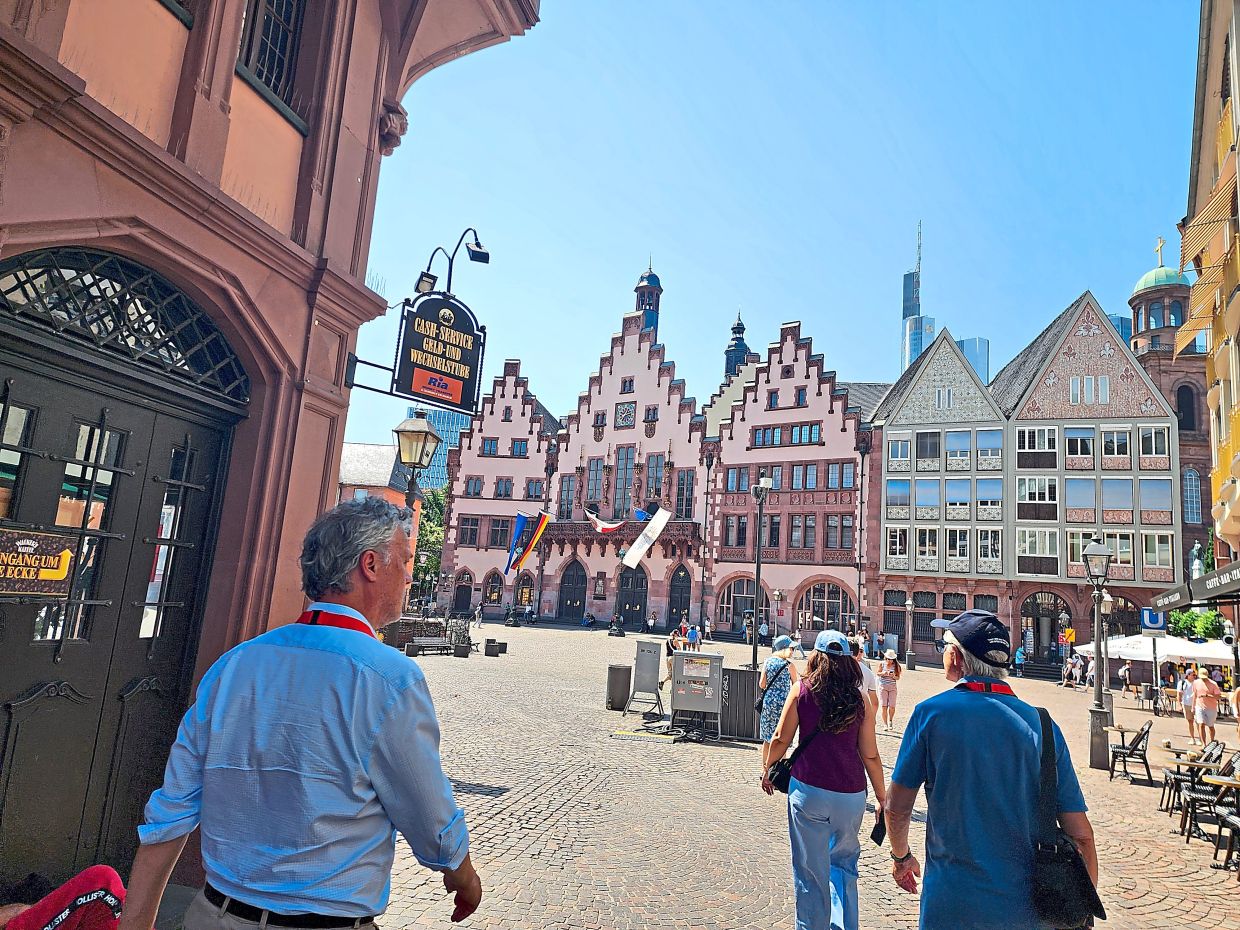
“So, here we are right in the middle of what is called the New Old Town,” Spanuth said when we later stood on a stone-paved lane.
Admitting that the appellation sounded contradictory, she quipped, “Either something is old or something is new; in Frankfurt we manage both.”
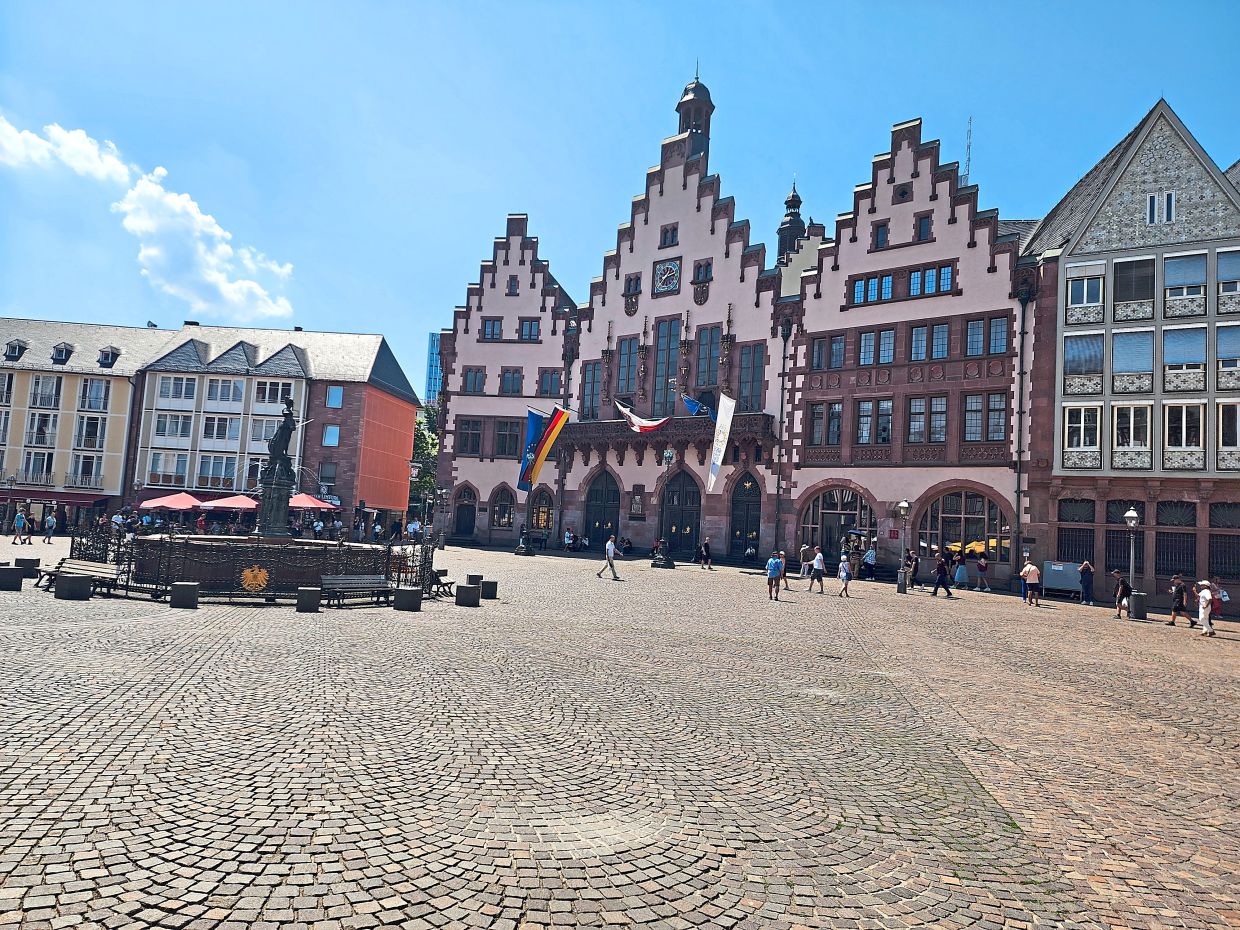
Also known as the Dom-Romer Quarter, the area – ensconced between historic Old Town’s Frankfurt Cathedral and the Romerberg square – came about following a major urban development project from 2012 to 2018.
To the untrained eye, all the buildings here may look authentic. But in reality, out of the 35 structures here, 15 are historic replicas that remain faithful to the original designs, while another 20 are new buildings designed with the historical aspects in mind.
For a sense of life in 19th-century Frankfurt, we headed to TimeRide. The attraction uses virtual reality to take visitors on a journey through time, when only the “old” Old Town existed.
What about castles? You may be wondering.
While Frankfurt does have castles, none of them are located in the city centre. Time constraints meant we had to forgo visiting places like Hochst Castle and Holzhausen Palace.
We did, however, get to taste Kaffeehaus Goldene Waage’s famous “mini coronation cake”. It is an adorable version of the Frankfurt Crown Cake, a 1735 creation commemorating the city’s distinction as a historical coronation site.
Crown, castles ... close enough!
Travel notes
Getting there: Lufthansa German Airlines operates flights from Kuala Lumpur International Airport Terminal 1 to Frankfurt Airport.
The shortest flight duration (16 hours) includes a transit at Singapore Changi Airport.
Where to stay: Melia Frankfurt City, Hyatt Place Frankfurt Airport, Victor’s Residenz-Hotel Schloss Berg, Premier Inn Saarbrucken City
Currency: Euro is the official currency, with €1 equivalent to RM4.65 at time of writing.
More information: Find out more about Germany’s tourist attractions and destinations online at Germany Travel (www.germany.travel/en/home/).
Germany's little wonder
This Renaissance castle is part of Victor's Residenz-Hotel Schloss Berg. — FLOREY D. MIKIL/The Star
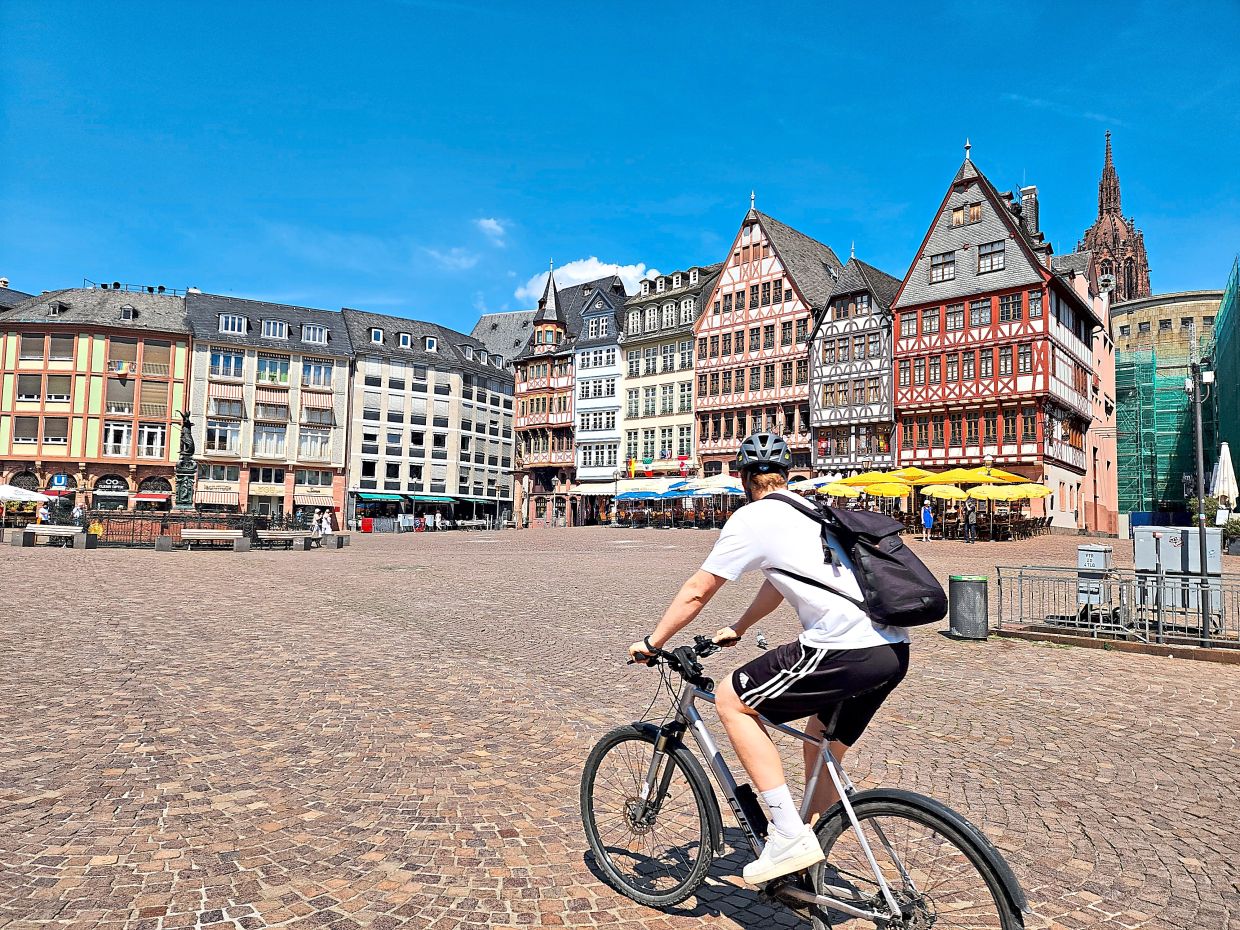
Romerberg is a historic square in Frankfurt.
Romerberg is a historic square in Frankfurt.
Blieskastel is an ‘edible city’ in Saarland.
Blieskastel is an ‘edible city’ in Saarland.
The Biosphere Town Garden in Blieskastel.
The Biosphere Town Garden in Blieskastel.
Casino Schloss Berg is attached to a Renaissance castle.
Casino Schloss Berg is attached to a Renaissance castle.
Selfie-Point Frankfurt is a travelling 3D installation.
Selfie-Point Frankfurt is a travelling 3D installation.
Walking around Neue Alstadt in Frankfurt.
Walking around Neue Alstadt in Frankfurt.
Romerberg is a historic square in Frankfurt.
Romerberg is a historic square in Frankfurt.
Roman Villa Borg is said to be the only fully reconstructed Roman villa in the world.
Roman Villa Borg is said to be the only fully reconstructed Roman villa in the world.
Saar River as seen from Treetop Walk Saarschleife.
Saar River as seen from Treetop Walk Saarschleife.
Saarbrucken Castle’s architecture is a mixture of traditional and modern.
Saarbrucken Castle’s architecture is a mixture of traditional and modern.
Treetop Walk Saarschleife features a 42m-tall lookout tower.
Treetop Walk Saarschleife features a 42m-tall lookout tower.
Victor’s Residenz-Hotel Schloss Berg features Roman inspiration.
Victor's Residenz-Hotel Schloss Berg features Roman inspiration.
This Renaissance castle is part of Victor's Residenz-Hotel Schloss Berg.
Roman Villa Borg is said to be the only fully reconstructed Roman villa in the world.
Roman Villa Borg is said to be the only fully reconstructed Roman villa in the world.
Roman Villa Borg is said to be the only fully reconstructed Roman villa in the world.
Roman Villa Borg is said to be the only fully reconstructed Roman villa in the world.
Saarbrucken Castle’s architecture is a mixture of traditional and modern.
Saarbrucken Castle’s architecture is a mixture of traditional and modern.