
From rushing through the chaotic and crowded Howrah Railway Station in Kolkata, India to get to our train, we later found ourselves on a white-knuckled drive up the Darjeeling mountainside, negotiating hairpin bends in the dense fog.
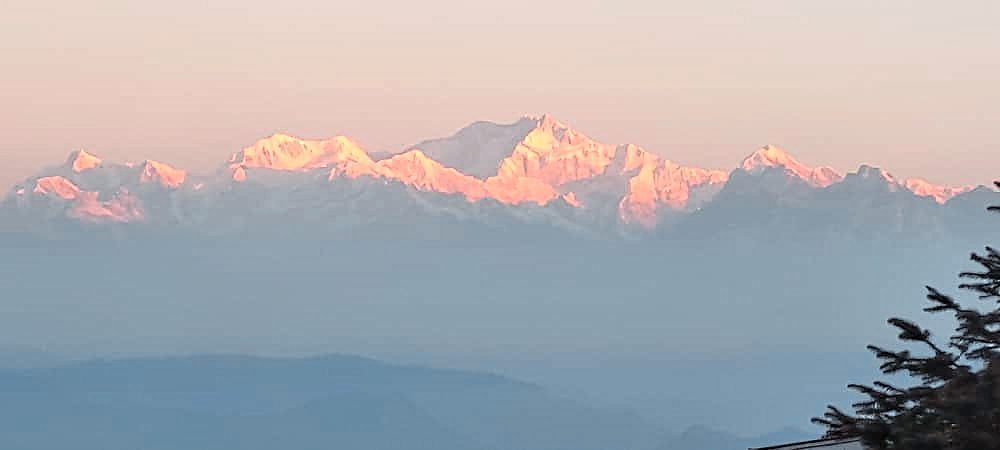
At the hotel the next morning, we were greeted by a spectacular view of the Kanchenjunga, the third highest peak in the world. We stood there speechless, mesmerised by its magnificence, as the massif gradually changed its hues with the rising of the sun.
Darjeeling’s history is as colourful as the prayer flags that flutter from the roofs of houses there. At the centre of the town is The Mall, also known as Chowrasta.
Mostly vehicle-free, the narrow streets are lined with shops selling everything from curios, woollen clothing, foods and tea.
Glenary’s Bakery and Cafe, established more than a century ago, is one of the town’s landmarks. There’s also Kunga Restaurant for visitors who want to sample an authentic taste of northeastern cuisine, including dishes like momo and thukpa.
For shutterbugs and history buffs, Das Studio, founded in 1927, is a must-visit. Vintage photos of misty, “old” Darjeeling, and of mountaineering pursuits, jostle with smiling family portraits in its windows.
The Oxford Book and Stationery is housed in a charming building typical of hillside architecture, with sloping pitched roof bordered by fretted wooden eaves. Great for bibliophiles and stationery lovers alike.
Head to the Padmaja Naidu Himalayan Zoological Park – established in 1958 – where research and conservation of endangered species are undertaken. We saw an adorable red panda chilling out in her “home”, oblivious of her many fans fawning over her.
There were also the Himalayan Tahr, snow leopard, mountain goats, a large variety of avian species and many more wonderful creatures to see here. The hilly terrain was quite physically challenging for us, though it did not put a damper on our enthusiasm.
Nearby is the Himalayan Mountaineering Institute, set up in 1954 to commemorate the ascent of Everest by Edmund Hilary and Sherpa Tenzing Norgay.
The Batasia Loop is a spiral railway track built to reduce the uphill gradient on the mountainside. On it, the iconic narrow- gauge Darjeeling Toy Train brings passengers on a scenic ride. This is one of the most popular attractions in Darjeeling.
At the top of the hill you will find the statue of a soldier, with his head bowed down as a tribute to fallen comrades.
The quaint Ghum Railway Station, said to be the highest railway station in India, is a Unesco World Heritage Site, and definitely worth visiting. There’s a small museum in its compound that displays the near-impossible feats that were undertaken to establish the railway back in the day .
Darjeeling is steeped in culture and spirituality, where places of worship abound. For example, St Andrew’s Church near The Mall was built for Scottish soldiers and tea planters in the 19th century.
Then there’s the gleaming, dome-shaped Peace Pagoda (“Shanti Stupa”) on the Jalapahar Hill. Four golden statues of Buddha, depicting the respective stages of his life, adorn the sides of the pagoda along with beautiful sandstone carvings. From there, picturesque vistas allow one to pause to appreciate the beauty of the Himalayas.
There’s a Japanese Temple nearby that is guarded by a pair of stone lions, too.
Elsewhere, the colourful Samteng Choling Monastery is a feast for the senses. A huge statue of the Buddha looks down from here, surrounded by prayer drums and bells, while intricate thankas and carvings decorate the walls.
For someone who is not a tea aficionado, a sip of the “first flush” tea will make it crystal clear why oceans were crossed and wars were fought over this simple beverage.
Margaret’s Deck is a tea lounge outside Darjeeling town that, when not blustery, you can sit on the balcony outside for a more atmospheric vibe. Perched above emerald vales of undulating tea gardens, it is the place to imbibe the perfect beverage for frigid climes and make plans to return to this magical realm in the clouds.
Memories of the arduous journey to reach Darjeeling faded away, replaced by memorable ones of the enchanting city.
The views expressed are entirely the writer’s own.