
The massive brown structure came into view as we approached the museum with a bizarre central opening that looked almost like a black hole (though it’s actually weathered steel).
This is the Mona Confessional, an interactive sculpture at the Museum of Old and New Art (Mona) in Tasmania, Australia.
Located in Hobart, Mona is one of the most unconventional and provocative museums I have ever set foot in. The Mona Confessional, by British artist Oliver Beer, acts as a bridge between the interior and exterior of the museum.
Don’t be deceived by its exterior though; while it looks like a single-storey building, the museum spans three levels of exhibition space underground.
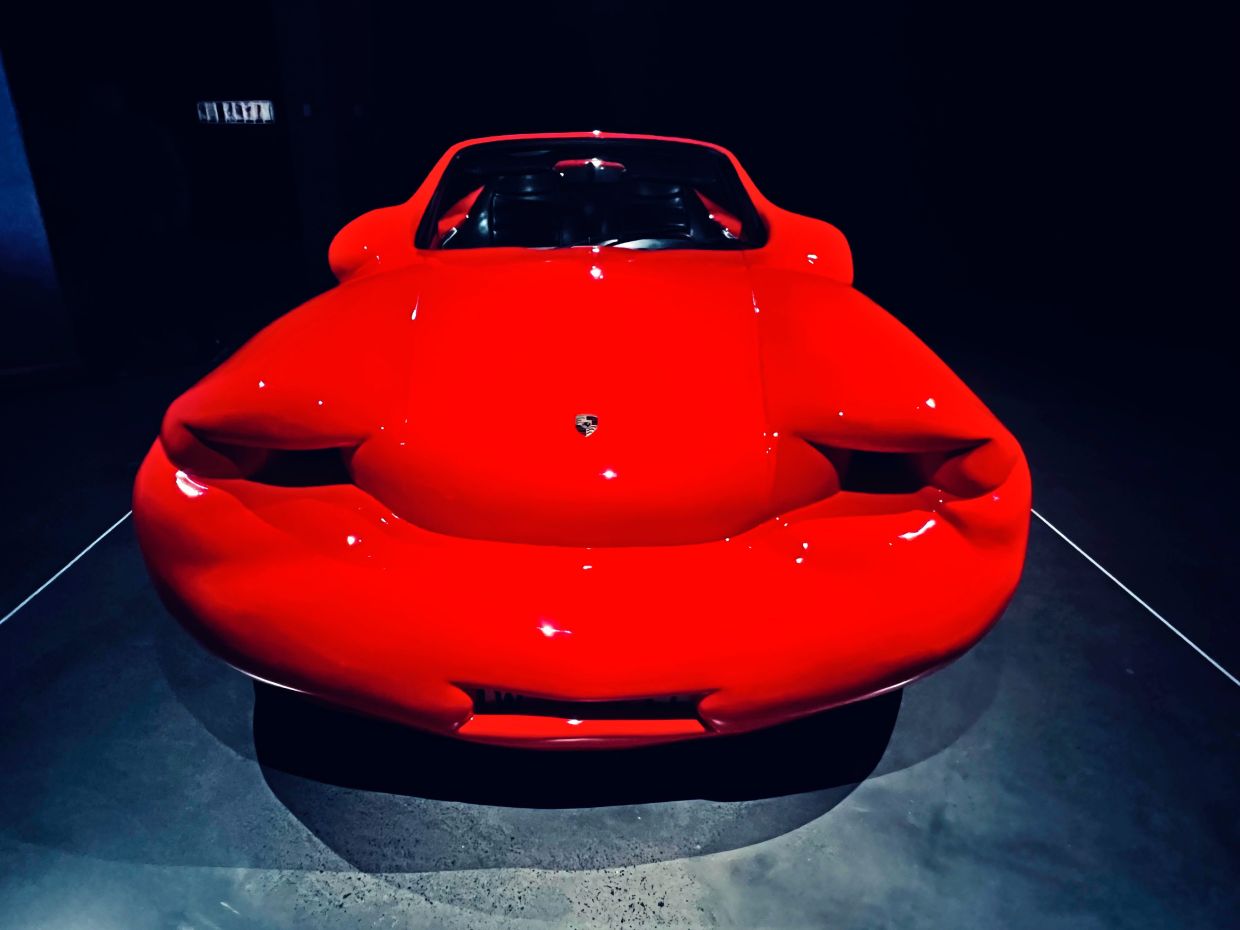
In most museums, there are signs telling you where to go. The Mona, however, lets visitors find their own way through the space. So, we wandered through its maze-like interior, letting curiosity guide us from room to room. The experience felt more personal and meaningful.
Inside there are permanent and temporary exhibitions. One moment you are walking past artefacts, the next you are standing in front of contemporary installations that – as my friend put it – feel “unsettling”.
Some works deal with mortality, others with identity and the human body.
We saw a long queue outside a room, with a worker standing at the entrance. Whatever was behind those closed doors was clearly intriguing enough to draw a crowd, so we joined the queue.
I craned my neck trying to catch a glimpse of what was inside. It seemed like only one person was allowed in at a time.
When it was finally my turn, I stepped carefully onto the narrow suspended walkway. The air smelt of petrol. Around me were towering concrete walls lined with grid patterns that stretched so high the space felt boundless.
Looking down, there was nothing but a still black pool of reflective sump oil beneath me.
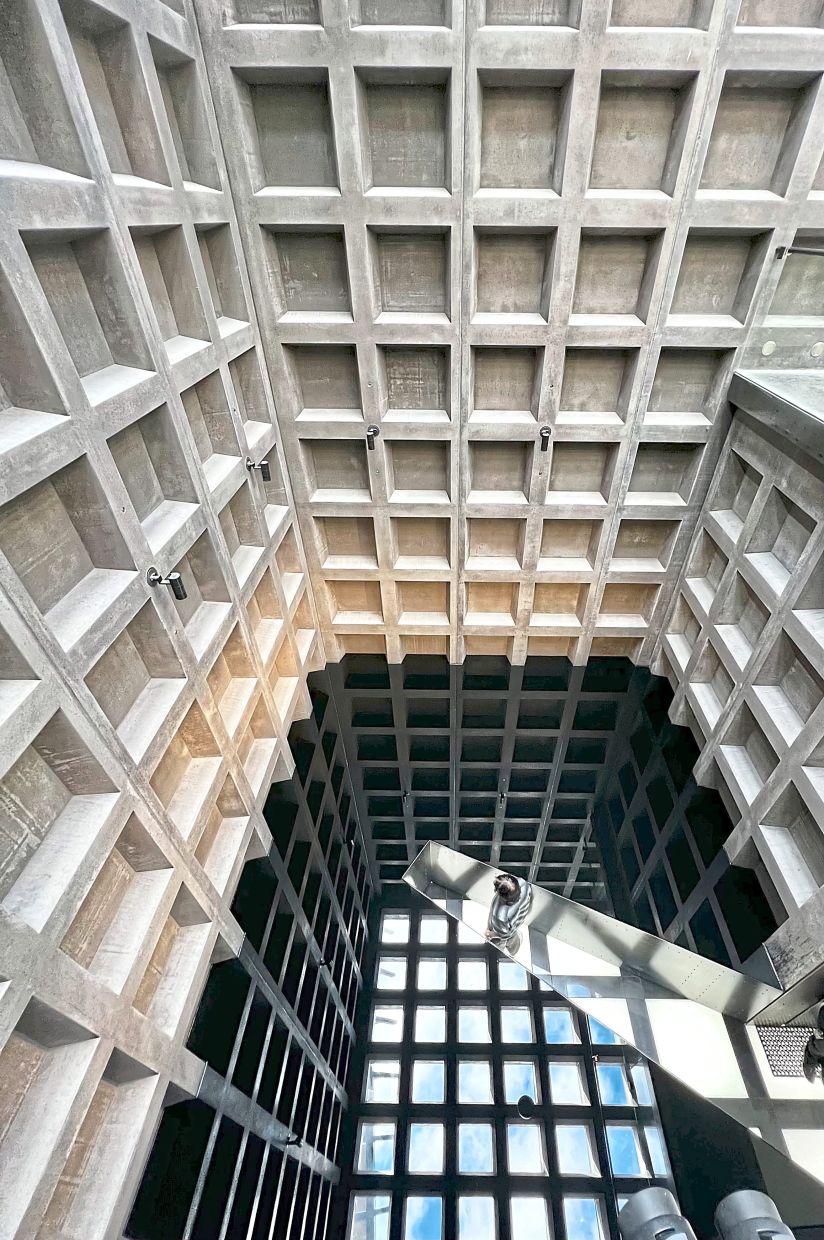
This was Richard Wilson’s installation called 20:50 (cover picture), where a reflective surface creates the illusion of infinite depth.
As we were heading to our next exhibit, we noticed a few visitors gathered along a corridor, phones pointed downward as they leaned over the railing. Curious, we walked over, half expecting another exhibit. Instead, it was a staircase.
When seen from above, its sharp geometry looked striking.
Part of what makes Mona special is the variety of its exhibits it runs each year. If you’re planning to visit Tasmania, take the time to explore this museum.
You can reach Mona either by ferry or by road from the main town of Hobart. Visitors can scan QR codes for audio explanations of the works on display.
There are other museums around the globe that redefine how visitors experience art. In celebration of International Museum Day, which takes place annually on May 18, here are a few of them that are worth visiting this year.
ArtScience Museum (Singapore)
At Singapore’s ArtScience Museum, the only constant thing is change.
As part of its 15th anniversary this year, the museum hosts the exhibition, Flesh And Bones: The Art Of Anatomy. Running until August, it explores how different cultures and eras have their own understanding of the human body.
Bringing together more than 160 artworks and artefacts, the exhibition features historical illustrations, anatomy books, contemporary installations and immersive digital experiences – all of which reimagine the body in different ways.
For instance, Italian artist Antonio Cattani showcases life-sized anatomical engravings, while Hong Kong artist Angela Su has a more modern take on anatomy and identity.
Japanese artist Chiharu Shiota explores the intricate and delicate interconnected systems of the human body through a web of red threads in The Network Within. This work also represents the “bonds that link memory, history and human connection”.
The exhibition gets even more interesting through digital works by British art collective Marshmallow Laser Feast, which takes visitors inside the body itself, following the flow of oxygen through the lungs.
Regional and Singaporean artists bring cultural perspectives into the exhibition, while a section dedicated to traditional Chinese medicine explores Asian understandings of the body as systems of energy rather than purely physical structures.
Rare medical specimens from Nanyang Technological University Singapore and Germany’s Institute for Plastination are also on display, lending a more personal and human touch to the exhibition.
Underwater Museum of Art (Mexico)
Off the coast of Cancun in Mexico, more than 500 life-sized sculptures rest on the seabed, their faces almost entirely concealed by algae and slowly claimed by coral.
Fish weave in and out of the figures at the Underwater Museum of Art (Musa), where the collection is constantly reshaped by marine life.
More than a museum, its sculptures also serve as artificial reefs, which are located across the waters of Cancun, Isla Mujeres and Punta Nizuc.
And unlike a typical museum, where visitors wander through a series of galleries on foot, you can explore Musa by diving below the surface, making it one of the most unusual cultural sites in the country, and arguably even the world.
Those who prefer to stay dry can admire the sculptures from a glass-bottom boat. Several tour options are available depending on your preference, so you can experience it either from the surface, or go into the water with a vessel.
Musa, the brainchild of British sculptor Jason deCaires Taylor who worked jointly with marine park director Jaime Gonzalez Cano, is more than an attraction. It was created to help restore coral reefs damaged by tourism and climate change, using art to draw people away from fragile marine ecosystems while encouraging new reef growth.
Set at different depths from 4m to 10m, the sculptures are now part of the underwater habitat.
Middelheim Open Air Sculpture Museum (Belgium)
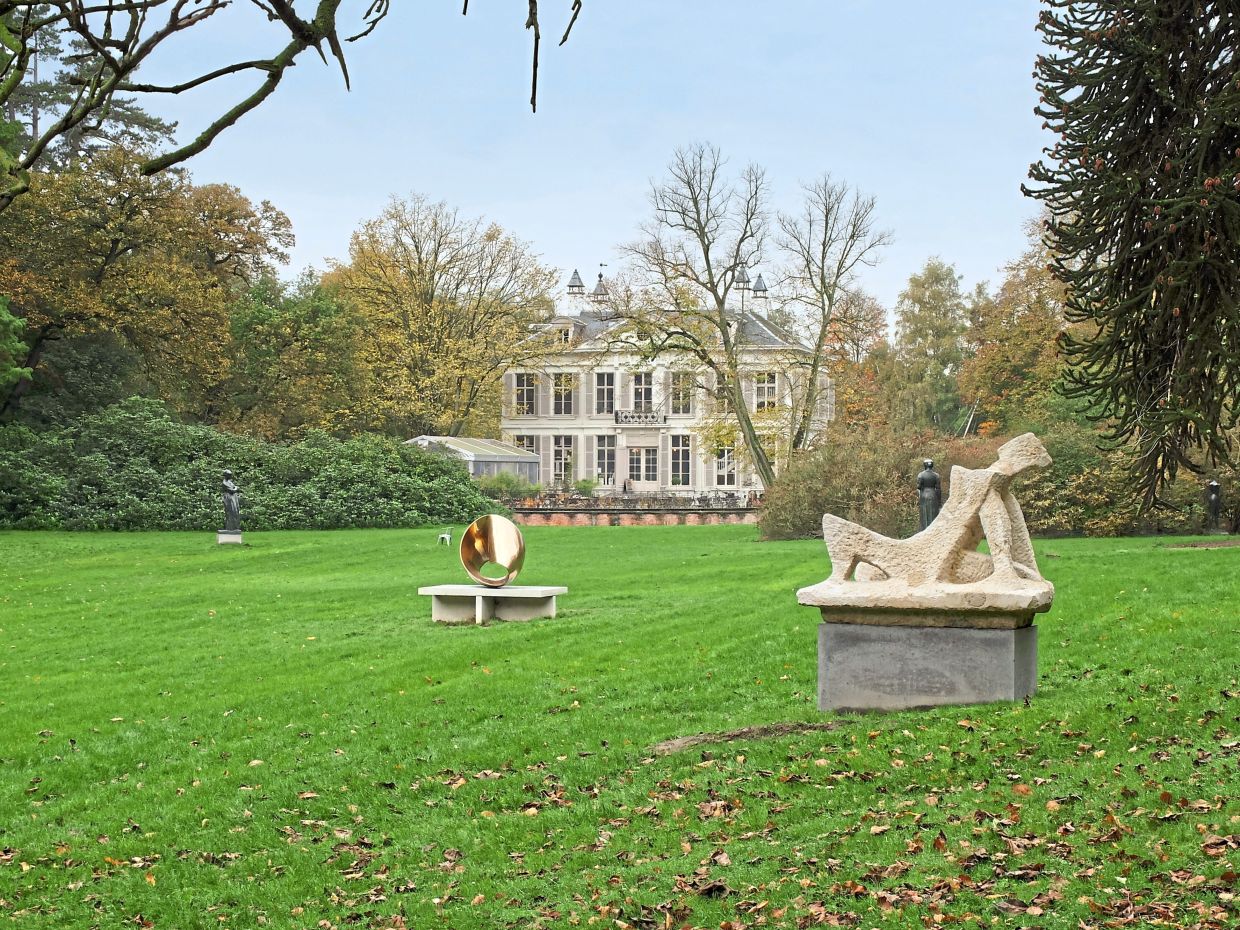
The Middelheim Open Air Sculpture Museum in Antwerp, Belgium, is essentially a park. Here, visitors come across contemporary sculptures scattered throughout wooded areas and walking paths.
Occupying a sprawling 30ha of public space, the museum blends nature into the exhibition itself, where art is part of the landscape.
First opened to visitors in 1950, Middelheim is now one of Europe’s leading open-air sculpture parks, with hundreds of contemporary works placed throughout the space.
Some works draw the eye in at open spaces, while others are tucked among the trees.
Far from a conventional museum, the park is filled with people jogging or relaxing on the lawns.
Today, it remains one of the few museums in Antwerp with free admission year-round, making contemporary art part of everyday public life rather than something confined behind gallery doors.
Zeitz Museum of Contemporary Art Africa (South Africa)
At the Zeitz Museum of Contemporary Art Africa (Zeitz Mocaa) in Cape Town, South Africa history lives in both the artworks and the building that holds them.
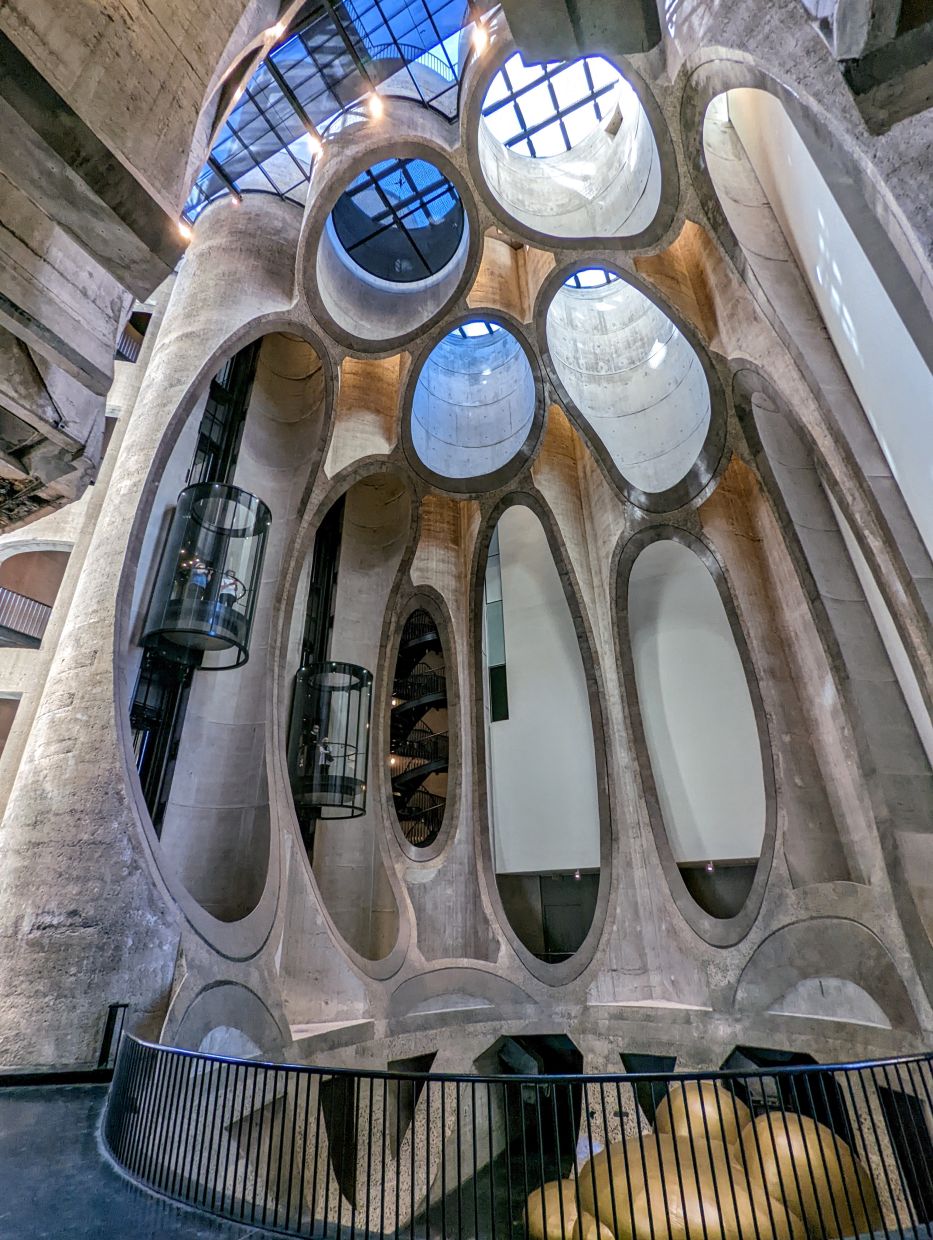
Once a grain silo complex, the structure dates back to the 1920s and stands at 57m tall, making it – at the time – the tallest building in South Africa. Built for the storage and movement of grain through the port, it formed part of Cape Town’s industrial and trading past.
The historic building was extensively renovated and reopened in 2017 as a museum. The “wow” factor lies in the impressive interior. British architect Thomas Heatherwick and his team carved a massive central atrium out of the concrete silo tubes to create a vast open space and a network of over 100 gallery rooms.
Today, the museum spans thousands of square metres of exhibition and education spaces.
Beyond that, Zeitz Mocaa is a showcase of contemporary African art in all its forms – painting, sculpture, photography, installation and performance – reflecting the history, identity, migration and life in rapidly changing cities.
You are not just looking at history, you are living in it.