
If you’ve never heard the jungle hold its breath, never felt the way the air tightens when a predator steps into the clearing, or caught the sharp scent of fear – not yours, but the prey’s – you haven’t yet lived wild.
Not properly. Not the kind of wild that gets under your skin and stays there, long after the dust has washed off and the last mosquito bite has faded.
I’ve just returned from Ranthambore National Park in India’s Rajasthan – four days in a land where the earth bakes hard under the sun, where the trees stand like ancient sentinels, and every shadow might be alive. Four days of waking before dawn, holding my breath at waterholes, reading the landscape like it’s speaking a language older than words.
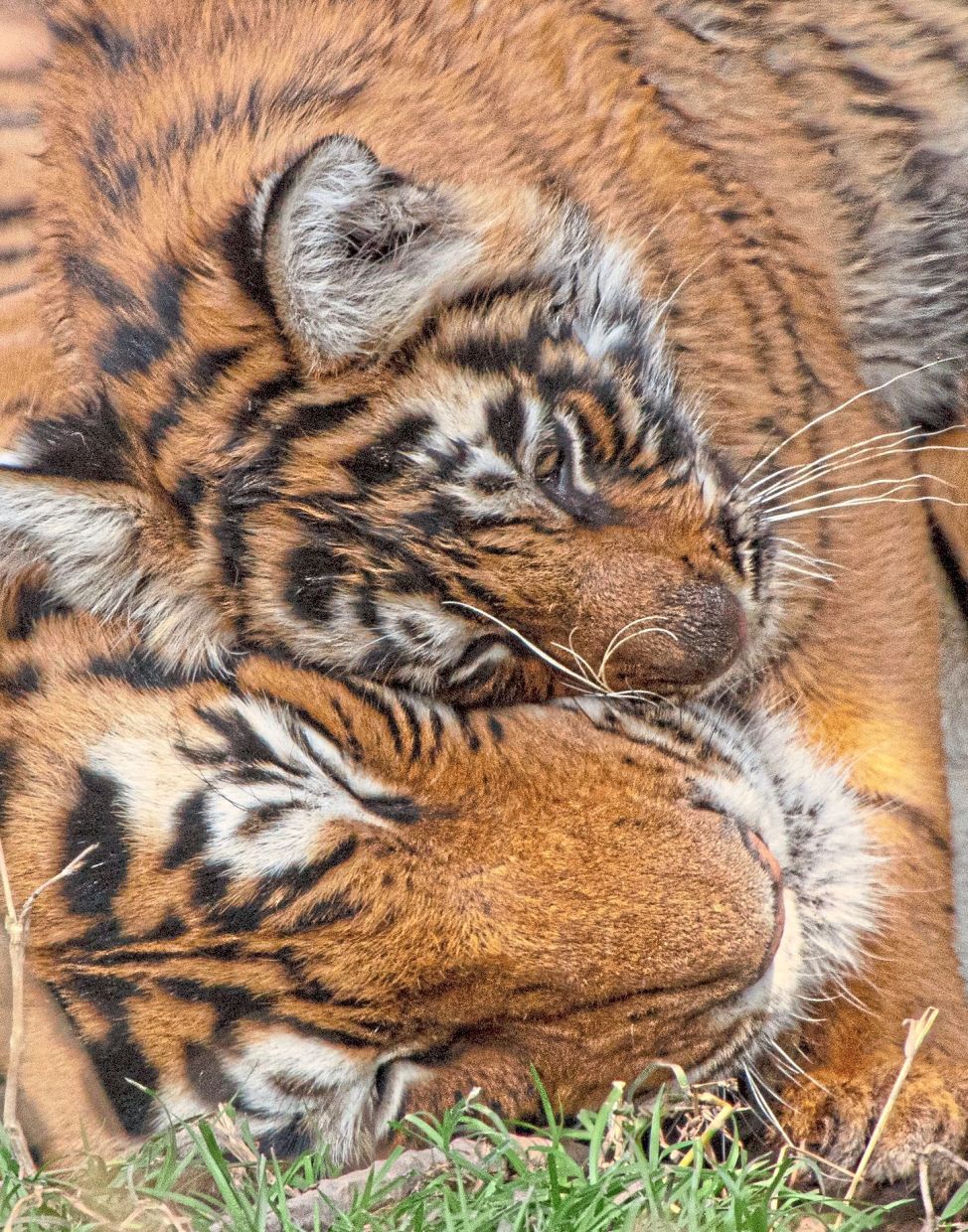
And in those four days, I saw 14 wild tigers. Not on a screen or behind a cage – in the flesh. In their cathedral of rustling leaves and golden light, sovereign and unbothered by the likes of us.
But this isn’t just a story about numbers or luck. It’s about what happens when a country decides, in no uncertain terms, that extinction is not an option. That its apex predator belongs not in fairy tales or textbooks, but alive – breathing, stalking, hunting, ruling.
Malaysia, if you’re listening, this is the part where you sit up.
We made camp at Sher Bagh, which is less camp and more fever dream of an old-world safari, minus the colonial baggage. Think: polished brass, canvas luxury, Hemingway-worthy settings – only with better food, colder gin, and staff who anticipate your cravings before you even ask.
Yes, it’s indulgent. And yes, you should go.
You’re not paying for thread counts and bathrobes but for proximity to the wilderness. To the pulse of life, a place where the nights hum with cicadas and the hoot of distant owls, and the air feels charged like a live wire, as though something might come crashing through the bush at any moment. Sometimes, it does.
Here, your sundowner isn’t a ritual, it’s survival. With ice cubes in your glass, and the pairing of lime and gin, the horizon turns the colour of ripe persimmon. Around you, the staff move like jungle ghosts, barely a whisper, always present. You think of something – a blanket, another drink, maybe some snack – and it materialises.
They tuck hot water bottles into your bed at night and slip you out of slumber before dawn with a grin that says, “Trust me, you’re going to want to see this.”
And they’re right.
At Sher Bagh, you don’t dread the 5am wake-up call. Out there, beyond the canvas flaps of your tent, the jungle is stirring. And you want to be first in line for whatever show it’s staging today.
The real magic, though, comes in the form of a man named Yadvendra Singh.
The ‘Tiger Man’
Forget whatever image you have of a safari guide. Yadvendra doesn’t perform for the tourists – he’s not here for your Instagram. He’s the president of the Ranthambhore Guide Asso-ciation, but out here, titles mean nothing. It’s instinct that counts.
Thirty years of tracking tigers has shaped him into something elemental. He reads the forest the way a priest reads scripture – reverent, precise, and deeply personal. His eyes scan the horizon not just for movement, but for absence of sound, for the hush that descends when something apex enters the scene.
Following him is like shadowing a war general. He parses every crack of twig, every bird call, every heartbeat of the forest. While others squint at dust and guess, Yadvendra knows. And when he speaks, you listen.
“She has eaten,” he murmured, crouching over a blood-darkened pugmark in the sandy track. The tigress, Sultana, had made a kill recently. “She will go to water now.”
No theatrics. No bravado. Just certainty.
We raced to the river, the sun slicing through the canopy. Minutes ticked by and the air grew thick with tension.
And then – there she was, Sultana.
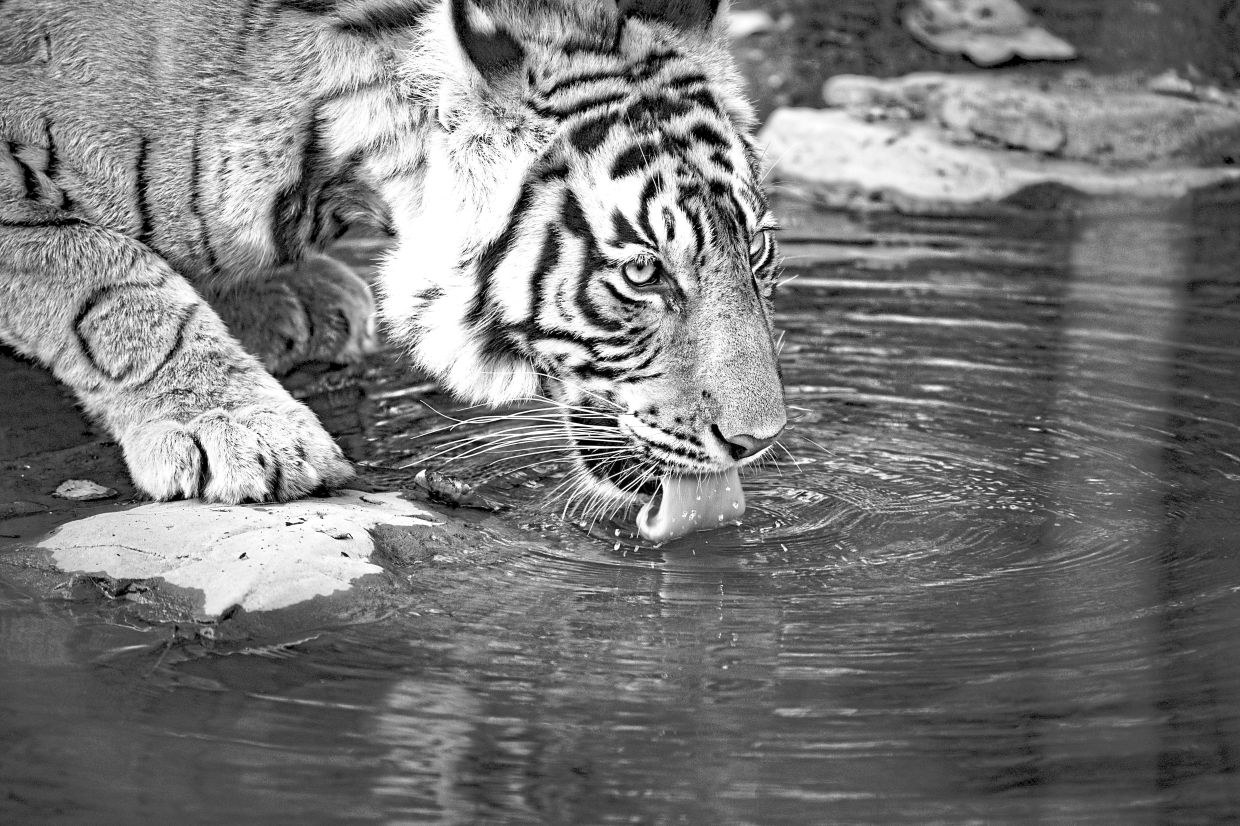
Regal and muscular, with her coat catching the morning light, she moved with a grace that made your chest tighten. She lowered her head to drink, completely unbothered by our awe.
We were 50m away, close enough to feel the ground vibrate with her steps. Cameras clicked, but for a moment, I forgot the lens entirely. I was just a witness to a private moment in a very wild life.
These are the seconds you travel halfway across the world for. You have to earn them, too – with patience and sweat, as well as a trust in your guide, and faith in the forest.
India’s tiger resurrection
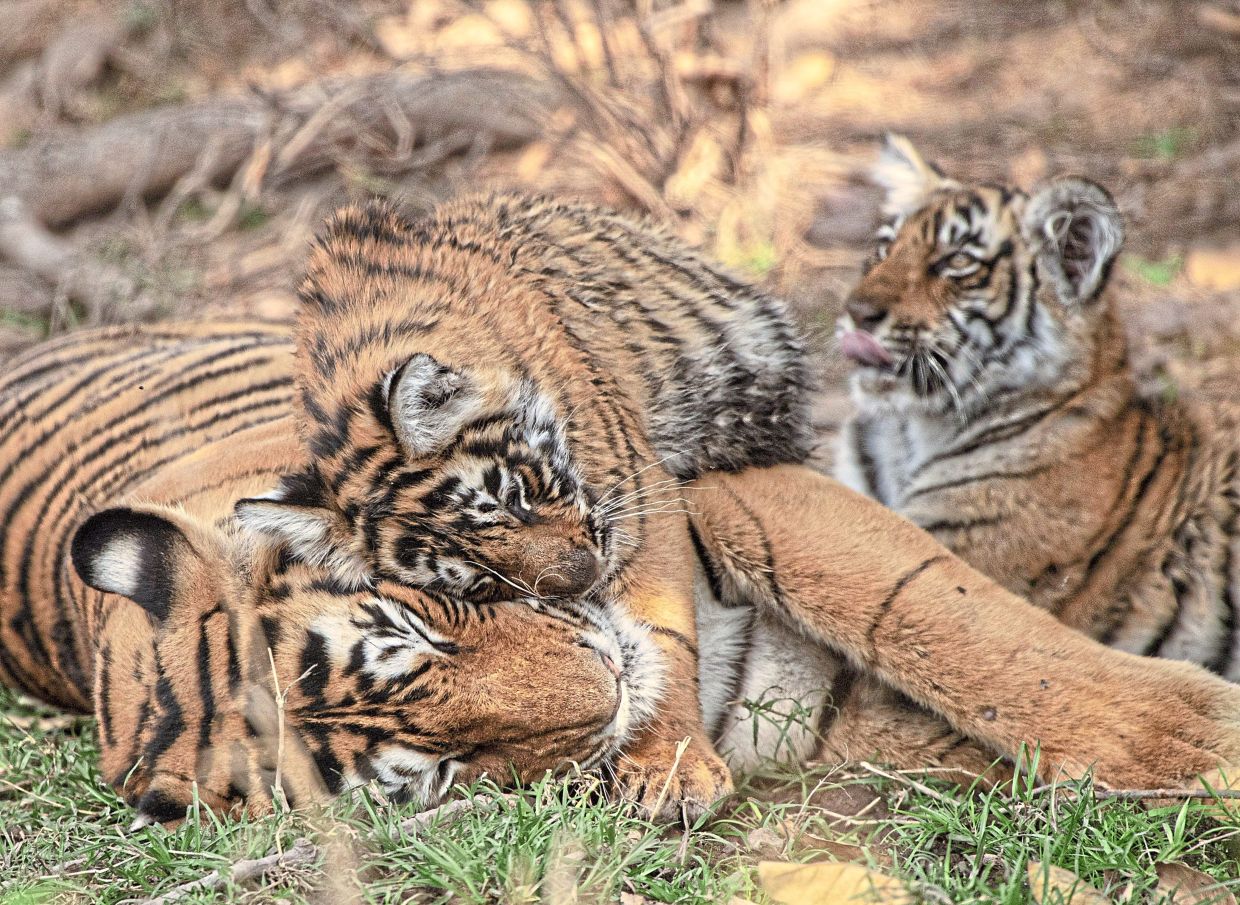
Sultana’s quiet dominance isn’t a fluke, she is the living symbol of a conservation triumph.
In 2006, India’s tiger population was only a miserable 1,411. But fast forward to 2022 and the numbers increased to 3,682 tigers. A good 75% of the planet’s remaining wild tigers now call India home. This did not happen by accident.
Instead, this is all thanks to India’s conservation efforts. Project Tiger, launched in 1973, laid the groundwork for it, but in recent years, things got serious. Poachers are hunted as ruthlessly as they once hunted the cats, using technology – camera traps, drones, GPS collars, et al.
More importantly, authorities made the locals partners.
In places like Ranthambore, tigers are the rock stars, and the local economy hums because of it. From guides and trackers to hoteliers and drivers, everyone eats when the tiger thrives.
And so it is only right that they protect her.
Yadvendra, for example, is not just a guide. He is a guardian of a living treasure. His livelihood, and that of his neighbours, depends on Sultana and her kin walking these forests, free and fearless.
Now, let’s shift the lens closer to home.
Malaysia, once home to an estimated 3,000 Malayan tigers in the 1950s, now has fewer than 150.
Sure, we have our campaigns. We slap pictures of tigers on billboards, churn out slogans, post hashtags during Merdeka. But where’s the urgency?
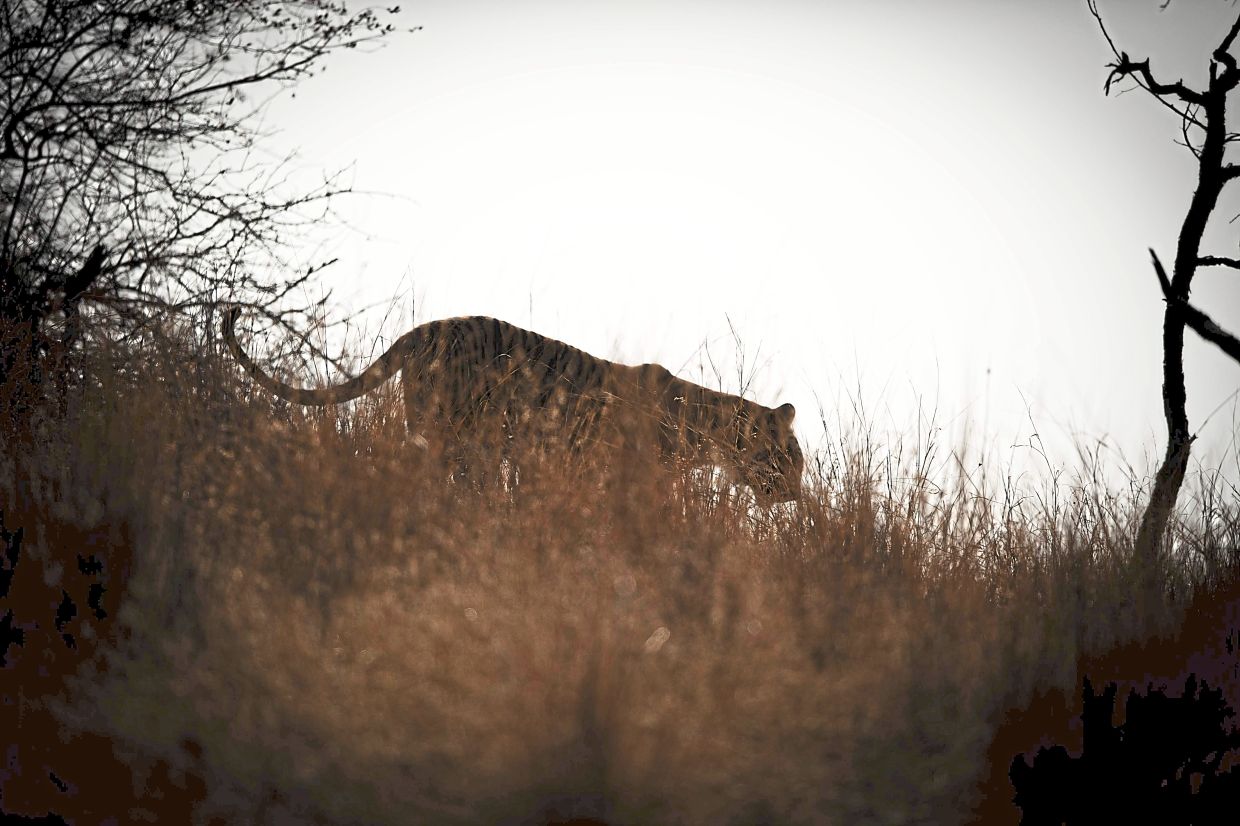
Our enforcement is patchy, with poachers slipping through every now and then. There are still many cases of illegal logging taking place. While we dither and pose for glossy NGO photos, the clock runs out.
India has shown us the way. They had everything stacked against them – population pressure, poverty, corruption. But they still managed to turn things around.
The tiger isn’t just a symbol, it’s the keeper of our forests, rivers and our heritage. Once we lose this we lose so much more than a stripe in the ecosystem. We lose a part of ourselves.
On my last night at Sher Bagh, I watched the embers of the fire glow like tiger eyes in the dark. Somewhere beyond the perimeter, Sultana prowled her kingdom.
I thought of Malaysia and of how we still have time to change the ending of our story.
Tiger conservation isn’t charity, it’s survival. When you save the tiger, you save the land and the livelihoods of people who live in its shadow.
I’ve seen what’s possible, I’ve seen the jungle breathe. I’ve seen Sultana drink from the river like she owns the sunrise.
So, Malaysia, pick up the playbook: Study it, live it.
And for India – I raise my glass to you. Long may your tigers reign.
The views expressed here are entirely the writer’s own.
Abbi Kanthasamy blends his expertise as an entrepreneur with his passion for photography and travel. For more of his work, visit www.abbiphotography.com.