
Fishing isn’t always about catching fish.
For anglers who view their passion as an outdoor sport, the real challenge is mastering the techniques – landing a fish is just the next phase of the fun.
This is especially true for fly-fishermen who practise an ancient angling method believed to have been around since 200AD.
Over the centuries, new fishing techniques have emerged with far shorter learning curves, allowing complete novices to hook a fish within minutes.
Yet, fly-fishing remains an exception. Some anglers spend months or even years perfecting their cast before finally landing a fish on fly.
“And it takes concentration with every cast. If you get too excited watching your target fish surface, or if you don’t pay attention to the wind or what’s behind you, your cast will most likely fail,” says Ben Foo, a fly-fisherman with 21 years of experience.
“You might even end up with the fly line wrapped around yourself.”
Foo, a casting instructor certified by Fly Fishers International since 2011, believes the saying “the more you practise, the luckier you get” rings especially true in fly-fishing.
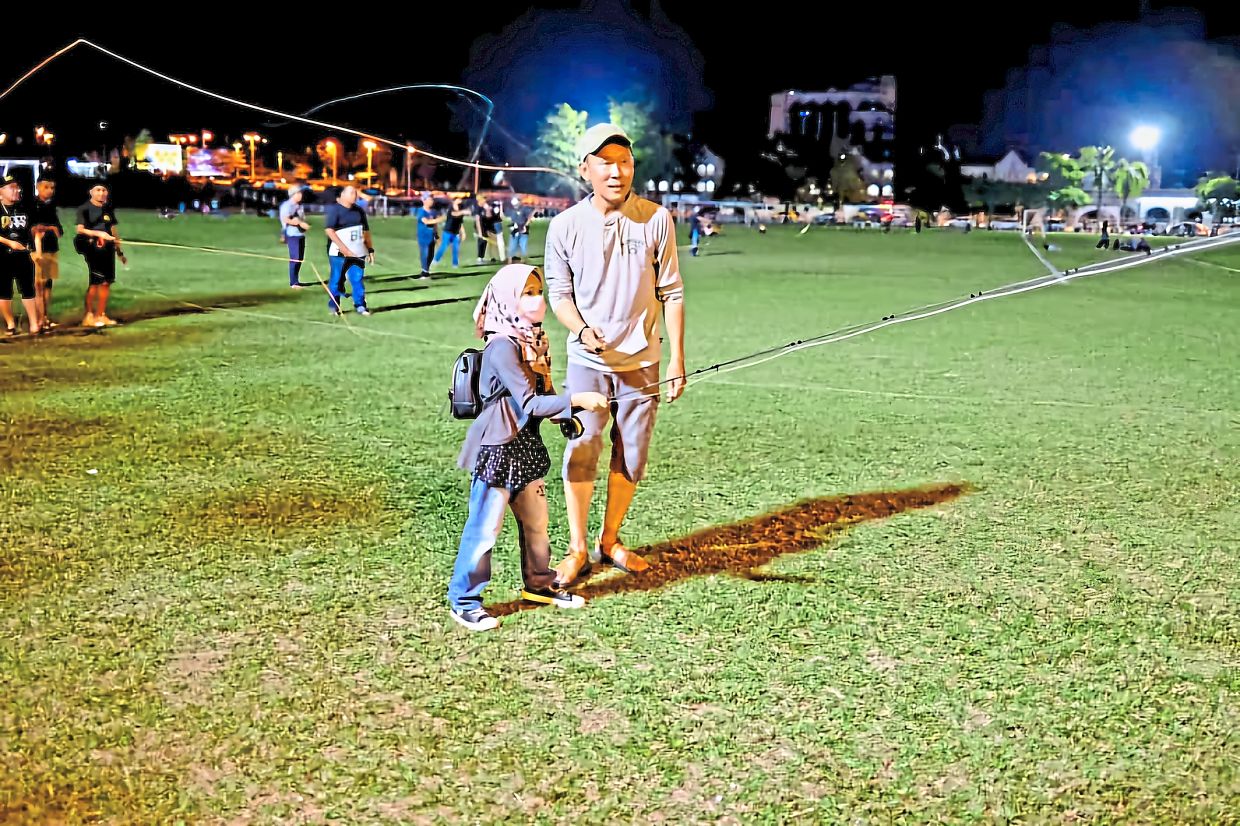
Since not everyone has the time to travel to prime fishing spots for practice, many aspiring fly-fishermen end up perfecting their casts on grassy fields – where there are absolutely no fish.
The good news? Unlike conventional fishing lines, tough fly lines are impervious to grass.
“If you practise on sand or tarmac, the constant impact can wear out the tip. But on grass fields, you’re safe,” Foo says.
Recently, Foo conducted a casting session for members of the Perak Fly Fishing Syndicate (PFFS) at Padang Ipoh. More than 50 fly-fishing enthusiasts showed up from across Malaysia, including Kuala Kangsar, Gerik, Penang, Sungai Petani and even Kuala Lumpur.
With over 30 fly rods in action, the sight of people “fishing” on dry land turned heads.
PFFS chairman Rizal Effendi admits it does look amusing, and every time they practise, they draw curious spectators.
“But you have to practise on land. Once you’re at the water, your focus is on catching fish. On a field, you can fully concentrate on your fly line,” he explains.
Nearly every weekend, PFFS members meet in small groups to refine their casting.
“You need a fly-fishing buddy to observe your movements – how you manipulate the line in the air, shape the loops and achieve the perfect cast.
“Then, with feedback, you can fine-tune your technique and improve your control over the fly line,” Rizal says.
PFFS is organising a fly-casting competition at Sungai Kampar, near Gopeng, in April. The event will feature skill-based challenges, with prizes for top fly-fishermen.
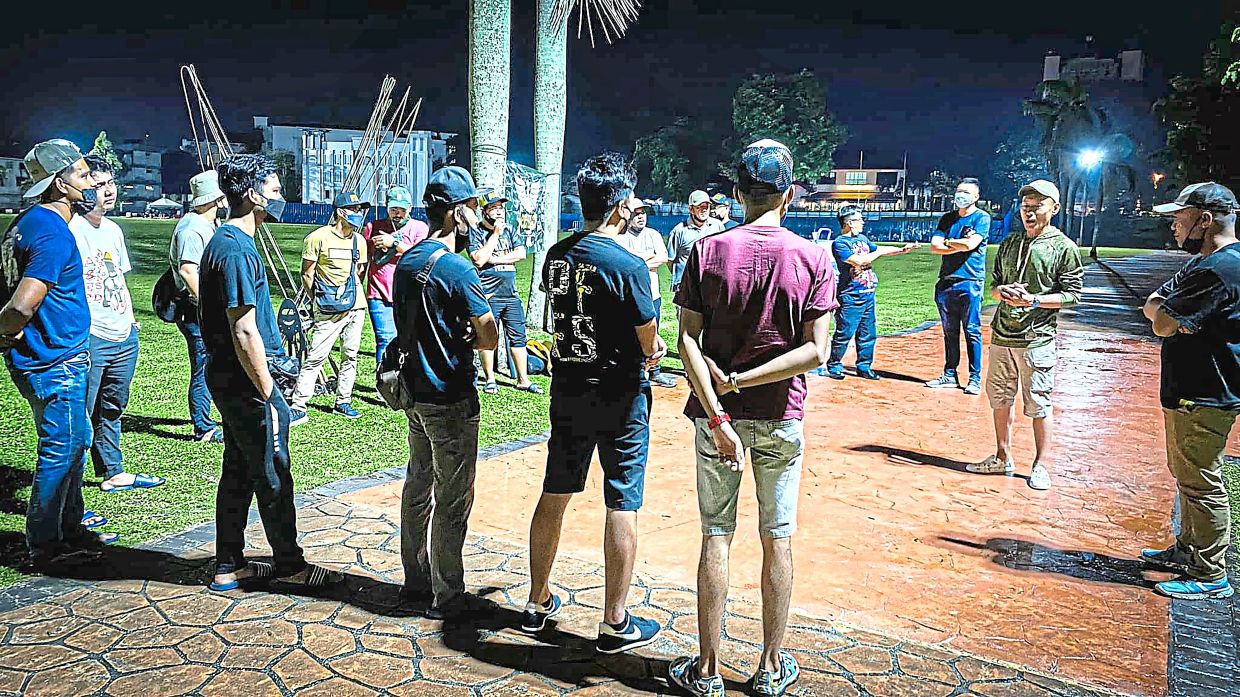
PFFS has over 5,500 followers on social media and around 100 registered members – 60 of whom, Rizal notes, are “diehard fly-fishos”.
Foo explains that fly-fishing relies on ultra-lightweight (measured in milligrammes) artificial lures called flies, designed to mimic shrimp, larvae or aquatic insects.
“Because flies lack mass, they can’t overcome wind resistance like conventional lures. That’s where the fly line comes in – its weight propels the fly forward.
“Once you grasp the physics behind momentum, leverage and spring action, you can send your fly exactly where you want it,” he says.
One key advantage of fly-fishing?
Precision.
“In conventional lure fishing, once you retrieve your lure, you must bring it all the way back before casting again.
“But with fly-fishing, as soon as your fly leaves the target zone, you can lift the line and shoot it right back to the same spot instantly,” Foo explains.
Of course, no sane fly-fisherman practises on land with an actual fly at the end of the line.
Instead, they tie a harmless piece of yarn to avoid accidentally hooking themselves – or anyone nearby.
Foo notes that many anglers transitioning from conventional fishing struggle at first, as they carry over habits and expectations that don’t translate well to fly-fishing.
“That won’t work. You need to internalise how to shape the fly line loops in the air.
“Once you do, your line will shoot out like a tracer bullet,” he says.