
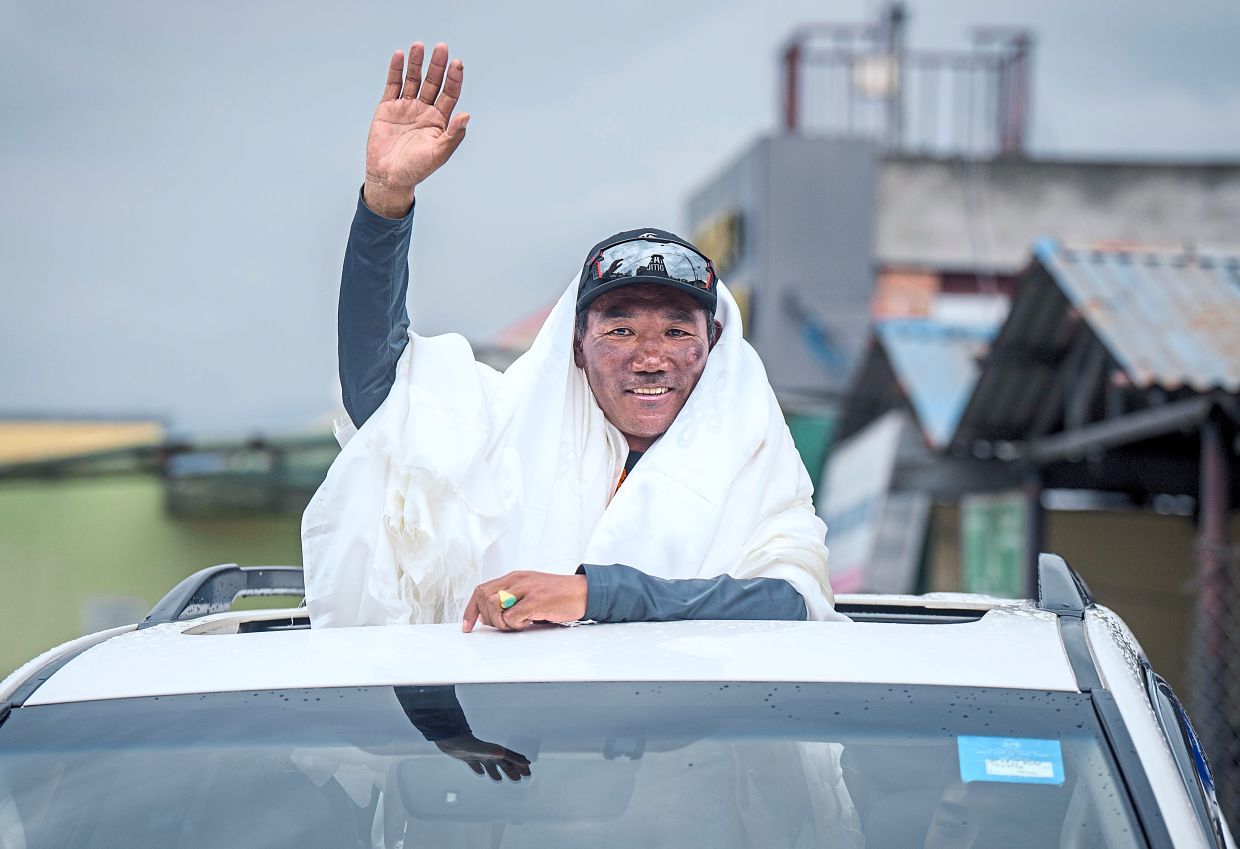
When Kami Rita Sherpa set out on his first expedition to Mount Everest in 1992, he had to trek nearly a month just to reach the Everest Base Camp.
Since there were no regular flights to Lukla back then – a small town in north-eastern Nepal which today is a popular starting point for climbing the world’s highest peak – his team had to hike for several weeks from Jiri, a town around 190km north-east of the capital Kathmandu, all the way up to the base camp.
With hardly any hotels or tea shops along the trail, the expedition members had to cook for themselves, using kerosene or sometimes even fodder to prepare their meals.
Back then, expeditions would take up to 90 days, during which participants would spend nearly two months trekking.
“Nowadays, those things are a thing of the past. You can now land directly at the base camp and order almost any dish that you can find in a five-star hotel in Kathmandu,” says Kami.
“If you have the money, you can get almost everything at the base camp that you can get in Kathmandu – comfortable accommodation, great food, internet service, and medical facilities.”
The availability of hotels, lodges, helicopters and tea shops as well as dozens of daily connections to Lukla means that Everest expeditions these days hardly last more than around 45 days.
Kami’s testimony reflects the impact of the commercialisation of the climbing industry amid increased investment in the region, which have made climbing much easier over the decades. However, rising costs mean that the adventure is increasingly accessible only to an exclusive club of wealthy people who can afford to spend thousands of dollars to reach the top of the world.
Growing attraction
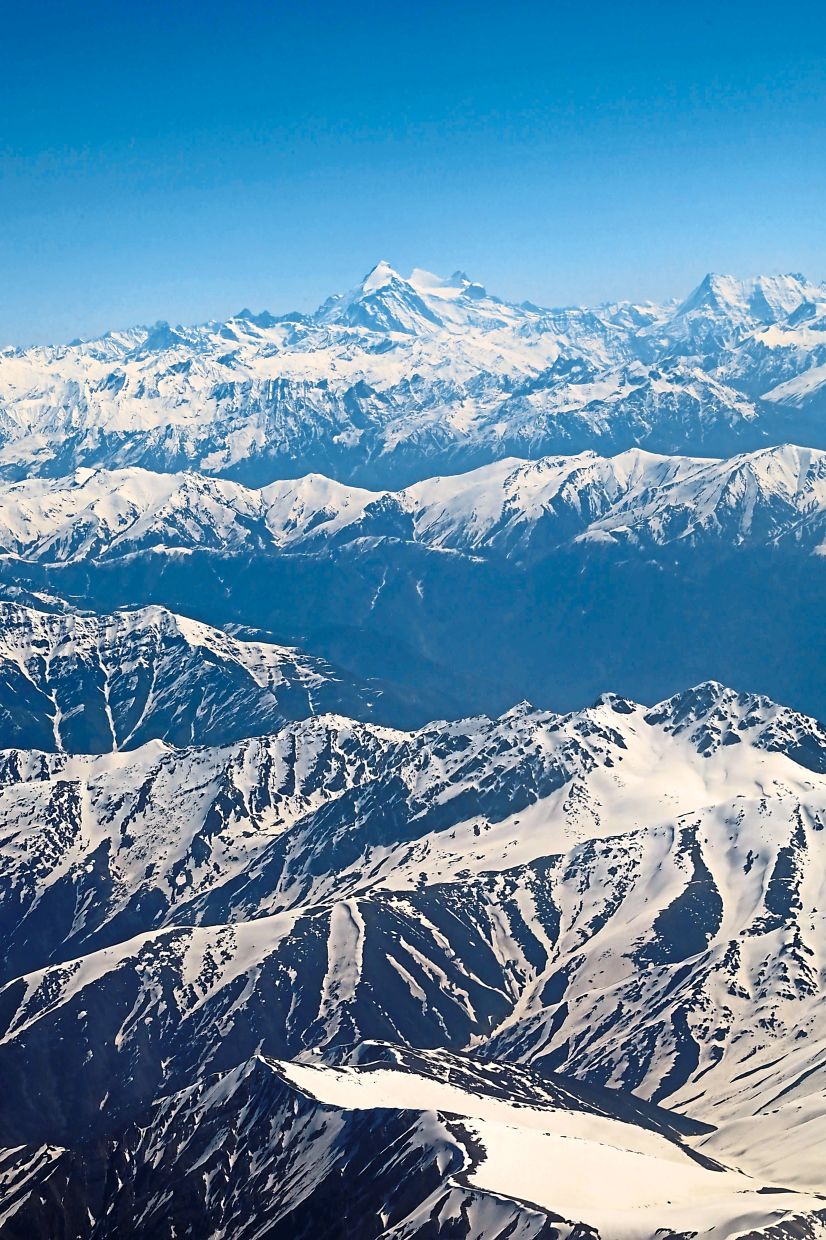
Mount Everest, the world’s highest peak towering 8,848.86m above sea level, has been attracting a growing number of climbers in recent years, even as the associated costs for permit fees and expedition services continue to skyrocket. Among other things, this has led to problems like overcrowding and pollution.
For the first three decades since the first successful ascent of Mount Everest by Tenzing Norgay and Edmund Hillary in 1953, only 158 people including 30 guides had successfully climbed the peak, according to the Himalayan database.
Since then, there has been an astronomical rise in the number of climbers with the advent of commercial expeditions. By 2022, Everest had been climbed more than 11,341 times including 5,721 times by guides from Nepal and China.
Recent years have seen a particularly sharp rise, with a growing number of climbers and short weather windows frequently causing “traffic jams” near the summit. A total of 325 climbers obtained permits to climb Mount Everest in 2022, according to the Department of Tourism. For 2023, that figure already stood at 478 by May.
Khim Lal Gautam, a climber who has worked as a liaison officer to regulate mountaineering activities on Everest, says that the mountain is attracting both professional and amateur climbers from all over the world.
“Mountaineering is becoming more accessible to the masses, thanks to more expedition companies providing safer and better-planned expeditions,” says Gautam, adding that the industry is “likely to continue growing in the future”.
Sherpa guides and agencies says that climbers are being attracted to Mount Everest due to passion for the sport as well as name and fame. For some, it is also a way to secure business endorsements, for example.
In recent years, climbers have competed to ascend Mount Everest to be the first from their country, race, religion, gender or community to achieve the feat.
In the 2023 spring season, two deaf people from the United States as well as a British Gurkha veteran – an above-the-knee-amputee – successfully scaled the world’s highest peak, according to liaison officers.
Skyrocketing cost
Everest’s growing allure has also led to a sharp increase in cost. On average, commercial climbers end up spending at least US$40,000 (RM185,040) on the expedition, which includes permit fees, guide fees, food, accommodation, and other expedition agency charges.
The Nepalese government charges a permit fee of US$11,000 (RM50,886) for climbing Everest from its side of the border, while China has set even higher fees for permits to climb the peak from the Tibetan side.
Costs for expedition agencies, meanwhile, differ depending on the package selected. Many now offer VIP and VVIP services to attract more clients.
With the VVIP service, which can cost up to US$100,000 (RM462,600), climbers get a private chef, deluxe accommodation, a standby helicopter during the day, multiple helpers, a photographer, and porters for up to 200kg, according to expedition agencies.
Kami, who has summited Everest a record 28 times, including twice in 2023 as a guide, says that the introduction of a range of deluxe services for high-end climbers has led to a higher demand for high-altitude guides, amid a shortage of workers willing to take risks in the Himalayas.
“In the past, expedition agencies only hired climbing guides with experience,” the experienced mountaineer says.
“Nowadays, there is such a shortage of workforce that they book guides six months in advance, even if they don’t have experience climbing Everest. There are not enough high-altitude workers, let alone experienced guides,” Kami says, adding that there wasn’t enough attraction among the new generation in local Sherpa ethnic communities, whose members are considered expert mountaineers who have traditionally worked as guides on the peak, to risk their lives in mountaineering.
A climbing guide earns between 500,000 rupees (RM17,486) and 1,500,000 rupees (RM52,458) per season, depending on their experience, according to estimates given by four Sherpa guides.
“In our early days, we would hardly make a few thousand rupees, but back then, that money had more value, and we could do so many things with it. Nowadays, even with millions of rupees, there isn’t much we can do,” says Sherpa.
Hidden costs
While the growing number of clients has increased revenue for the Nepalese government and created more jobs for guides, porters, and locals, it comes at a high cost, with frequent deaths reported each season.
The intense competition among agencies and guides has resulted in dangerous traffic jams and constant tussles among high altitude workers, amid risky climbing conditions due to natural disasters such as avalanches and icefall.
According to the Himalayan database, by 2022, a total of 299 climbers (including 113 guides) have died in Everest expeditions since 1953. Reliable data is unavailable but several dozens of climbers and sherpas are believed to have perished while trying to conquer Everest even before the first successful ascent in 1953. For example, British climber George Mallory disappeared near the summit in 1924, and his body was not found until 1999.
Gautam, who served on a government committee to improve expeditions, emphasises the need for better regulations in mountaineering to enhance safety and protect Everest and other mountains against pollution and climate change.
This year marks the 70th anniversary of Norgay and Hillary’s successful ascent.
Kami acknowledges the significant changes in mountaineering that have taken place since then. “The peak remains the same, but nowadays climbers don’t have to trek up to the base camp from Kathmandu valley, cook their own food, and spend nearly half a year for a single expedition like in the old days of Norgay and Hillary.”
Looking ahead to the future, the experienced guide says he is concerned that if current trends continue, “it won’t be long until climbers are airlifted to the summit and back”. – dpa
Already a subscriber? Log in
Get 20% OFF The Star Digital Access
Cancel anytime. Ad-free. Unlimited access with perks.