The act of leaving a creative mark on surfaces isn’t exactly new. There have been many primitive cave paintings that date back to more than 40,000 years ago.
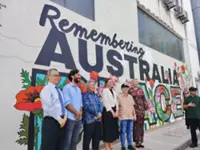
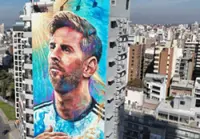
These days, such creative outlet is better known as street art. Murals have the power to attract visitors to a particular location, and this has translated to massive tourism boom for small towns and big cities.
Here in Malaysia, Penang probably comes up tops whenever any discussion about street art is brought up. Experts agree that street art, as well as their artists, have plenty of touristic appeal in the island state.
Just head over to the inner heritage enclave of George Town on a weekend and you will find several spots featuring art by Lithuanian artist Ernest Zacharevic packed with people.
“Nowadays, Penang is not only well known for its rich heritage and street food but also for its vibrant showcase of street art,” Universiti Sains Malaysia researcher Chang Shu Fun wrote in a research paper.
In the journal titled Street Art Sparkle As A New Economic Driver In Penang, Chang discussed the contribution of street art towards Penang’s economic landscape.
“Besides being a new key tourism product, street art is also playing a vital role in cultivating creativity and innovation among Penang’s community. Consequently, this generates impact in stimulating cross-sectors collaboration to strengthen the local economy,” she said.

“Other than contributing as a new tourism product, Penang’s street art also helps in boosting local creative industries and other related industries (local art industries, retails, restaurants, cafes, hotels and souvenirs) through economic multiplier effect.
“Besides, it also brings in positive economic spin-offs like engaging local residents, promoting new social connections among local communities,” she said.Another city that has been making headway in street art is none other than Kuala Lumpur. In 2020, KL mayor Datuk Mahadi Che Ngah said that the city will be transformed into a street art capital.
This came following the success of some pilot projects such as the transformation of the previously dark and dirty lanes at Changkat Bukit Bintang in March 2018.
Besides the Bukit Bintang area, the project would also be carried out at Lorong Sultan and Lorong Petaling, which are near Pasar Karat and Petaling Street.
Mahadi told reporters then that the project will give a new image to many of the capital’s alleys.
He added that the murals will vary depending on the background and history of the area.
Apart from KL and Penang, many other cities throughout Malaysia have also jumped on the street art bandwagon. This is certainly good news for travellers seeking to up their social media game.
We take a look at six major destinations in the country where visitors can pose with vibrant and unique murals.
It’s impossible to talk about Malaysia’s street art scene without mentioning Penang. The island state pretty much kickstarted the whole phenomenon over a decade ago thanks to a series of murals from Zacharevic.

The Lithuanian artist had painted six murals entitled Mirrors George Town as part of George Town Festival in 2012. His paintings, which depicted Penang’s local community, quickly became the talk of town thanks to social media.
Before long, there were long queues at these mural spots. Of Zacharevic’s work, one of them proved to be incredibly popular. The Little Children On A Bicycle mural integrated a bicycle installation with the charming painting of two children.
Over the years, Penang has continued its trajectory of incorporating street art throughout the old quarters of the city. This has in turn revitalised old buildings and injected economic opportunities at many of the spots where these murals are found.
Other international artists who have left their mark in the streets of Penang are Martin Ron, Julia Volchkova and Rone.
If your main purpose is to hunt down these street art, you can just go on the Penang Street Art trail. Some souvenir shops in the heritage enclave area do sell maps that show the exact spot of the murals.
It would seem that there’s always a bit of tourism competition between Penang and Ipoh. And that friendly rivalry extends to the street art scene too.

Following the success of the street arts in Penang, the artist Zacharevic was invited to paint in Ipoh. In 2014, he completed seven murals all over Ipoh’s Old Town.
The seven murals, which were Hummingbird, Old Uncle With White Coffee, Paper Plane, Girl With Stool And Birdcage, Kopi-O, Trishaw and Evolution, could be found along Jalan Panglima, Market Street, Jalan Bijeh Timah, Concubine Lane 3, Jalan Tun Sambathan and Jalan Padang.
During the launch of the murals then, Zacharevic said that he was inspired by his journey throughout the country.
It’s worth noting that Zacharevic’s murals are not the only ones in Ipoh. Over the year, the street art scene has picked up and evolved in the city.
Chances are visitors will be able to see many other unique murals while walking around the older parts of town. Visitors can also pick up the Ipoh Mural Art Trail map that’s produced by the Ipoh Tourist Information Centre.
The map shows the locations of some of Ipoh’s famous artworks, which will save travellers the trouble of wandering around aimlessly.
While the street art in this historic city doesn’t generate as much buzz as those in Penang or Ipoh, there is still much to explore and discover.
A notable highlight here is the large Orang Utan mural located at the Orangutan House. The building also happens to be a gallery and T-shirt store run by a local artist.
Many of the city’s murals could be seen within the Jonker Walk area. For a more exciting experience, consider taking a cruise along the Melaka river where you can see many other murals along a scenic route.
While the capital of Kelantan might not seem like the most obvious place to run into vibrant murals, that’s exactly what greet visitors at a little pocket in the city.

Over at Jalan Dato Pati, you will find that there’s a vibrant street art scene tucked in the back alley. Many of the back lanes of the buildings here have been revitalised with colourful murals depicting Middle Eastern and local elements.
Meanwhile, another section of the back alley features murals of Palestine life before the war. But as you move along, the scenes begin to shift to one of destruction. It’s a painful reminder of the devastation faced by the war-torn nation.
The street art movement in Sibu began with a 2016 campaign by the city’s municipal council. The project saw 10 murals being painted in different locations throughout the inland city.

The murals all, in one way or another, depicted the story of the Sibu’s culture, heritage and lifestyle. Over at Jalan Khoo Peng Loong, the Wharf Laborer mural sheds light on what Sibu was like in the 1950s and 1960s where these wharf workers were a common sight.
Foodies who also appreciate the arts should head over to Jalan Pasar where they will find several murals depicting the city’s unique delicacies. These include Kampua mee, kompia and pulut panggang.
For something a little more quirky, check out the Wrapped Chicken And Duck mural located at the Sibu Central Market, facing Jalan Bengkel’s direction.
The mural features chickens and ducks wrapped in tubes of newspapers. This happens to be a unique selling technique by Sibu hawkers.
KL has definitely stepped up its game when it comes to integrating street art into the cityscape.
In fact, the city council has had some success stories in revitalising dingy alleyways into vibrant spots thanks to colourful murals.

These days, you will find that many of these murals are concentrated around the Bukit Bintang area and Chinatown. In Bukit Bintang, the street art features bright colours, flowing rivers and lush rainforests.
But while government initiatives are commendable, some private entities have also joined the efforts in revitalising the city’s back lanes with murals. One notable example here is Kwai Chai Hong, which was restored by a local space management company.
Visitors to the area will find a nostalgia-tinged arch that marks the entrance of the secluded back alley. Pass over a bridge and you will be greeted by thematic murals, each with a delightful tale.
The artworks depict the daily activities of the early Chinese settlers living in the vicinity during the 1960s. For those who live and breathe social media, the venue will certainly provide you with many colourful photos for your social feed.
The growing street art scene in Sabah can best be seen through the Pillars Of Sabah initiative. The community art project occupies the ruins of the old Land and Surveys building in the heart of KK.
The heritage building was destroyed in a fire in 1992, and what remains today are the 31 free-standing pillars. These pillars have always been popular with rogue graffiti artists, but in 2018, the Sabah arts community came together to start Pillars Of Sabah, a one-off outdoor exhibition and installation showcasing local talents.

However, as the project’s popularity rose, the community decided to change things up and produce more editions. This means that no single artwork will remain a permanent fixture at the space.
Pillars Of Sabah has so far had three editions, with the upcoming one (Wonders Of Wilderness – The Ocean) currently in progress.
Another site worth checking out in KK is the Vanishing Wall. The artwork featured here explore social issues and will certainly get people thinking.
One painting features animals at the brink of extinction running away from an evil business man. The street art can be seen on the walls of old warehouses along Jalan Tanjung Lipat, near the former Customs Department building and Suria Sabah mall.
You will also see plenty of giant murals by local artists that cover whole buildings in the city. Some of the more notable ones include the Traveloka mural at Ang’s Hotel by Kelantanese artist Akid One, the mural at Toojou Kota Kinabalu by internationally-renowned Sabahan artist Kenji Chai (you may have seen his famous Chaigo the dog graffiti art) and a beautiful mural on the side of the Wisma Sabah building by the popular Cracko Art Group, a local art collective.
Already a subscriber? Log in
Get 20% OFF The Star Digital Access
Cancel anytime. Ad-free. Unlimited access with perks.