Museums in Penang hanging by a thread amid the pandemic


It is 2008 and there’s a buzz of excitement in the air.

George Town, the state capital and historical centre of Penang, has just been inscribed as a Unesco World Heritage Site in a joint listing with its sister city, Melaka.

For decades now, life in this old heritage quarter has dwindled with the exception of a few hubs of activity – the colourful Little India and the courthouse that still draw (or, in the case of the latter, mandate) people’s presence during the day.

But when office hours come to a close and dusk arrives, shutters eagerly come down, returning George Town into a sedentary state.

ALSO READ: 5 magnificent Chinese clan houses to visit in Penang

Barely a soul is seen on the streets and woe to you if you find yourself here at dinnertime looking for food.

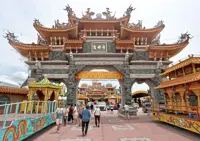
Pinang Peranakan Museum’s new annexe, which also doubles as a restaurant. — Pinang Peranakan Museum

But the Unesco inscription, awarded after years of planning and negotiations, was set to change all that and reclaim the glory days of the former spice entrepot.

Slowly but surely over the next decade, it did.

Cafes began popping up, crumbling pre-war shophouses were restored and an explosion of museums and galleries erupted from Weld Quay to Burma Road.

Showcasing everything from Penang’s famous street food to its ghostly history, exhibitions and clever gimmicks drew both tourists and locals, eager to drink in the new, chic atmosphere of George Town.

And suddenly, seemingly overnight, it all disappeared.

ALSO READ: Nasi kunyit helped me 'travel' to Penang from my kitchen in KL

As the pandemic raged, the country went into a three-month strict lockdown in March 2020 that has been followed by other periodic stages of movement restrictions, which continue to this day.

Like other tourist attractions, museums are largely in-person pursuits and have been among those worst hit during this persisting crisis.

Some are surviving while many others are just hanging on for a brighter day.

Penang House of Music

In mid-January this year, the doors closed at Penang House of Music (PHoM) located within the iconic Komtar tower.

Cases of Covid-19 were rising and Penang, along with five other states, were put under another phase of movement control order.

Six months down the road and the gallery, which showcases the history and evolution of music in the state, remains shuttered.

A steady hum of work, however, is ongoing behind the scenes and in the homes of the three full-time and two part-time staff virtually accompanied by a handful of interns who refuse to be deterred by the pandemic.

“Currently, our archiving unit is keeping us alive. I’ve always said that our resource centre is the heartbeat of PHoM.

“While our gallery is closed, we have been able to focus almost all our attention on building our digital archive and library,” says establishment director Paul Augustin.

Augustin says that the Penang House of Music has been focusing almost all its attention on expanding its digital archive. — MARILYN KANG
Since its inception in 2016, PHoM has been a multi-faceted endeavour. The gallery, which takes visitors on a whirlwind trip down memory lane by retelling the story of Penang through music, is the official face of the musical hub.

An adjoining black box courts and encourages new talent while in the belly of the 650sq m centre lies the lesser-known crown jewel – a resource centre aimed at collecting and digitalising historical items from the social fabric of Malaysia.

“During this pandemic, a lot of people are staying home and with their time, they’re cleaning their houses. When this happens, a lot of things are discovered – old records, CDs, newspaper clippings, magazines and sometimes, old programmes and song books.

“Our work at the resource centre – and PHoM – has never been just about music as you can’t tell the story of music in Penang without first understanding what was happening at every era.

“What was life like? How did they dress? How were the arts promoted? Music lies within the social and cultural history of the times,” Augustin explains.

Charging a nominal fee for digitalising visual or audio artefacts, PHoM has one stipulation for its customers: they get to keep a copy of whatever passes through their hands.

From black-and-white photographs of grand charity balls at the E&O to dances at the Green Parrot and newspaper advertisements offering everything from bridesmaids head-dresses (priced from $5.75 at Whiteaways Penang back in the day) to Bakewell tarts (only available from 3pm-5pm), the public can peek into PHoM’s rich digital collection through their frequent “From The Vault” updates on social media.

PHoM’s growing digitalised library, supported by audio-visual facilities already in place at the centre, has made them an attractive prospect for those seeking to produce documentaries or embark upon academic research.

This year alone, they have helped produce two research documentaries: Alleycats: Hingga Akhir Nanti sponsored by Sunway University, and Reviving PoTeHi In Penang by the Penang Arts Council.

They are also the only venue in the country featured in the Unesco study released this month on the potential and survival of the creative sector in the region entitled Backstage: Managing Creativity And The Arts In South-East Asia.

On weathering the pandemic, Augustin credits the Penang State EXCO Office for Tourism and Creative Economy (PETACE) that has taken over the funding for PHoM at the beginning of last year.

He expounds that the strong financial backing has allowed his team to continue with their work while the doors of the gallery stay shut.

Meowseum: Museum of Cat Art, Craft and Collectibles

Behind the doors of a cherry, orange-and-white pre-war townhouse in Lebuh Melayu live four very content cats.

Oblivious to the pandemic, they nap on the stairs, laze around on round tatami mats or relax in a tiny, wooden, kampung cathouse set up just for them on the ground floor.

At least one of the furry creatures can usually be found frolicking in the sunbeams that stream through the front door, if that entrance hadn’t been closed for three months now.

A labour of love by former advertising man Justin Shin, Meowseum contains a huge collection of feline memorabilia sourced from over 80 countries around the world.

The Meowseum has over 500 cat-themed artworks that are worth checking out.

Art is its main focus with 500 paintings and limited-edition prints by everyone from the art greats to obscure artists covering the walls and spanning the length of two towering airwells originally built for natural cooling.

Alongside rows of indoor greenery that Shin has brought in are a further 1,600 cat figurines, statues and sculptures and a cosy library corner with some 500 books, mostly on cats but also on topics like art and literature.

All in all, sipping on a cup of catnip or cat’s whiskers’ tea, it’s a charming place to while away an afternoon in exchange for a small pay-per-entry fee of between RM10 and RM15.

However, as people often say, timing is everything.

Leaving behind a stress-filled career in Kuala Lumpur, Shin embarked on this museum project before Covid-19 arrived on Malaysia’s shores and was committed by the time the full-blown pandemic hit.

“Nobody plays with fire by intentionally starting a business during a pandemic. That would be insane and suicidal. It’s more extremely bad luck than anything else for me.

“When the pandemic hit Malaysia, I knew there and then, the museum was in for a rough ride as it was supposed to be heavily dependent on tourists, both local and foreign, for revenue,” Shin says.

There’s a small library at the Meowseum where visitors can sip tea and browse a variety of cat and art-themed books. — Photos: ANDREA FILMER

Officially opening its doors in September last year during a lull in the number of Covid-19 cases, Meowseum has only managed to operate for a collective four months to date.

To help with expenses, Shin has managed to secure a six-month grant from the Cultural Economy Development Agency (Cendana) – a lifeline, he says.

“I’m thankful that some people out there think my little museum of cat art and craft is worth saving. But I can’t help feeling depressed, worried and anxious every time I need to spend on daily expenses because money is going out but not a single sen is coming in.

“I’m very mindful of my expenditure and I cut where I feel is necessary especially on food and basic goods.

“Put it this way – my cats eat better than me,” Shin says, smiling sadly.

Not wanting to sit around idly, the 52-year-old has been pushing forward during the lockdown, adding more content to the gallery, redecorating certain sections and setting up a merchandise section.

“I can’t really plan for the future when I don’t even know how tomorrow will pan out given the volatile situation of the pandemic.

“But I do hope I can get people to invest in Meowseum for the long-term if the museum survives this pandemic.

“I also hope Penang people will help by visiting the attractions in their own state (when movement restrictions ease). They might be surprised with the fact that there are some hidden gems run by people who are passionate about what they do that are well worth an hour of their time,” he says.

Pinang Peranakan Mansion

If you are familiar with George Town, it’s unlikely that you would have missed the mint green Pinang Peranakan Mansion (PPM) on Church Street.

Once a crumbling abode, the two-storey mansion – first owned by Chinese kapitan and prominent philanthropist Chung Keng Quee – has since been restored to a stately affair and houses a recreation of a wealthy Baba home.

Filled with several thousand antiques and collectibles, PPM has been the backdrop for numerous television shows and documentaries and was even a pit stop on The Amazing Race.

Fully closed since the latest round of the MCO, the museum was only partially opened when movement controls were previously relaxed, restricting visitors from 10 to 30 per day.

Museum staff helping out with maintenance and restoration works. — Pinang Peranakan Museum

“Our normal visitor number is around 300 per day so this is a dismal number. PPM is a private enterprise, funded by its owner. Currently, we have income from our auctions and antique business along with our collection to see us through,” says museum director Lillian Tong.

Famous for its carved filigree screen panels and a grand, long dining table used to house tok panjang (a Hokkien-Malay term directly translated to “long table”) feasts, PPM has used the current downtime to undertake significant refurbishment.

“The mansion has undergone repainting of every room and restoration works on furniture, woodworks and the upstairs floorboards.

“We have also created a courtyard garden in the kitchen and made space for a new Nyonya restaurant,” Tong says.

Also using the time to index and do inventory on the mansion’s collection, Tong adds that the team keeps up to date with ongoing auctions in order to bring in new collections of costumes, embroidery, beadwork, jewellery, porcelains and more.

As the house has been completely empty, selected production crews like RTM and Astro applied for permission to use the venue to film documentaries and shows over the last year-and-a-half.

PPM also managed to create and help produce a number of short documentaries of their own including Come Dress Up In Sarong Kebaya in collaboration with George Town World Heritage Incorporated, Toh Ee for the winter solstice, Red Paper Cut for Chinese New Year and Little Nyonya in collaboration with state government agencies.

“We’ve also worked on our own books and publications. Last year, I co-wrote Once Upon A Kamcheng with Dr Jewel Tan; it’s an anthology of Penang Baba Nyonya stories.

“The stories are recollections from the last century and family stories from the gilded age of the Baba Nyonyas in Penang and was published in December.

“PPM is also working on research and photography, and will publish a coffee table book on the mansion’s collection later in the future,” Tong adds.

Through the lockdown, the team is staying positive though Tong acknowledges that tough times will likely persist for longer than anyone hopes.

“It will take a few more years for the world and tourism to recover from the pandemic,” she predicts.

TeddyVille Museum

For reasons unknown, there is a certain satisfaction in seeing a life-sized bear frying char koay teow.

At TeddyVille Museum, located just outside George Town on the road up to the Batu Ferringhi beach resorts, Penang’s culture and history are presented in a unique, furry way.

From Captain Francis Light setting foot on the island in 1786 to teddy counterparts of Penang greats Tan Sri P. Ramlee, Datuk Jimmy Choo and Datuk Nicol David, the adorable establishment manages to draw smiles even from the most sceptical of visitors.

TeddyVille Museum is actually a fun way of introducing Penang’s history and culture to kids and other tourists.
“We fill over 830sq m on the ground floor of DoubleTree Resort by Hilton situated in Batu Ferringhi. The TeddyVille Museum is also the abode of Mini Penang where miniature bears are dressed and placed in small sets that represent the many attractions that Penang has to offer.

“It is a cute and cuddly summary of the sights and experiences you should never miss upon a visit to our delightful island,” says museum director Tony Ch’ng.

Being located within a hotel has had its benefits over the years but unfortunately, not during a pandemic where the government has mandated that leisure resorts shut their doors.

“Being inside a hotel, we had the opportunity to attract the guests of the hotel. But once there’s an MCO and no crossing of state borders, the hotel guest numbers drop drastically, and so do ours.

“Visitors in 2020 are averagely less than 15% as compared to 2019 month-to-month. We have been shut for most of the months in 2021 so the numbers itself can be described as daunting,” Ch’ng continues.

Banding together with other tourism players under the Association of Tourist Attractions Penang (ATAP) umbrella, the TeddyVille team have brainstormed, shared ideas and embarked on various, hopeful campaigns to stay afloat.

From 50% discounts to Penangites, packaging DoubleTree’s famous cookies with their signature Mr Beary mascot to offering free tickets online to March, April and May babies, the team have exhausted their creative juices to keep their doors open.

But with cases still rising and no respite in sight, TeddyVille has recently made the difficult decision to close indefinitely.

“A hibernating bear can survive the winter with virtually no food. We do hope the strategy of our ‘hibernation’ can enable us to survive this long Covid-19 winter with virtually no income until we are able to wake up and return.

“My opinion is that financial aid from the government is the only way to help museums and attractions survive and be ready for a rebound when things are back to normal.

“We know the tourism industry represents an important source of income for our country and when the situation improves, we will collectively have to compete with all our surrounding countries as tourists start to embrace the new normal in travels.

“If we do not have the much-needed support and help right now, it will be like waking up from a nightmare, out in the woods, completely unprepared,” he concludes.

Get 20% OFF The Star Digital Access

Monthly Plan

RM 13.90/month

RM 11.12/month

Billed as RM 11.12 for the 1st month, RM 13.90 thereafter.

Best Value

Annual Plan

RM 12.33/month

RM 9.87/month

Billed as RM 118.40 for the 1st year, RM 148 thereafter.

Follow us on our official WhatsApp channel for breaking news alerts and key updates!

Next In Travel

Swiss steam railway celebrates its 100th anniversary
Step into this historic American 'Pioneer Saloon' near Las Vegas
Outdoor adventures await travellers in the United States
European walking holidays you can check out
Mesmerised by the sight of the Kanchenjunga in Darjeeling
Discover oceanic wonders with Crybaby marine characters in Singapore
Airports, airlines warn new EU border checks disrupt summer travel
A rising interest in offbeat destinations across Asia
Hello from the other side: Why Penang's Bukit Mertajam is worth a visit
To better understand the American Revolution, go to Barbados

Others Also Read