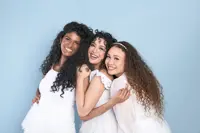
Straight and smooth hair has been depicted as the preferred style in Malaysia’s beauty landscape for years, from visuals of beautiful, smiling models with silky hair in advertisements to salons encouraging those with textured hair to straighten their tresses.
Curls and waves are often treated as something to tame rather than understand, but that is beginning to change as more Malaysians learn about their natural texture and question long-held ideas about what constitutes manageable or presentable hair.
But for those who grew up treating curls as a problem, embracing them can involve more than simply changing a hairstyle.
It means learning how textured hair behaves, what it needs and how factors such as Malaysia’s heat and humidity affect it.
Challenging hair standards
The issue is not necessarily that Malaysians do not appreciate curls, but that the country’s beauty culture has historically given them little reason to understand them.
Soniahanim Abu Bakar, managing director of Coco Onya, was inspired by her own experience growing up with curly hair to find her own solutions.
“I think for a very long time, curly and textured hair has simply been misunderstood in Malaysia,” says Soniahanim. “Growing up, straight hair was often seen as the beauty standard – neat, manageable and ‘presentable’.”
Yasvenaa Nagendrarao, founder of CurlFixers, a specialist curly-hair studio in Kajang, traces the problem to a salon industry traditionally focused on making hair appear smoother and straighter.
Rebonding, straightening and other chemical treatments have become normalised, while textured hair requires a different approach.
That difference is often misunderstood as difficulty.
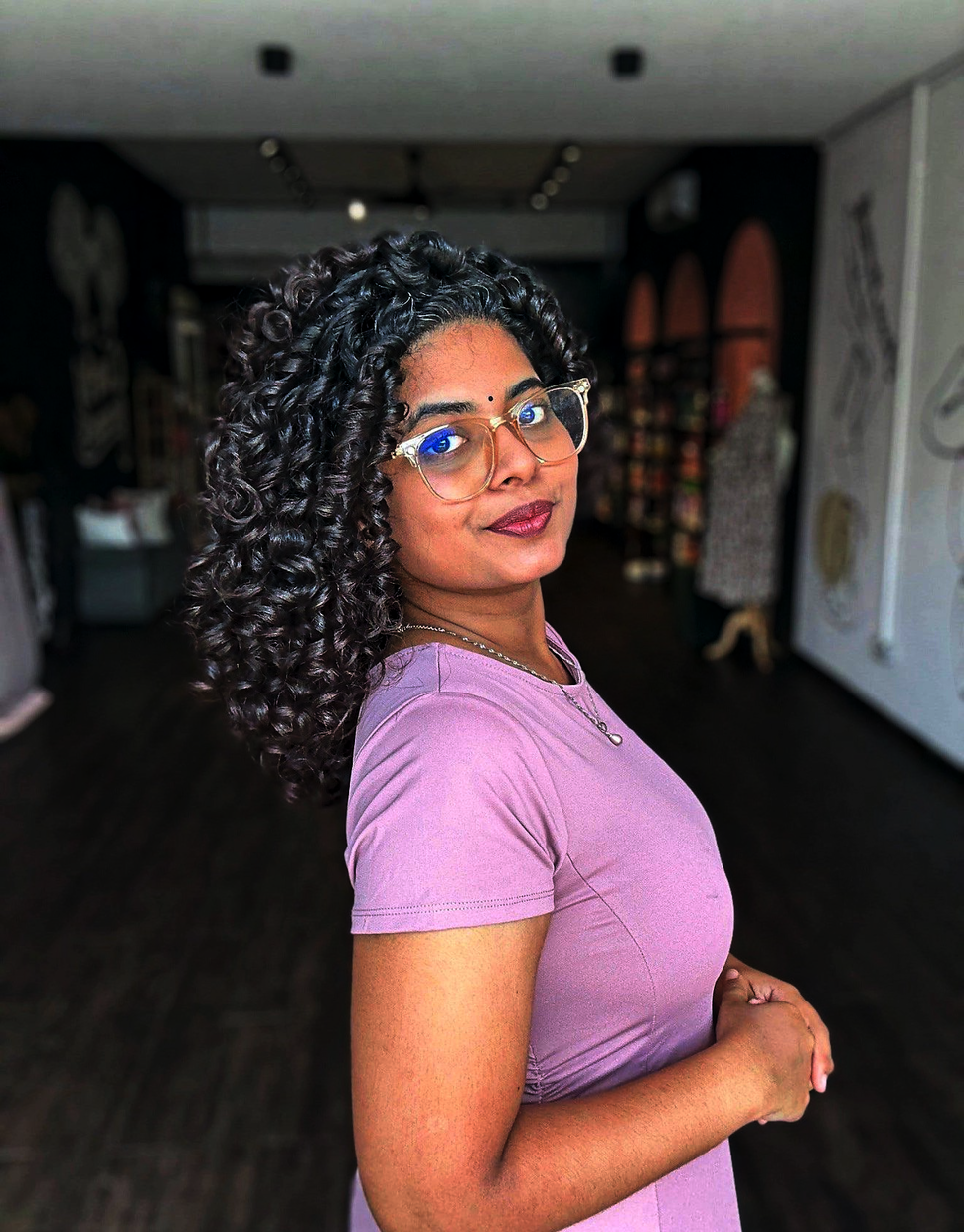
“One of the biggest reasons is that Malaysia’s salon industry has historically been built around the idea of making hair look smoother, straighter and more controlled,” says Yasvenaa, who also co-founded Curly Bouncy Malaysia, a curly hair products brand.
“When I started learning more about curly hair, I realised that many people were not actually struggling with ‘bad hair’. They simply had never been taught how their natural texture worked,” she says.
Dharishinni Devi Kumar, co-founder of the curly hair products brand Surul Curls, was drawn to helping people understand and care for their natural hair texture.
She says one of the most common misconceptions is that curly hair is simply frizzy or difficult to manage.
Read more: From passion to longevity: The realities of building a Malaysian beauty brand
“There is still a gap when it comes to salon training and product development for textured hair. This is partly due to the misconception that straight hair is easier to manage, while curly hair is often seen as difficult or naturally frizzy,” says Dharishinni, who founded the brand with Sivaanni Kumar.
“Another misconception is that all curls can be treated in the same way,” she adds.
The distinction matters because what looks like dryness, frizz or unruliness may simply be the natural behaviour of textured hair. Soniahanim points out that curly hair also has a different structure from straight hair, with natural oils travelling differently along the strands.
“The biggest misconception is that curly hair is a problem that needs to be fixed,” she says. “We just weren’t given the right education, products and routines to understand them.”
Learning what your hair needs
For someone beginning to embrace their natural texture, the advice is remarkably consistent: simplify the routine and learn to respond to the hair rather than forcing it into a particular shape.
All three founders recommend cleansing the scalp properly, conditioning the lengths and detangling while the hair is wet and has enough slip.
Soniahanim’s advice with cleansing is to focus the shampoo mainly on the scalp rather than aggressively scrubbing the lengths of the hair.
“The goal is to remove dirt, sweat and buildup while keeping your scalp healthy,” she says.
Where textured hair differs is in how it is handled afterwards.
Rough towel-drying is a common culprit for unnecessary frizz. Instead of rubbing the hair, gently squeezing out excess water with a soft T-shirt or microfibre towel can help preserve the curl pattern.
“Styling products are generally best applied while the hair is wet or damp,” says Dharishinni, with scrunching used to encourage the natural pattern.
Drying can then be done by letting the hair air dry naturally, or with a diffuser, depending on the hair and the desired result.
“Most importantly, there’s no one-size-fits-all routine,” says Dharishinni. “Your texture, porosity, density, damage and even Malaysia’s humidity can affect what works for you.”
Yasvenaa also cautions against assuming that using product automatically means more definition.
“It doesn’t. Too much product can weigh the hair down and create buildup,” she says.
“Another common mistake is constantly touching the hair while it is drying. Let the curls form and set. The more you disturb them, the more likely you are to create frizz,” says Yasvenaa.
Beyond ingredients
The growing interest in curly hair has also brought with it a new set of rules circulating online, with certain ingredients routinely described as unsuitable for textured hair.
“I don’t think there’s a universal list of ingredients that people with curly hair should avoid,” says Dharishinni. “Curly hair is generally more prone to dryness and breakage, so for us, it’s more important to understand what an ingredient does and how it works within the overall formulation.”
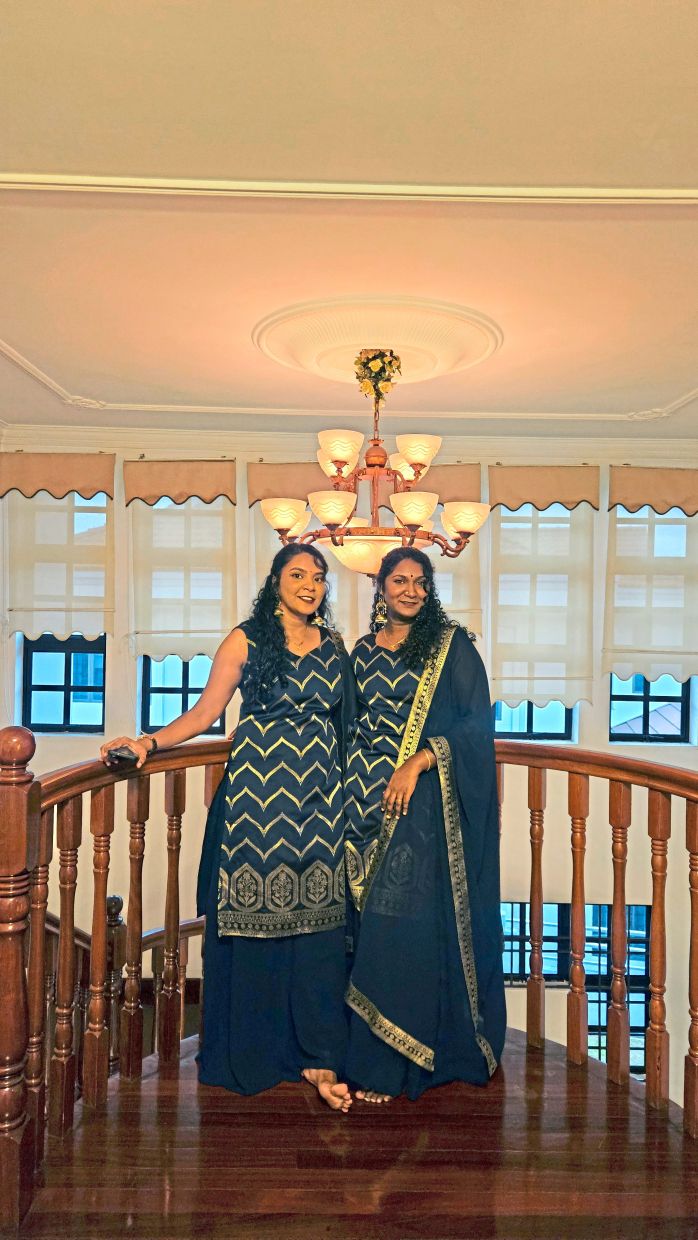
Sulfates, she says, can feel stripping when overused but may also be useful for removing heavy buildup.
Similarly, not all alcohols behave in the same way, while some fatty alcohols (long-chain alcohols, unlike the drying kind of alcohol found in sanitiser) can have conditioning properties.
“Silicones are also often unfairly demonised. Certain silicones can provide slip, shine and protection, which can be beneficial for textured hair,” she adds. “The concern is more about buildup and whether the product suits your routine, rather than the silicone itself.”
Soniahanim takes a similar view.
“The truth is that ingredients are not universally good or bad. It depends on the formula, concentration, how often you use the product and, most importantly, your individual hair and scalp needs,” she says.
“Healthy curls don’t come from following a long list of ‘forbidden ingredients’. They come from finding the right balance of cleansing, moisture, treatment, conditioning and styling for your individual hair,” says Soniahanim.
The broader message is one that applies beyond curly hair: social media has made information more accessible, but not necessarily more nuanced.
Read more: What does 'clean' mean in haircare? A beauty buzzword decoded for today
Ultimately, the growing acceptance of curls is not simply about adding another category to the beauty conversation.
It is about questioning the assumption that one type of hair should be the standard against which all others are measured.
For those who have spent years straightening or rebonding their hair, that shift can be particularly personal.
“I would tell them to start slowly and, most importantly, be patient with their hair,” says Dharishinni. “Loving your curls doesn’t have to happen overnight.”
Soniahanim believes the change also involves reconsidering the language people use about their hair – moving away from descriptions such as messy or difficult and towards curiosity about what the hair actually needs.
Yasvenaa says: “Don’t feel guilty. If you spent years straightening or rebonding your hair, it doesn’t mean you have done something wrong.”
“Many of us grew up believing that straight hair was the definition of neat, beautiful or professional hair.”
Learning to embrace natural texture, then, is not necessarily about rejecting straight hair or prescribing curls as a new ideal. It is about having enough knowledge and choice to decide what works for you.