Looking good is no longer just about what you apply to your skin. It is about what you put into your body – or so it seems.
There is a fast-growing trend towards ingestible beauty products, from supplements to drinks that promise to support everything from a glowing complexion to healthier hair and nails from within.
It certainly challenges the old adage that “beauty is only skin deep”.
Yet questions remain about how effective these formulations and their active ingredients really are.
Safety is another issue that warrants closer examination, particularly as more beauty products move from the bathroom shelf to the kitchen cabinet.
Dr Lim Ing Kien, a practising medical doctor, points out that these products are already subject to regulation.
He estimates that about 80% of beauty ingestibles on the Malaysian market are classified as food supplements.
According to Dr Lim, these typically come in formats such as liquids, sachet powders and, increasingly, gummies. They fall under the Food Act 1983 and Food Regulations 1985, overseen by the Health Ministry’s food safety and quality division.
The remainder, he says, are sold as conventional health supplements.
These are available in capsule or tablet form and require registration with the National Pharmaceutical Regulatory Agency, including a MAL registration number.
The distinction is partly down to the format.
Capsules and tablets can resemble medicines, potentially making it easier for consumers to mistake supplements for pharmaceutical products.
Cosmetics and topical skincare products, meanwhile, fall under a separate regulatory framework, Dr Lim explains.
Unlike medicines and health supplements, cosmetics are generally notification-based rather than subject to full registration, with comparatively limited testing requirements.
Cosmetic companies in Malaysia must notify the National Pharmaceutical Regulatory Agency (NPRA) before marketing their products, unlike medicines and health supplements, which require separate registration.
When contacted by StarLifestyle, the Health Ministry confirms this in a press statement but still cautions consumers to remain vigilant.
The issue is whether this is enough to address concerns about ingestible beauty products occupying something of a grey area.
This is particularly pertinent as consumers may also assume that regulatory oversight means the products have been proven to deliver the promised results.
Read more: What are multitasking cosmetics and why are they now a go-to beauty choice?
Looking good goes beyond the surface
As it is, beauty ingestibles are indeed having a moment.
A report by market research and consulting firm InsightAce Analytic estimates that the global market was valued at US$4.2bil (approximately RM16.95bil) in 2024 and is projected to reach US$13.1bil (RM52.86bil) by 2034.
International celebrities including Kourtney Kardashian and Elle MacPherson have also launched their own brands, selling wellness products designed to be eaten or drunk for their purported beauty benefits.
In Malaysia, former television personality Marion Caunter offers “botanical beverages” under her own haircare brand, described as being “formulated with multivitamins” to enhance overall hair quality, thickness and lustre.
Dr Lim says one of the turning points for the beauty industry was the Covid-19 pandemic.
“People started thinking about prevention instead of correction, and they started thinking about health generally,” he says, noting that while beauty ingestibles were already on shelves before then, the category really took off in 2021.
Pointing to skincare as an example, Lim says people often forget that the skin is an organ.
“On the outside you have UV, pollution, heat. On the inside you have hormones, diet, stress, everything your body is doing. If you treat only the outside, you’re treating only half of it.”
He adds that the idea of consuming products for beauty and wellness is hardly new in Asia.
Drinkable collagen, he claims, can be traced to traditions ranging from Chinese herbal soups and Malay jamu to Indian Ayurveda.
“Every one of those traditions has something you swallow or drink for skin, hair, general vitality,” he says.
“Our grandmothers were doing this long before anyone called it a beauty trend. What’s new is the scientific evidence. We now have scientific data supporting the ingestible side.”

He gives the example of studies like the treatment of melasma with ingested pine bark extract (Pycnogenol), and a placebo-controlled trial examining ingested fern extract (Polypodium leucotomos) as an add-on to sunscreen.
Lim has also entered the market himself, launching his own range of “drinkable skincare” products.
This raises an obvious question about potential conflicts of interest, particularly when the medical professional recommending a beauty ingestible is also involved in developing and selling it.
Lim acknowledges that it may become a problem, but says he is transparent about his commercial interest, disclosing that he owns and formulated the product whenever he recommends it to patients.
He argues that doctors can bring a valuable perspective to health-related businesses, given their understanding of patients’ needs and ability to assess scientific evidence.
“What the patient actually wants matters more than what I recommend,” Lim says.
“Some want a capsule, some want something to drink, some want neither, and any of those is a reasonable answer.”
Broader convergence of health and beauty
There is a broader expansion of what beauty means, with consumers looking beyond skincare and cosmetics to wellness practices that support both how they look and how they feel.
Sleep therapy, stress management, nutrition, fitness and other aspects of holistic health are becoming intertwined with beauty.
This shift is prompting healthcare companies to broaden their portfolios to include beauty and wellness solutions – and positioning themselves in an increasingly blurred market where looking good and feeling good are part of the same proposition.
Sandy Tan, CEO of Optimax Holdings Bhd, says that consumers are becoming more proactive about their overall health and appearance, the reason being that people today are looking for sustainable ways to age well and maintain their quality of life.
Optimax began as an eye specialist before expanding into aesthetics and holistic beauty services.
Tan believes that research into healthy ageing and the connection between overall health and skin health has advanced significantly in recent years.
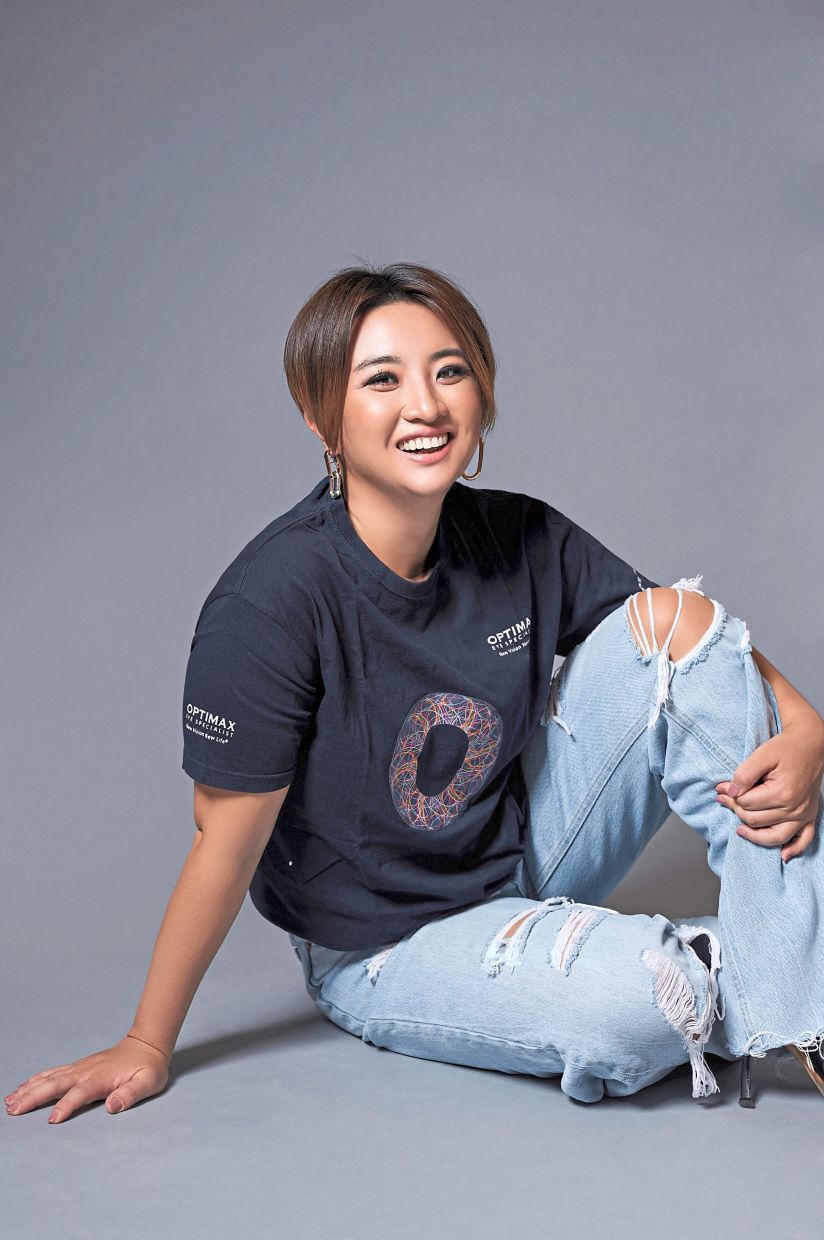
She however cautions that the growing popularity of these topics has also resulted in increased marketing, making it difficult for consumers to distinguish established science from emerging theories.
“As a healthcare provider, we encourage consumers to evaluate claims carefully and look for credible clinical evidence rather than marketing promises,” Tan stresses.
“While innovation is important, consumers should understand that scientific evidence develops over time, and not every trending ingredient or concept has been conclusively proven.”
She adds that a person should not have to think that if a product is marketed for beauty, it must be effective or suitable for everyone.
Her view is that professional advice is particularly important because supplements and wellness products may not work for some people.
In the end, individual health conditions, medications and treatment goals should always be taken into consideration before incorporating them into a daily routine.
At Neumax, Optimax’s aesthetics arm, medical doctor Datuk Dr Liow Tiong Sin serves as medical director, reflecting the increasingly medicalised nature of aesthetics.
Tan says that beauty is, without a doubt, evolving from being largely appearance-focused to becoming part of a broader wellness journey.
She observes that consumers are increasingly looking for solutions that support healthy ageing and long-term wellbeing rather than simply addressing visible concerns.
“I believe this integrated approach will define the future of beauty, where looking good is increasingly seen as a reflection of overall health and wellbeing.”
Read more: Refillable beauty is slowly gaining ground in Malaysia, here's why it matters
Consumer awareness is always important
At the end of the day, consumers have a responsibility to assess the claims made by brands.
In February last year, the Health Ministry flagged a China-based cosmetics brand over suspected contraventions of the law in its marketing campaigns.
While the products were intended for topical use, they were depicted in social media videos in ways that suggested they were edible.
The case is a reminder that not everything seen online should be taken at face value – particularly when it comes to claims about beauty and health.
Co-founder of local wellness brand Boony & Co, Boon Hau Hng, says that, in his experience, consumers are becoming savvier.
He relates how his customers come in asking very specific questions about active ingredients.
They take it seriously and want to know whether a particular product is safe for them or their family members to consume.
“Everyone has been focusing on skincare for the longest time,” Boon says, referring to topical products. “But skincare is a great complement; it is not the be-all and end-all.”

He admits that as the ingestible beauty market grows, marketing efforts by different brands are also getting louder, whereby consumers have to be extra careful to cut through the noise.
On whether people let their guard down when it comes to beauty products compared with health products, Boon says what everyone expects is results.
“Everyone is checking with AI first, but then they don’t even completely believe the answers they get,” he says.
“Especially the younger generation. They will come in asking about the formulation of products.
“So they don’t just believe everything they read or are told.”
The other co-founder of the brand, his wife Fam Swee Ying, says ingestible beauty products also mirror some of the traits seen in the cosmetics market, including the fact that women continue to make up much of the customer base.
This perhaps illustrates just how closely beauty and health have come together.
She also points out that even skincare brands are seeing their customers become more discerning.
“You will notice they are asking about specific active ingredients in a face cream,” Fam notes.
“So it shows that consumers, buying beauty or other products no longer need you to hold their hands and tell them what to buy. They come in shopping for specific needs as well.”
Ultimately, the growing overlap between beauty and wellness may mean that looking good is no longer simply about what happens in front of the mirror, but also about the choices we make beyond it.
As the beauty shelf continues to expand into the wellness aisle, a little curiosity – and a healthy dose of scepticism – may be the best things consumers can bring to the shopping basket.