




Experts have warned of the infection risks associated with an anti-ageing beauty treatment known as “cadaver-derived skin injection” amid growing interest in the treatment, as authorities crack down on beauty premises offering services with unregistered products.
The warnings came a day after the Department of Health revealed it had seized vials of an injectable product called Elravie Re20, which claims to contain human tissue, following raids on four beauty premises in the city on Friday and Tuesday.
A 38-year-old woman was arrested during the operation.
Health authorities said the product, carrying Korean packaging, was classified as a “regulated product” under the Human Organ Transplant Ordinance, as well as a “pharmaceutical product”.
The department had also referred other cases involving the products contravening the ordinance to police, which on Wednesday confirmed they were following up.
The department had received an application for an exemption of a “regulated product” and was still processing it, but had not received any application for it as a “pharmaceutical product”.
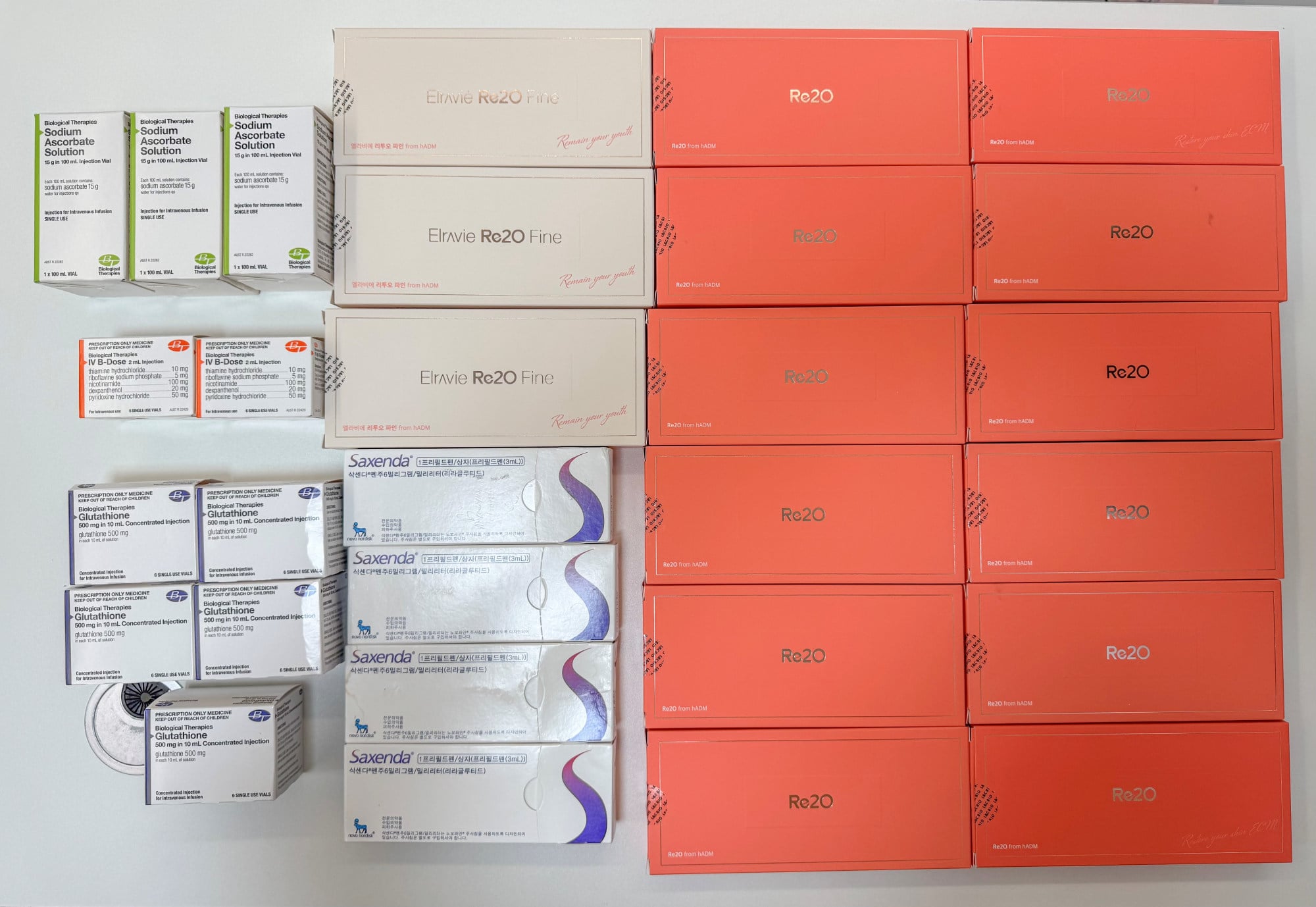
According to Humedix, the Korean distributor of Elravie Re20, the product contains materials called human acellular dermal matrix, which is derived from processed human tissue. The company claims the product can help improve skin blemishes and pores.
Korean beauty clinics have also set up webpages in Chinese making claims about the product’s anti-ageing effects.
But Dr Peter Pang Chi-wang, a specialist in plastic surgery, warned that products containing human tissue could carry unknown pathogens.
“The product is claimed to be acellular, meaning all cells have been removed and suggesting it’s sterile. But are bacteria found in cells only?” he said. “The safety of the product has not been proven yet.”
Pang also said the claimed benefits of the product remained uncertain, as there were records showing that injection of medical substances or saline solution, or purely microneedling, could also help reduce pores and tighten skin.
Dermatologist Dr Kingsley Chan Hau-ngai also warned of possible infection risks when using unregistered injection products.
“Cadavers are not that clean, how can they ensure the pathogens are removed?” he said. “Also, how are the products stored? If they have been stored for a long time, there could also be bacteria, fungi or virus growing.”
Chan added that the product sounded like a gimmick and not a product supported by strong evidence.
Dr Fung Ying, controller of regulatory affairs at the department, warned on Tuesday that the product lacked clinical safety data and could pose public health risks.
The South China Morning Post reporter posing as a customer contacted the Korean Aesthetic Surgery Centre Hong Kong, a local medical beauty clinic that claims to be the only authorised distributor of Re20 in Hong Kong, to ask whether the injection was available.
A staff member said the injection was not yet available as it had not been approved by the government.
On social media platforms, posts from users believed to be in Hong Kong and Taiwan discussed Re20.
In a statement released last month, the clinic claimed that the product was made from donor skin from the United States. Each donor was also thoroughly evaluated, including their cause of death, medical history and blood and microbiology tests.
Nelson Ip Sai-hung, founding chairman of the Federation of Beauty Industry, noted discussion about Re20 had increased recently.
“It is a trending topic recently ... Many people were talking about it and saying how magical it is,” Ip said.
But not many of his peers were offering the product, he said, adding that it was difficult to source.
Ip urged consumers to exercise caution when trying new beauty treatments.
“It is not a bad thing to observe a bit. There must be a reason why the product has not yet been registered in Hong Kong,” Ip said. “When you are not clear about a new product, is there a need to be impulsive and try?” -- South China Morning Post


