



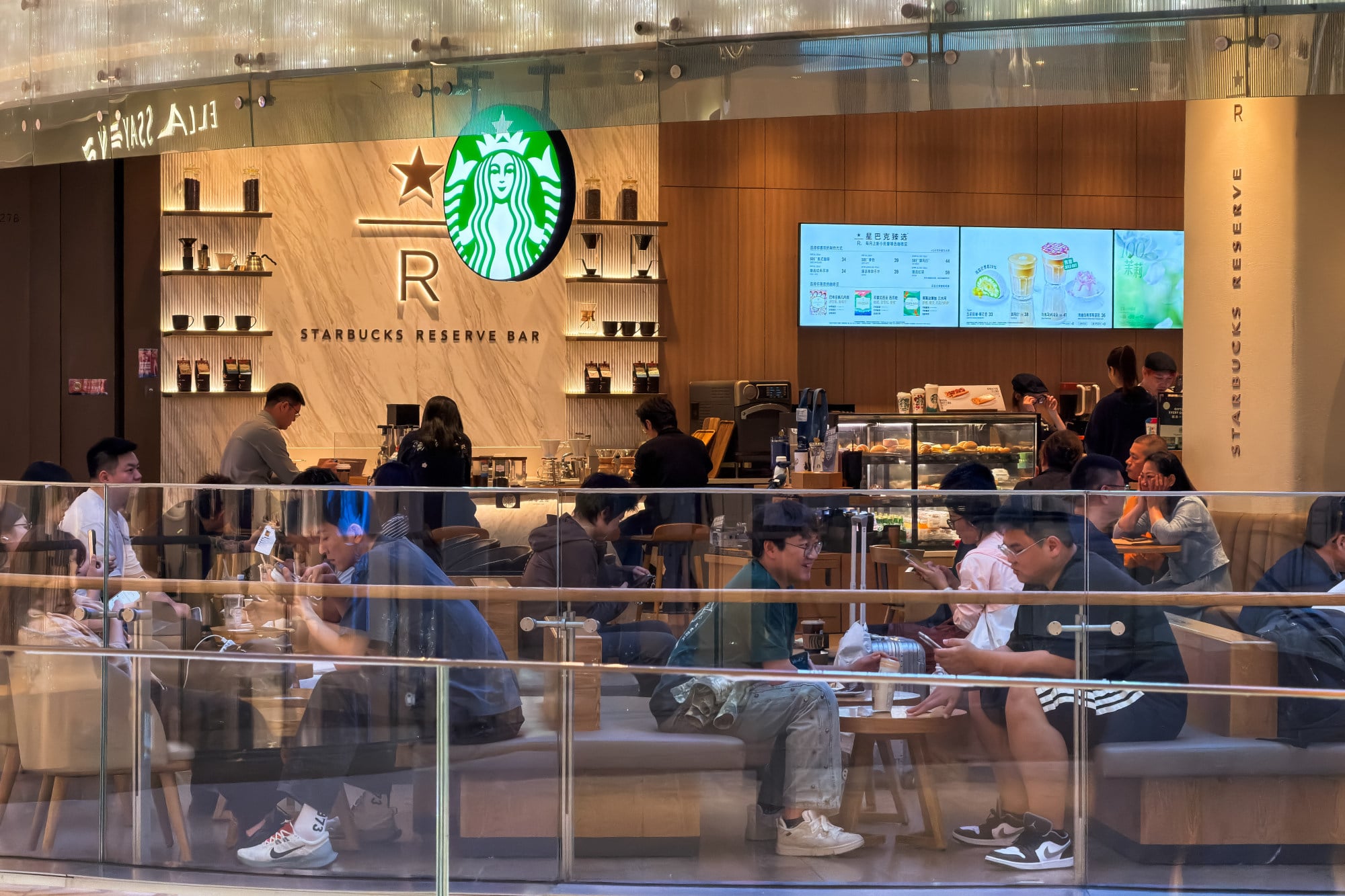
Starbucks China says it will roll out its “purchase before seating” rule nationwide starting Thursday, with corresponding signs put in stores, following a similar policy it introduced at its North America stores last year.
The Seattle-based coffee chain would prioritise helping visitors in need, such as pregnant women and people with limited mobility, and would continue to foster its stores as so-called third places, it said in a statement on Wednesday.
The policy has sparked widespread discussion online, with some commenters saying the rule was reasonable and common sense, and Starbucks should have introduced it earlier in China, according to posts on Chinese social media platform RedNote.
China’s coffee market has been expanding fast, and competition among operators has intensified. The country now has over 550 million coffee drinkers, according to data platform Canyin88’s research arm.
Starbucks China plans to invest more than 300 million yuan (US$44.9 million) to upgrade its store facilities and experiences in its 2027 financial year beginning on September 28.
The chain finalised a joint venture deal in April with Chinese private equity firm Boyu Capital, as it looks to further expand its footprint in China. Boyu Capital holds a 60 per cent stake in the new entity that runs Starbucks’ retail business in China. The seating policy may not be relevant to Seattle headquarters.
The joint venture now operated some 8,000 Starbucks stores on the mainland, with an ambition to expand the network to 20,000 outlets over time, it said earlier.
By comparison, domestic chain Luckin Coffee operates over 36,000 stores in China, including Hong Kong, making it the largest player among coffee chains operating in the country.
“Free-seat hogging is only the visible issue. The bigger challenge is that shoppers willing to pay extra for Starbucks’ third-space experience are being drawn away by competitors,” said Fu Yifu, a special research fellow at Su Merchants Bank in Nanjing in China’s eastern Jiangsu province.
“Still, raising the seating threshold alone is an operational improvement. To tackle broader competitive pressures, it’s important for Starbucks to pair this with stronger products, in-store experiences and distinct value,” Fu said.
In the third quarter of its 2026 financial year, revenue from Starbucks’ international segment fell 34 per cent year on year to US$1.3 billion. The drop was primarily driven by the conversion of its China retail business into a joint venture, which drove company-operated store revenues lower, it said in its latest quarterly earnings.
Starbucks had already moved to tighten seating access in North America. It announced in January 2025 that it would reverse its open-door policy that it introduced in 2018. The rule had allowed anyone to use store facilities, including seating areas and restrooms, without making a purchase.
The change comes as Starbucks grapples with soft sales in North America and aims to improve the in-store environment in the region. The coffee chain did not launch similar seating rules in other countries but posts a code of conduct on its official website. -- SOUTH CHINA MORNING POST

