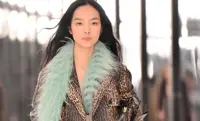
At 7pm on the first day of men’s fashion week in Paris in June, the Japanese label Auralee staged its latest runway show.
It was a modest, chummy affair. Supporters clustered in the front row, fanning themselves, as models slipped past in wispy plaid shirts and electric blue windbreakers, their sandalled feet clicking along the marble floor.
Two hours later, Louis Vuitton, the alpha dog of the French fashion industry, staged its latest men’s show.
There were croc-skin coats and saggy striped suits, presented against the backdrop of a mammoth perpetual wave, like something out of a Dubai megamall.
A gospel choir performed. Victor Wembanyama, Jeremy Allen White and Missy Elliott were in attendance. Truckloads of sand rimmed the runway.
In scale, the shows could not have been further apart. One was a plucky indie, the other a traffic-halting blockbuster.
Yet they shared one key character: Charlotte Collet, a blunt 40-year-old from the south of France who, in the past several years, became one of the most important stylists working today.
She has styled runway shows for brands including Jil Sander and Post Archive Faction, campaigns for Tod’s and APC and magazines like W.
Read more: Framing fashion: Bibo Aswan, the photographer shaping Malaysia's visual style
Across these jobs, a Collet sensibility emerges. It is extracted from how people dress on the street, with a bit more polish here, a bit more conscious dishevelling there.
“I don’t like stuff which is too conceptual,” Collet said.
She is not a stylist who further puffs up luxury fashion, layering on the gems and jewels. She dresses things down, making outfits that you’d want to print out and tape to your mirror as inspiration.
In her hands, a corporate grey Jil Sander suit is paired with bruised brown work boots. A chandelier-sparkly Louis Vuitton sweater vest is balanced by washed-out jeans and a pedestrian, almost dorky short-sleeve button-up.
“I like real clothes,” Collet said.
That realism helps explain why her work has found particular acclaim in men’s fashion, where the audience often not just expects, but demands a clearer, less fantastical depiction of fashion.
“Some stylists use a lot of layers to complicate the clothing,” said Fabrice Paineau, the editor of Double Magazine, who has worked with Collet since her early 20s.
“She doesn’t do that. She’s quite direct. And I think that’s super fresh.”
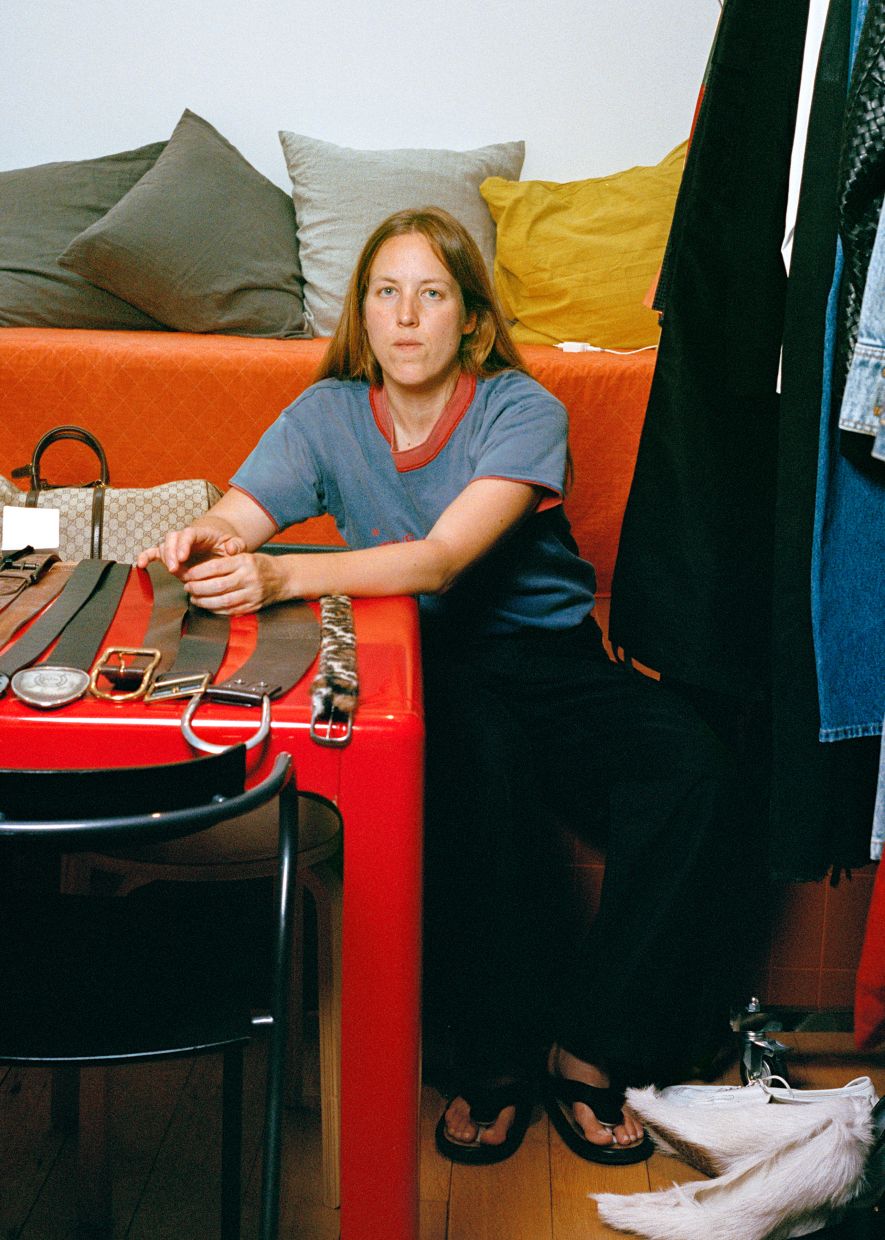
In her own telling, Collet’s pragmatism stems from her upbringing. She grew up in Prats-De-Mollo-La-Preste, a town of around 1,000 people so far south in France that its denizens speak Catalan in addition to French.
Collet was raised on a farm, where her parents made cheese, a line of work her mother continued at until she retired a few years ago.
“I really grew up in nature,” Collet said.
After a first interview, she sent photos from her mother’s Instagram account showing verdant hills and herds of sheep.
“Basically the opposite of LV (Louis Vuitton),” she wrote.
Rather than creating the raw ingredients of fashion – the knits and shirts and suits – Collet was interested in the meals you could make out of them.Magazines, with their transportive photo shoots, captivated her.
She was employed at Purple magazine and worked for Masha Orlov, an influential French stylist. She inched her way up the stylist hierarchy, working on shoots for Chanel fragrances and Esprit.
The role of a stylist in a runway show, or for a campaign ad, can be a tricky one to explain.
If a designer is akin to a film director, a stylist is more like an editor. A designer makes a sweater you want to buy; a good stylist composes not just an outfit, but a person you, ideally, wish to be.
Collet insists that it is not a glamorous job. It entails lugging suitcases of clothes and crawling on the floor to pin a pair of trousers on a model.
As a result, she never wears anything that would be called luxury. In this interview, she was dressed almost entirely in Uniqlo.
“I just like comfort workwear, basic stuff,” she said.
Her break came in 2018, when Auralee, having made the leap from fashion week in Tokyo to Paris, was seeking out a local stylist. A publicist passed along Collet’s name, and she took the job.
She found, in the brand, a shared DNA with what she likes to work with.
“I have immense trust in her ability to add an elegant, playful twist while maintaining a deep respect for classic clothing,” the Auralee designer, Ryota Iwai, said of Collet over email.
“She intuitively catches our current direction and what we want to express without needing long explanations.”
Read more: From Hong Kong to the Paris runway, Robert Wun is living the couture dream
A playful and warm approach to colour is the attribute that critics most often hail in Collet-styled Auralee shows.
In the last show, she styled a suit the colour of a martini olive over a dusty dress shirt and a tee with wide blue stripes.
In another outfit, she complicated a pair of brown corduroys, the type you could’ve found at Brooks Brothers in 1973, by coupling it with a zesty aquamarine zip-up.
On one side, the shirt collar flopped out over the jacket, like an errant splotch of paint on a canvas, making sure the audience didn’t miss the shirt’s chartreuse colour.
Yet she balanced the whole look with a pair of brown boat shoes, like something a suburban dad might wear to the country club.
Collet knows well where to challenge our expectations and where to validate them.
Paineau, fittingly, described Collet’s sensibility as “like a collage”.
Collet had collaborated with reputable French brands before, APC among them, but working with Auralee was her first time styling a runway show, a step-up into a sphere of attention and scrutiny.
She has since styled runway shows and campaigns for designer Simone Bellotti, first at Bally, then at Jil Sander; the rising South Korean techwear label Post Archive Faction; and now, Louis Vuitton. – ©2026 The New York Times Company
This article originally appeared in The New York Times.