Arnaud Nicolas does not view the world the same way as most CEOs do.
While others may see a luxury brand steeped in nearly two centuries of history, he sees a laboratory for stories.
The rest of the horological world is often obsessed with the past, but Nicolas is busy building the future, one gear at a time.
The L’Epée 1839 CEO’s journey into horology didn’t start in the quiet, wood-panelled rooms of Swiss watchmaking.
It began in the humid, high-stakes environment of Arianespace in French Guiana.
There, he helped launch rockets into the vastness of space.
In that world, there is no room for “almost.”
A single decimal point out of place, or a microscopic flaw in a valve would mean a multi-million dollar mission end in fire.
While he carried that iron-clad discipline with him, he eventually felt something was missing: the soul.
“At Arianespace, everything was about precision and mastering complex systems,” Nicolas explains.
“But what I discovered later was that the creativity was missing.
“What drew me to clockmaking was the chance to work with mechanical systems that were allowed to be expressive.
“It’s one of the only fields where you can mix art and function,” he adds.
The engineering of a new era
Despite his title, Nicolas doesn’t view himself as a traditional executive.
With a Masters in Engineering, he is a builder at heart who just happens to have the keys to one of the world’s most prestigious manufactures.
His path to the top was more of a rescue mission rather than a corporate ladder climb.
L’Epée 1839 was founded by Auguste L’Epée and renowned for the creation of high-end mechanical clocks that were designed and produced entirely in-house, with hand-crafted components.
It held patents for innovative escapements. It was also a key supplier for prestigious watchmakers.
By the 20th century, L’Epée 1839 had gained fame for its officer’s carriage clocks and travel clocks.
In 1981, L’Epée clocks were gifted to important guests who attended the wedding of Prince Charles and Lady Diana.
It was a brand associated with power and influence, but its story had faded into the background noise of history.
In 2009, when Nicolas and a close friend acquired L’Epée 1839, the company was in a very fragile state.
The traditional “carriage clock” − once a staple on the desks of heads of state, European royalty and even the Pope − had become a dusty relic.
The spark for Nicolas’ revolution came from a moment of personal frustration.
While searching for a gift for a friend who was an avid watch enthusiast, Nicolas found himself empty-handed.
He wanted a clock interesting enough for a serious collector yet modern enough to live in a contemporary home.
“I couldn’t find one,” he recalls.
“Everything available felt either decorative in the wrong way or locked in the past.
“That’s when it clicked. Mechanical clocks were no longer relevant as they were.”
His solution was radical: don’t preserve the company – reinvent it.
He approached the business like an engineering project.
He identified the problem − the product was no longer relatable − and built the solution step by step, focusing on developing new calibres and bringing specialised expertise back in-house.
L’Epée 1839 joined the LVMH stable of brands two years ago.
Why clocks still matter
At the L’Epée 1839 manufacture in Delémont, Switzerland, the goal isn’t just to make sure the hands move accurately.
In fact, Nicolas says that for his team, timekeeping is almost secondary.
They aren’t just making clocks; they are making “horological sculptures.”
This philosophy has blurred the lines between utility and art.
A traditional clock tells you the time so you aren’t late for a meeting.
A horological sculpture tells a story, expresses an idea, and happens to tell the time as a bonus.
Whenever a new project begins, Nicolas pushes his team past their comfort zones with one vital question: “Why would this object deserve to exist?
“If we cannot answer that clearly, then we are not pushing far enough,” he says.
“For me, it’s not only about technical achievement.
“It’s about storytelling.
“Is it surprising, emotional, provocative, playful or interactive?
“Because in the end, if there
is no story, then there is no reason for the object to exist,” he states.
By creating pieces that look like mechanical spiders, intricate robots or high-octane racing cars, L’Epée 1839 provides a “way out” for collectors.
In a world where luxury watches can often feel predictable and codified, these kinetic sculptures offer an escape.
They allow adults to reconnect with a sense of wonder and humour, moving the relationship with time from the wrist to the living space.
Moving forward, looking back
Some might find the weight of a brand founded in 1839 intimidating.
There is a temptation to stay safe, to keep making what worked 100 years ago to avoid tarnishing the name.
Nicolas, however, sees the date “1839” as fuel rather than a burden.
“It gives us the legitimacy to take risks,” he notes.
“When a brand has existed for nearly two centuries, it proves that innovation isn’t a departure from its identity but part of its DNA.”
When he looked into the archives, the few that remained after a portion was lost in a fire years ago, he didn’t see a company defined by formality.
He saw a lineage of invention.
By “activating” this heritage rather than just protecting it, he gave himself the freedom to be bold.
He isn’t repeating the story of L’Epée 1839, he is writing the next chapter.
Nicolas is focused on expanding this creative territory even further.
The year ahead promises unexpected collaborations and objects that will continue to challenge the very definition of what a clock can be.
Nicolas wants to surprise an audience that ranges from interior designers to hardcore art collectors, proving that mechanics can be as captivating as any digital screen.
Despite his high-tech background and the practicalities of modern life, his heart belongs firmly to analog.
He acknowledges that digital tools are useful for a personal schedule, but he believes they lack the “pulse” of a mechanical heartbeat.
“Mechanical time has a presence − something alive − that digital can’t replicate,” he says.
“It’s also about durability. A digital object becomes obsolete very quickly, while a mechanical clock can live forever.”
When he isn’t dreaming up the next mechanical marvel or solving a technical puzzle in the workshop, you can find him in the Swiss mountains.
A simple Sunday spent walking in nature, enjoying the silence and disconnecting from the noise of the world is where his best ideas are born.
It is in that quiet that he finds the clarity to continue his mission.
For Nicolas, clockmaking is the ultimate expression of the human spirit.
It is the point where the cold precision of engineering meets the warmth of human feeling.
“A clock gives time, light, movement and emotion in one object.
“That’s why it works. Not as nostalgia. Not as utility. But because it still does something nothing else quite can,” he concludes.
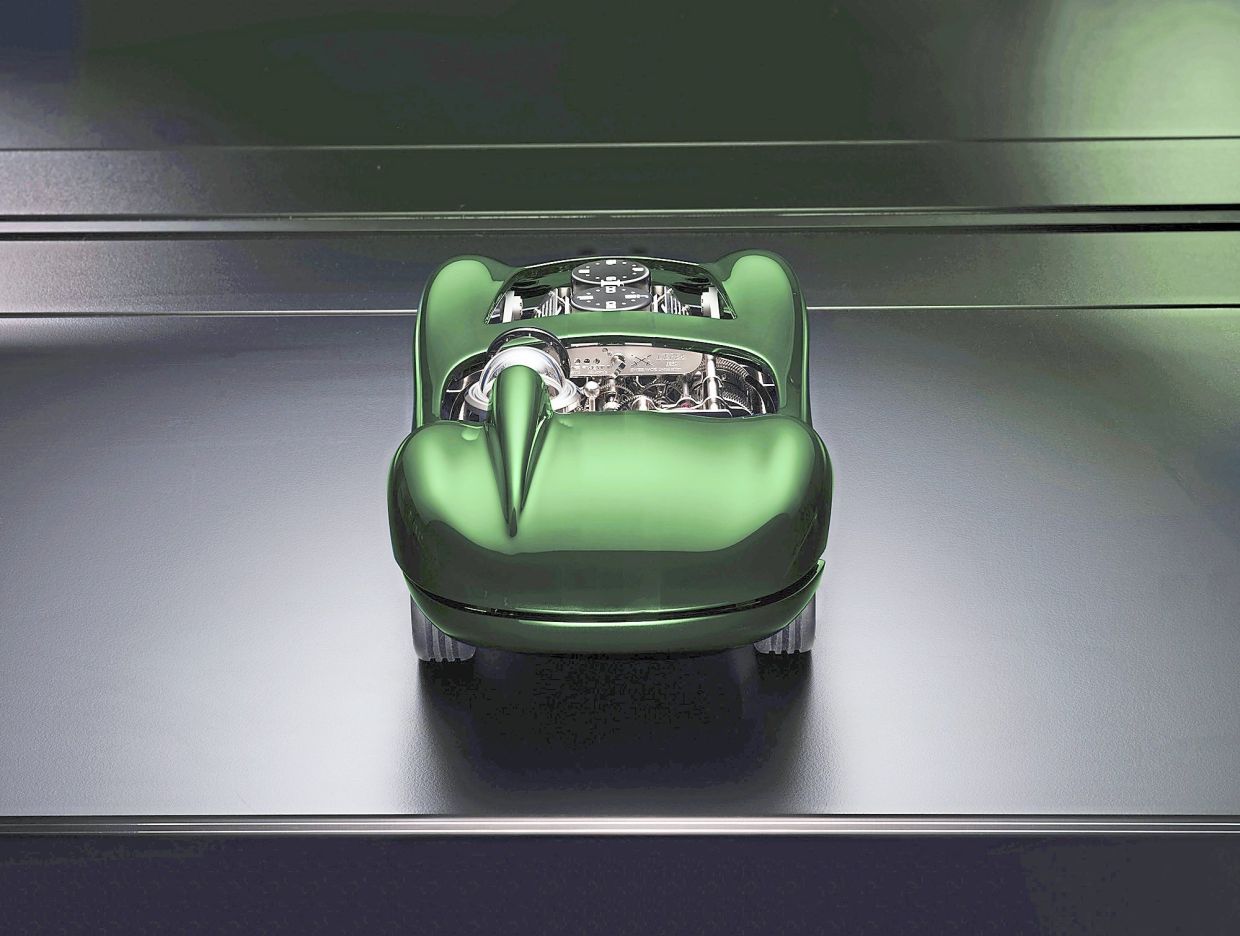
L’Epée 1839’s Time Fast II captures the high-octane thrill of 1950s race cars in a ticking mechanical sculpture.
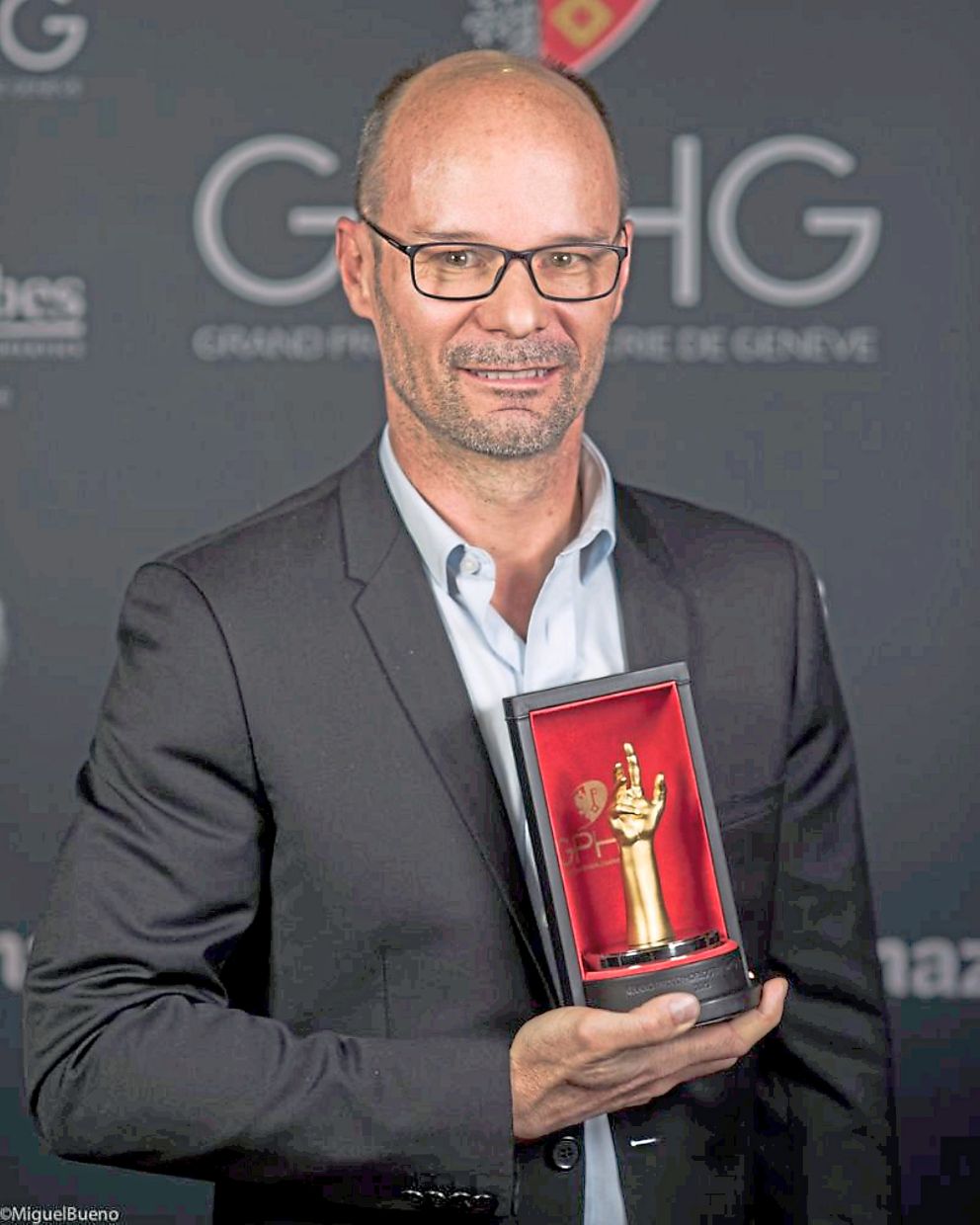
Nicolas with the Grand Prix de l’Horlogerie de Genève 2023 trophy won by the brand’s Time Fast II Chrome in the mechanical clocks category. — Photos: L’Epée 1839
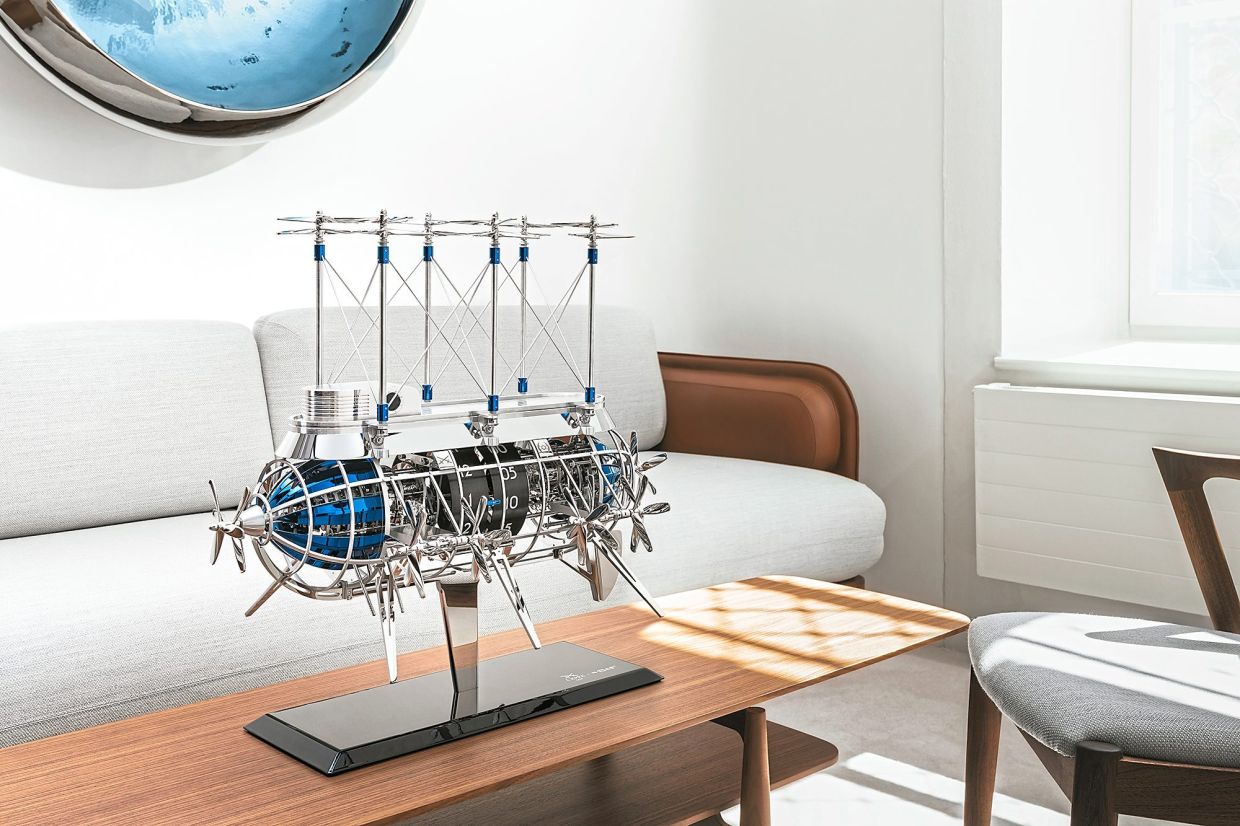
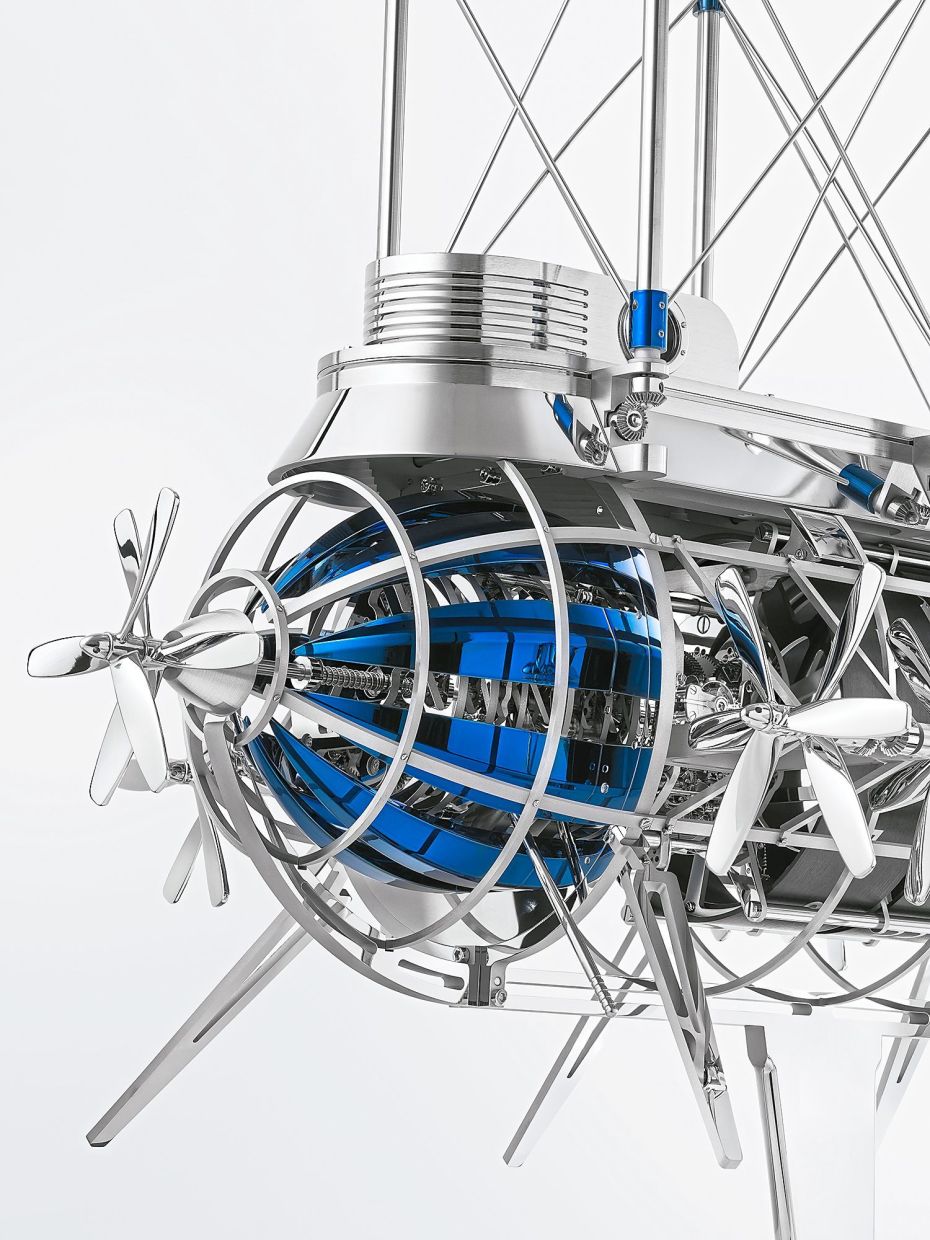
Full view of the Albatross, a massive 1,520-component steampunk airship co-created with MB&F.
Going into the details of the Albatross.
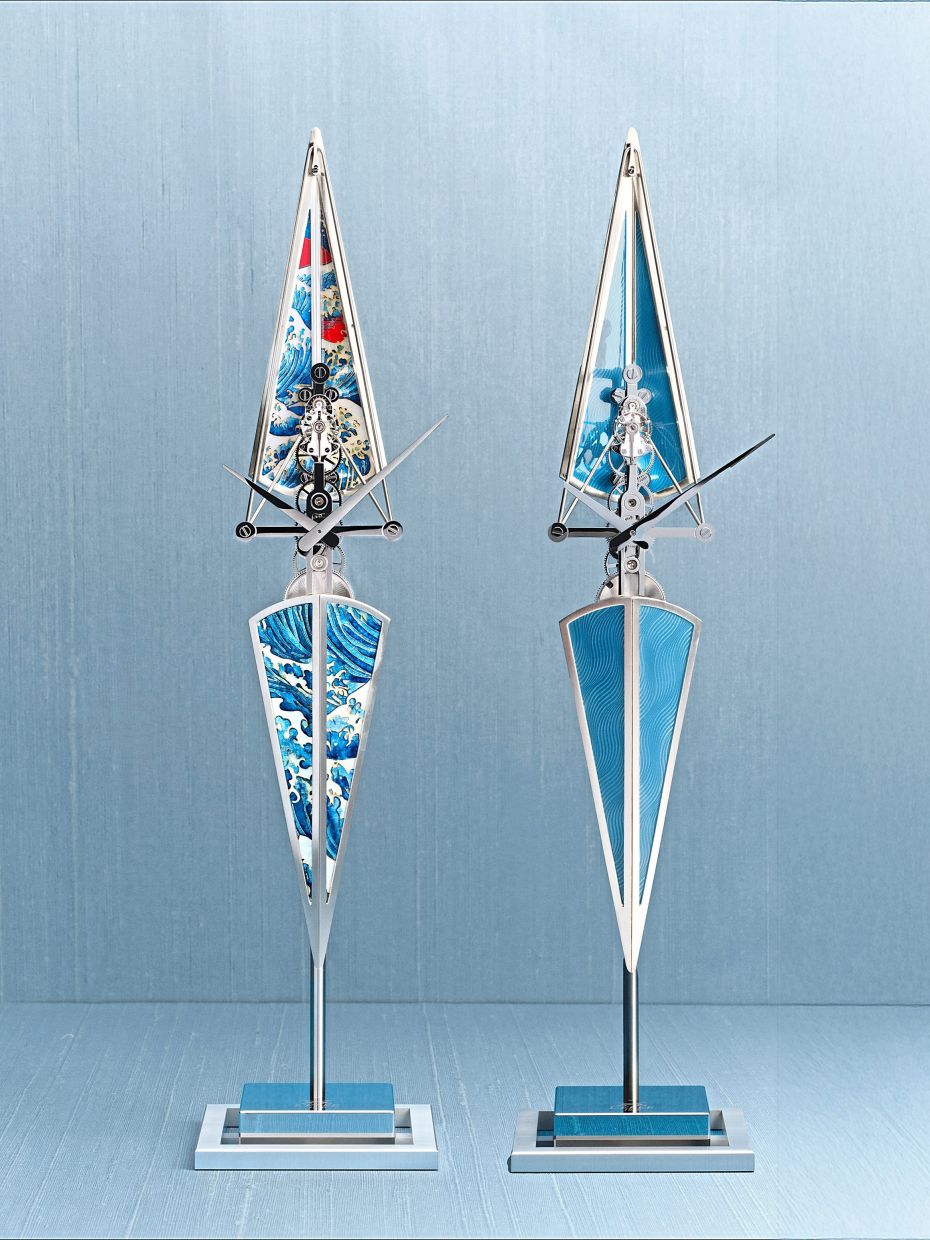
The Regatta mirrors the symmetry and balance of a rower’s motion.
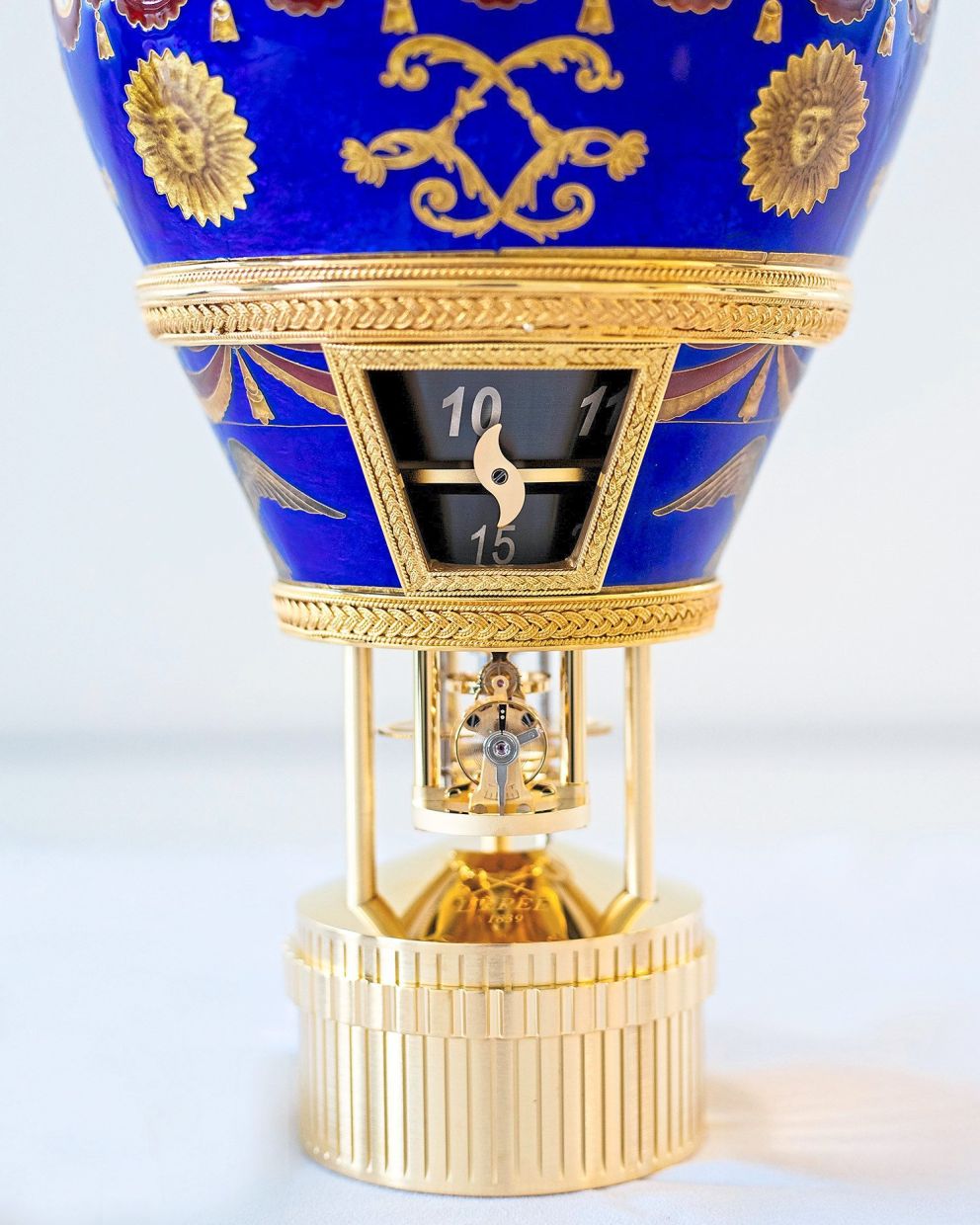
Celebrating humanity’s first flight with 1,600 hours of exquisite, painstaking enamel work seen on the Imperial Hot Air Balloon.