
Hours before the recent Film Independent Spirit Awards, Eva Victor, the writer, director and star of the film Sorry, Baby, was sitting in the dining room of a Spanish-style house in Los Angeles.
She was encircled by four people – or five, if you counted the disembodied voice of a caller on FaceTime.
Sitting closest to Victor was Nina Park, a makeup artist whose home the group had assembled inside.
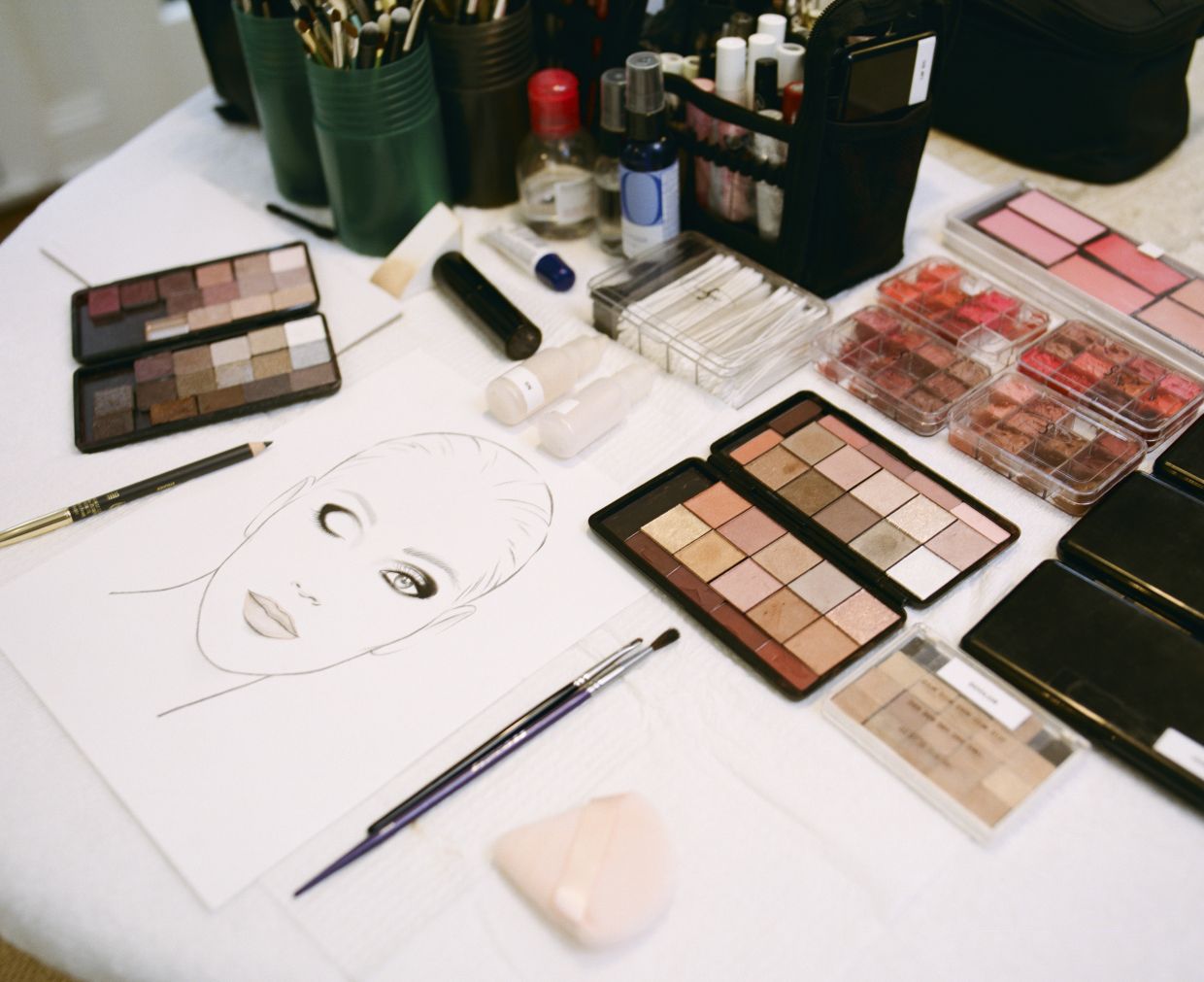
Nearby, eight black cases were arranged on a dining table like surgical trays, each unzipped and stuffed with products that included foundations, concealers, lip liners and a slew of lipsticks from Prada.
Other cosmetics – swatches of taupe and soft grey eye shadow, blotches of black eyeliner – were smeared on the back of one of Park’s hands.
As Park dabbed Victor’s face with a pigment so sheer it was nearly undetectable, Olga Pirmatova, her assistant, stood at her side with the focus of someone who knew which product to reach for before Park had to ask.
Joining them via video call was Victor’s stylist, Danielle Goldberg, whose styling assistant, Cassidy Mamula, was in the room, along with Anh Co Tran, a hairstylist.
In between blots of powder, Victor, 32, who had arrived at Park’s home wearing sweatpants, Uggs and no visible makeup, turned to me.
“Did you see me before?” she asked. “I looked really different. Now, I look 12 steps hotter.”
Read more: Ask The Expert: Makeup 101 by this Malaysian pro who works with celebrities
Later that day, Victor won the Independent Spirit award for "Best Screenplay".
Onstage, she looked polished and luminous and – save for a change of clothes, a different hairstyle and some muted brown lipstick – almost exactly the same as she did before her session with Park, which lasted several hours.
That, according to Park, was by design.
“Beauty, to me, was always not about the transformation, but about kind of how someone can really look like themselves,” she said in a video interview in January.
“I respect artists who can completely transform a face. I think that’s incredible. But for me, I’m just more interested in, like, balance and editing.”
That philosophy has made Park, 42, a new arbiter of the “no-makeup makeup” look: the kind that gives someone a natural glow that might be attributed to a good night’s sleep or to time in the sun but is actually achieved through careful and thoughtful application.
Park has been honing her technique since she was a teenager.
She grew up in “a strict Korean American household” where she was not allowed to wear makeup, she said, so she taught herself how to apply it imperceptibly before leaving the house.
Now, her invisible labour is highly sought-after in Hollywood.
The list of people Park works with has begun to resemble an Oscars ballot, not least because Jessie Buckley and Emma Stone, two of this year’s best actress nominees, are among her clients.
Others include Margaret Qualley, Mia Goth and Greta Lee.
Many actresses who work with Park are ambassadors for big luxury brands, and she often accompanies them on global press tours, doing their makeup in train cars and hotel suites.
Park said that she and her husband, Frederik Vig, a founder of an ecommerce consulting firm, hoped to have children, but that she was worried about balancing motherhood with a career so demanding of travel.
Lee, a client of Park’s since 2019, said that the effortless nature of her work could belie the amount of effort that Park put into it.
“It’s not a casual experience,” Lee said.
“You might make certain assumptions, because the makeup itself is so natural and naturalistic and fresh. She’s not working on a whim. It is extremely deliberate.”
Lee, who is 43 and Korean American, became Park’s client after working with other makeup artists who, as Lee put it, would use products to “block out the yellowness of my skin”.
Park “is the opposite of that”, Lee said, because of the way she works with, not against, a person’s natural features.
“I don’t think anyone else I’ve ever worked with has done that,” Lee added.
An association with a growing number of celebrities has started to earn Park fame of her own.
There are thousands of videos tagged #ninapark on TikTok, where amateur artists try to replicate her makeup style. Fans regularly ask for tutorials.
She is still acclimating to the attention, she said.
Her longest-running A-list client is Zoe Kravitz, whom she met backstage at The Tonight Show in 2017. Park was booked last-minute to do Kravitz’s makeup for an appearance on the programme.
“I felt like I looked like myself, and there was just an ease there,” Kravitz, 37, recalled about her first session with Park.
“What makes Nina so special,” she added, “is that she really takes in the shape of your face, the tone of your skin, and she just really works with the individual.”
Park’s process draws on her background in art – something she took an interest in as a child and later studied in school.
Read more: Glamour game: The power of celebrity fashion in Malaysia and beyond
Before high-profile red carpet events, she often sketches a client’s face on paper, creating what she calls a “face map”.
The maps are a way for her to test shades of concealer or blush she might use, or to determine how she might apply contour or lip liner.
She keeps the maps, along with journals containing her notes about products and Polaroid photographs she takes of clients after makeup applications, as records to inform her work.
Most of Park’s early work as a makeup artist was for fashion publications, including W, Elle and British Vogue. But at some point, she said, she started to get more requests to do makeup for celebrities.
She leaned into the latter, grudgingly at first.
“My background was in fashion, and working with celebrities was almost looked down upon from my fashion peers,” Park said.
“I was insecure about that for a long time.”
As her attitude has changed, so too has her definition of success.
“Success used to mean momentum and opportunity, and now it’s more about clarity,” Park said.
“It’s just like, being able to work at my own pace and make decisions that I’m proud of.” – ©2026 The New York Times Company
This article originally appeared in The New York Times.