
Ralph Lauren has expanded the lens of its aspirational take on Americana with a collection inspired by the Black legacy of Oak Bluffs, a town on Martha’s Vineyard, Massachusetts.
Featuring collegiate sweatshirts, patchwork jackets and coastal-inspired attire, the line, released in July, is of a piece with other portrayals of the Black elite that have recently permeated culture.
The Metropolitan Museum of Art’s “Superfine: Tailoring Black Style” exhibition, the basis for this year’s Met Gala, had a section on respectability and fashioning the elite.
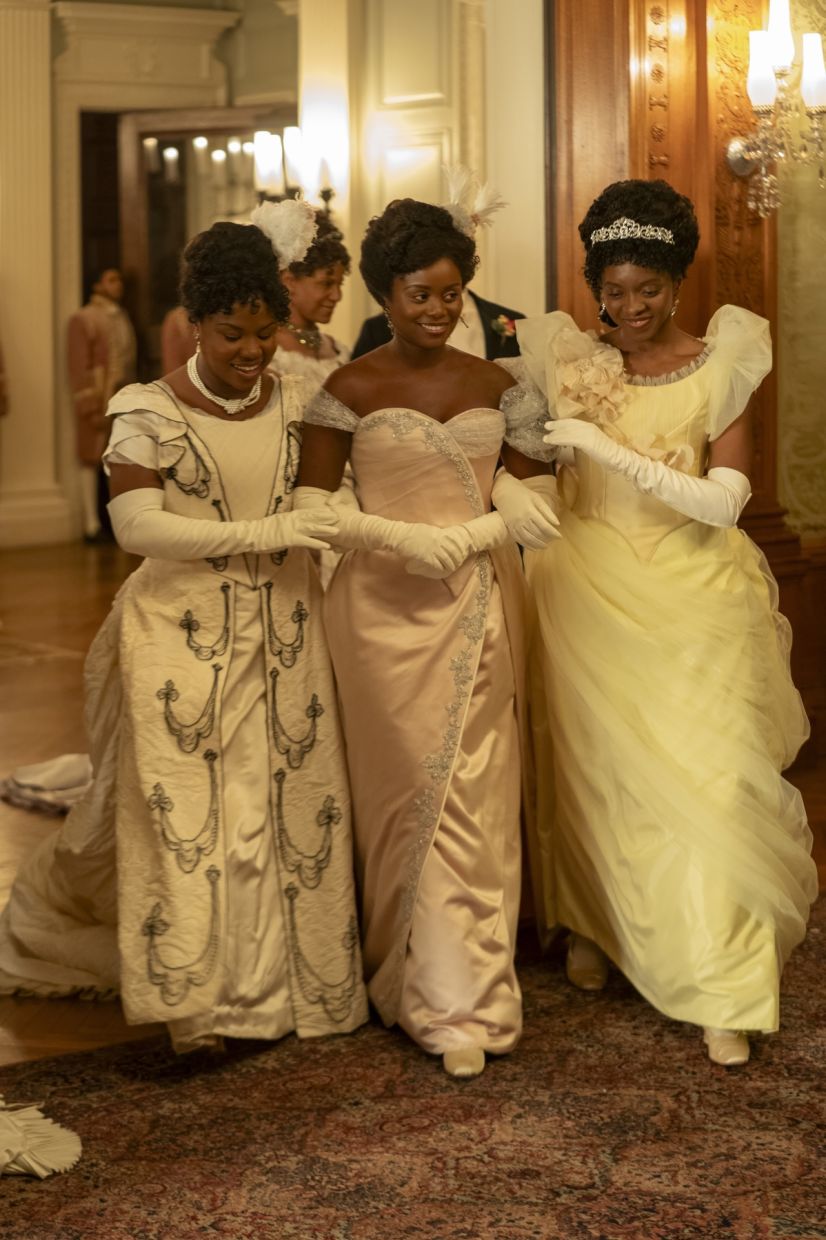
HBO’s The Gilded Age, in its third season, contrasted two fictional Black families: the Scotts, a newly wealthy family from Brooklyn, New York, and the Kirklands, New Englanders who are even more entrenched in high society.
These projects have highlighted the social and economic divisions among Black Americans that have existed since at least the early- to mid-19th century, when westward expansion, industrialisation and the rise of tourism in the US opened new paths to education, riches and visibility (at least for some).
Read more: 'Dandyism is a discipline': One man's take on style, identity and defying labels
And, like the Met’s exhibition examining dandyism and Black men’s fashion as a form of cultural power, the Polo Ralph Lauren for Oak Bluffs line and The Gilded Age have started conversations about elitism and exclusion within the Black community.
Online, some praised the Oak Bluffs collection ads, which feature breezy beach scenes and impeccably dressed families, for offering a vision of Black life not centred on hardship.
Others saw the romanticised portrayal of Black vacationers in a rarefied enclave as out of touch.
Jonathan Square, a fashion historian and an assistant professor of Black visual culture at The New School in New York, put it this way.
“At the same time,” he added, “I do have to recognise that it’s shot through with elitism and colourism and it doesn’t reflect the experience of most Black folks then and now.”
The collection is the second born from Ralph Lauren’s ongoing partnership with the historically Black colleges Morehouse and Spelman, part of a company initiative to design clothes “authentically celebrating heritage” that reflect “inspirational and aspirational” facets of American life.
The earliest Black elites were defined not just by wealth, but also by education, tightly knit social networks and respectability, said Carla Peterson, professor emerita at the University of Maryland and the author of Black Gotham: A Family History Of African Americans In Nineteenth-Century New York City.
Respectability, Peterson added, “was the outward manifestation of inner character and rooted in bourgeois values of hard work and moral uprightness”.
Square said that fashion was a way for the Black aristocracy to telegraph an “adherence to respectability politics”.
Its members, who descended from free Black communities, conformed to Eurocentric dress codes to signal status and legitimacy in a country largely still hostile to their success.
They found economic footholds before and after the Civil War through emerging industries like hospitality, Square added, and often had lighter skin, a trait that distinguishes the Kirklands from the Scotts on The Gilded Age.
But the difference in wealth between established Black families like the Kirklands and newly arrived ones like the Scotts was slight when either’s fortunes are compared with those of the affluent white families of their era.
Because the Kirklands’ and Scotts’ differences were more cultural than material, the characters’ attire reflects only subtle distinctions, Kasia Walicka-Maimone, the costume designer for The Gilded Age, said in an interview.
For Mrs Kirkland, the costuming was expansive and varied.
The variety of her wardrobe – which ranges from attire in summery whites and blues to pieces in autumnal oranges, greens and browns – is meant to show the scale of her affluence.
For Mrs Scott, whose husband was formerly enslaved, Walicka-Maimone used a convertible dress – two tops with the same skirt – a historically accurate trick women used at the time to stretch a single garment across occasions.
With entrepreneurial ventures in leisure towns like Newport, Rhode Island, the home of the Kirkland family, a Black moneyed class gained more influence, Erica Armstrong Dunbar, a historian and an executive producer of The Gilded Age, said in a recent interview on the show’s companion podcast.
“One of the things that gives me great joy about this show is that we get to think about lives outside of the kind of typical narrative that we see or read about,” Armstrong Dunbar said on the podcast.
Her sentiment echoed what fans of Ralph Lauren’s Oak Bluffs collection have said about the line, named for another getaway long visited by the Black aristocracy.
This month, some of its members gathered in Oak Bluffs for cultural festivals that featured events for the Ralph Lauren collection and The Gilded Age.
Read more: Beyond the Met Gala, dressing like a dandy is timeless – here’s how to do it
The fact that Black elite style is “having a moment” now, as some are seeking to minimise diversity and widen inequality in the US, can be read as a form of resistance, Square of The New School said, because of the way it affirms self-worth by embracing dominant sartorial codes to assert belonging.
But commercial portrayals like the Ralph Lauren Oak Bluffs collection can also emphasise the class disparities separating different groups of Black Americans, he added.
Speaking about the Oak Bluffs line on a panel at the recent Martha’s Vineyard African American Film Festival, David Wall Rice, a professor at Morehouse College, grappled with the complexities of spotlighting the Black upper-crust.
“What does it mean to be in elite spaces and protected spaces, and then what does it mean to be elitist, to separate yourself from others?” Rice asked.
“That’s something that’s important for us to pay attention to as we are in these privileged spaces. What is our responsibility?” – ©2025 The New York Times Company
This article originally appeared in The New York Times.