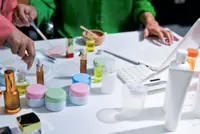
Beauty brands and consumers are making mindful moves towards sustainability


Conscious beauty is an idea and movement that has been growing in the past few years. — Natura

Beauty and skincare products are a lifestyle staple to women across the globe, with consumers spending an estimated US$382bil (RM1.6 trillion) a year on these products.

Every year, the beauty industry produces an estimated 120 billion units of packaging, according to Zero Waste Europe. These include complex lids, cellophane and multi-layered boxes which are mostly non-recyclable, ending up in landfills and the ocean.

As more consumers adopt the habit of researching products’ ingredients before they buy them, many take it a step further to find out which brands actively adopt sustainable practices throughout product’s life cycle.

Conscious beauty is an idea and movement that has been growing in the past few years – the idea is to adopt skincare and beauty regimes that are not only kinder to your body, but also to the environment and the planet.

Beauty giants too, are moving in the right direction. In September 2021, a collective effort led by some of the industry’s biggest companies was announced, according to an article in Vogue Business.

A collaboration to co-develop an environmental impact assessment and scoring system for cosmetics products was announced by L’Oreal, Henkel, LVMH, Unilever and Natura & Co, who said that the scoring system would enable shoppers to easily compare the environmental impact of cosmetic products.

At Natura, 90% of the brand’s formulas are made with natural and renewable ingredients, and the brand prioritises the use of post-consumer recycled and renewable materials in producing packaging and refills.

For decades, the brand has been working with local forest communities to extract ingredients in a sustainable manner, ensuring opportunity, well-being and income for all.

“We seek innovations inspired by nature and, through our sustainable practices, we motivate people to keep the forest alive,” says InNature Bhd managing director Datin Mina Cheah-Foong. The Brazilian cosmetics brand Natura is owned by Natura & Co.

Homegrown Malaysian brands such as The Olive Tree and Lips Carpenter are doing their part in the sustainable beauty movement.

“I was exposed to all kinds of information about plastic-free campaigns and environmental damage especially how we impact the physical environment in many ways through our daily product consumption,” says Law Hong Mei, founder of The Olive Tree, a brand which offers natural handmade soaps, hair care, body care, facial care and aromatherapy products.

The brand was created in 2015 with the purpose of offering clean and natural skincare products, and two years later they began including mindful moves into sustainability.

 Law Hong Mei’s brand uses recycled kraft paper boxes to protect bottles and recycled paper fillers to protect all the packaging. — The Olive Tree
Law Hong Mei’s brand uses recycled kraft paper boxes to protect bottles and recycled paper fillers to protect all the packaging. — The Olive Tree

“Sustainability is now top of mind for beauty brands, and we’ve seen an industry-wide push towards developing more sustainable packaging. But there is a lot that must be done differently when becoming more sustainable because it involves sustainable processes, materials, and products, and doing things differently. “

To begin reducing their reliance on plastic and minimising plastic pollution, the primary effort is to cut down plastic from the source, on the supplier’s end including the manufacturer and logistics partner, where the use of plastic is much high than the consumer’s end.

“Imagine a bottle of essential oil packaged in a glass bottle without any outer box, this will require plastic or a non-sustainable wrapping when it gets delivered from manufacturer to logistics partner. More wrapping is needed when it is sent to us,” explains Hong Mei.

“By using recycled kraft paper boxes to protect the bottles and recycled paper fillers to protect all the packaging, we have cut off the plastic use entirely. Same goes to the consumer's end when we deliver their needs after the purchase.”

Among The Olive Tree’s sustainable initiatives is to offer discounts to customers who return glass and plastic bottles to them, and they have a presence in well-known zero waste bulk stores the Hive and Common Goods Market.

“We are one of the very first brands in Malaysia who started doing refills in bulk. We are conscious of the fact that most of our products are packaged in recyclable packaging such as plastic and glass bottles. Therefore, we want to be responsible for the packaging that we produce for our products,” adds Hong Mei, whose handmade soaps use 100% recyclable and biodegradable soap boxes. “We are currently in the transitional process of changing all PET bottles into recycled PET bottles (RPET).”

A few months after her brand’s inception, Lips Carpenter co-founder Yifon Law and her team began identifying ways to overhaul their product packaging.

“We made conscious efforts to incorporate eco-friendly packaging concepts in our decision-making to reduce their environmental impact. For example, our lip balms are in degradable paper tubes and our facial cleanser and mask come with refill packs,” says Yifon, whose brand offers skincare and cosmetics including facial cleanser, facial mask, lip balm and lipstick.

“Another initiative our team has been doing is packaging donation drives where we collect used bubble wrap and scrap paper from our local customers and businesses and give them a second life.

“It takes more time and effort to conduct experiments and innovate packaging concepts and designs. Products and packaging need to be practical, user-friendly and better for the environment. Creative sustainable packaging also comes with its set of challenges where consumer education is needed to introduce new packaging designs and new application methods when people are so used to the conventional," says Yifon.

Natura has been a part of a global network of companies that associate economic growth with the promotion of social and environmental well-being since 2014.

“B Corp certification reinforces our commitment to sustainable global development. In December 2020, for the third time running, Natura received B Corp certification, which is a certification for B corporations that uses their businesses to generate positive economic, social and environmental impacts,” explains Cheah-Foong. “In other words, they strive to be more inclusive in their processes.”

In the “Living Amazon Forest” cause, Natura contributes to the conservation of 2 million hectares of the Amazon region by means of its business model which combines fair trade, sustainable stewardship and benefit sharing.

“The company was the first Brazilian cosmetics brand to adopt refills for its products as early as 1983, avoiding the daily disposal of waste equivalent to the amount produced by 5.5 million people,” adds Cheah-Foong.

In 2020, Natura Malaysia started its own recycling campaign as an initiative of closing the loop and reducing plastic waste. Any of Natura’s empty plastics can be returned to the store and as a token of appreciation, customers can enjoy a discount on their next purchase.

For any five plastic empties returned, a recycled plastic soap dish made from Natura’s plastic will be given.

Keeping it clean

Conscious beauty and clean beauty often go hand-in-hand, and the demand for both are on the rise in Malaysia.

“Over the years, handmade soaps have becoming common in Malaysia however we set ourselves apart from other brands with our 100% olive oil base,” says Hong Mei who started the brand when she was trying to find personal care products for her children who had eczema.

More and more, customers are avoiding products that contain harmful sulphates, silicones, parabens, and toxins, perusing the shelves for natural ingredients.

Natura’s wide range of 100% vegan products are developed with safe, natural and renewable ingredients from the Brazilian Amazon Forest.

“We combine our knowledge of this biodiversity with the best in cosmetic technology, to enhance the performance of our products and deliver the best results for you, through bio-active ingredients from seeds, plants and fruits,” says Cheah-Foong. “We have also not tested on animals since 2006, our product portfolio is 100% vegan."

Apart from using clean ingredients like moisturising butter and oil in their products, Lips Carpenter is a big driver of personalised beauty.

“We focus on customised products such as custom lipsticks made with natural base ingredients, free from harmful chemical,” says Yifon.

 Yifon Law’s brand uses paper tubes as they can be decomposed in two years versus plastic tubes that could take 500 years. — Lips Carpenter
Yifon Law’s brand uses paper tubes as they can be decomposed in two years versus plastic tubes that could take 500 years. — Lips Carpenter

Customisation for their refillable lipsticks and lip balms include various casing designs, colours, scents and name engraving.

“With personalisation, it enhances the desire for people to reuse the packaging and opt for refills. The customisation also makes our custom lipstick and lip balm great gifts for the ladies.

Moving in the right direction

Cost is a driving factor with any purchase, and many consumers are still on the fence when it comes to spending more on conscious beauty.

“As with all movements that challenge the status-quo, there will be groups that embrace change and groups that choose to stay the same,” explains Yifon.

“For example, our lip balm which is packaged in a push-up paper tube costs at least six times more than plastic tubes but we still decide to go with paper tubes as they can be decomposed in two years versus plastic tubes that could take 500 years.”

To Yifon, it’s all part of a long-term process of innovating, fine-tuning and making better, sustainable products.

“The good news is the majority of our customers embrace the idea of sustainability and are in love with our lip balms and other products! Many support us because of the effort that we put into thoughtful packaging,” she adds.

With sustainable beauty, the amount of time to produce recyclable materials is relatively higher than that of conventional packaging.

Hong Mei points out that her brand’s recycled kraft paper boxes and kraft paper fillers are less popular in the supply chain, as they involve a more complex manufacturing process.

“Some consumers may still believe that brand owners are responsible for providing sustainable packaging without passing along any additional costs, however the social responsibility doesn’t lie solely on brands.”

“Sustainability is the responsibility of every individual; hence everyone is socially responsible for the process of sustainability to bring change in better environment. Societal influence will directly impact the packaging decision.”

Cheah-Foong believes that consumers are become increasingly more well-informed about sustainability and are starting to embrace and adopt it in their daily lives.

“Malaysian consumers are definitely moving towards supporting brands with strong sustainability values, increasing positive impact and saving the environment,” she says.

Hong Mei believes that green purchase behaviours will eventually gain more traction as people between the ages of 18 and 25 value brands that contribute positively towards the environment.

“High information exposure on environmental causes is the key determinator as it educates the younger generation about the causes, risks, and solutions related to environmental change. When they are more socially conscious, they will be more likely to put their money into sustainable beauty (and living),” she says.

Enjoy lower prices on sustainable beauty brands by using Zalora Discount Code Zalora Discount Code

Get 20% OFF The Star Digital Access

Monthly Plan

RM 13.90/month

RM 11.12/month

Billed as RM 11.12 for the 1st month, RM 13.90 thereafter.

Best Value

Annual Plan

RM 12.33/month

RM 9.87/month

Billed as RM 118.40 for the 1st year, RM 148 thereafter.

Follow us on our official WhatsApp channel for breaking news alerts and key updates!

Next In Style

Inside fashion designer Martin Margiela's private archive as collectors bid big
From Hong Kong to the Paris runway, Robert Wun is living the couture dream
Malaysian heritage represented through adaptive fashion at V&A exhibition
What are multitasking cosmetics and why are they now a go-to beauty choice?
Dior versus Chanel: Which fashion house won the celebrity bridal battle?
Framing fashion: Bibo Aswan, the photographer shaping Malaysia's visual style
Has Taylor Swift’s wedding just outshone the Met Gala in fashion stakes?
Fashion awaits Taylor Swift's bridal look, but here's what the guests wore
The American dream, dressed: A look into 250 years of fashion and aspiration
Why letting go of a wedding dress can be among fashion’s hardest choices

Others Also Read