Cindy Blaney stood at the top of a ladder with moss in her hair.
She had spent the morning checking bat boxes, wisps of greenery getting tangled in her wiry grey locks.
So far, she had come up short on her annual survey.Then she let out a cry: "Oh, we have bats!”
For three decades, she has dedicated much of her career to these prehistoric and polarising creatures. Maligned as harbingers of death in folklore in many parts of the world, bats are cherished by conservationists for their vital role in ecosystems.
Her accent floats between Maryland, where she grew up, and London, where she has worked and lived — in a cottage over a disused railway tunnel full of bats — for 32 years.
"It’s all a little bit mysterious to us.”
Most of the time, she sees bats only at a distance, watching them skitter overhead as they hunt insects at dusk.
But once a year, she tries to count the bats in Highgate Wood. She checks the boxes for any furry friends, and for proof of residency in their droppings.
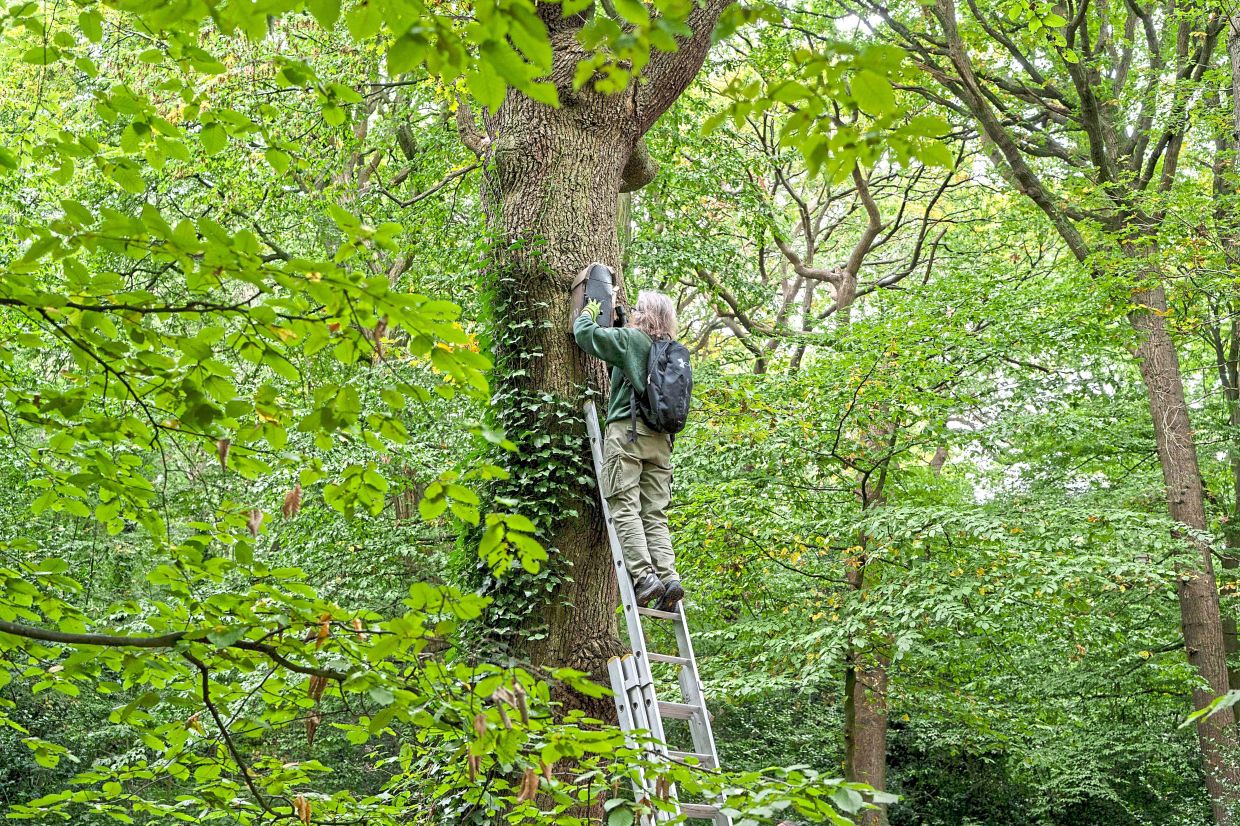
The survey provides data on how her precious charges are using the protected woodland, and whether their population is rising or declining.
She also leads Londoners on nighttime bat walks, which sell out months in advance. Her goal is to share the magic of bats living in the city, with the help of bat detectors that convert their ultrasonic signals into audible sound, while debunking fears and correcting misinformation.
"It’s like tuning in to another world,” she said. "Like a high-speed, high-frequency other world.”
Ancient little bodies
Blaney always loved the outdoors. She grew up near one of the United States’ oldest national parks, Rock Creek Park, and remembers feeling more alive pedalling through woodland on a bike than in the classroom. Her mother modelled a hands-on approach to nature, nursing injured birds and other animals back to health.
Bats entered her life many years later, after she moved to England to be with her British partner (now husband) and became a gardener and then a tree surgeon. She met a conservationist who was caring for an injured bat. Inspired, she got a license to handle them.
Even her mother was a little mystified: "But can you look them in the eyes?” she would say.
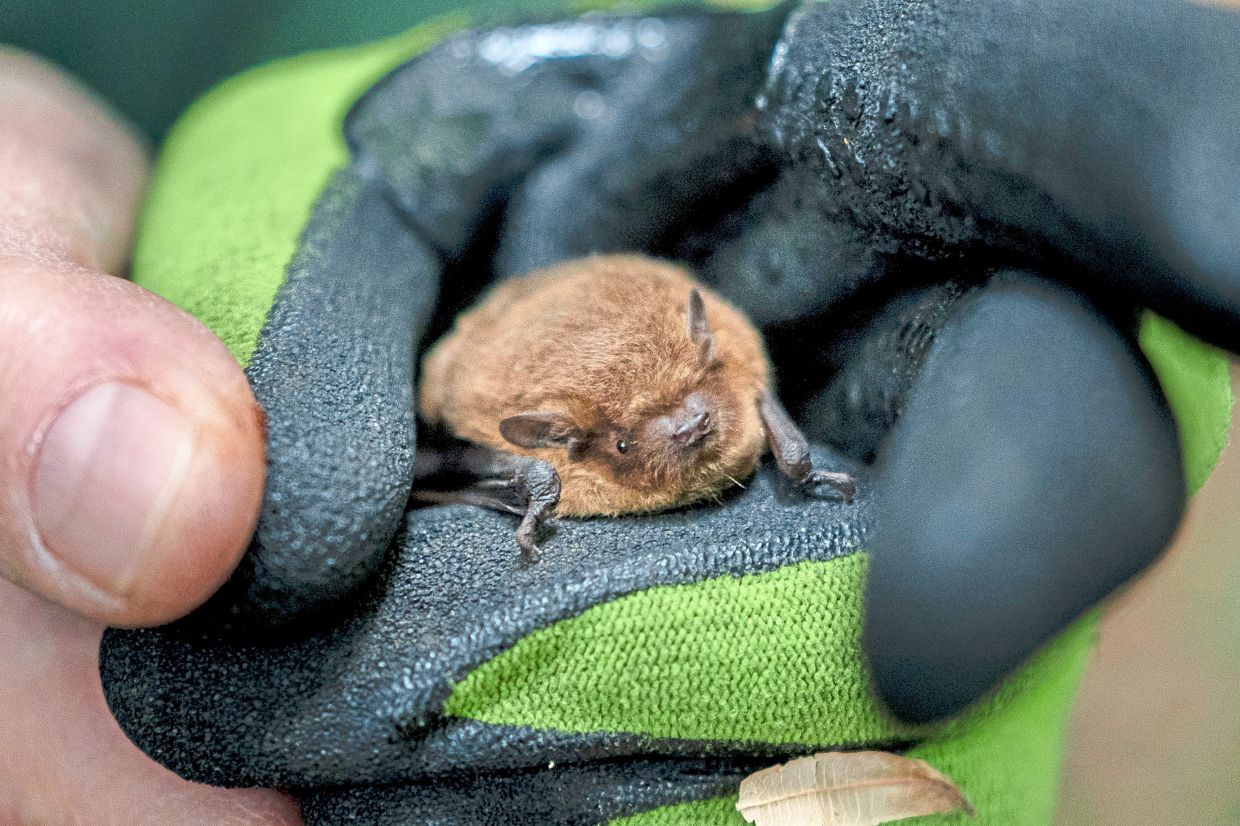
Blaney sees her mother’s point — she may have a face-to-face meeting with the creatures only once a year. But she respects their aloofness, their elusiveness, their ancient little bodies. (Bat skeletons have been dated back more than 50 million years.)
And she’s not really a pet person: "I prefer things that are having their own life.”
Still, she is wary of overusing comparisons.
"The similarities begin to make people a bit more familiar, a bit more sympathetic,” she said. "But I think what’s so cool is how different they are.”
In Britain, bats make up four of the 11 mammal species at risk of extinction in the country. They are threatened by climate change and habitat loss. Artificial lights make hunting at night more difficult. And populations of insects — the main source of food for most bat species — are declining worldwide.
Many scientists have pointed out that human behaviour — including the destruction of bats’ natural habitats and the live animal trade — has made the spillover of viruses into other species more likely.
Blaney tries to remind people of bats’ importance in ecosystems. Many bat species spread seeds and pollinate plants. Crucially, they eat large quantities of insects.
When bats die off, people suffer, a 2024 study by a University of Chicago researcher showed. After a fungal disease decimated three species of bats in North America, the study showed that local farmers in the affected counties increased their use of pesticides by 31%. Infant mortality in those areas rose by an estimated 8%.
"Bats really are a great signal of the overall health of our environment,” said Joe Nunez-Mino, communications director of the Bat Conservation Trust, a British charity.
"If you haven’t got a healthy bat population, you probably don’t have a healthy environment.”
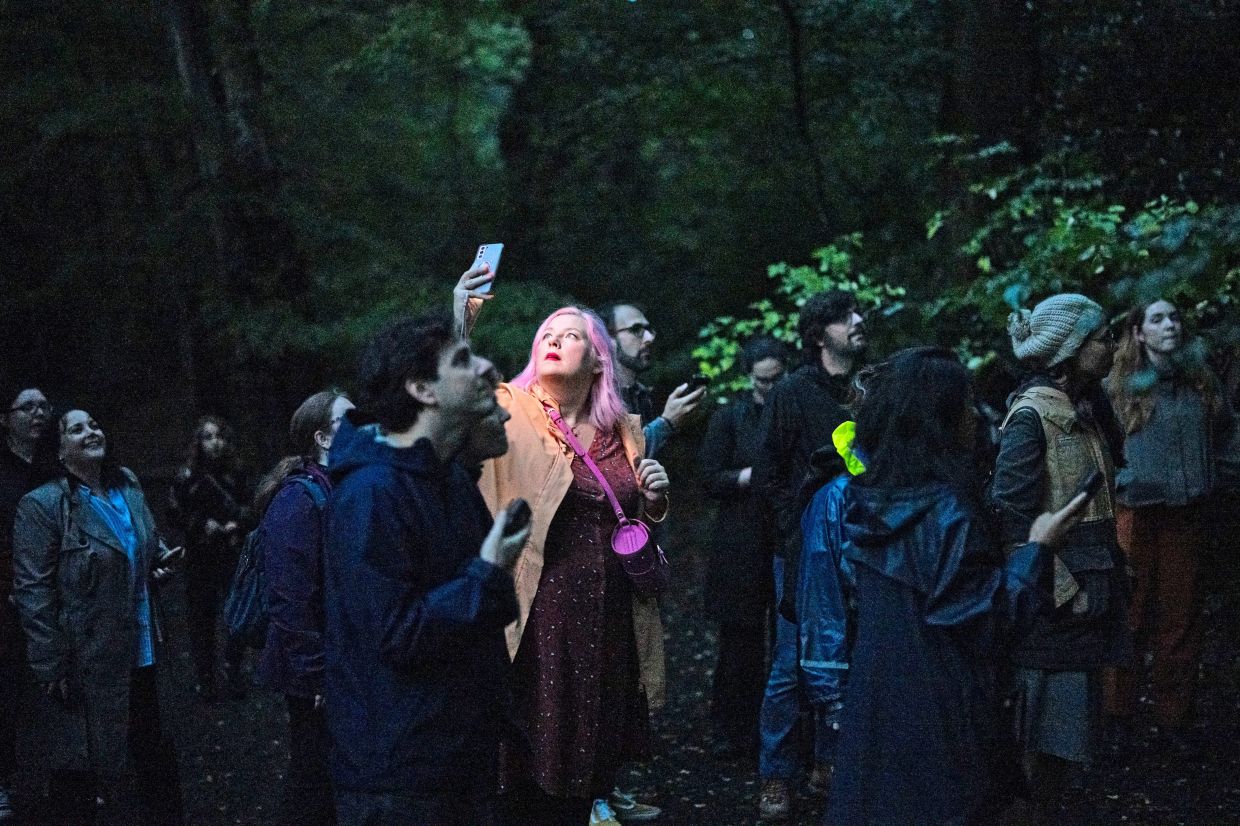
As the early evening light started to streak the clouds orange, a group of Londoners waited in a circle, sturdy-booted and ready for mud. In many cities around the world, bat walks have become a popular way for conservation charities to educate locals.
"This is a great way to demonstrate that bats fly with their hands,” she said, holding the Noctule and stretching her other hand out like a wing.
Sometimes, she brings bat droppings, which look like brown pencil erasers. Blaney likes to crumble the poop to show off its shimmer — "like fairy dust”, she says. (The sparkles are fragments of insect exoskeletons, which bats do not easily digest.)
Blaney ended her introduction by handing out bat detectors, which pick up on the high frequency sounds the creatures make as they echolocate. Then she led the group into the darkening trees.
They heard the bats before they saw them. Suddenly, the small detectors started clicking. Dozens of people looked skyward.
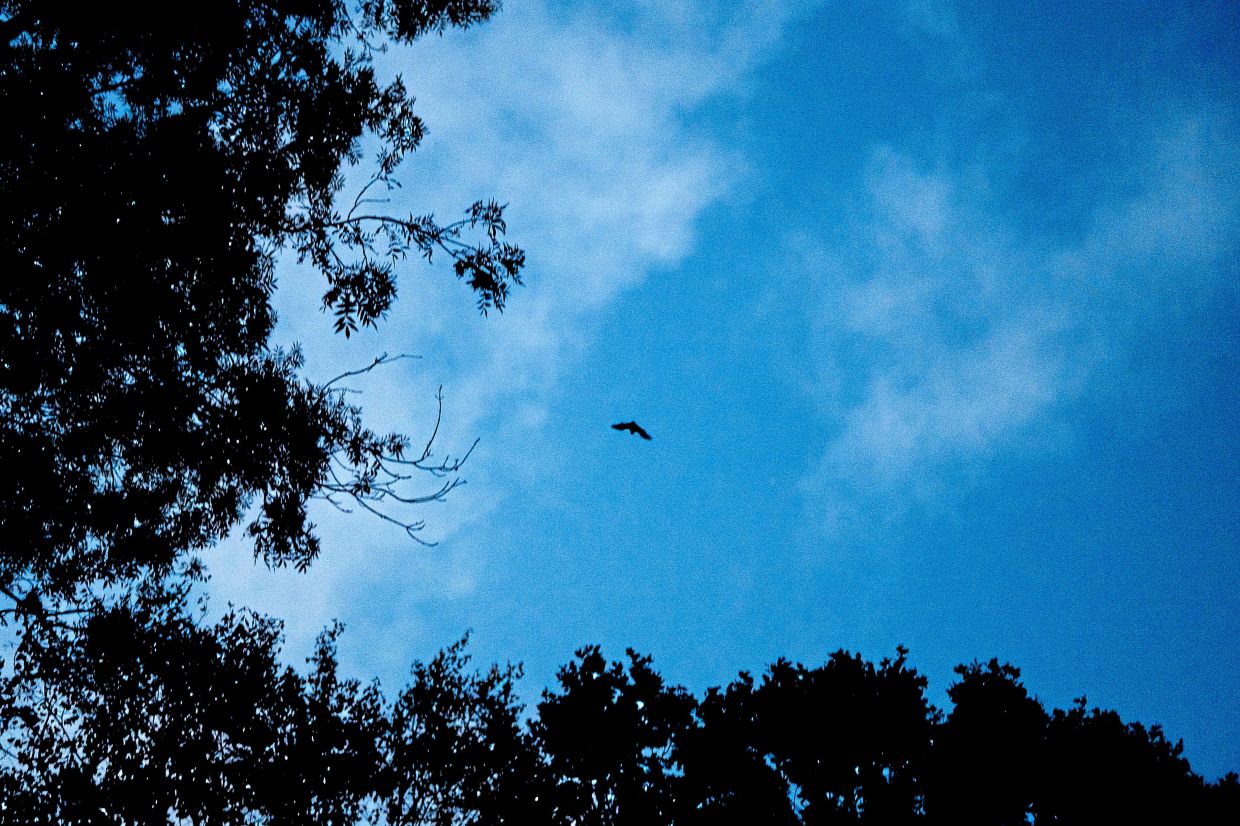
Bats are easy to spot because they fly a little bit like Tinkerbell, erratic and staccato, whereas birds tend to soar or glide.
"Look, there’s one!” said Barney Nutbrown, 11, pointing. "There. Look! Do you see that?”
Bats wheeled above him. His six-year-old sister, Shoshi, followed his finger. Then she saw them, too. "Bats!” she shouted. "Watch out!”
"Bats are just doing their thing,” Blaney said, reassuringly.
"Did you see one?” Kate Fawell-Comley asked her husband, Matt Thomas.
Fawell-Comley said that she had loved learning about their local park. "You don’t really ever, during the day, look up at the trees and think about what’s up there,” she said.
On the day of her annual bat census — carried out in daylight, when bats are sleeping — Blaney eased herself down the ladder, carrying the nesting chamber from a bat box.
Once on solid ground, she took a closer look.
The bats were nestled like furry walnuts, bleary and still. One poked its nose out as she bent to count them: Four.
Then she climbed back up, holding the chamber flat, like a server with a tray of drinks.
"They like to be quite cosy,” she said, carefully fitting it back into place. – ©2026 The New York Times Company