After the flood: Germany winegrowers struggle with a difficult harvest


By AGENCY
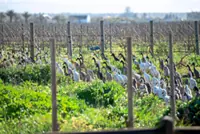
Lanzerath cuts grapes in the Ahr but vintners fear the floods mean this year's harvest won't be promising. Photos: Thomas Frey/dpa

Eva Lanzerath is cutting grapes with her pruning shears and laughs as she rests a moment in the steep vineyard that looks down on the Ahr river.

"The grape harvest is a special feeling. It's something I can't miss in any year, not even in this year of the pandemic and floods."

A local from Germany's Ahr valley, she is training to be a primary school teacher and has just finished a year as Germany's Wine Queen.

It has been a difficult year, after the Ahr valley was hit by flash flooding in mid-July, killing 133 people and causing widespread destruction. The Ahr is a tributary of the Rhine and the valleys are Germany's northern-most wine region, known for its slate-warmed red, slightly sweet wines.

But the floods wreaked havoc at 65 of the 68 wineries in the valley, causing damage of US$186mil (RM775mil). Some 32 of 560ha of vineyards in the area were completely washed away, according to state Minister of Viticulture Daniela Schmitt.

A further 15ha were so badly hit by flooding that no grapes can be harvested there this year.

July's flash floods in Western Germany were a catastrophe for wine growers.

That damage will be expensive. It costs up to €1.5mil (RM7.15mil) to rebuild a vineyard, according to Knut Schubert, managing director of the Ahr Winegrowers' Association. New plantings amount to around €60,000 (RM286,098) per hectare – and the grapes cannot be harvested for the first three years.

Most winegrowers in the Ahr valley are not insured against natural hazards, Schubert says. They are now hoping for reconstruction aid from the federal and state governments.

Most of the wineries that were damaged in the floods are located in the lower parts of the river valley. However, with their vineyards tended to be planted on the steep, rolling upper slopes, most remained unaffected.

Meanwhile, many in the industry were quick to lend a hand.

"The cellars in the Ahr Valley have largely been restored or the winegrowers have joined forces and help each other or have rented halls," Lanzerath says. "Everyone knows everyone here."

The floods left gaps where buildings once stood. Many buildings will have to be torn down after structural damage in the floods.

Thousands of specialist vehicles used in the Ahr Valley were also damaged in the flash floods. Thanks to mobile workshops, many of the winegrowers' tractors have now been repaired, according to Schubert, particularly the older ones with little in the way of electronics.

"An incredible amount has been done," he says. People lent or fixed wine presses and labelling machines, or helped locate replacements. "A lot happened in the shortest possible time."

Wine sellers also moved swiftly to create fundraising campaigns to help vineyards and restaurants. One relief campaign, called Flutwein, which translates as "flood wine", managed to gather €4.5mil (RM21.5mil) by inviting supporters to order bottles of wine that were still soiled in the mud of the floodwaters, making them unique.

Local vintners are now busy with the harvest in full swing in the area dubbed a red wine paradise. The mood is proving to be surprisingly positive, says Lanzerath, calling this a happy surprise. It is more upbeat than many expected partly thanks to the many volunteers who came to help, shocked by the images they saw on television.

One group of 25 people travelled from the nearby city of Cologne to help out her family. "They all had hardly any idea about viticulture, but were very interested," Lanzerath says. "After a short introduction, they had a lot of fun. We all tasted wine afterwards and everyone took a bottle home."

The Wine Queen adds that afterwards, all said the work had helped them to appreciate wine much more. Still, this year's harvest is likely to be disappointing, according to Schubert. All the wet weather has not been good for the largest contiguous red wine region in Germany.

Reconstruction work is underway in the wine-growing area but is likely to take a long time.

The German Wine Institute echoes this assessment saying on the whole, the fruit was good nationwide, but rain has caused regional fungal infestations. Nonetheless, the harvest should be complete in the coming weeks in the Ahr, says Schubert, as ever, depending on the weather.

Every summer, the narrow Ahr valley heats up and its slate soils radiate the heat again at night, a microclimate that the Romans are said to have used to grow wine in the area 2,000 years ago.

Nowadays, the valley draws tourists who hike along its trails, winding their way through the steep vineyards and, in a normal year, tasting the wine at small stalls.

Between glasses of fruity red, there are sights to see, too, such as a monastery at Marienthal, or the German government's historic underground bunker. This year too, the valley is busy with day-trippers and winegrowers alike.

But even though the harvest is under way, they don't get in each other's way – rather, it feels like a welcome moment of normal life again, Schubert says. – dpa

Get 20% OFF The Star Digital Access

Monthly Plan

RM 13.90/month

RM 11.12/month

Billed as RM 11.12 for the 1st month, RM 13.90 thereafter.

Best Value

Annual Plan

RM 12.33/month

RM 9.87/month

Billed as RM 118.40 for the 1st year, RM 148 thereafter.

Follow us on our official WhatsApp channel for breaking news alerts and key updates!
wine , wine growers , Germany , climate change

Next In People

Bespoke milliner makes World Cup-themed cowboy hats in Texas, US
South Korean pianist recreates himself as a one-handed performer after paralyzing stroke
Entrepreneur and father Ma Han Pin is redefining what success looks like
Malaysian veteran photographer and her son share work and family ties at The Star
A living dilemma: Syrians in Germany split over staying or returning to homeland
Entrepreneur and mother of four Nadia Nasimuddin on redefining wellness and bodycare
She's only 10, but she's taking college courses in the US
Iban woman leads Malaysia's parasitology and tropical medicine society
What keeps this Malaysian vendor delivering The Star for decades
Couple goals: Married medics face war side by side in Ukraine

Others Also Read