
Eight years ago, computer science graduate Sivarajan Gunarajan, 37, started a logistics company. Running the company gave him a bird’s-eye view of how to operate a food business, as many of his clients were food or snack companies. The exposure also spurred an interest in manufacturing a food product himself.
Siva was particularly keen to develop something uniquely Malaysian. Last year, he finally found his perfect opportunity when he started running a fuchok (dried beancurd skin) snack brand called Fupi Beancurd Skin Crisps – taking over the brand from someone else.
At the time, Fupi’s core consumer base was Singapore hotels, but Siva saw the potential in turning it into a global, Malaysian-made snack.
“Someone told me that there was this product that the owner wanted to let go. And I wanted to manufacture something that has a strong story that we can bring out of Malaysia and something that can be championed as being Malaysian, because fuchok is eaten by all races here.
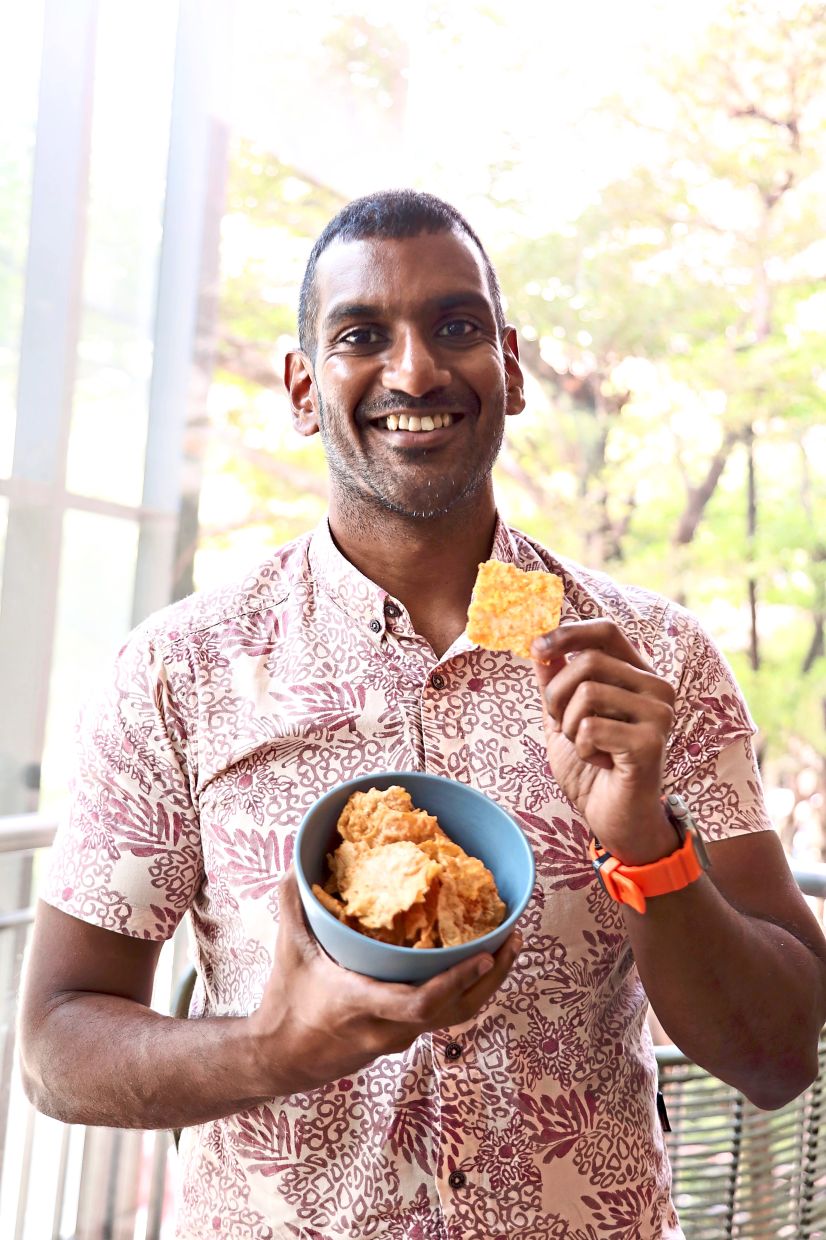
“I thought that it had a huge potential to become a proper snack brand that could be exported overseas compared to just a unique one that you can find in hotels,” says Siva.
Siva’s core ethos is about making sure the snack is almost entirely Malaysian. To this end, he champions a network of five small cottage industries based in small towns in Johor that still make fuchok the traditional way.
Fuchok is traditionally made by extracting (by hand) the thin layer of skin that forms on top during the heating of soy milk to make tofu. It’s a rigorous, highly manual process that is essentially a labour of love.
The resulting air-dried fuchok is processed manually at Siva’s manufacturing plant in Melaka. While Fupi originally had only two flavours, Siva has perfected the recipe and grown the manufacturing process to include four variants – Sichuan mala, hotpot tomato, Thai green curry and seaweed wasabi.
The snacks are very addictive – each piece of beancurd skin is thin, incredibly crisp and seasoned with flavouring agents that really add character to its composition. The mala is particularly feisty and poignant, while the tomato is a sleeper hit that creeps up on you slowly, imparting a warm bloom of tomato-riddled flavours with each mouthful. These are snacks that are easy to get behind because they’re just really good.
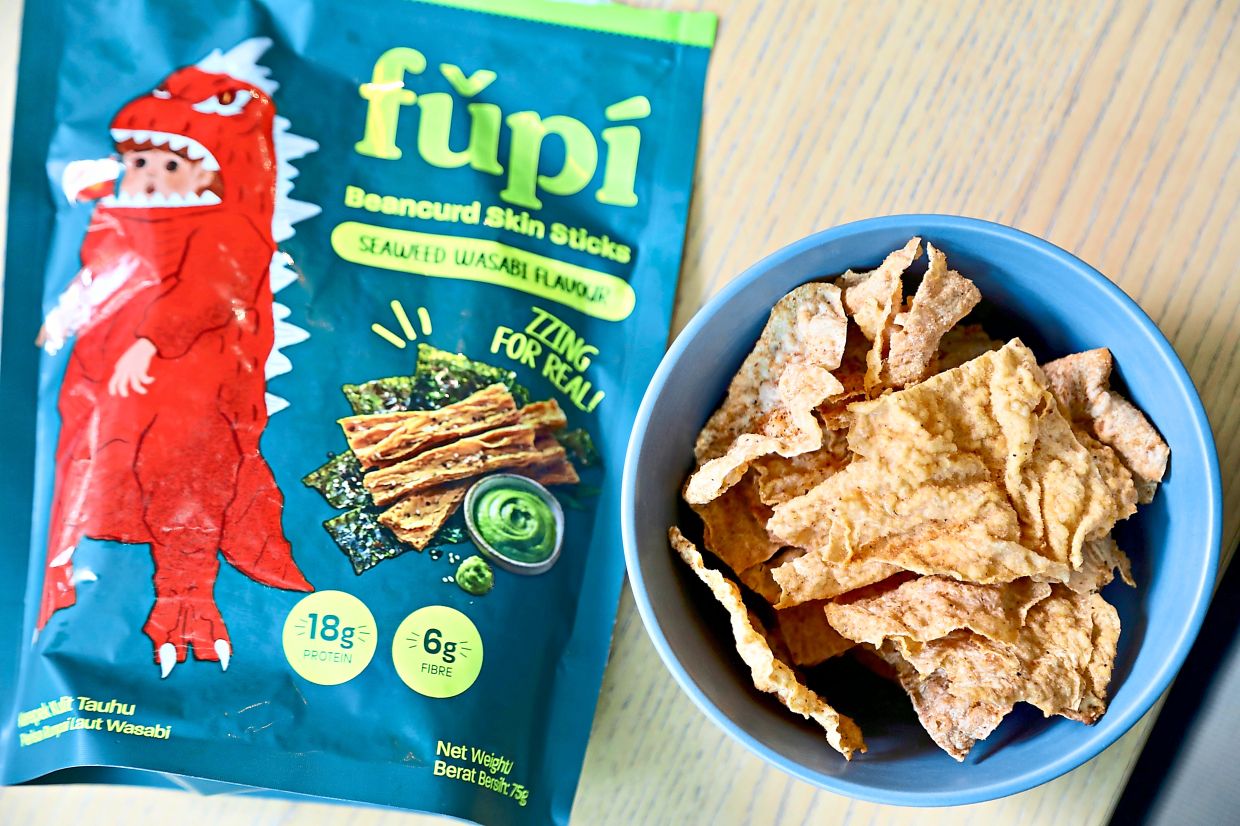
There is also a health element to this snack. “Beancurd skin is a complete protein – almost as complete as animal protein – and it has amino acids and healthy fats.
“So we position ourselves as a healthy-ish snack and there’s a huge gap in the market for something like this because if a product is too healthy, the flavour sometimes goes off. So this one is right in the middle – it’s healthy enough, but the flavours keep you satisfied and make the eating experience worthwhile,” says Siva.
Since taking over the brand, Siva has worked hard to get it into major retailers. Fupi is now available at BilaBila Mart, select Jaya Grocer and Qra outlets and is sold on online e-commerce platforms as well as upscale KL hotels like Waldorf Astoria Kuala Lumpur and KLoe KL. The brand is also available in select Asian supermarkets in countries like Switzerland, Belgium and Germany.
To make it accessible to more Malaysians, the product is priced at RM9.90, offering a value-for-money proposition that will likely endear it to many.
Fupi now sells 4,000 to 5,000 packs a month, although 70% of the business still comes from Singapore. To continue growing the brand, Siva is in the process of expanding the flavour range to include more Malaysian options, and more importantly, he is hoping to attain halal certification for the brand.
“So for us, being a Malaysian brand, I think being halal is important, because it benefits not just consumers but also the manufacturers themselves, as it sets the right standards in terms of cleanliness, quality, the right processes and all that.
“But our biggest plan is actually to export the product globally. We want to make it something that Malaysians can be proud of,” says Siva, smiling.