
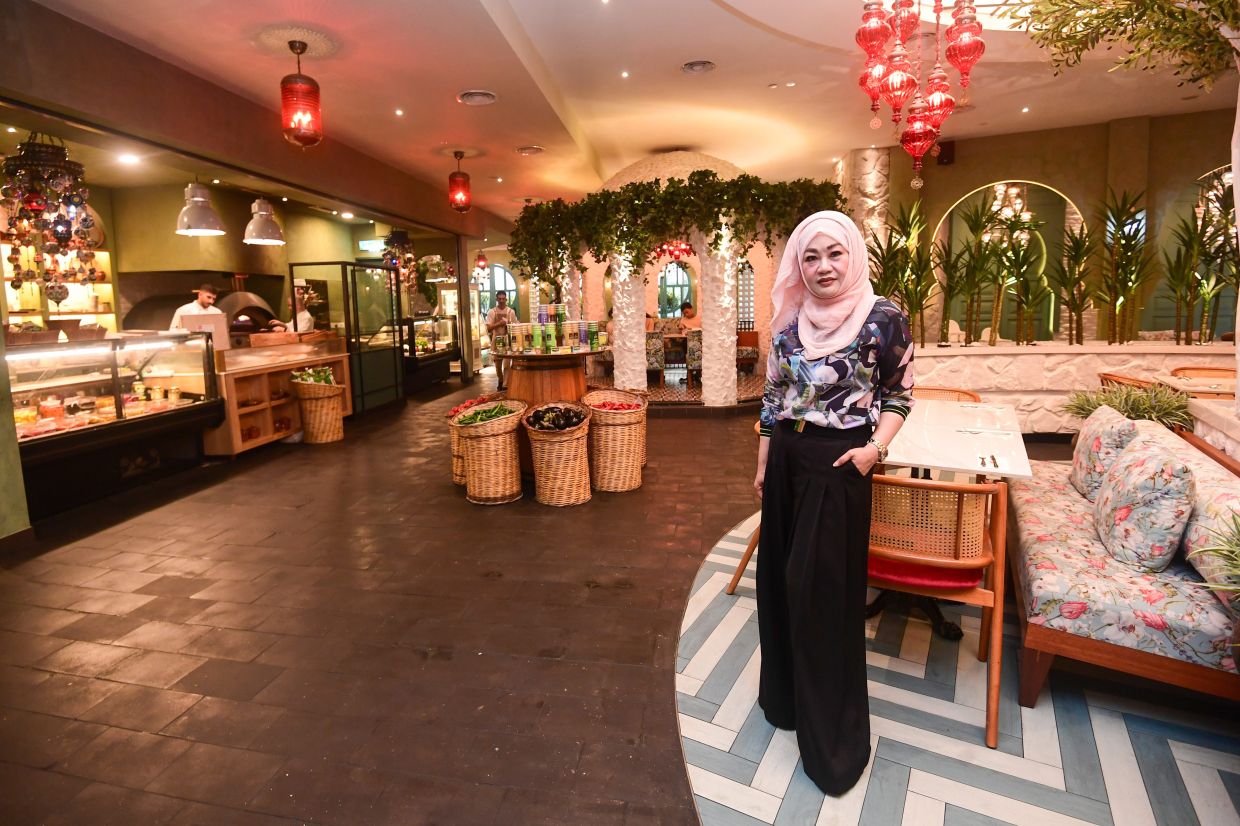
Walking into Al Halabi in Kuala Lumpur’s upscale Pavilion Damansara Heights is like sashaying into an Aladdin’s cave of gargantuan properties.
The sprawling 743sq m eatery is beautifully appointed with custom-crafted floral upholstery, Moroccan lamps and picture windows looking out onto the city beyond.
The restaurant is helmed by seasoned entrepreneur Shereene Kung Abdullah who is no stranger to opening West Asian restaurants. Shereene and her ex-husband Mohyiddin Al Halabi were the duo behind famed eatery Tarbush, which opened way back in 1998.
Tarbush became renowned for its Arab meals and was a huge hit, filling a gap in the market for West Asian fare, which was underserved and underrepresented at the time.
“The father of my children is Syrian and he cooks very well. And at that point, there was no Arab restaurant, so whenever people would come to the house, he would always cook for them and everybody would be like, ‘Oh, you should open a restaurant’.
“Then one day, he decided to do just that. He said, ‘Oh, I've rented this place, so I think we're going to do a restaurant’, and I was like, ‘What?’,” says Shereene, laughing.
Shereene and Mohyiddin were instantly thrown into the deep end. She recalls days where they closed the restaurant at 10pm, went to the wholesale market, slept in their car until 4am when the market opened, woke up to buy what they needed and went back to the restaurant.
All that crazy hard work paid off and Tarbush soon expanded to nine different outlets, which Shereene and Mohyiddin managed on their own. In 2014, they sold off Tarbush, but by then, they had already opened Al Halabi (named after Mohyiddin’s family name), first as a lounge restaurant in an upscale hotel and then in Pavilion Kuala Lumpur.
Twelve years later, Shereene and Mohyiddin (who have since divorced but are still business partners) followed this up with Al Halabi in Pavilion Damansara Heights.
At Al Halabi, the focus is on the food of the Levantine belt – Syria, Lebanon, Jordan and Palestine. The kitchen is helmed by chefs who hail from Syria and everything is made from scratch under Mohyiddin’s supervision with a large part of the menu dedicated to his family’s heirloom recipes.
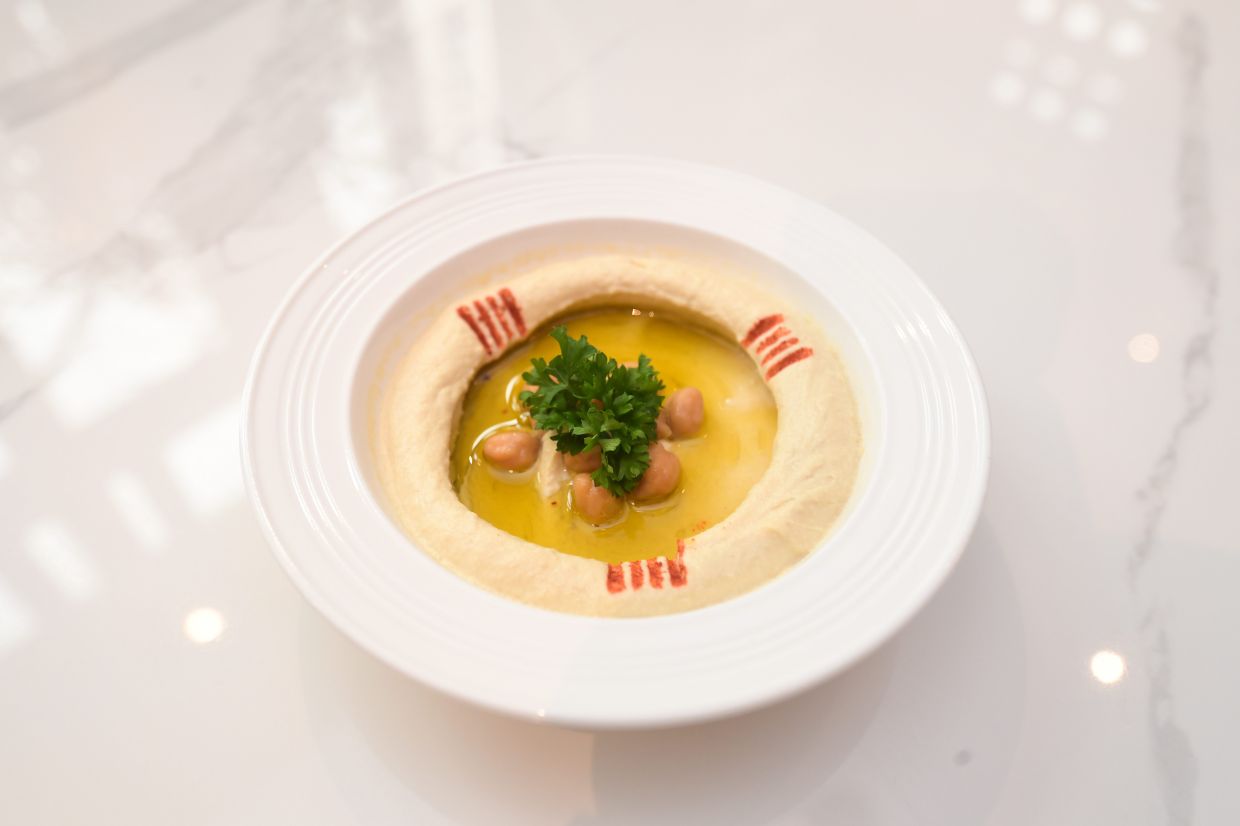
To begin a meal here, get the Hommus Al Halabi (RM25). Hummus is a mainstay dip in Arab cuisine but it has grown to become a successful crossover artist in the food world and is now a global favourite in its own right.
In the restaurant’s iteration, this smooth, creamy chickpea-fuelled operator is buoyed by tahini (a ground sesame condiment), garlic, lemon, olive oil and spices.
The dip is intensely flavourful with rich, nutty nuances and a pleasant tang to counter this decadence. Pair it with hot, fluffy Lebanese bread for maximum effect.
The Baba Ghanoush (RM25) meanwhile espouses the virtues of eggplants that have been grilled till the vegetables are ever so slightly burnt and release a rich umami flavour.
This is juxtaposed against fresh parsley, tomatoes, chives, garlic, lemon juice and oil.
The result is a hedonistic, luscious dish that has a smoky redolence punctuating each mouthful.
The potency and lushness of the eggplant meanwhile comes through hot and strong while still allowing the other players here to actually play a part in this glorious team effort.
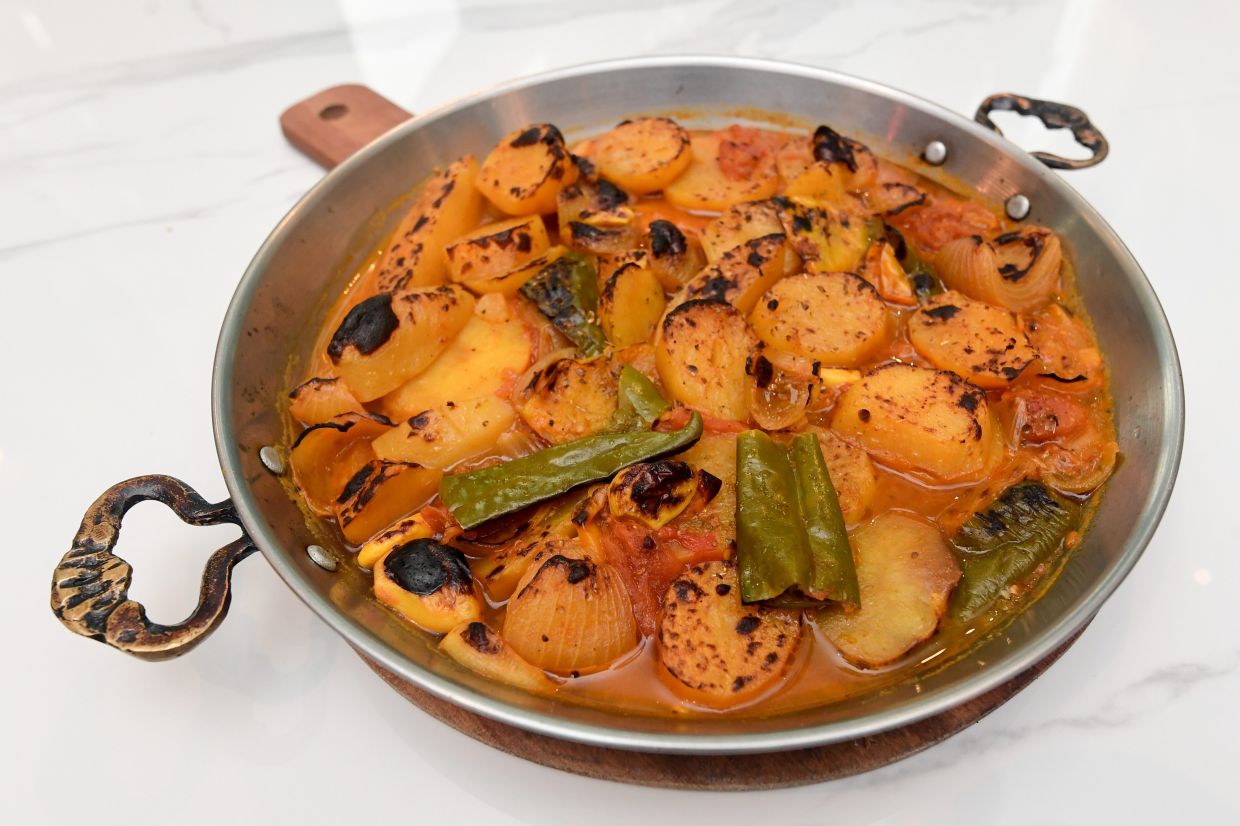
Another vegetarian option to try is the Batata Bil Forn (RM30) which is essentially baked potatoes with tomatoes, onions, garlic and spices.
This delicious dish is boosted by the power and heft of the potatoes which are cooked perfectly while still retaining some degree of firmness.
The tangy, garlicky undertones that coat this dish form the base of many traditional Lebanese dishes, so it’s well worth trying if you’d like to understand the flavours that define Lebanese cuisine.
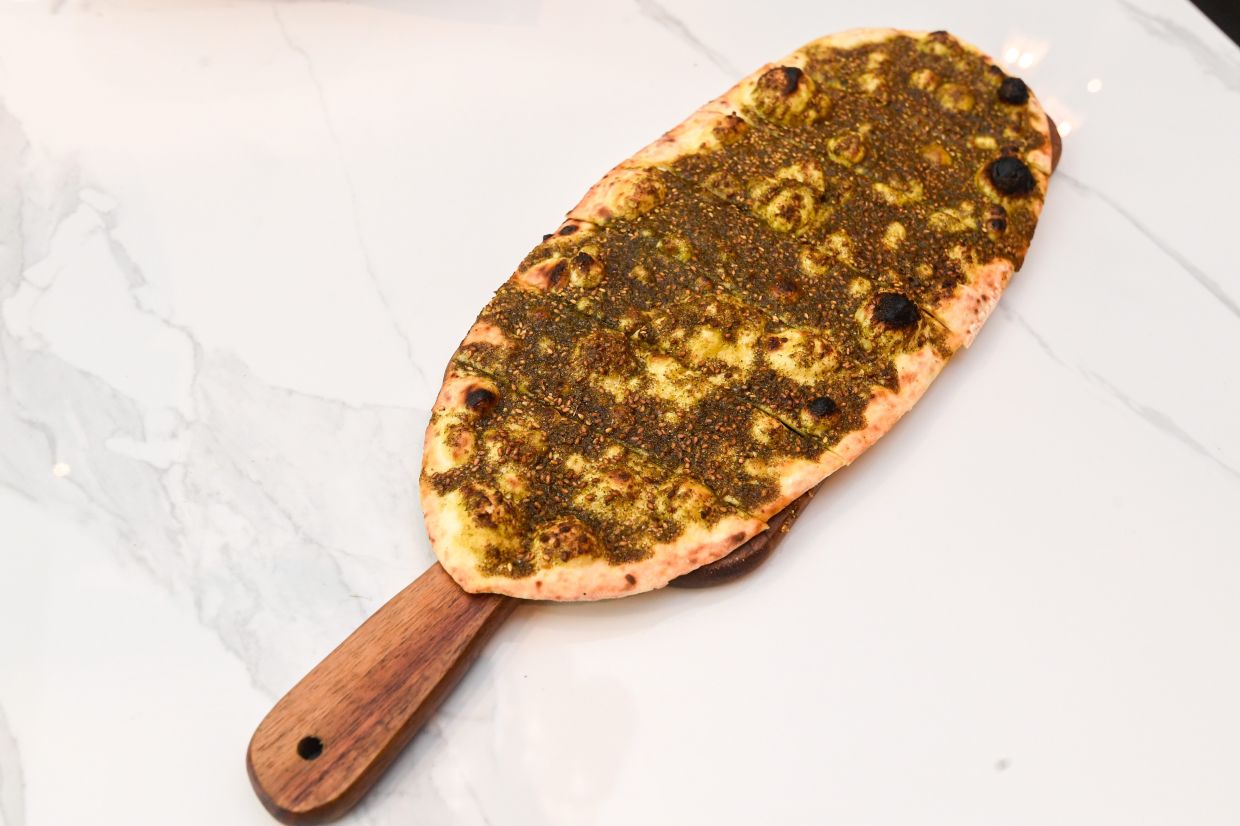
For more meat-free delights, definitely try the Saj Zaatar (RM30). This popular street food features thin flatbread cooked over a metal dome (saj), topped with the popular West Asian spice spread of zaatar – made up of dried wild thyme, toasted sesame seeds, olive oil, sumac and salt.
Here, the bread acts as a thin canvas for soaking up the flavours of the zaatar, which is awe-mazing – crumbly, gritty and crunchy with an herbaceous overlay, oleaginous nuances and nutty overtures. It’s truly one of the best things to eat at Al Halabi right now.
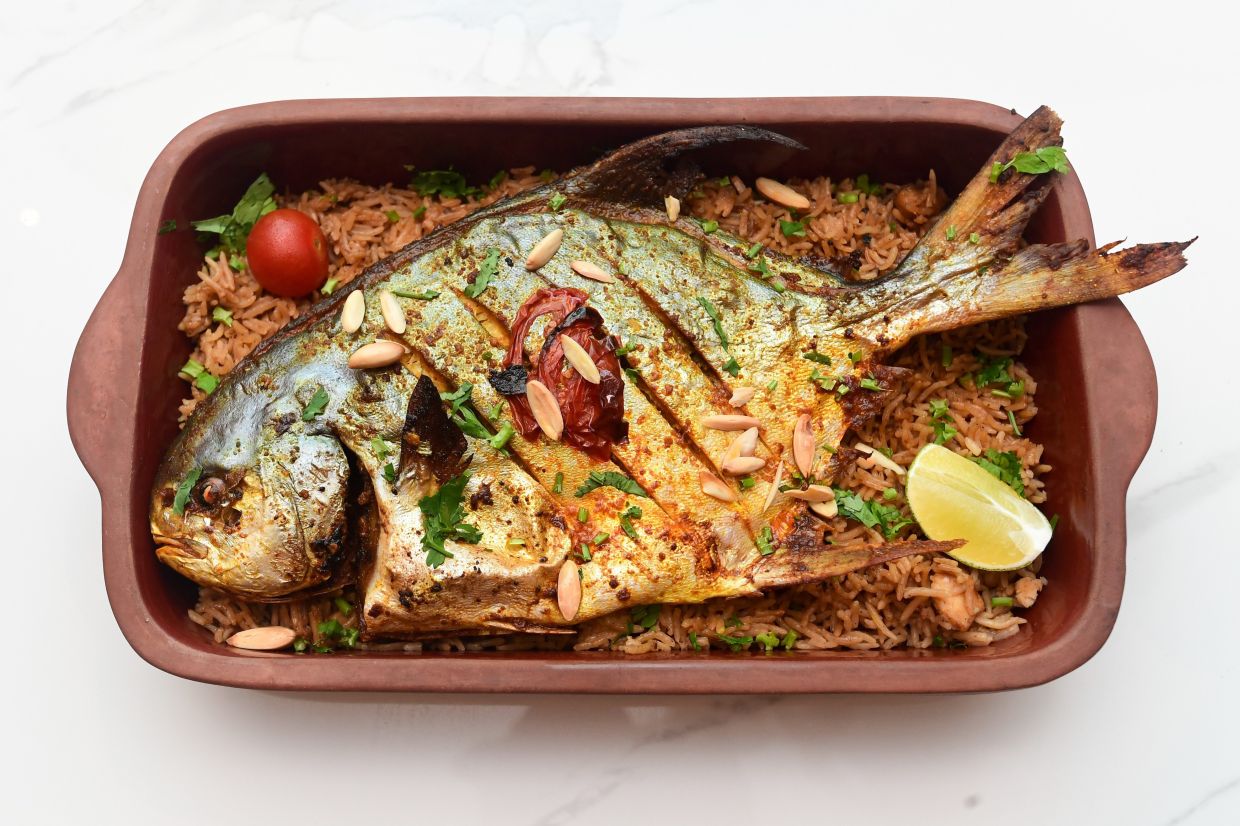
For something from the aquatic persuasion, try the Sayadiyah Fish (RM65), a Levantine dish popular among coastal communities. The word “sayadiyah” comes from the Arabic word “sayyad” and roughly translates to “fishermen’s catch”.
The dish features rice cooked in a fish broth with spices and fried caramelised onions – one of the distinctive attributes which gives this meal a rich, allium finish.
The rice is topped with a whole fish, accentuated with yet more small pieces of fish and garnished with nuts. The entire dish is cooked in the oven so it emerges hot and steaming.
This is a fabulously good meal – the rice is the soul of the dish, boasting heady aquatic undercurrents buoyed by the fish pieces tossed into this wonderfully aromatic configuration. The fish itself is also great – flaky, fleshy and incredibly flavourful.
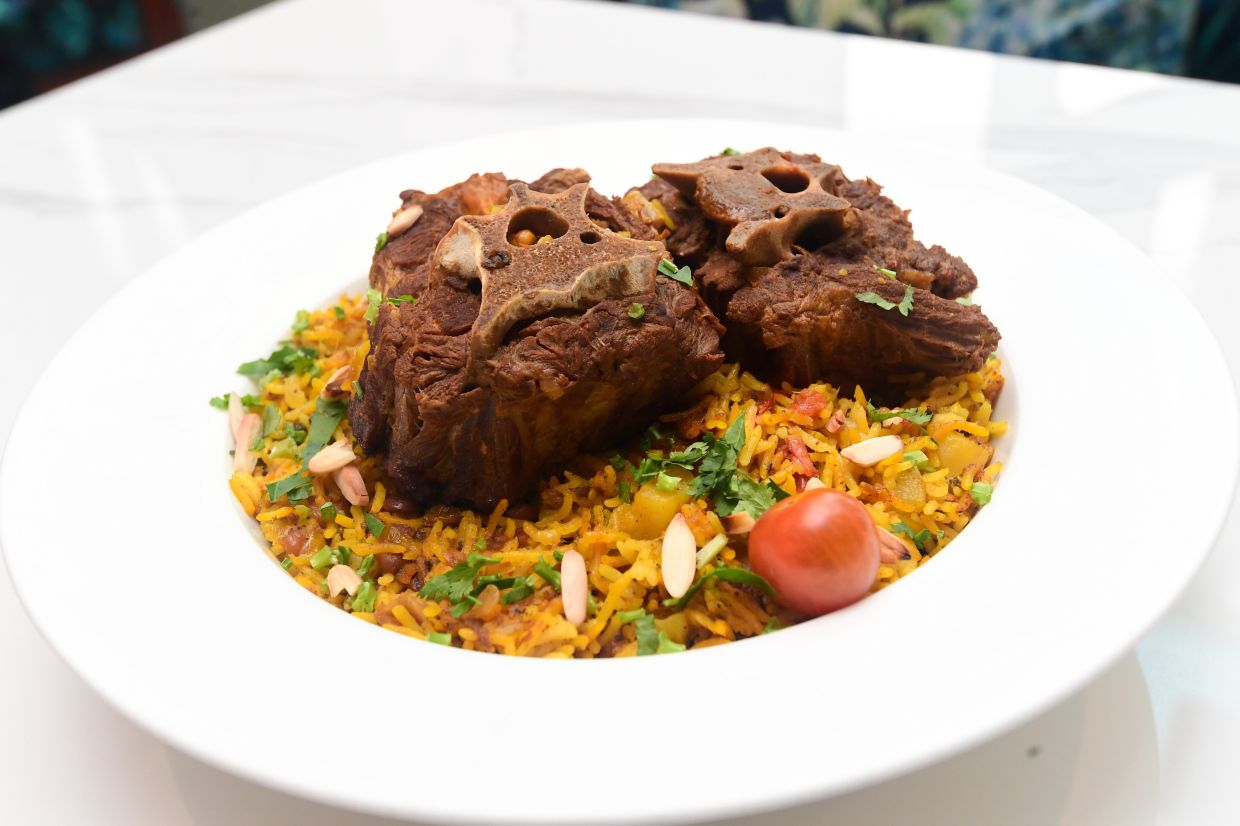
Next up, wander through carnivorous territory courtesy of the Biryani Rice Lamb (RM55) which features succulent lamb shoulder cooked with biryani rice, fried onions with a spicy Arab chilli paste (shatta) to round it out.
The biryani is very good – each kernel of rice is absolutely saturated with flavour. The icing on this cake is the lamb, which is so pull-apart tender that it is like spun silk on the palate.
The shatta meanwhile is the fiery temptress of the meal – so seductive that you’ll want to have more of it with the rice, even if your gut tries valiantly to protest.
Shereene says given that she has spent nearly three decades of her life developing restaurants in Malaysia, her hope now is that her children will eventually take over the Al Halabi restaurants. After all, they are the flag-bearers of the brand's name.
“I’m training my two older kids – they are both adults. I told them ‘I didn’t build this for 26 years for nothing!’
“The brand is an established one so it’s not something they have to build from scratch. So we’ll see ... for now, I’m taking it slowly with my children,” says Shereene.