Sometimes seemingly ordinary incidences are actually serendipitous opportunities in disguise – the kind that can literally change the course of your life – if you choose to act upon them. This “destiny calling” moment happened to Tengku Ariputra a few years ago at his paddy farm in Kedah.
Ari – as he is better known – is a former business development maven and fundraiser who has done some work with non-governmental organisations like the World Wildlife Fund (WWF) and UNICEF, opportunities that have led him to Indonesia to secure funds for charities there.
After the onset of the Covid-19 pandemic – and after some soul-searching – he moved back to his hometown in Kedah to start a paddy farm with his dad and uncle. He also converted another plot of land in Kedah into a sustainable farm where he hosted travellers willing to volunteer their time on the farm in exchange for accommodation.
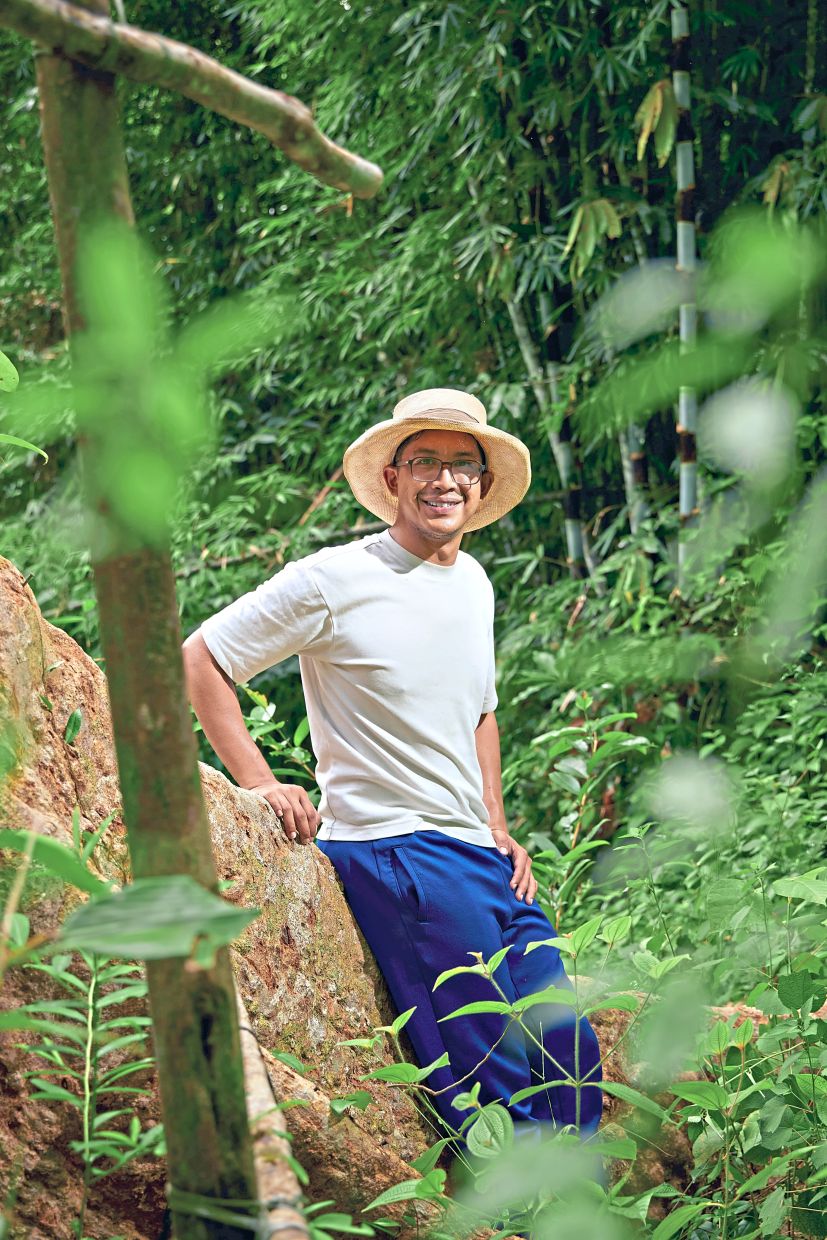
Ari was getting to grips with the fundamentals of farming when an Orang Asli from Jerantut, Pahang, found his way to his farm. That seemingly innocuous encounter eventually led him down a new path of discovery.
Chance connection
“One fine day, an Orang Asli appeared on my farm through a mutual contact because he was supposed to sell honey to someone else.
“So I think they agreed to buy it from the Orang Asli for RM120 per kg. But when the Orang Asli arrived, loaded with four large cartons of wild honey, they low-balled him and said they would buy it for RM40 per kg.
“The Orang Asli couldn’t proceed with that price and was wandering around to see who he could sell it to. So my friend introduced me. I didn’t buy it the first time. I just helped store it for him in case he found a customer,” says Ari.
At the time, Ari was preoccupied with farming and figured he would just keep the honey for the Orang Asli so he wouldn’t have to haul the nearly 100kg worth of products back through deeply forested areas and riverine routes to get back home.
Other than that, he didn’t think much about that meeting. Three months later, the Orang Asli called him and asked him if he would be willing to buy the honey.
“Essentially he asked if I could buy it because of two reasons: the tribe has been harvesting for five generations now, spanning over 100 years and this is a form of income for them.
“Plus, the fact that now more than ever people tend to not trust the Orang Asli honey because there is a reputation that their honey is adulterated. Often, this is because the middlemen or someone else down the chain is adulterating it for profit, and yet, the Orang Asli get a bad name. So that reputation has made it harder for them to sell their wild honey,” explains Ari.
Hesitant, Ari decided to try a sample of the honey before venturing into foreign territory. He gave some to friends as well as an uncle who was recovering from chemotherapy and had lost his appetite.
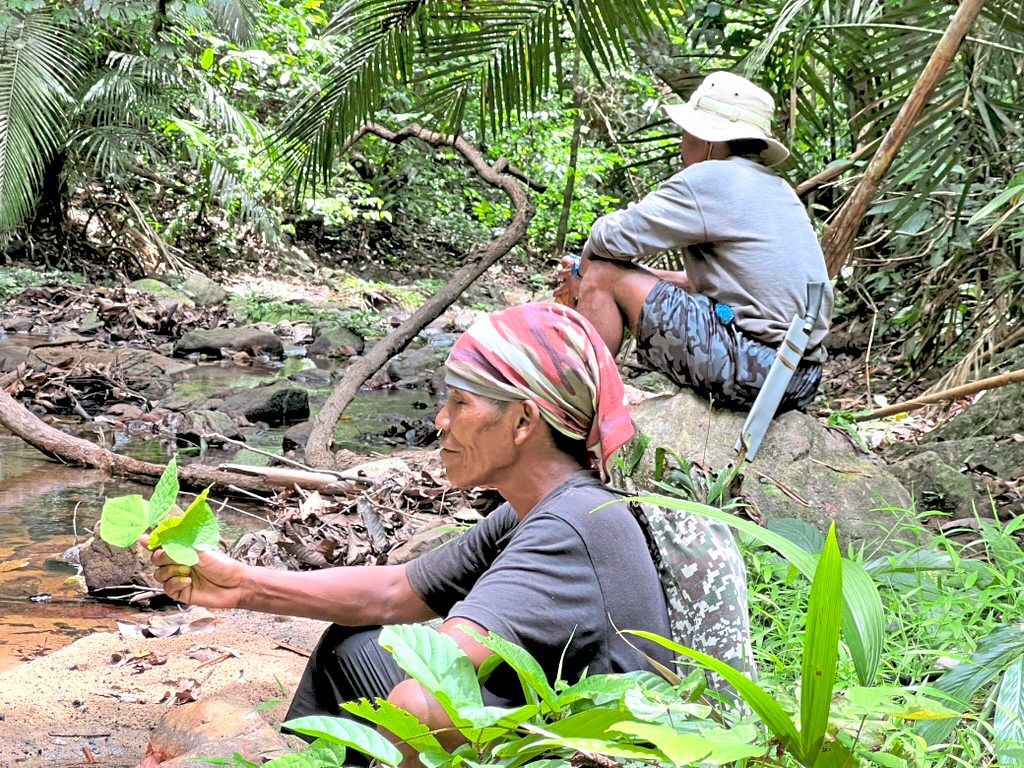
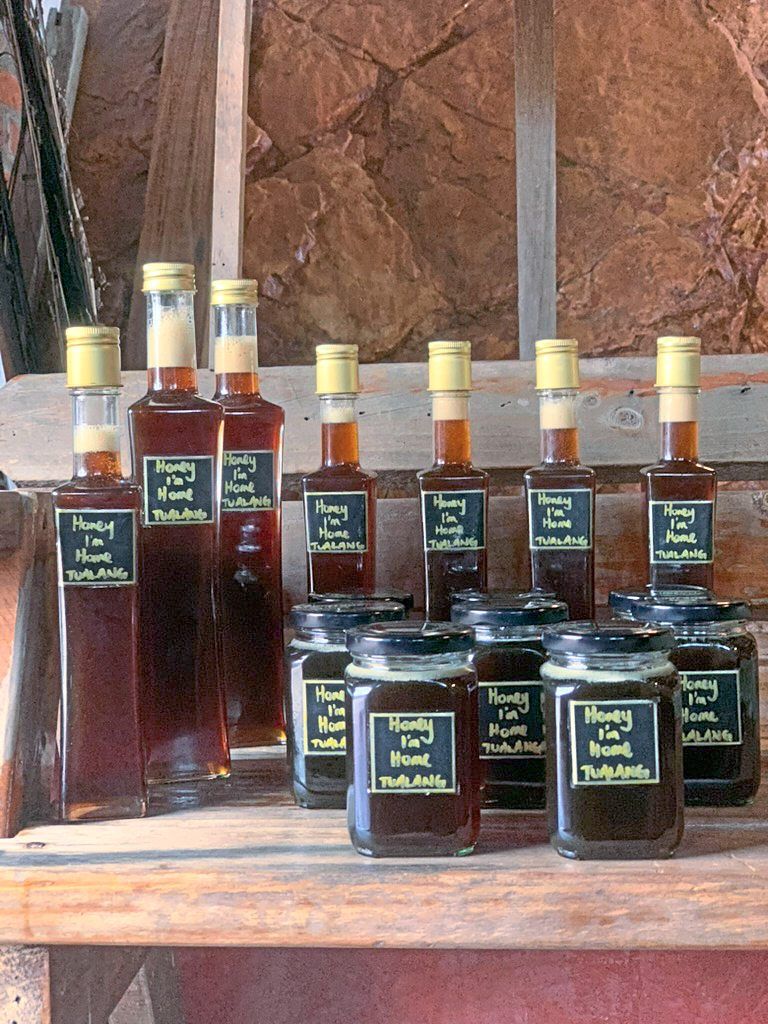
Within a week, his uncle had regained his appetite and it was this that convinced Ari that perhaps the honey was worth a chance. And that is how his nascent Orang Asli-harvested wild honey brand Honey I’m Home was born.
Getting started
In the beginning, Ari started out small, borrowing RM5,000 from his aunt and friends, which he channelled towards buying the honey, as well as purchasing jars and labels for the products. Initially, he sold the honey at morning markets and night markets, then eventually came to KL where he sold at more upscale weekend markets.
Ari says the business model would probably have remained the same and not developed as much if not for his girlfriend Carmun Chan and her cousin Mengkit Chan, who invested in it and took it to whole new heights.
“They brought in a strategic injection of money that allowed me to then upgrade our look, our brand positioning, and where we sold the honey,” he says.
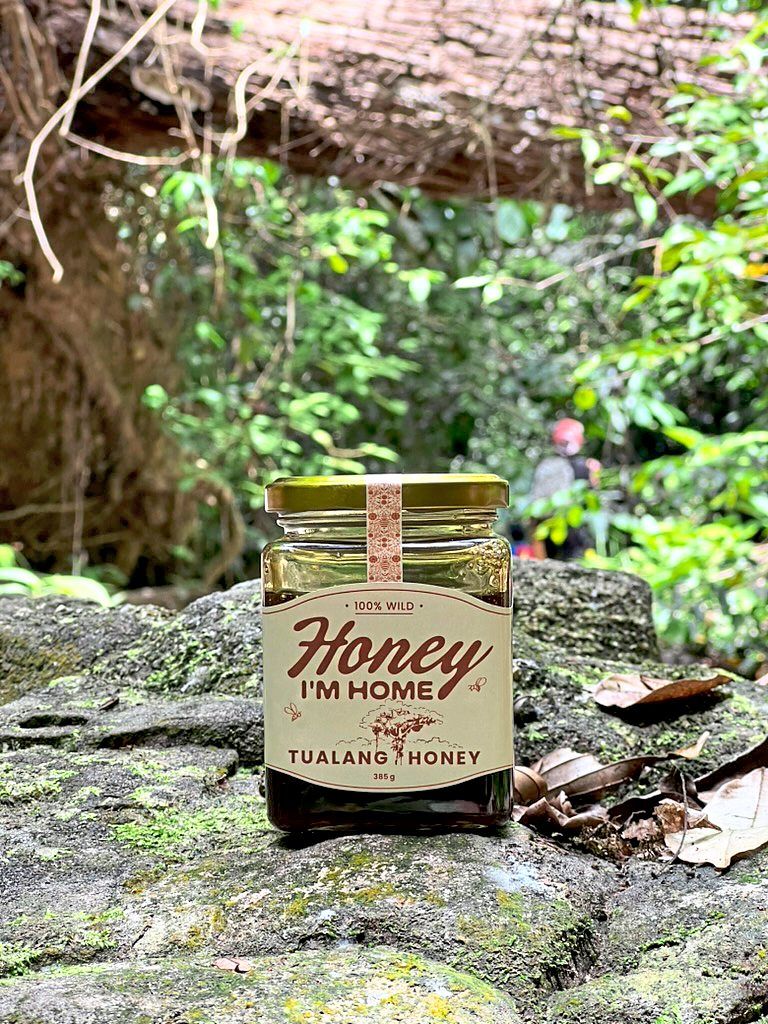
These days, Honey I’m Home’s 100% pure, wild-harvested Tualang honey is available for sale on their website as well as in retail outlets like Le Bon Aout in Bangsar.
On the palate, it has a fresh, floral taste with a slightly tangy underbelly, although the taste fluctuates depending on the season and the multi-floral nectar the bees choose to savour.
The Orang Asli connection
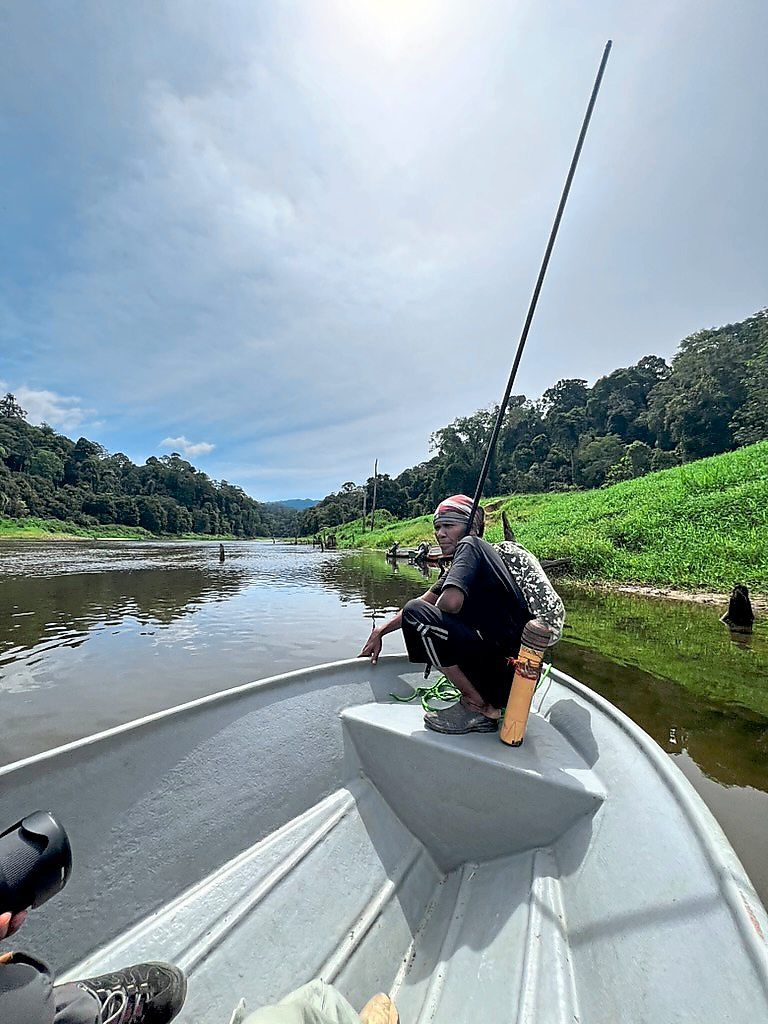
At the moment, Ari primarily works with the Orang Asli Batek tribe in Jerantut, Pahang, in an area that is part of Taman Negara, a tropical rainforest thought to be as old as 130 million years. To harvest the honey, Ari travels to the Orang Asli settlement – an arduous journey that includes nearly two hours spent traversing a river. Once there, he meets and greets the tok batin (village chief) and pays tribute to the elders in the community.
This is followed by a site recce, which involves journeying through thick forest vegetation to see if the Tualang trees have any hives. Tualang honey is typically harvested only once or twice a year. In the Orang Asli community, each tree “belongs” to different families, with families harvesting honey from their own trees for their own use or getting together as a community to harvest for sale.
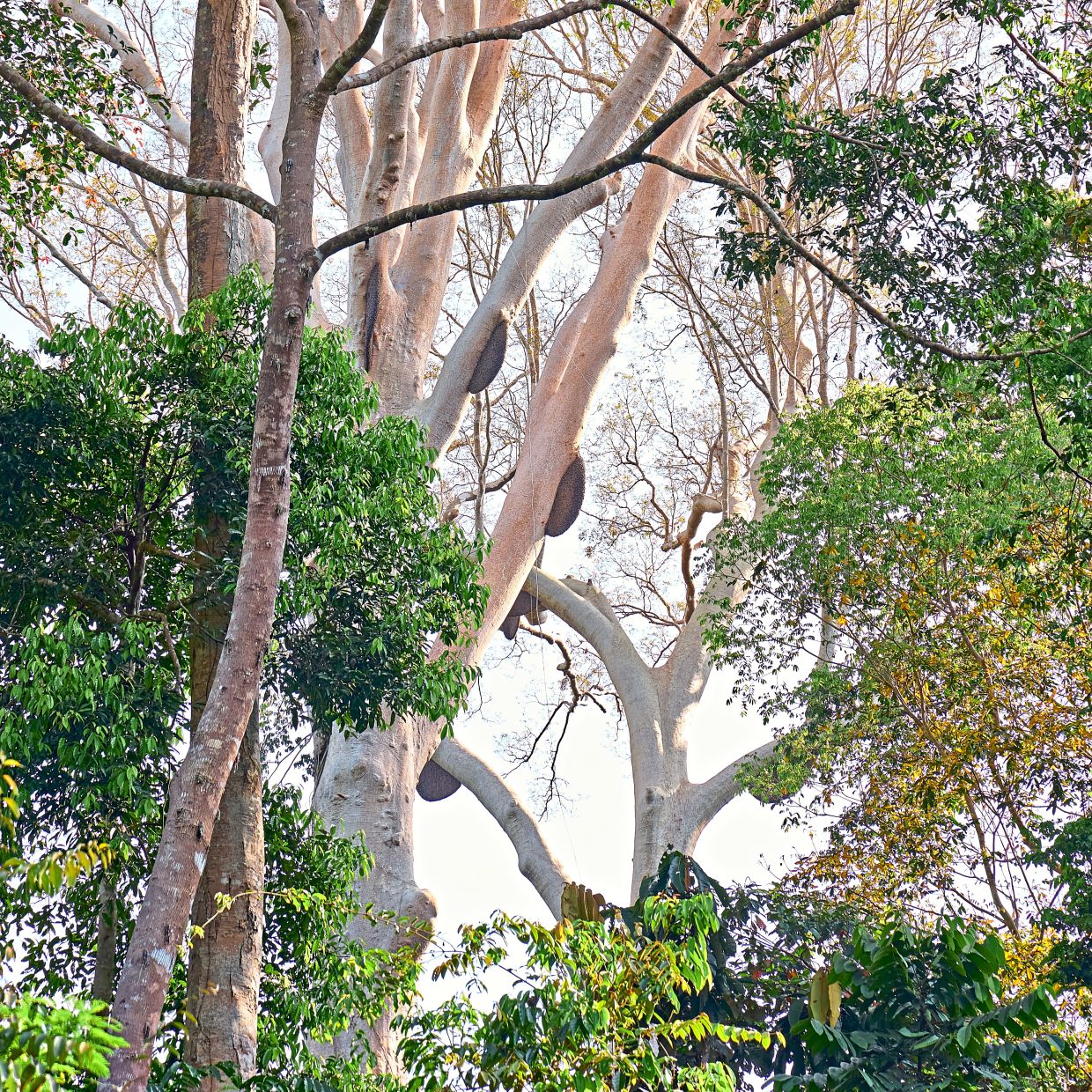
The Tualang tree is native to South-East Asia, and the ones in Jerantut, Pahang, are ancient, with some over 600 years old. Each tree is towering and can reach heights of up to 85m, making it one of the tallest tropical rainforest species in the world. For perspective, an average tree can often be as high as a 25-storey building.
Tualang trees’ height and smooth trunks make them the ideal place for wild honey bees (Apis Dorsata) to build large hives.
A Tualang tree is also distinct because its branches only sprout right at the top (around the 65m to 85m range). This is by design and ensures that the tree is able to rise above its surrounds in order to receive sunlight in the dense forest. This characteristic also means that the Orang Asli can easily tell from the ground if a bee hive is somewhere at the pinnacle of the tree.
“A trip into the forest can take anywhere between three to six hours. The elders now don’t do the climbing; it’s the younger members of the community.
“But the elders lead the expedition, they’ll go in with their blowpipes because going into the jungle is not a singular objective just to check the Tualang trees; they will also forage for other things along the way.
“Once done, we’ll come back out of the forest and wait till night descends. The Orang Asli only harvest at night because what they said to me is that bees are less active in the night and also our bodies don’t produce as much oil, which is what triggers bees and causes more bee stings,” says Ari.
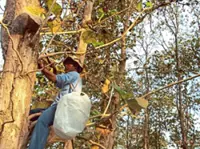
At the moment, Ari works with 10 harvesters from the community – a mixture of older and younger generations. There is a lot of labour and danger involved in harvesting the honey from such a whopping height – many of the trees feature hand-built bamboo ladders that the Orang Asli have painstakingly crafted themselves to help the harvesters scale the tall, towering trees.
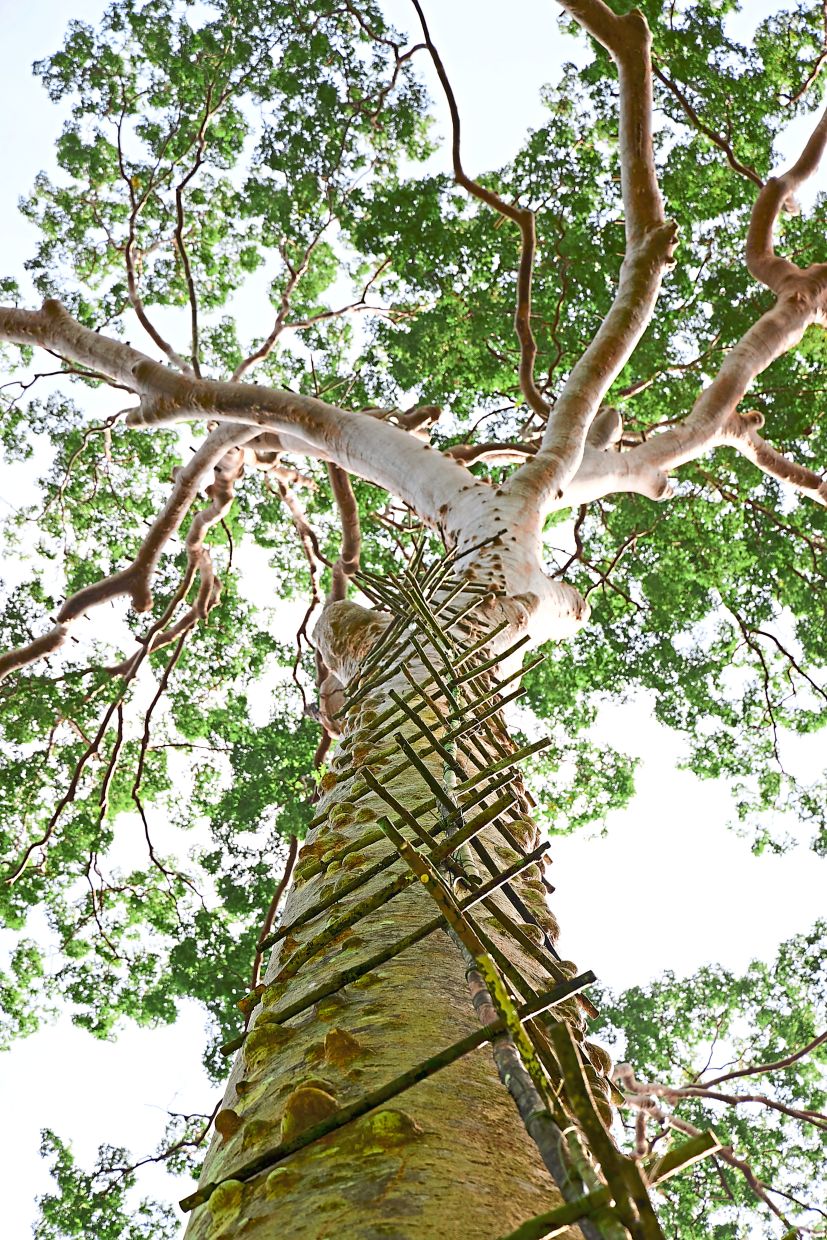
A more primitive method also involves the placement of long nails, which are used as leverage to scale the trees, often without a harness in place.
“I had to negotiate with them and be like, ‘Hey, can you put a harness at least?’ Because these are all things that they are so used to doing that they don’t think it’s necessary,” says Ari.
Once they reach the hives, the honey combs are cut and then inserted into sterile food-grade containers. The honey is then manually extracted from the honey combs and processed in KL.
Each tree can yield anywhere from 10kg to 500kg of honey. The more honey there is, the more trips up the tree the Orang Asli have to make.
Ari and his team let the Orang Asli decide how much they want to be paid for the honey they have harvested. Previously, villagers from nearby kampungs would try to short-change the Orang Asli, offering as little as RM22 per kg of honey, but now they eschew these pitiful sums in favour of working with Ari and his team.
“Yeah, of course now the Orang Asli, they don’t say ‘yes’ to that. Because they’ve got a sweet deal with us.
“Essentially, they set the price of however much they want because they know best the amount that will sustain their lifestyle and we pay them the price they ask for. We also pay immediately once we see the product is good because they’ve had bad experiences where people promise to pay them and then the payment never materialises. Then we do the work of making sure the end product is the best,” says Ari.
The treacherous, back-breaking, perilous work involved in extracting foraged, wild Tualang honey is what contributes to its pricing. Ari sells Honey I’m Home’s 100% wild Tualang honey at RM50 for 185g and RM88 for 385g.
“When people say, ‘Why is it so expensive?’ I say it’s because of the journeys the Orang Asli have to take to actually harvest the honey. It’s also the knowledge of knowing how much to take before we actually affect whether the bees come back next season. This is money-can’t-buy passed-down-for-generations information,” says Ari.
The future
One of Ari’s major goals is to eventually register the business as a social enterprise so that he can apply for more grants and other initiatives which will help the business and eventually help Orang Asli communities in the process by channelling more profits in their direction and building surrounding infrastructure to support the community.
He also wants to send the wild Orang Asli-harvested Tualang honey for lab tests in order to determine its health benefits and other attributes and eventually apply for halal certification as well as various other certifications – just to give consumers more assurance.
At the moment, studies have shown that Tualang honey has anti-microbial and anti-inflammatory properties and can aid in healing wounds and protecting against neurodegeneration.
His ultimate motivation, though, is to work with more Orang Asli communities outside of Pahang and support their honey-harvesting activities with the aim of eventually looking at global distribution.
“My goal is to bring Tualang honey out of Malaysia as an indigenous product. Our competitors are not local Malaysian brands but the Manuka honeys of the world. So what I really want to work towards is creating a honey collective so that we then control the quality of what we harvest and get it to other markets in the world,” says Ari.