Designing a shared bedroom can be both a challenge and an opportunity.
A popular choice and need for families, shared rooms can poise different challenges especially as it relates to configuration and furniture placement.
Twin beds are often the go-to choice for flexibility, but those with larger rooms may opt for full beds, which still provide flexibility, spaciousness and symmetry.
To create a thoughtful, cohesive look, proper furniture placement can transform a complex or confined space into one that is balanced and elevated.Here are five top design tips for maximising and elevating a shared space.
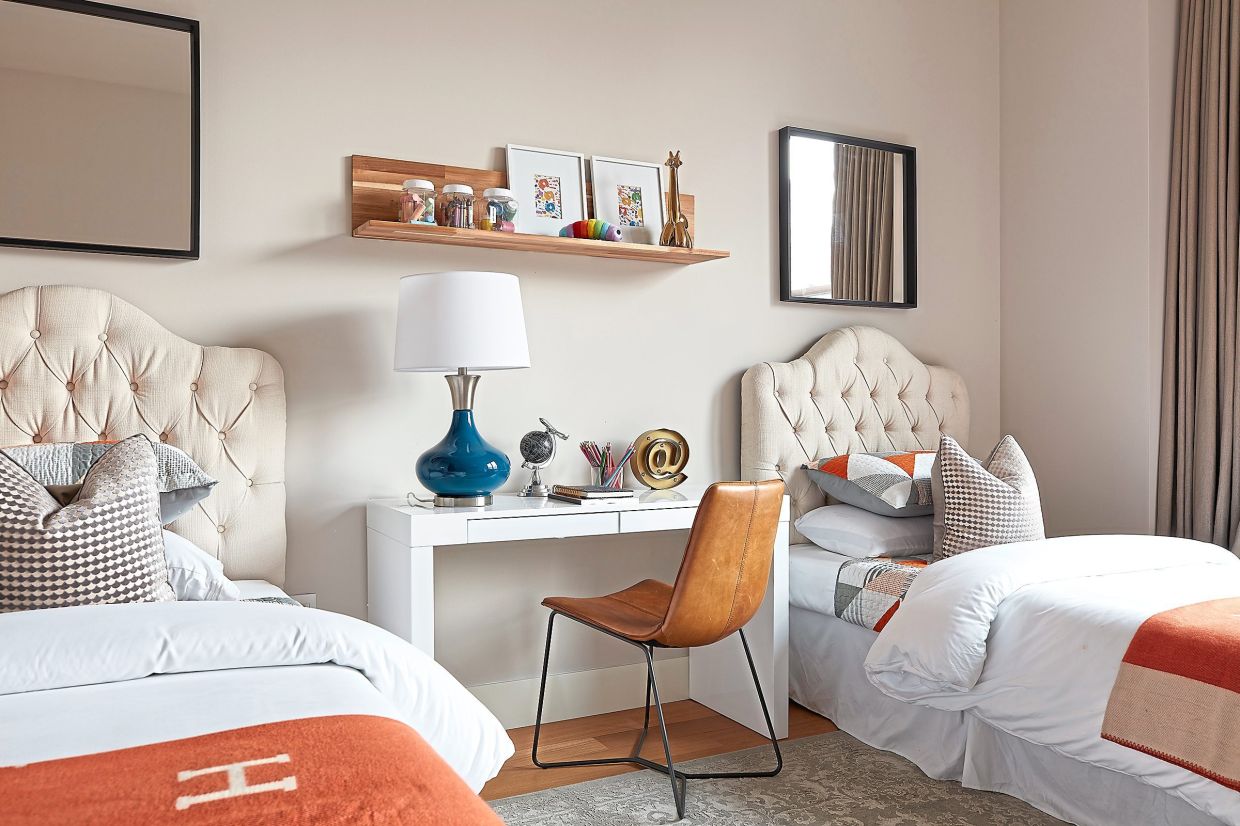
- Consider placing a desk between two identical beds. A desk centred between two beds can help create a focal point.
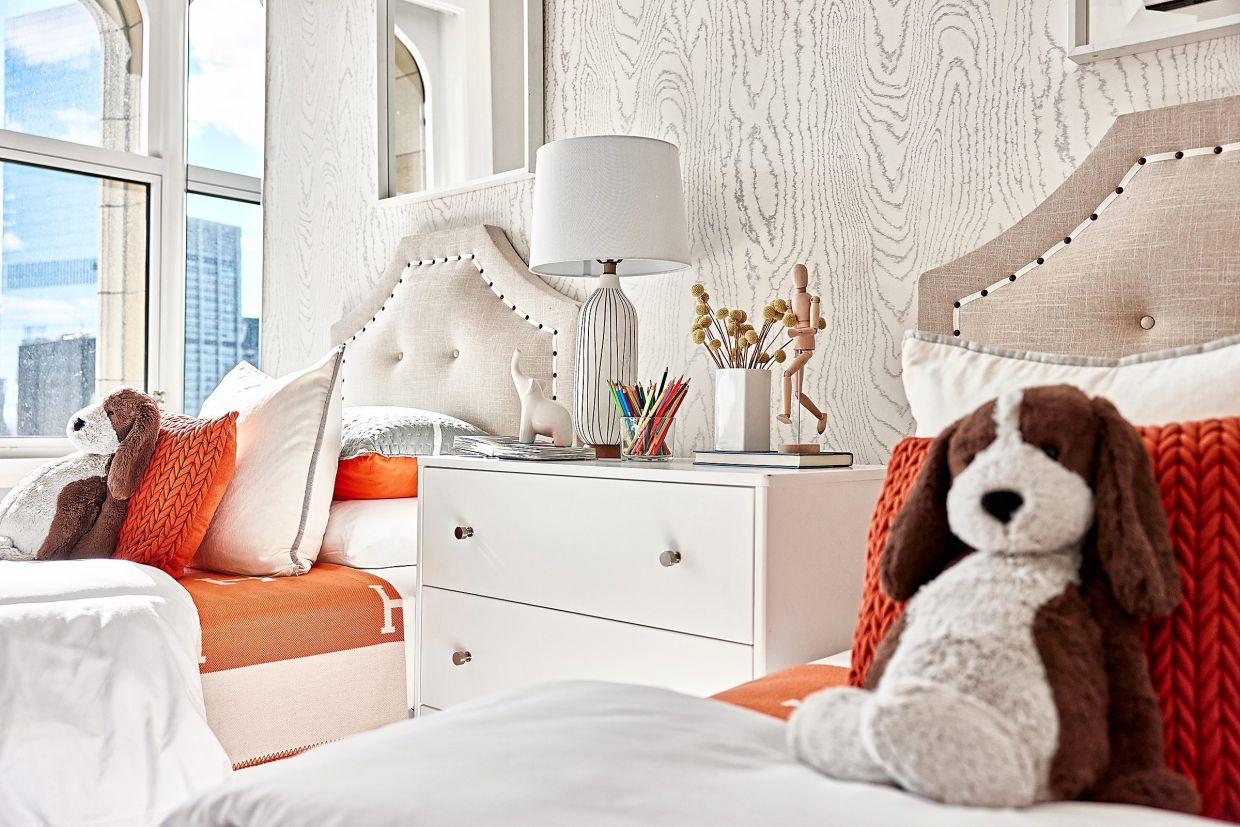
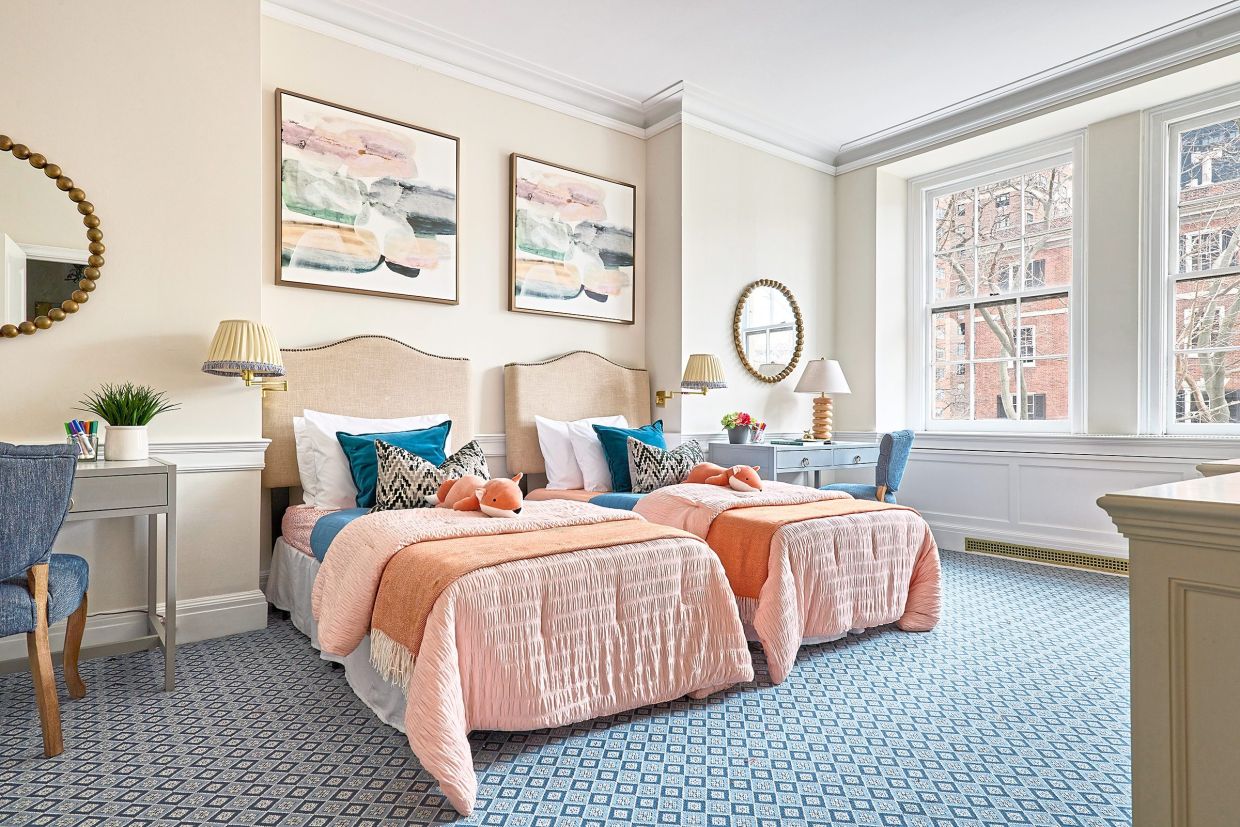
- Match it. Identical design elements such as furniture, artwork, mirrors, bedding, and pillows and throws can help create a cohesive and appealing look.
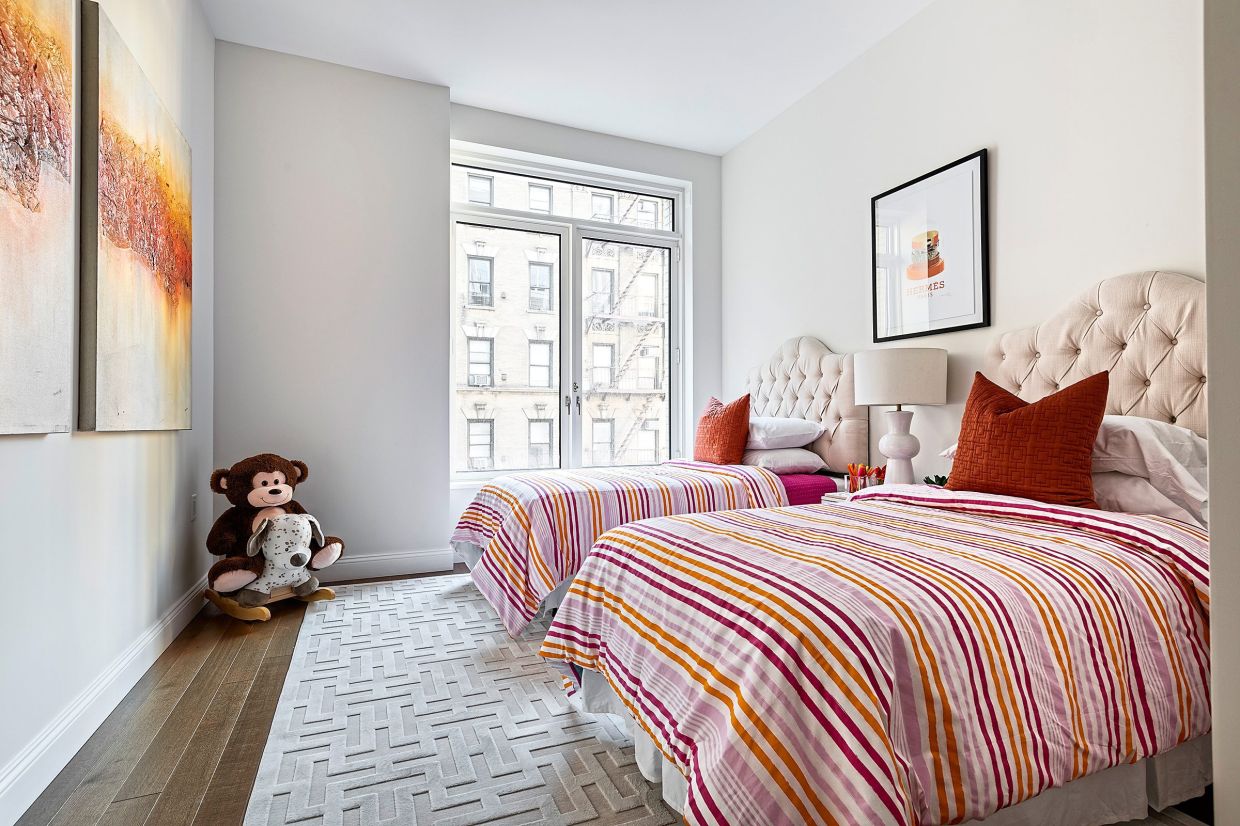
- In a narrow room, place beds on opposite walls. Positioning beds across from one another helps create open floor space.
- Use an oversized rug to visually connect both beds in a furniture layout. Rugs that are too small will make a room feel "shrunken” and small, while larger rugs will help a room feel more unified, open and spacious.
- Utilise vertical elements. From architectural elements such as moulding or wall panelling to wallpaper and even decorative paint, vertical elements can help make a ceiling feel taller and a space feel more generous. – Tribune News Service
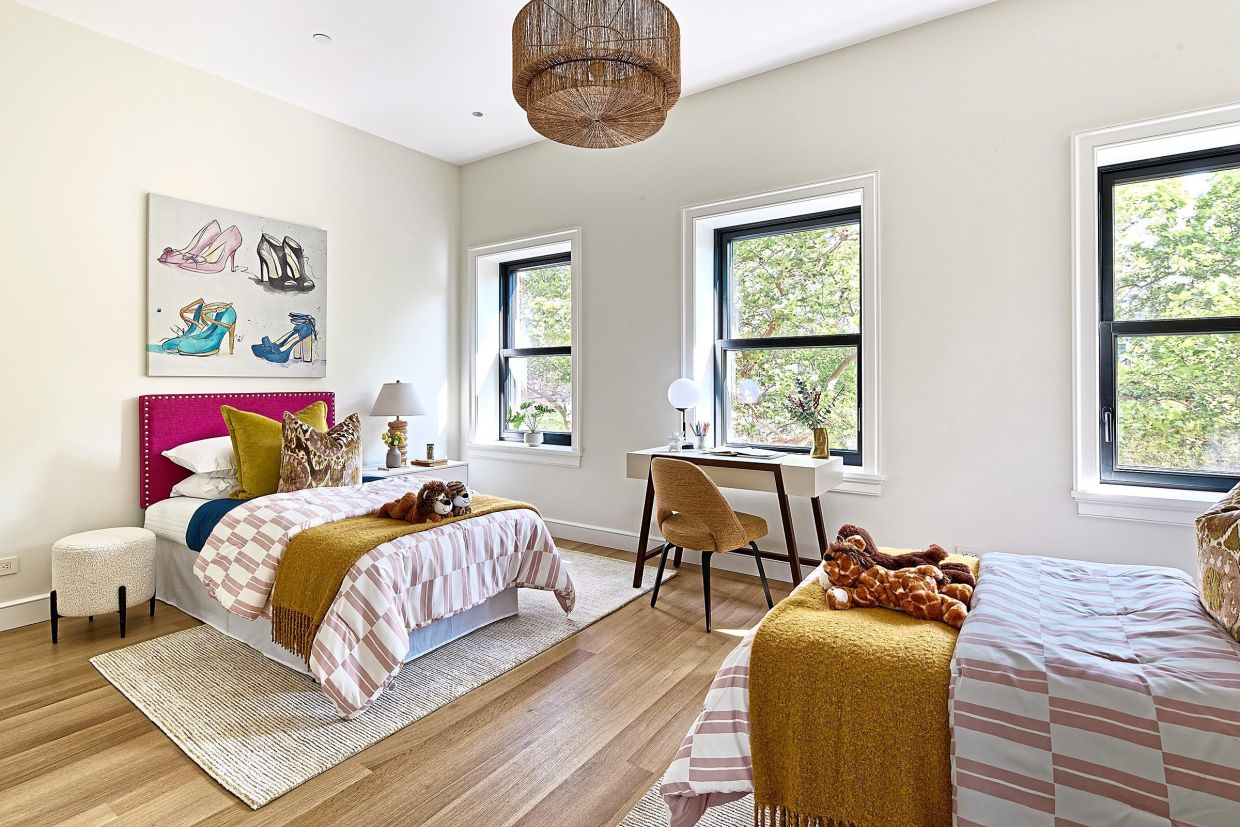
A desk with shelf is used as a room divider and shared space in this children's bedroom.
(Scott Gabriel Morris/Handout/TNS)
A neutral desk is placed between two twin beds in a children's bedroom.
(Handout/TNS)
Two beds are dressed with fun, bright 'candy colours' to help create a festive feel.
(Handout/TNS)
A long children's bedroom is maximised by the placement of twin beds opposite each other.
(Handout/TNS)
Two matching twin beds are placed with identical artwork above as well as matching desks with identical mirrors and chairs. Photos: TNS
(Handout/TNS)