Seeing how some of her young clients struggled to express their feelings openly has led a clinical psychologist to create a companion card game to help children share their thoughts and emotions more easily.
Launched April 4, Emokins was designed by Kuala Lumpur-based indie game development company 1+1 Studios and took one year to conceptualise.
"Emokins came from a very real gap I kept seeing in my clinical work. Children were experiencing big emotions but they didn't have the language, safety or structure to express them. While many may seem uncooperative or difficult during therapy sessions, they simply don't know how to express what they're feeling," said Kee Joey, 31, from Petaling Jaya, Selangor.

"I wanted to create something that could bridge that gap in a gentle, accessible way - something that felt safe rather than clinical, and engaging rather than instructional," she added in an email interview.
Instead of a workbook, app or therapy tool, Kee chose a card game format, believing that play is the natural language of children.
"A card game immediately lowers resistance. It creates shared, human interaction. It invites connection - eye contact, laughter, pauses and reflection - which are all critical for emotional development," said Kee, who holds a psychology degree from Britain's University of Sheffield and a Master of Clinical Psychology from Universiti Kebangsaan Malaysia.
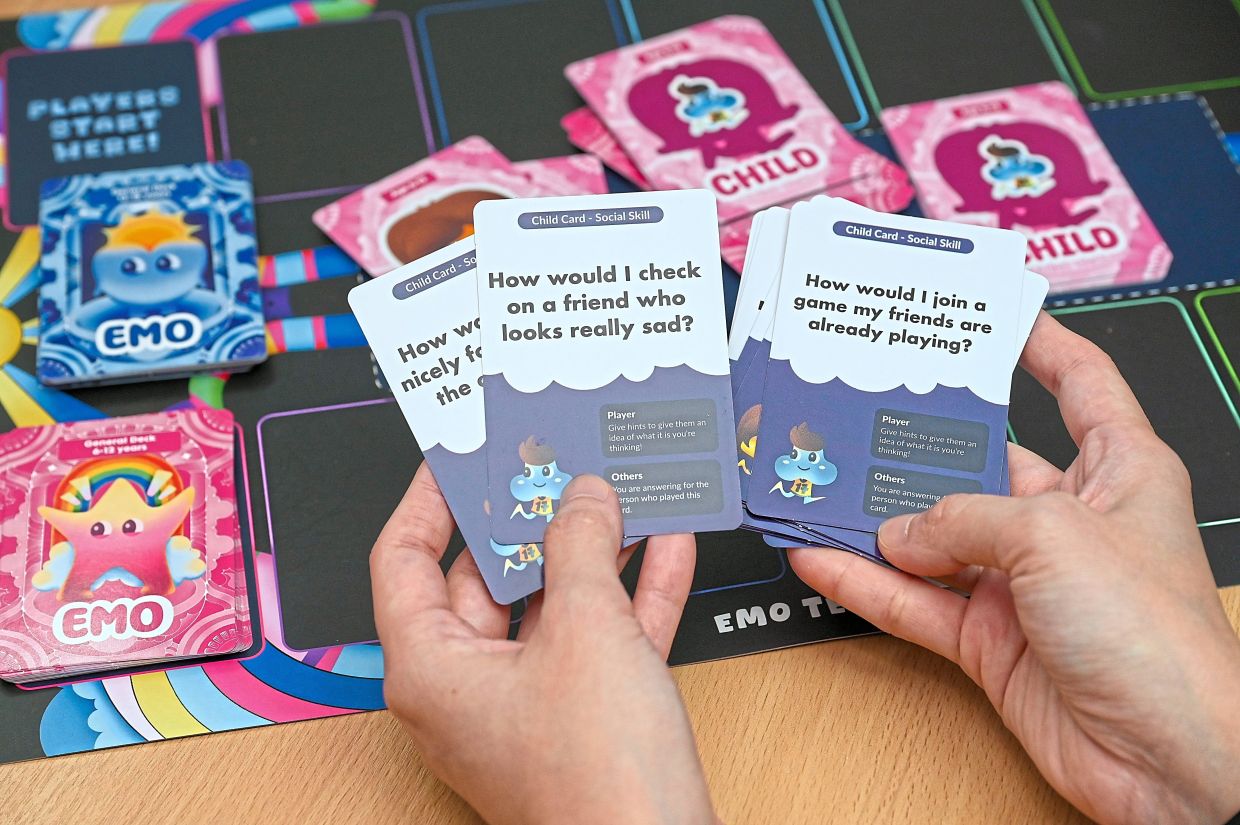
The game is divided into three decks according to different age groups - ages 6-12, ages 13-18 and a social skills deck for all ages.
Through storytelling and guided prompts, Emokins invites children to name what they feel, express it safely and connect with others. The game encourages parents and children to talk, reflect and check in without overcomplicating the moment.
Emokins is built on a simple but powerful idea that when children understand their emotions, they can begin to regulate them.

"Many parents are not lacking care; they're lacking tools. We're seeing more awareness around child development, but very few solutions that translate knowledge into something practical, accessible and sustainable in everyday life," said Kee, the founder of a behavioural health practice in PJ.
She also developed Early Minds, a child development initiative, under which the card game is released.
Communication is key
Kee said that in today's digitally saturated environment, intentional tools that build connection and emotional awareness are increasingly important.
"While awareness of children's mental health is rising, there is still a lack of practical tools to support it. Research shows children often express emotional distress behaviourally rather than verbally, such as tantrums, withdrawal or aggression," said Kee, who is currently pursuing her PhD at Monash University Malaysia.
A 2024 study, "Challenges in Regulating Emotion among Malaysian Adolescents: A Qualitative Secondary Data Analysis", found that adolescents struggle with emotional regulation due to factors such as parental control, sibling conflict and academic stress.
Published in Universiti Kebangsaan Malaysia's Medicine and Health Journal, the study also noted that some students suppress emotions to avoid negative reactions or social consequences.
Kee added that children often struggle to express emotions because the brain regions responsible for language and emotional control are still developing. Neurodivergent children may also process emotions differently and require alternative forms of expression.
"Environment also plays a role. If emotions are dismissed or punished, children learn to suppress rather than share. Excessive screen time can further reduce opportunities for real-life emotional interaction."
Kee explained that the game – available at BookXcess – was grounded in emotional development frameworks, play therapy principles and social-emotional learning (SEL) research. Interactive play testing with children, parents and educators helped refine its language, pacing and usability.
"We hope Emokins shifts conversations from instruction to curiosity. Ultimately, it's about helping adults respond to the emotion behind the behaviour, not just the behaviour itself," said Kee.
She emphasised that open communication between parents and children is foundational to emotional security.
"When children feel safe to express themselves, they develop stronger emotional regulation, build trust and are more likely to seek help when needed.
"It's not about perfect conversations, but consistency in 'your feelings are allowed, and I am here to understand them'."
Turning emotions into play
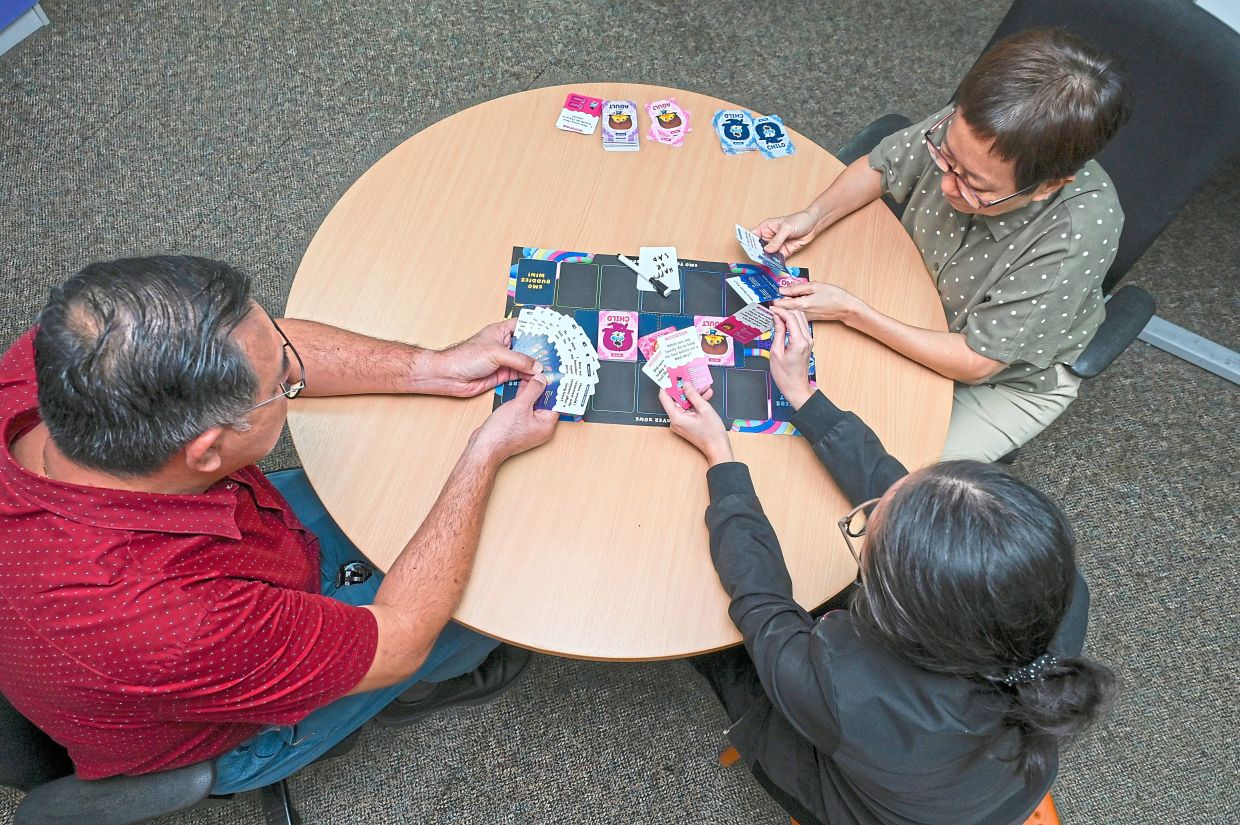
Emokins is a card game designed to help families support children’s emotional development. Photos: The Star/Izzrafiq Alias
Kee (left) explains how the Emokins game works at its launch earlier this month. Photo: Kee Joey
Kee (centre) worked with 1+1 Studio’s Rizal Azlan (left) and Kashif Khairul to develop the card game. Photo: Kee Joey
The Emokins card game makes it easier for families to talk about feelings and emotions.
Photo: The Star/Izzrafiq Alias