
Climate change and dry summers have prompted German fruit grower Peter Schwalbach to radically transform his business.
He ditched the sour cherries, plums and mirabelle plums, in favour of walnuts and also of late, almonds, as they too seem to be flourishing in Wolfsheim in Rheinhessen.
Willi Kuhn, meanwhile, of southern Palatinate, came to nut cultivation through a family inheritance.
His wife’s great-grandfather had a plantation with large nuts with thin shells.
“I’ve wanted to grow trees like that myself since the 1960s,” he says. “But I couldn’t do it with nuts I collected myself.”
A tip led him to a walnut tree nursery in Kaiserstuhl.
In England, too, warmer weather means farms are able to grow more nuts than in the past.
Tom and David Tame grow around a dozen varieties of walnut, with some then turned into oil.
The nuts flourish in temperatures of around 25°C, he says, so Britain is “finally getting into that territory”.
As the summers grow hotter, farmers are increasingly growing nuts, which also shelter livestock, such as sheep, from hot weather while also producing a profitable crop, Tom told The Guardian newspaper.
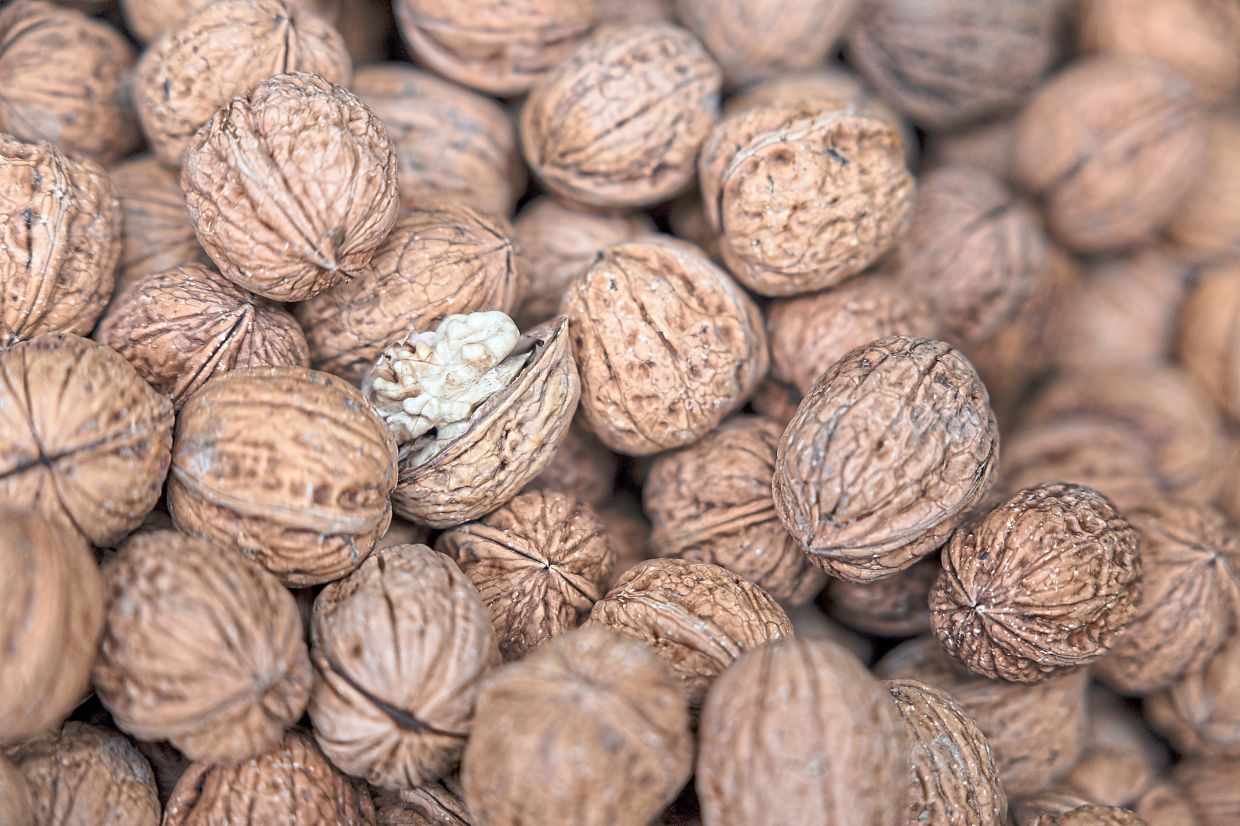
Promoting local nuts
Kuhn originally wanted to grow walnuts but given the presence of the American fruit fly, plus waterlogging, he opted for hazelnuts.
Later, on others’ advice, he added chestnuts. These days, he cultivates around 17ha, with 3ha of chestnuts, 6.5ha of hazelnuts, 4.5ha of almonds and 2ha of pecans.
Now, people just need to eat them. In Wolfsheim, Schwalbach wants to continue on the path he embarked on in 2019 and “make local nuts better known as a snack”, says his partner at that’s nuts, Shari Huwer.
“We have just harvested a significant amount for the first time.”
Schwalbach has planted around 50,000 nut trees: 30,000 almond and 20,000 walnut trees. The big advantage is that, unlike plums or cherries, they do not need a lot of water in the summer, though they are thirsty in spring.
“We have enough of that in Rheinhessen,” says Huwer.
In addition, nuts are somewhat less sensitive than conventionally grown fruit when it comes to storage.
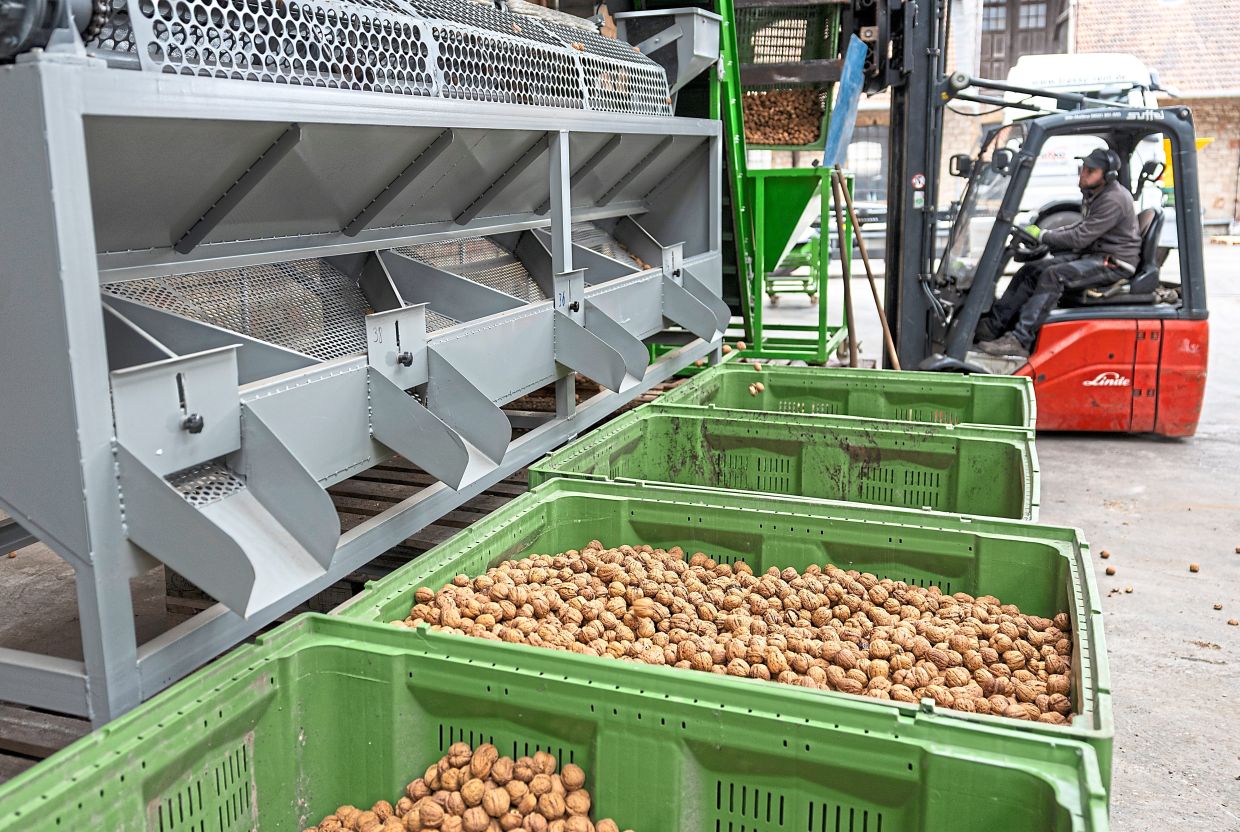
Out of their niche
Walnuts and almonds are still a niche product in the state of Rhineland-Palatinate. The local economy ministry says 44 farms grow walnuts on around 90ha. By way of comparison, the total area under fruit trees is around 3,500ha.
Meanwhile more than 99% of nuts and almonds eaten in Germany come from abroad – a large proportion from overseas.
“We want to create a brand whose unique selling point is that the nuts and almonds come from Germany,” says Huwer.
Another advantage is that the nuts can be freshly cracked and delivered quickly.
“We don’t have to irrigate and we have short transport routes.”
Location, location, location
Peter Hilsendegen from the Rural Service Centre (DLR) Rheinhessen-Nahe-Hunsruck sees potential for the two types of nuts to develop beyond their niche existence in Rhineland-Palatinate.
In addition to their adaptation to drought stress and heat, almonds and nuts offer a high level of biodiversity.
But nuts can be picky.
“The location requirements for almonds are particularly high,” Hilsendegen says. “Regular yields require good locations that are at least suitable for wine growing, or better still for apricot cultivation.”
Despite the potential, there are natural and therefore economic limits to how far nut cultivation can expand.
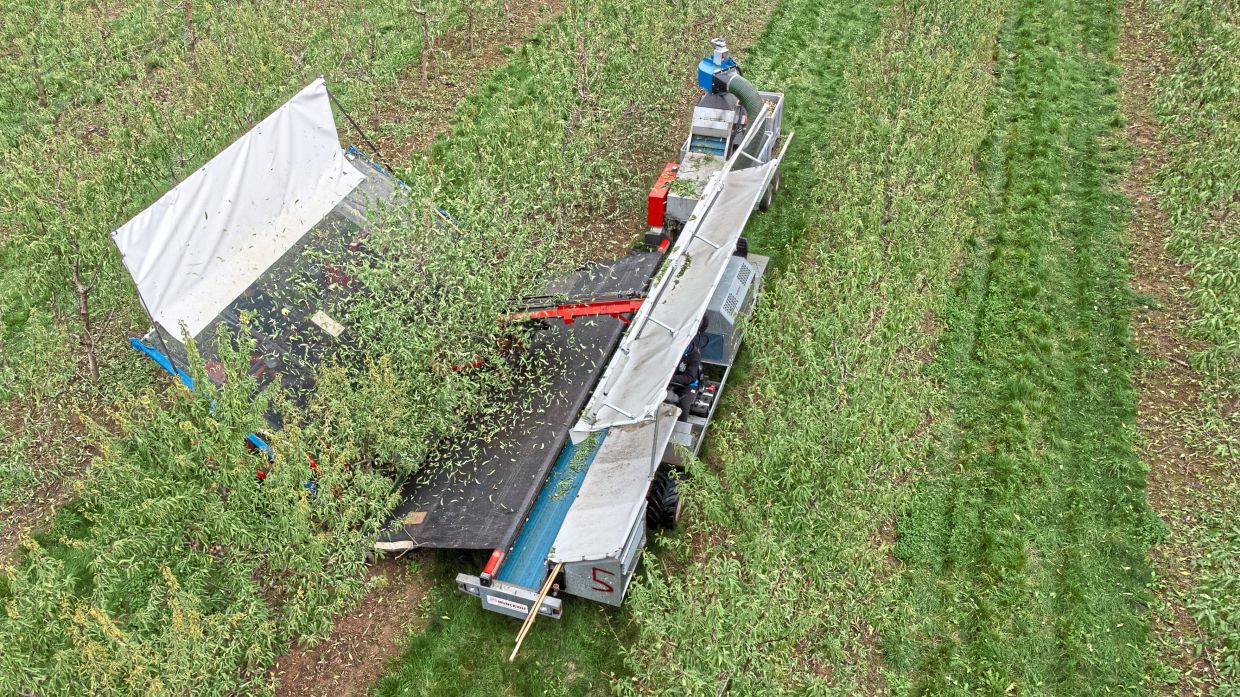
Another advantage of nuts and almonds is that harvesting is not so dependent on seasonal workers because it can be done largely mechanically.
Plus, the storability of nuts helps to stabilise prices, and the market is demand-driven, says Hilsendegen.
Alongside the online shop, the nuts are available in several farm shops throughout Germany and will soon be available at a well-known supermarket chain.
“We do see a Christmas boom, especially for almonds for baking,” says Huwer. “There is a growing trend towards year-round consumption.”
Many people sprinkle nuts on their muesli or yoghurt in the morning, while others snack on them through the day.
Technology needed
The potential for marketing almonds and walnuts with a regional connection via food retailers, restaurants and delicatessen processors is there and needs to be developed further, says Hilsendegen.
But one issue is that the region still lacks the technical equipment to turn the harvested fruit into a ready-to-sell product. That means cleaning, drying, storing, cracking, sorting and packaging, he says as he ticks off the items on his list.
Two companies in the south of the state are currently setting up the necessary technology to take on fruit from other almond and walnut producers.
Drying after harvesting is essential for quality, says Huwer. Stored in their shells in a cool, dry and dark place, nuts and almonds keep for quite a long time and can be delivered quickly when freshly cracked. For now, the young company is still testing exactly how long they keep.
Giving them a chance
Plant protection is essential in cultivation, says Huwer. The invasive walnut fruit fly – you can spot its presence in black, inedible walnuts – cannot yet be reliably controlled with organic methods. For almonds, on the other hand, a fungus (Monilla) is the problem.
So Kuhn is excited about pecan nuts that are resistant to the fruit fly. He is running a pilot project with the DLR which includes almonds. The first almond trees were planted in 2023 – following an exchange with an institute in Spain, says the former head of the Palatinate Chamber of Industry and Commerce.
Thanks to technology similar to that used for wine, almond cultivation can be successfully practised in the Southern Palatinate and in the wine region.
Climate change is both an opportunity and a risk, says Kuhn. Without it, it would be barely possible to cultivate nuts in his area – though more is needed in terms of processing and marketing.
“We should give the fruit a chance here.”
You’d be nuts not to. – dpa