Hidden in a quiet corner of Pavilion Hotel Kuala Lumpur is fine-dining eatery Kohaku Omakase. The intimate little restaurant is an oasis of calm, with 12 seats dotted around an expansive chef’s table.
At the centre of this Zen culinary temple is the amiable, smiley Takashi Taniguchi. Taniguchi is a redoubtable, seasoned Japanese chef who started cooking for his mother as a child.
At 15, he began working in a sushi restaurant in Kyoto before eventually making his way to the prestigious Sushi Saeki in Kyoto. He now helms his own restaurant Sushiya Yohei in Osaka, which is vaunted for its sushi omakase offerings.
Kohaku represents the culmination of Taniguchi’s decade-long dream of opening a restaurant in Malaysia.
“I’ve always been interested in Malaysia because I like the food and culture here. I’ve been waiting for a chance to open a restaurant in Malaysia for 10 years and finally have the opportunity to do it now, so this is a dream come true for me,” explains Taniguchi.
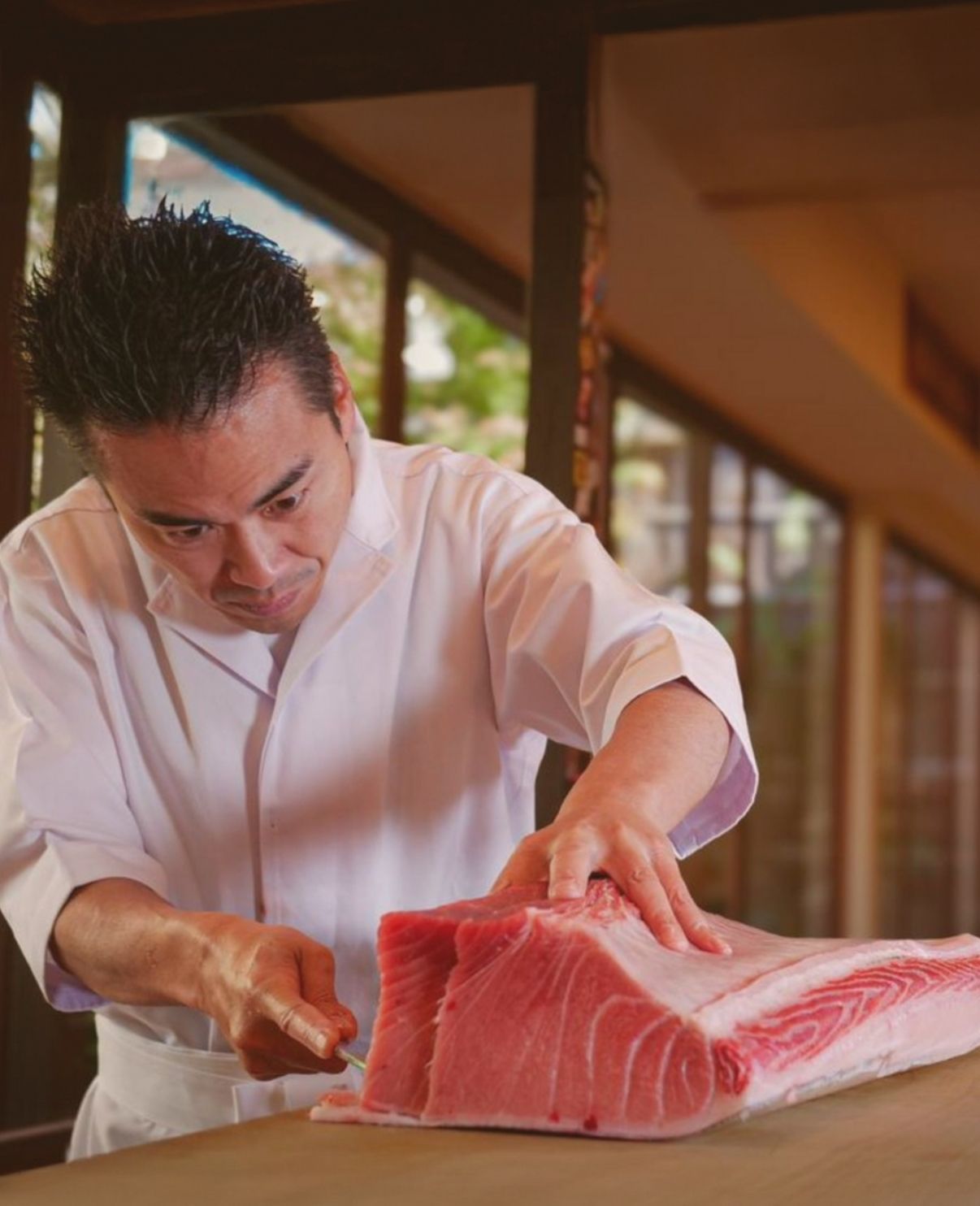
Kohaku opened just over a month ago, so Taniguchi is here more frequently but in the future, he says he hopes to visit the restaurant at least four times a year.
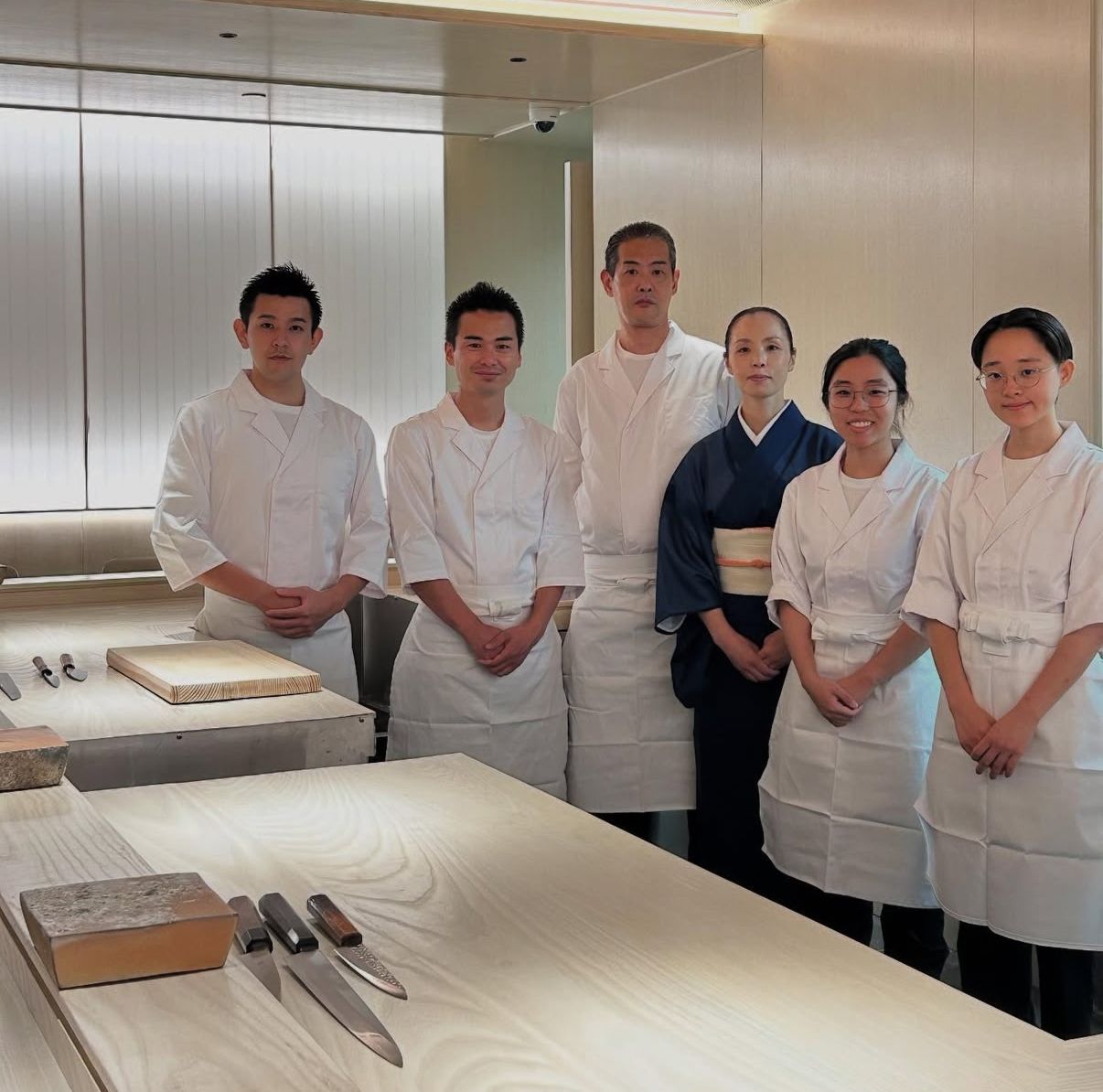
The kitchen has been entrusted to an all-star Japanese culinary team, including head chef Yosuke Kamiguchi who has over 20 years of experience in Japanese cuisine, and spent three months learning directly with Taniguchi.
At 28, sous chef Uraoka Shun is the youngest in the restaurant’s culinary coterie but has trained with Taniguchi for six years.
Taniguchi is a master of Edomae sushi (a traditional style of sushi originating during the Edo period, from 1603 to 1868) and modern Japanese cuisine, so this is reflected in the omakase menu.
Dinner is priced at RM780+ (under Kamiguchi) or RM980+ (if Taniguchi is there). There is also a shorter lunch omakase menu, priced at RM310+.
The restaurant is heavily focused on fresh Japanese seafood, which is flown in twice a week. The tableware is also sourced from various places in Japan and includes beautiful antique Arita plates.
The menu revolves around the seasons and changes accordingly, with the current autumn menu expected to be served until November 2025. The focus at the restaurant is on delivering an authentic omakase experience rooted in precision, purity of flavours and warm hospitality.
From the omakase dinner menu, there is honestly so much to tantalise and titillate. The menu starts off with grilled white tile fish with cold cucumber soup.
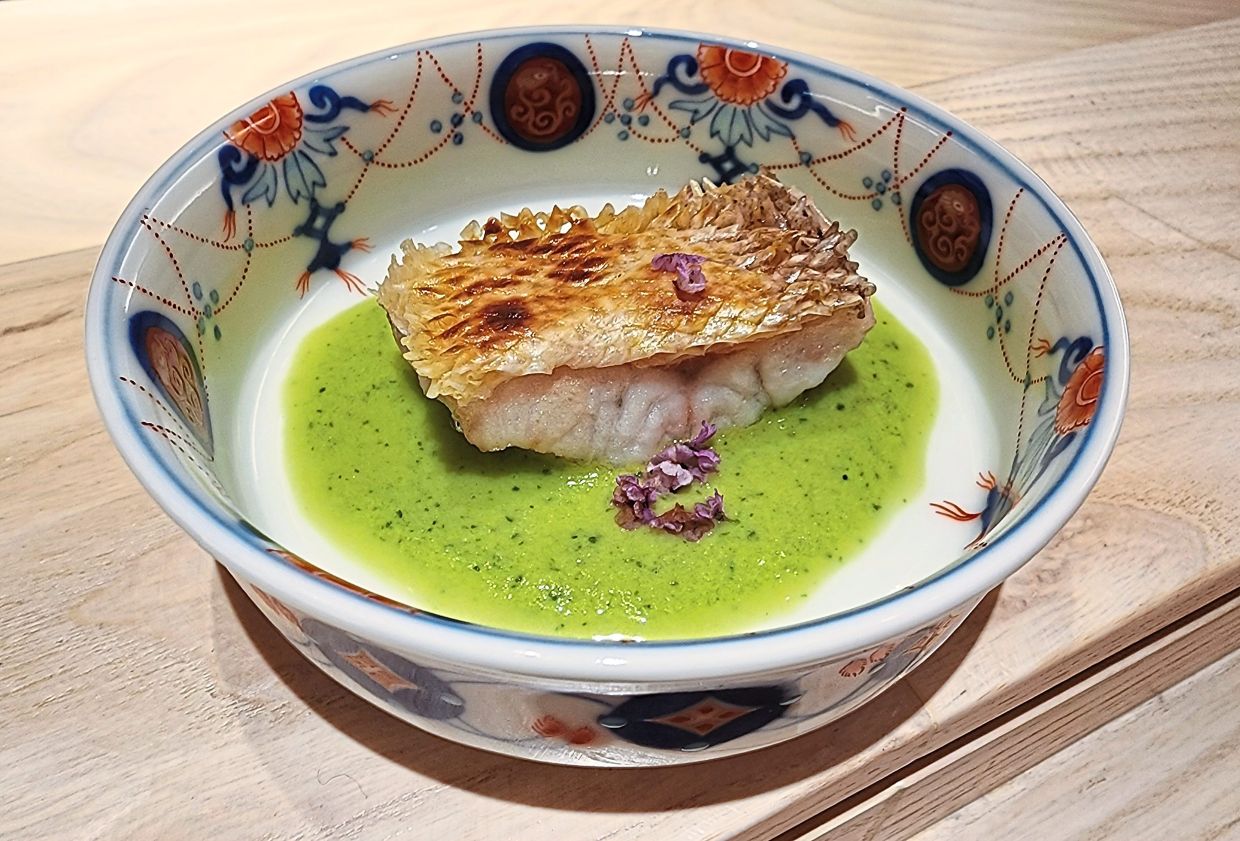
Interestingly, the fish has been grilled with its scales still intact so it has a blistered surface that has a spiky (but not poky) crispy crown that segues into magically tender fish.
The cold cucumber soup meanwhile is inspired by the heavy usage of cucumbers in the western part of Japan where farmers seek respite from the heat through cold dishes. The soup has a clean, fresh taste and offers cool comfort to start off the meal.
Up next is a familiar favourite – steamed egg custard – which has been given an aquatic twist, courtesy of the Hokkaido hairy crab and crab miso in its configuration.
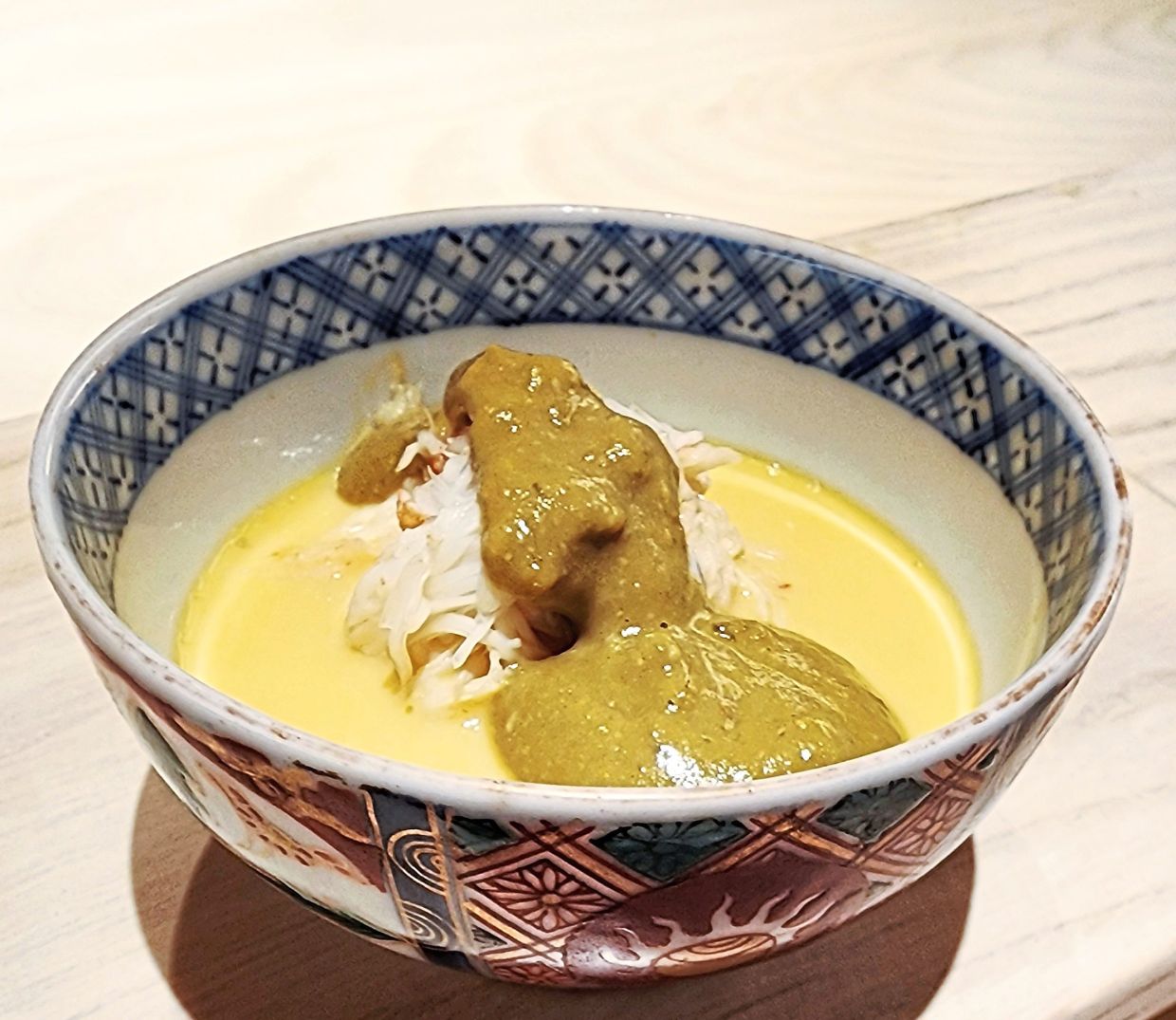
The custard is a smooth operator whose attributes are accentuated by the plump tufts of crab meat stuffed into its core.
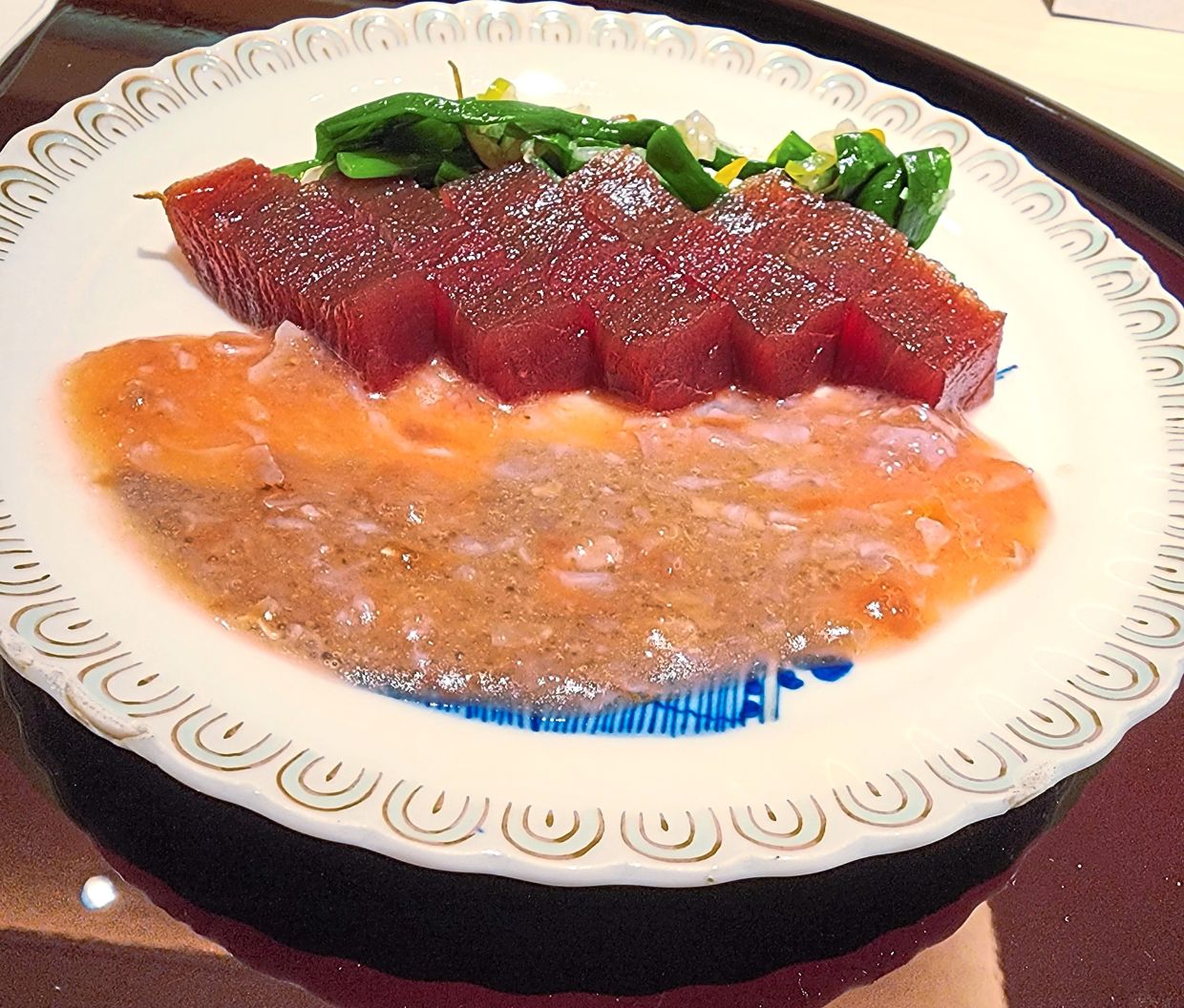
Another highlight from the small plates is the soy sauce marinated tuna with salted fish entrails and seasonal vegetables.
The salted fish entrails sauce features bonito guts that have been salted and aged for six months. This preservationmethod is ancient and pre-dates soy sauce.
There is a lot at play in this configuration and yet everything works together masterfully – the fish is fresh with a sweet undercoat while the entrails sauce is thick and viscous with fishy underpinnings.
After the build-up engendered by the opening acts – small plates – you’ll be guided towards the lead stars of the night: the sushi selections.
This is what Taniguchi has spent his entire career training for and consequently, it’s also where the menu hits its zenith.
The white tile fish sushi for example has been cured with kelp and seared. The searing has given it a smoky char while still retaining supple flesh that is pressed deeply into the rice in this configuration. The rice itself is firm yet retains a hint of tang.
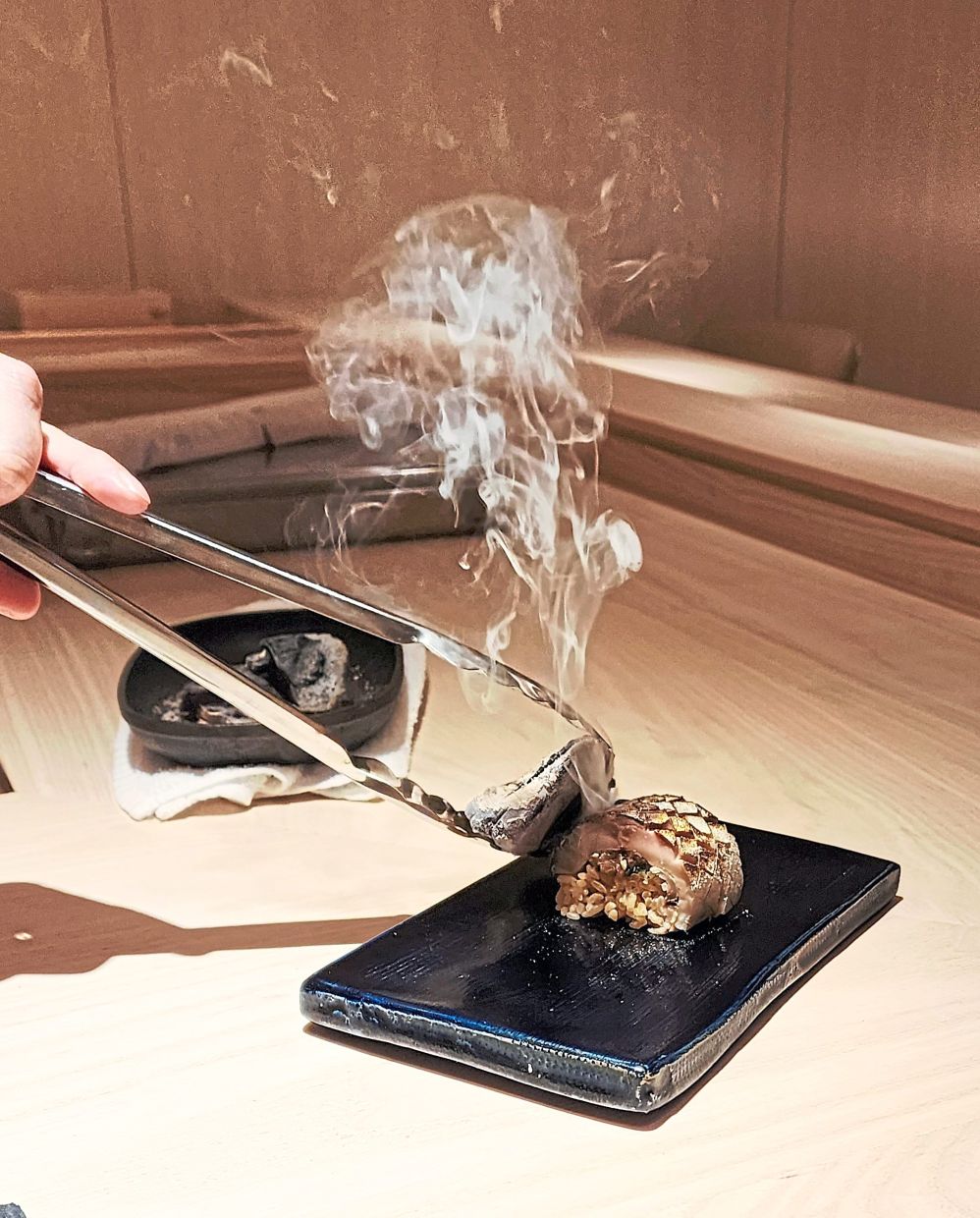
Then there is the mackerel box sushi, which features mackerel cured in kelp. The mackerel is stamped with hot charcoal, which is designed to eke out the oleaginous qualities of the fish.
As a result, the fat, hefty slice of fish is fantastically good – laced in a smear of smoke which gives it an almost inebriating addictiveness.
The next series of sushi represent the big guns of the night, sort of like a band’s most popular songs.
The winning streak starts with the scallop sushi. The scallop has been cured with kelp and is a dappled, silken smooth beauty whose voluptuousness means it lingers in the memory long after the meal is over.
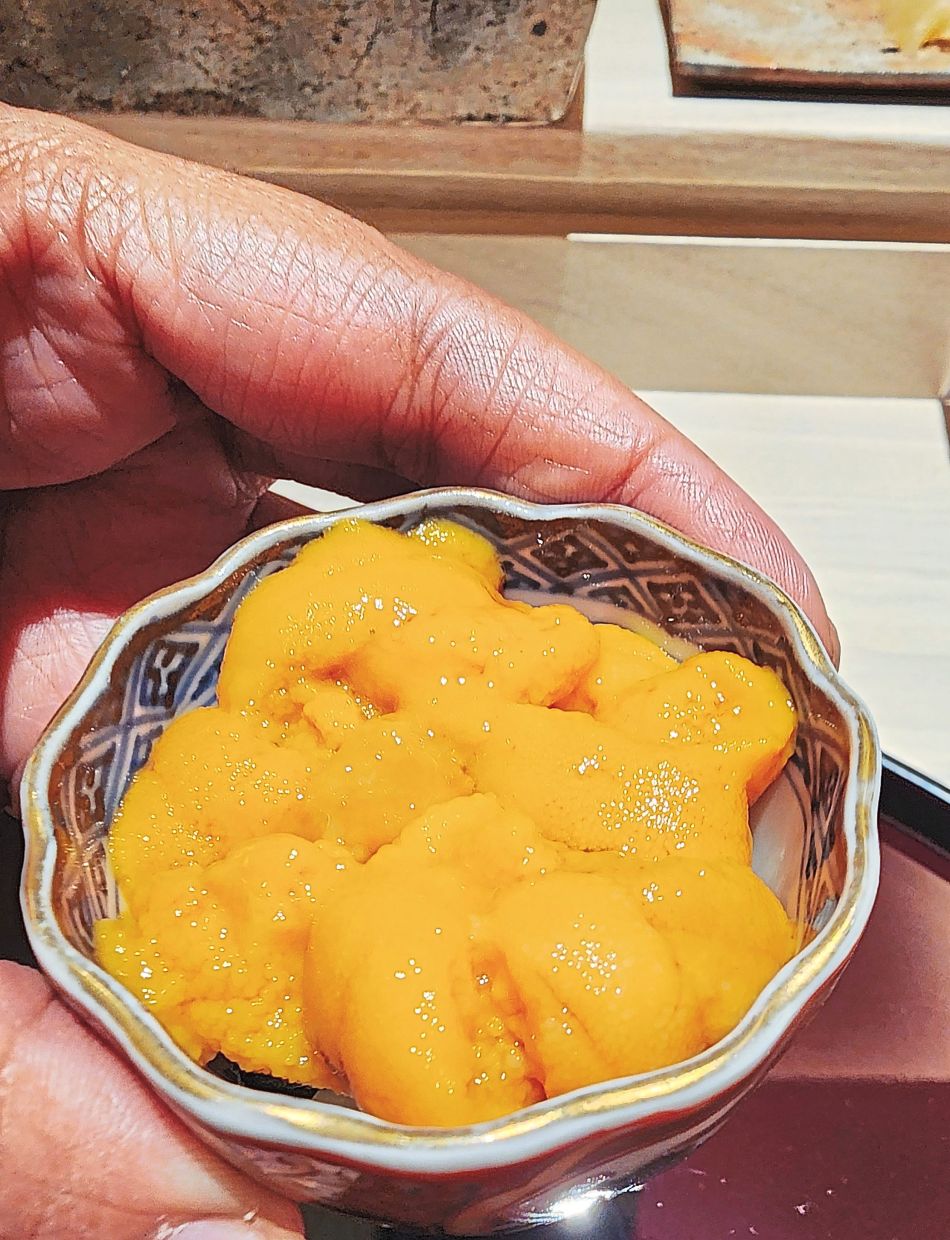
Then there is one of Taniguchi’s signature creations – sea urchin over rice.
The sea urchin has been preserved in brine and is just fabulous – creamy, velvety and decadent – the culinary equivalent of unspooling silk, except this rendition is layered with just a whisper of briny overtures.
The swordtip squid sushi meanwhile highlights the smoothness of the squid, which has just a hint of a firm bite.
The rice here is layered with calamansi lime which gives the entire dish a zesty pep in its step.
One of the star offerings of the night is the Nagasaki conger eel which has been gently simmered until soft and fluffy and served over vinegared rice.
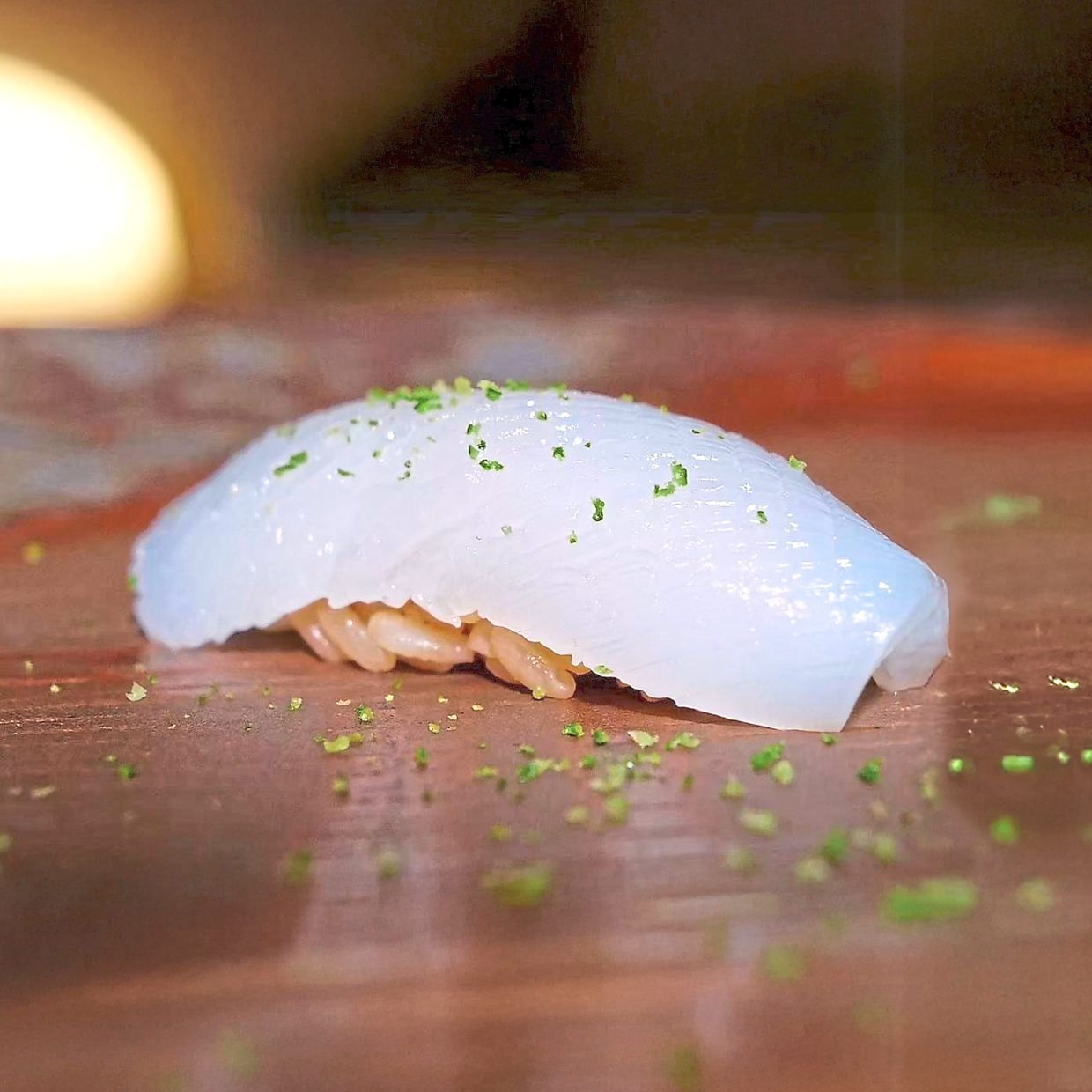
The cooking here has been executed to a delicate science because the eel is so tender that it seems to dissolve on the tongue like putty, making mastication an optional exercise.
Finally, there is Taniguchi’s popular fatty tuna roll sushi with pickled daikon.
The tuna is a mix of fatty, medium fatty and lean bluefin tuna paired with crunchy pickled daikon and wrapped in crisp nori.
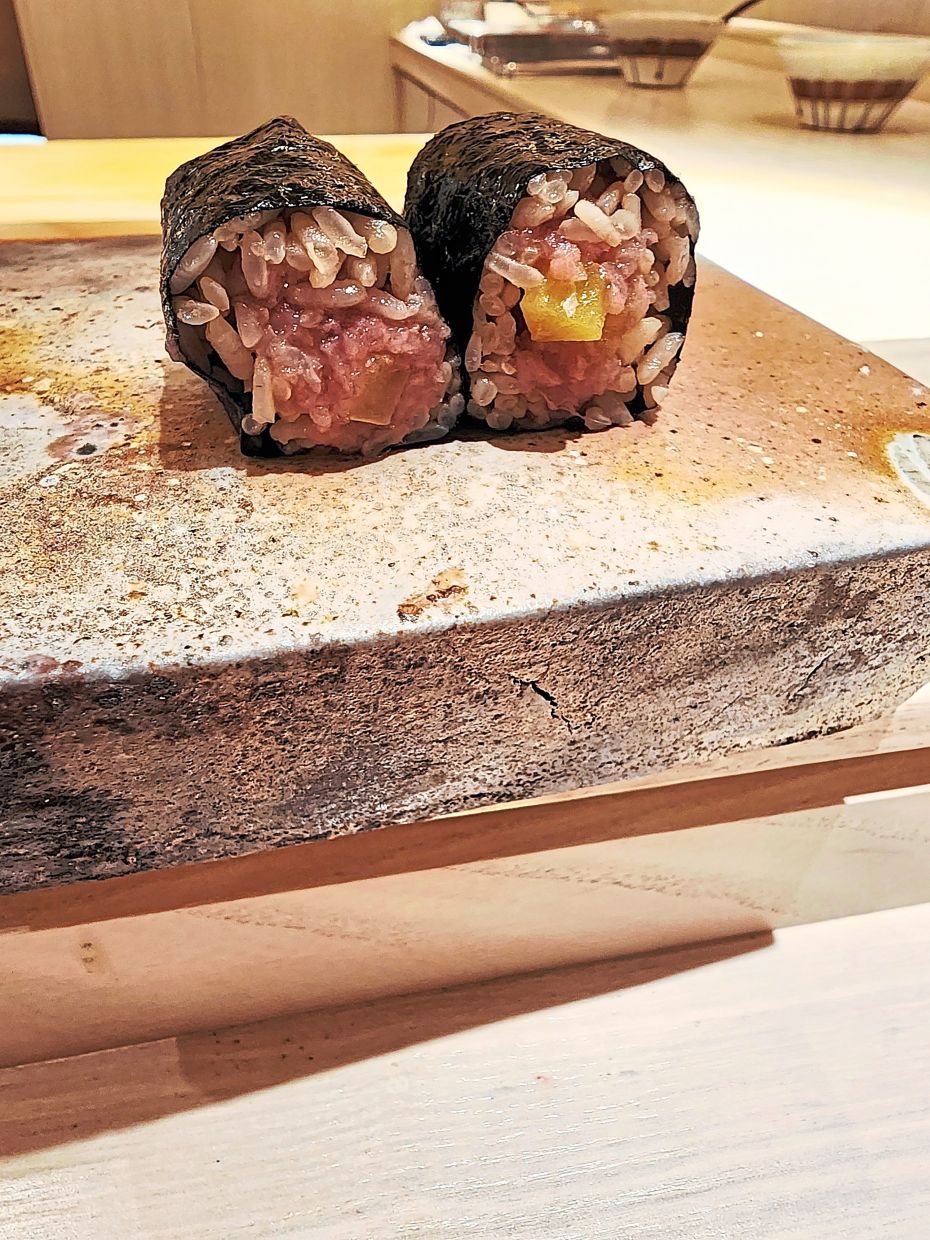
It’s a masterclass in textural elegance – delivering a melt-in-the-mouth aquatic experience enlivened by the crunch of the daikon and the crispness of the nori.
Ultimately a meal at Kohaku delivers a multi-layered omakase experience that is the culinary equivalent of a successful orchestral composition.
It starts on a slow simmer, builds to a rousing, euphoric middle and ends on a jubilant high note. And really, there is little more that you could ask for in an omakase meal.