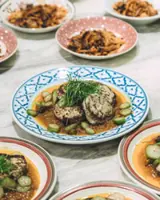
Petaling Jaya restaurant Table & Apron has been around for over a decade now, but the restaurant is proof that old dogs can still come up with new tricks.
In September this year, the restaurant launched a brand-new pop-up called The Teahouse Upstairs. Running every Wednesday and Thursday night throughout September and October 2025, the endeavour celebrates Myanmar food and is unique because it represents a collaboration between a restaurant and its own staff.
This offbeat idea was borne entirely out of an internal staff cook-off and utilises the existing team to craft an entirely new dining concept within the same premises.
“So actually we wanted to build off something that we were doing daily, which is our staff meals. Every day at 4pm sharp, we will always have a staff meal together and people will take turns cooking.
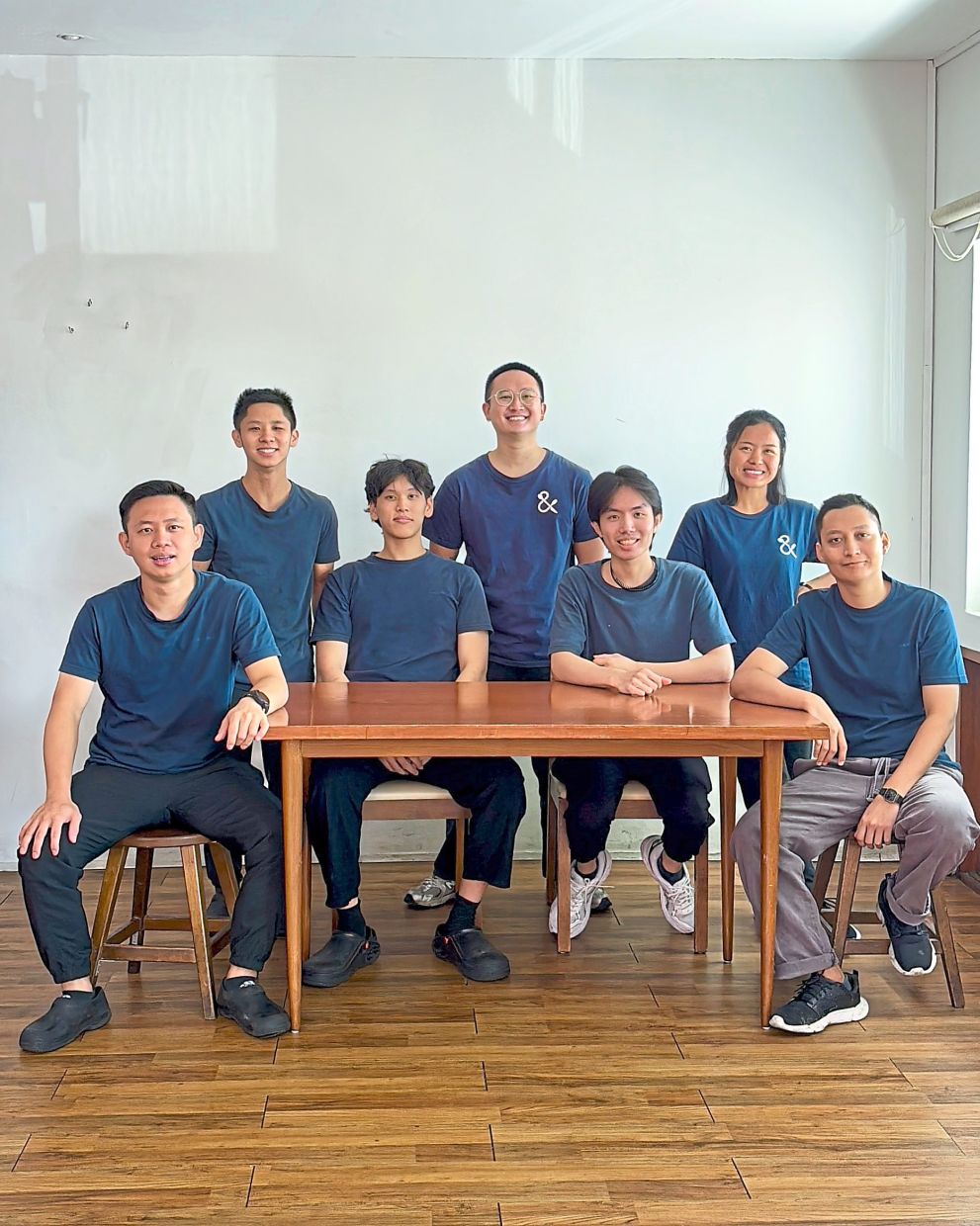
“And we came up with this incubation idea where every two weeks we had a different team paired up, and they selected the cuisine of their choice to cook and serve, and we then invited our regulars and people in the industry as judges, and after the scoring, we picked the top three winners to form a team to lead a pop-up,” says See Toh Wai Zhung, the manager of the restaurant.
The cook-offs went on for a period of six months and ended in July. According to Table & Apron’s founder Marcus Low, after this – the winning team only had two months to decide what to cook and then ultimately assemble the pieces to form the pop-up.
“The team really dug deep to see what cuisine to spearhead. And then it became a natural decision because about 50% of our cooks are from Myanmar, so the team took that as inspiration and thought, ‘Let’s all try to figure out what this food is about,’” says Low.
To understand the history, heritage and heart behind Myanmar cuisine, which is infinitely less known and less talked-about than regional fare like Thai food and Vietnamese fare, the team travelled throughout the city, gaining fodder for the food through visits to Myanmar temples, eating at other Myanmar restaurants and talking to elderly members of the community.
Another challenge was turning quintessential Burmese street food into restaurant-quality meals without simultaneously diluting the essence of the food and transforming it into something utterly unrecognisable.
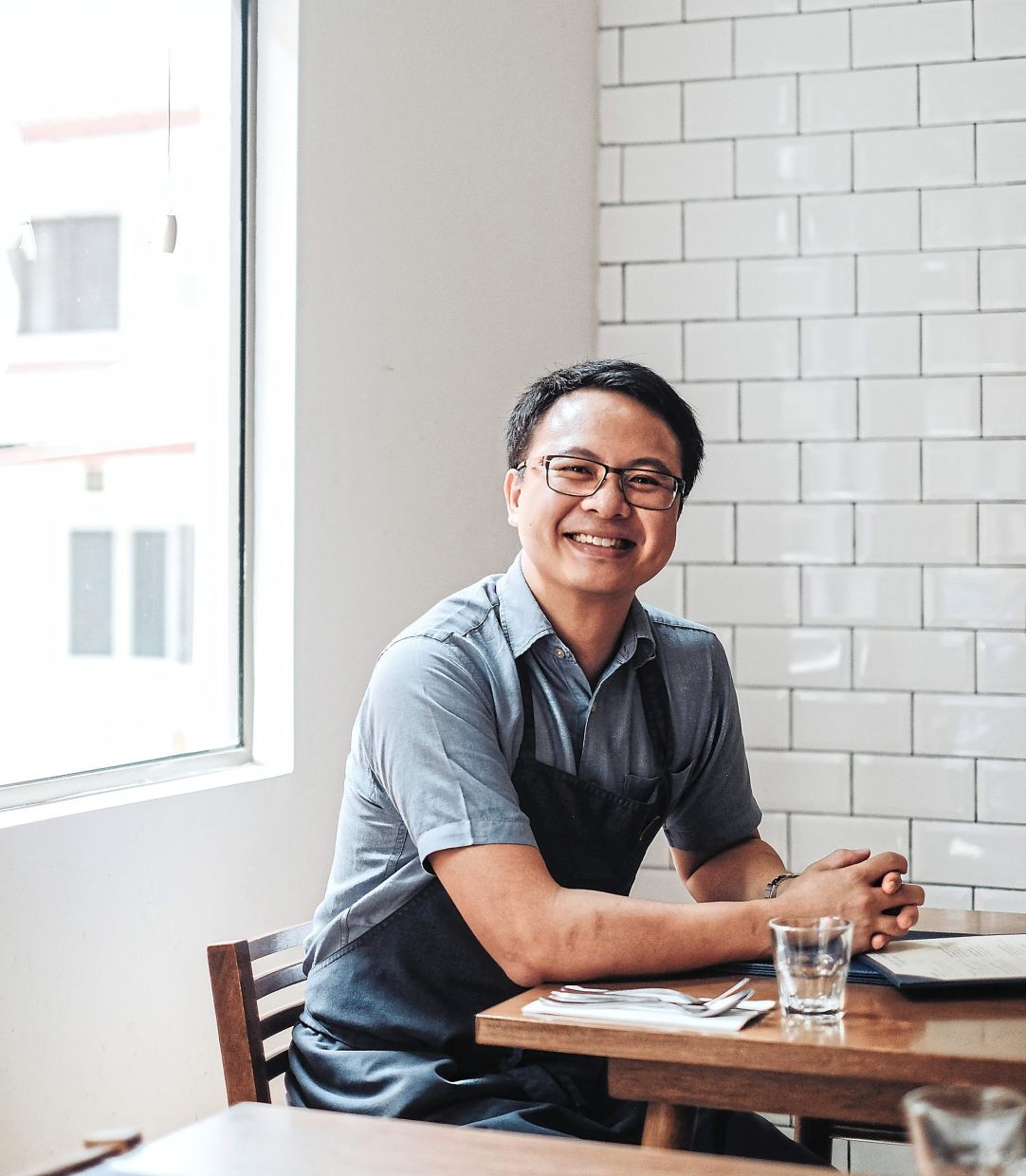
“In Myanmar, there are not a lot of restaurants, instead there are a lot more street stalls. So we tried to find ways to turn these meals into a restaurant package,” says Low.
Before the launch of The Teahouse Upstairs, Low says Myanmar team members at Table & Apron and sister bakery Universal Bakehouse were heavily involved in taste-testing the food crafted by sous chef Tan Yan Pin and giving their seal of approval to the final menu to ensure total authenticity in the experience.
Low also opened up the upstairs dining area of Table & Apron, which is typically used when the restaurant is busy – but which he decided could be repurposed as a space for the pop-up.
“We do open this space for regular dining because normally there is a need for it. But we made a conscious decision that we could do without it. I think as a restaurant, we get to control the narrative.
“So yes, we can use the space to make more sales by seating existing Table & Apron customers, but if this gives us more meaning to be able to do something else – well, it’s a no-brainer,” says Low.
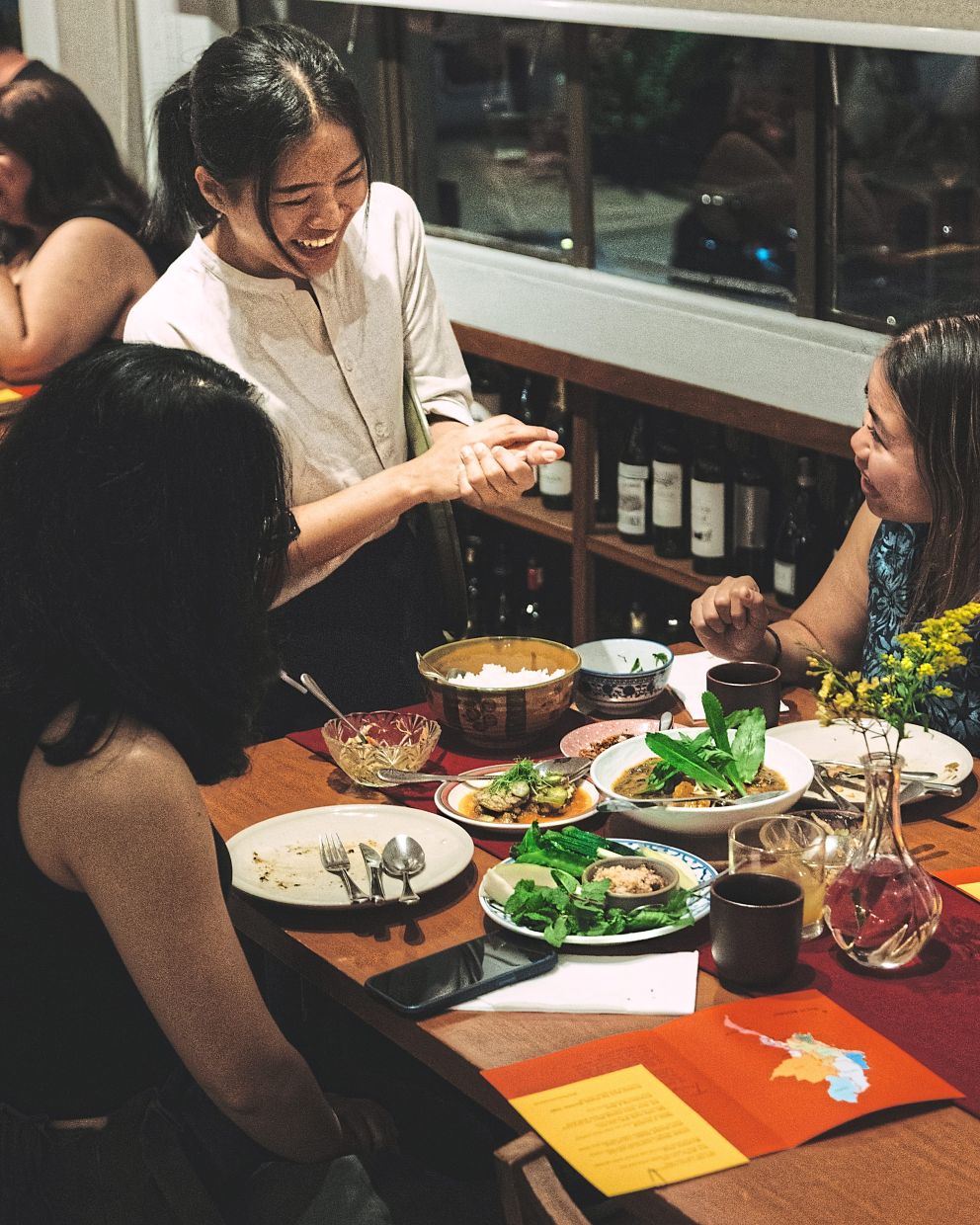
The menu for The Teahouse Upstairs has been crafted to be shared and is priced at RM128++ per person. It shines a spotlight on under-represented Myanmar food and highlights many unknown (to Malaysians, at least) Burmese dishes like Lahpet Thoke, which is considered a national dish in Myanmar. The fermented tea leaf salad with tomatoes, cabbage, prawn floss and peanuts is a tangy sleeper hit that shows how multiple ingredients can collude to create a flavour explosion.
Kachin Hin Cho meanwhile is a fish broth with kaffir lime leaf and galangal that is so warm, nourishing and engaging that it evokes an instant sense of comfort.
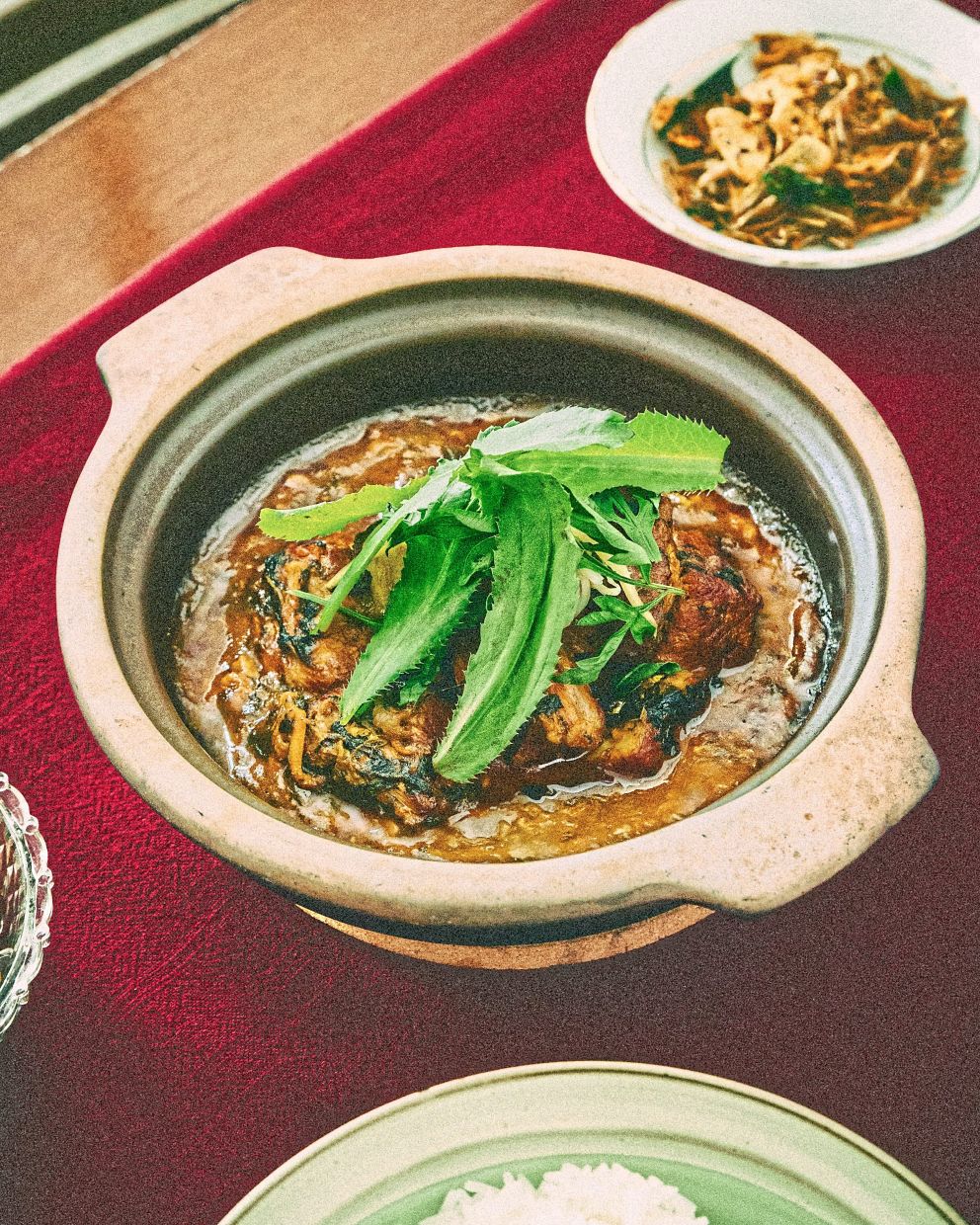
The Wet Thar Chin Paung Hin or pork belly curry features pliant pork belly alongside roselle leaves, bamboo shoots and green mangoes in a dish that is hearty and satisfying yet has a zesty, acerbic slant to it that gives it an energetic point of differentiation.
Throughout a meal here, multiple Myanmar staff engage guests in discourse about the food, offering a guided tour of each dish and what it represents to denizens of Myanmar from a cultural perspective. This gives the experience a different lens – one which closes the gap between the diner and the food.
Low, meanwhile, says that he believes this pop-up serves as a test tube project for his staff, enabling them to dip their feet in the ins and outs of running their own restaurant without having to actually invest any money in opening a physical business.
“They learn how to financially build this business. They don’t have to spend money to rent a place, but they spend money to do R&D and they have to log all of that. So it’s almost like figuring out how to open a restaurant. And all the proceeds from the sales go to the team.
“We want them to learn – even if this fails, we want them to learn what it takes to fail. And I think in today’s generation, everyone is scared to fail, but everyone also wants to open a restaurant, so this is the biggest platform we can give them to see if it will fail or succeed,” says Low.
For Low, this is a new and unusual way of thinking because he is working with his own team in ways he never conceived of before. And ultimately, this new way of working together resulted in something entirely beautiful and meaningful.
“For me, it was a case of how do we work with them on something that we’ve never really worked with them on before where we have to figure things out together? And I think that was the most meaningful type of experience you can get out of this, without going out and opening a new place,” says Low.
Low says this whole experience has shown him that he can carve out new pathways for his existing team within the ambits of his restaurant. In that sense, he certainly believes there is potential for a reprisal of a pop-up like this or something else in its stead.
“I foresee it coming back in some shape or form. It could be the same format; it could be a different format. That’s why we want to keep it very open and let the team figure out the narrative to take it to next year,” says Low.