
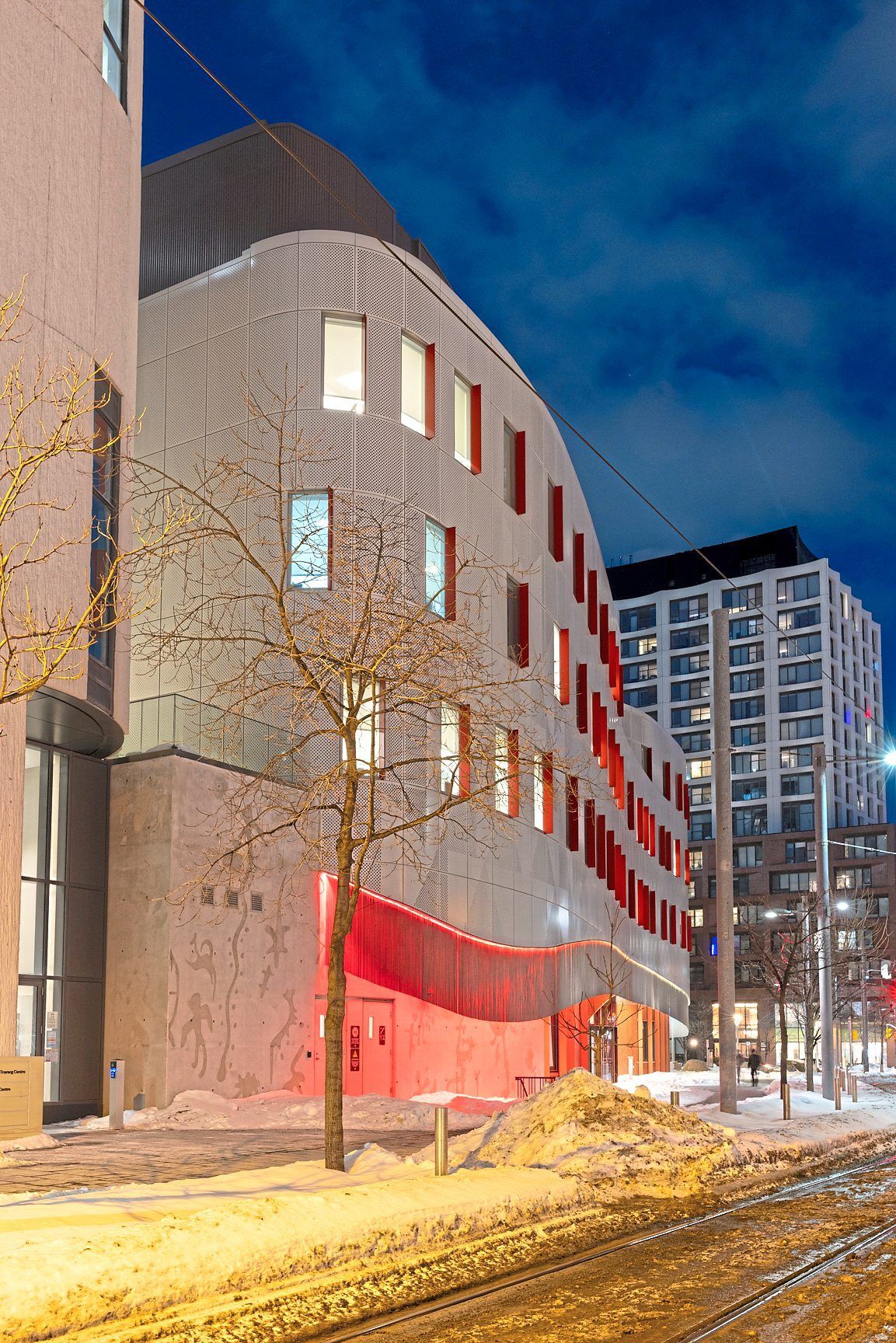
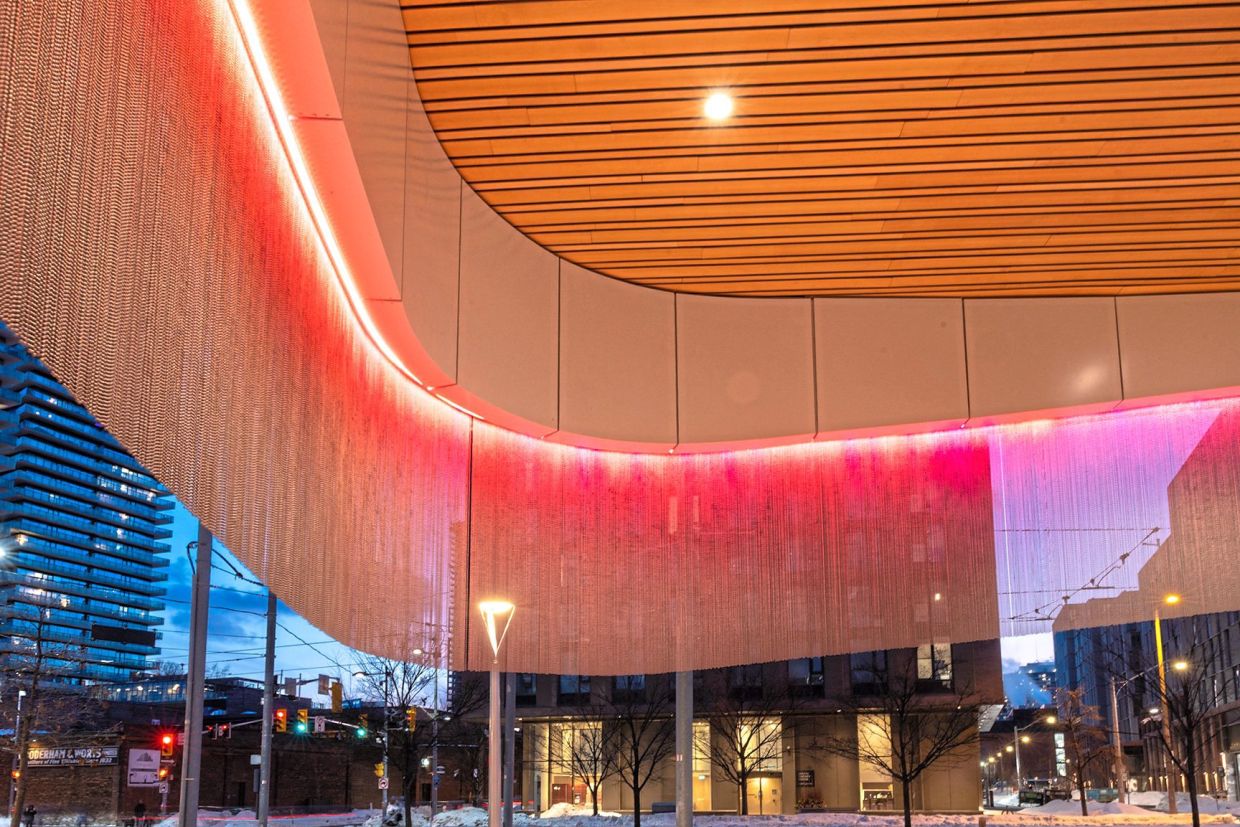
Stainless-steel beads form a shimmering fringe along the perimeter of the new Anishnawbe Health Toronto, a community centre southeast of downtown Toronto, Canada.
Above them, perforated aluminium panels mimic the geometric patterns of indigenous ceremonial shawls. In the wind, the fringe gently jingles.
"The fringe is about the sound,” said Matthew Hickey, a partner at Toronto’s Two Row Architects, one of the firms that designed the building. "Jingle dresses are used for ceremonies. It’s a movement and effect you don’t typically see in architecture.”
The health centre, which aims to serve more than 90,000 local indigenous people with a blend of Western and traditional medicine, marks the first phase of a planned Indigenous Hub in Toronto that will include housing and retail.
More than just a visual departure for Toronto architecture, which has favoured glass towers and black obelisks, it heralds the emergence of a new class of indigenous architects, whose work has become a primary driver of the city’s landscape after decades of exclusion from their chosen profession.
"The past has not been recognised,” said Hickey, 47, who is Mohawk and a member of the Six Nations of the Grand River. "A lack of identity has developed in this place – we tend to import buildings from Europe, with banks that imitate Greek temples.”
Today, fewer than 20 licensed indigenous architects are practising in Canada, according to Patrick Reid Stewart, a Vancouver architect who leads the Indigenous Task Force of the Royal Architectural Institute of Canada, and a hereditary chief of the Nisga’a Nation.
"But they’re making their presence felt. There was never a voice, and now we have a voice.”
Until 1961, Canada’s Indian Act forced its indigenous people to choose between seeking a professional education and maintaining their status as First Nations citizens – a choice that "put you in the uncomfortable position between honouring your culture and heritage, or wanting to be part of Canadian society,” said David Fortin, a professor of architecture at the University of Waterloo in Ontario and a citizen of the Metis Nation of Ontario. "It wasn’t just architecture – that was any professional field.”
Fifty years after Calgary-born Douglas Cardinal became Canada’s first certified indigenous architect, his legacy is being rekindled in the work of architects like Eladia Smoke, founder of the Hamilton, Ontario-based Smoke Architecture, whose projects have included a US$120mil (RM473mil) anchor building at Centennial College in Scarborough, Ontario.
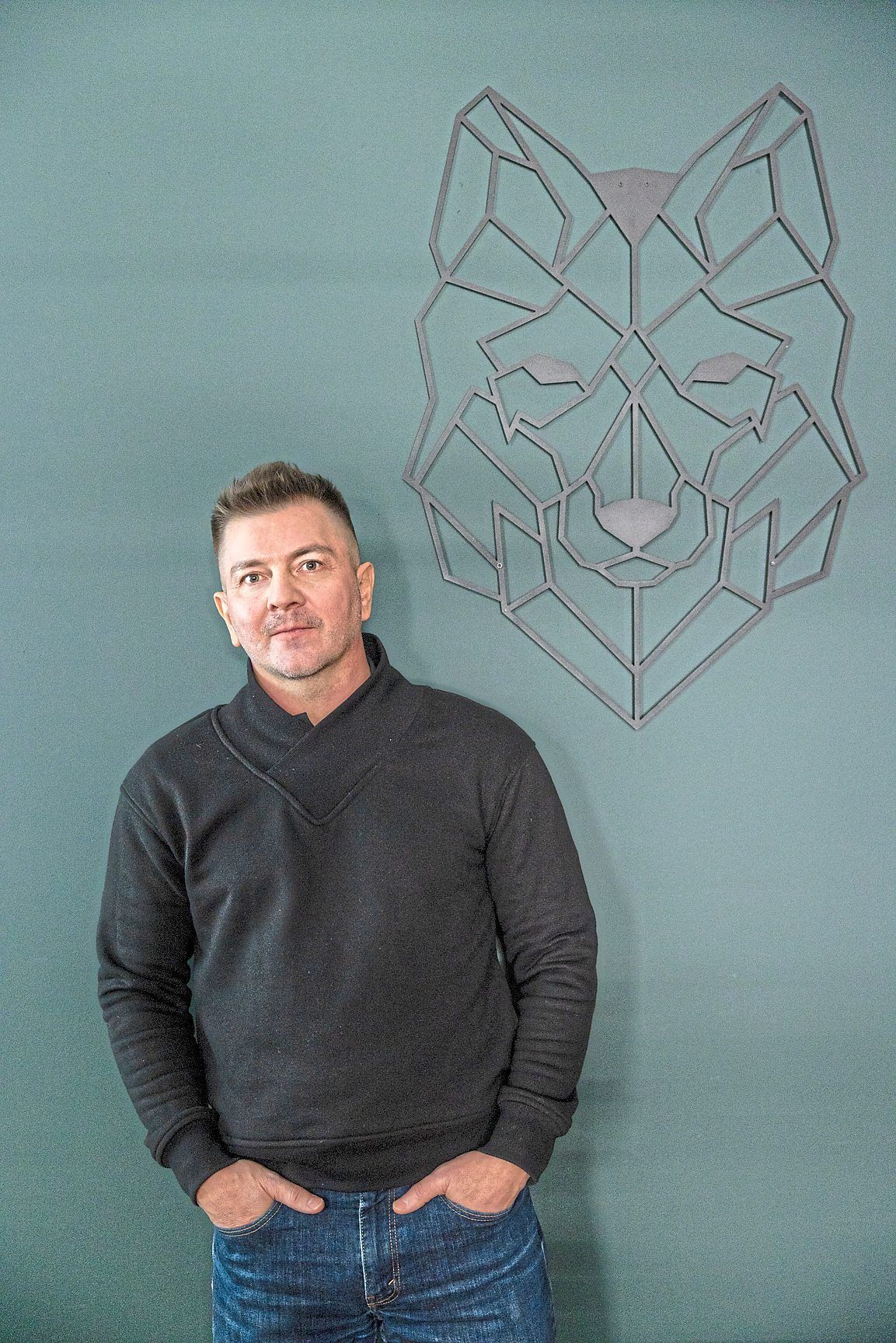
A collaboration with global firm EllisDon Construction and Toronto architecture firm Dialog, the Centennial College project "drew on an indigenous narrative and indigenous values”, Smoke said.
Among the building’s distinctive features: An indoor space inspired by wigwams, the traditional dome-shaped dwelling of Northeastern indigenous people; an exterior meant to evoke animal skin or fish scales; and an outdoor atrium "designed on principles of the Midewigan, an open-frame bentwood teaching lodge”, according to a project brief.
Design concepts like these have long been part of indigenous cultures, but indigenous architects in Canada have been "trained to use design principles from places they’re not from”, said Smoke, 47, who is Anishinaabekwe, and a member of the Obishikokaang/Lac Seul First Nation. "That’s how I was trained.”
Last year, Smoke founded Amplify Indigenous Voices in Architecture, a nonprofit that aims to "encourage young people to enter the profession, and to support elders to convey architectural teachings to the next generation”, she said. After a "birthing ceremony” last September, Smoke hopes to begin operations this year.
Collaborations between indigenous architects and larger legacy firms are starting to change the discipline. The Indigenous Hub, for one, is the result of a partnership between Two Row Architects and Canadian firms including BDP Quadrangle and Stantec.
For Toronto’s Dawes Road Public Library, Smoke Architecture conceived a building inspired by a blanket.
"On the one hand, it’s a metaphor for community services,” said Andrew Frontini, design director of the global firm Perkins + Will, a larger firm that partnered with Smoke on the project.
"On the other hand, a blanket drapes and folds. How do you make a building do that? I’m educated in Western architectural traditions, so large metaphors were both out of my comfort zone and a conceptual struggle.”
With encouragement from Smoke, Frontini’s team "stepped back and found a new way of working”, he said. Using felt, wooden scaffolding and a scanning app, the firm "began to translate the story of a blanket into a building. This project got us past our own inhibitions, and the client loved it”.
Firms like Perkins + Will aren’t just partnering with indigenous designers out of altruism. In 2015, Canada’s Truth and Reconciliation Commission published 94 calls to action after consulting with indigenous communities, civic leaders and survivors of the country’s notorious Indian Residential Schools, which punished students for using their native language or acknowledging their heritage.
Now, obtaining lucrative government contracts requires the engagement of "at least one indigenous knowledge carrier who can advise a design team”, said Fortin, the architecture professor and the first indigenous person to direct a school of architecture in Canada.
"Architects haven’t been the best listeners throughout history, nor do they come with humility,” Fortin said. "That’s why I see reconciliation as so important, and design as such an opportunity for it. It’s an underemphasised way to build relationships with First Nations people. Get to know them, build trust and create something together.”
Some indigenous architects bristle at the notion of favouritism under the Truth and Reconciliation requirements.
"I didn’t come up through the reconciliation-type atmosphere,” said Alfred Waugh, 58, the founder of Vancouver’s Formline Architects who identifies as "status Indian in Canada with both indigenous and Northern European descent”.
"I came out of school in 1993, when people thought I was getting a free ride because of my indigenous status. My approach was to prove myself through my merit as a designer.”
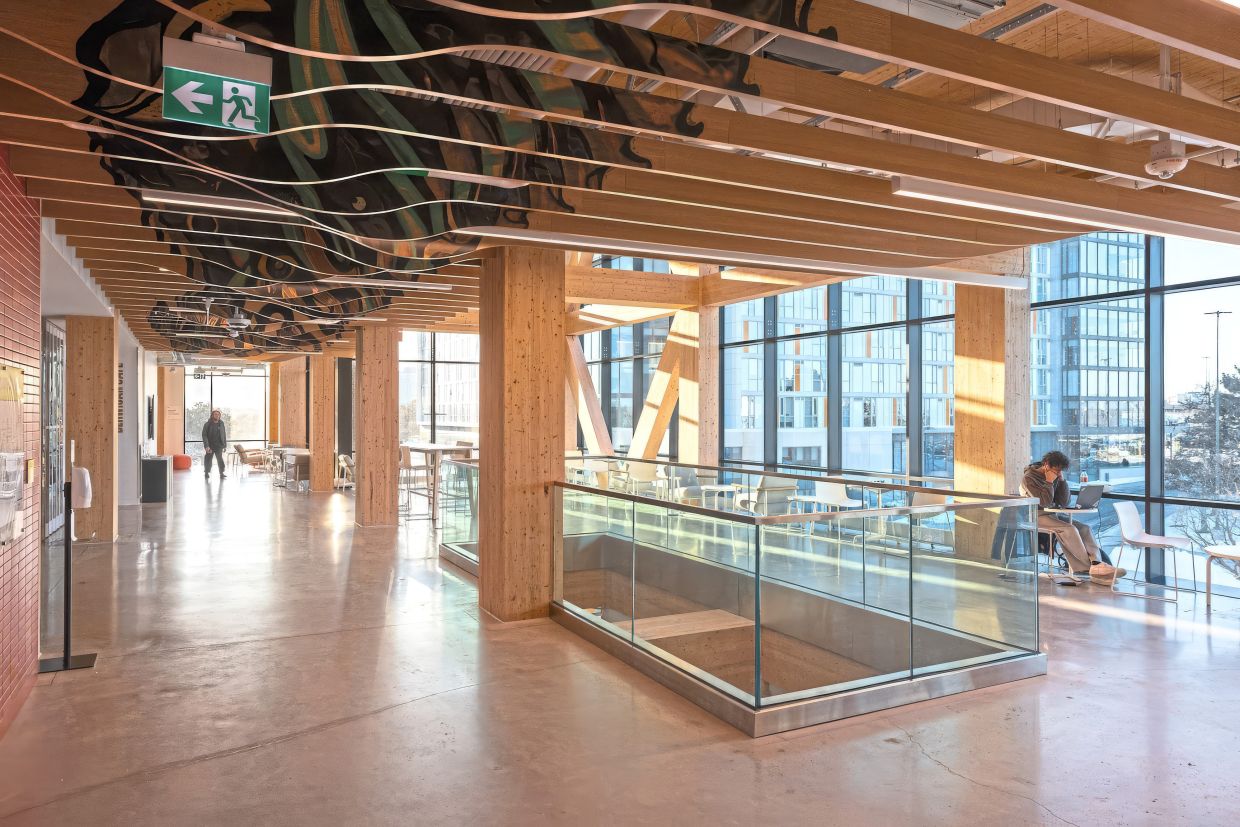
With its design of the Indian Residential School History and Dialogue Centre on the University of British Columbia campus, Formline became the first indigenous-owned firm to win the Governor General’s Award, one of Canada’s highest honours.
Waugh’s 19-person firm "tries to combine indigenous ways of knowing with Western knowledge as a positive way of moving forward”, he said. On the University of Toronto’s Scarborough campus, that approach produced Indigenous House, a "humane and organic” timber building in a sea of Brutalist and modernist facades.
Formline collaborated with Toronto’s LGA Architectural Partners on the design, which "makes you think about your place in this world and heightens your awareness of the connection to nature”, Waugh said.
But his choices were also practical, including underground tubes that pump fresh air into the building.
"They’re based on an old anthropological diagram where birch bark tubes ran underground to provide oxygen to a fire,” he said.
Indigenous principles are informing landscape architecture too.
"Design has moved so far against natural systems and laws that have governed indigenous cultures for a long time,” said Ashley MacDonald, a designer with Toronto-based SpruceLab, an indigenous-owned planning firm founded in 2020.
"Now, we’re coming back to those laws of nature. It’s about harnessing the power of wind and solar that have been used forever, instead of just decorative aspects. These are lessons taught for generations.”
Thanks in part to that inherent seed of sustainability, indigenous architecture "isn’t just having a moment”, said Hickey, of Two Row Architects. "It’s the future, especially in North America.” – ©2026 The New York Times Company