A flock of sheep grazes quietly, each minding its own business, in a sunny meadow in Germany's Rhon highland region until a donkey comes along.
It trots towards a person who is approaching the animals.
The donkey stands in the man's way, refusing to let the hiker pass.
Its stance is as firm as any bouncer at a nightclub. But after sniffing the man's rucksack and looking at him again, the animal relaxes and gives way.
A second donkey approaches, likewise looking critically at the walker.
"These are Tessa and Pauline, my herding donkeys," says Oliver Spies, a shepherd, as he follows the second donkey towards the visitor.
Many are familiar with dogs who herd sheep but these donkeys are also able to handle a flock.
They are overseeing some 300 sheep plus a few goats. The menagerie includes two donkey mares and a couple of herding dogs.
Together, the animals are working in nature conservation.
By nibbling on bushes and eating grass, the sheep and goats ensure that the Weinberg nature reserve in the heart of Germany is not overgrown by bushes and trees, but remains a habitat rich in different species.
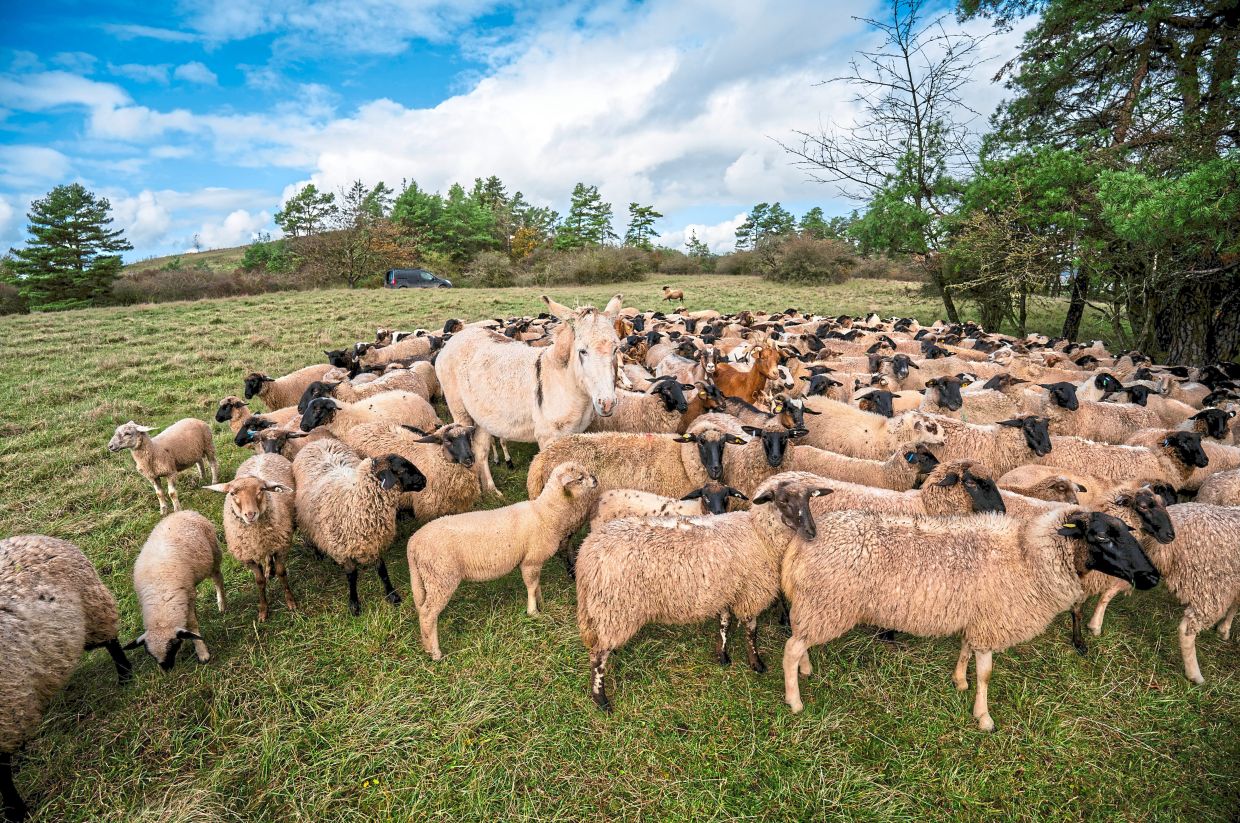
"Pauline and Tessa are there to protect the herd," says Oliver.
"When someone approaches, they stand in front of the flock and first look to see what kind of animal it is or whether it's an enemy or a friend."
They stand firm until the shepherd comes along and decides whether everything is all right.
Special skills
Spies found buying the two donkeys and maintaining them is less expensive than his dogs. But his unusual herders are not only selected for helping him save money.
The two donkey mares have special abilities that guard dogs don't have.
"There are a lot of dog walkers here in the local recreation area," says Sarah Spies, a vet now on parental leave. She too occasionally helps her husband with herding.
"A guard dog with its strong territorial behaviour makes no difference whether it's a wolf or a dog approaching," she says. "The guard dog says, 'You don't belong here,' whether you're on a lead or not."
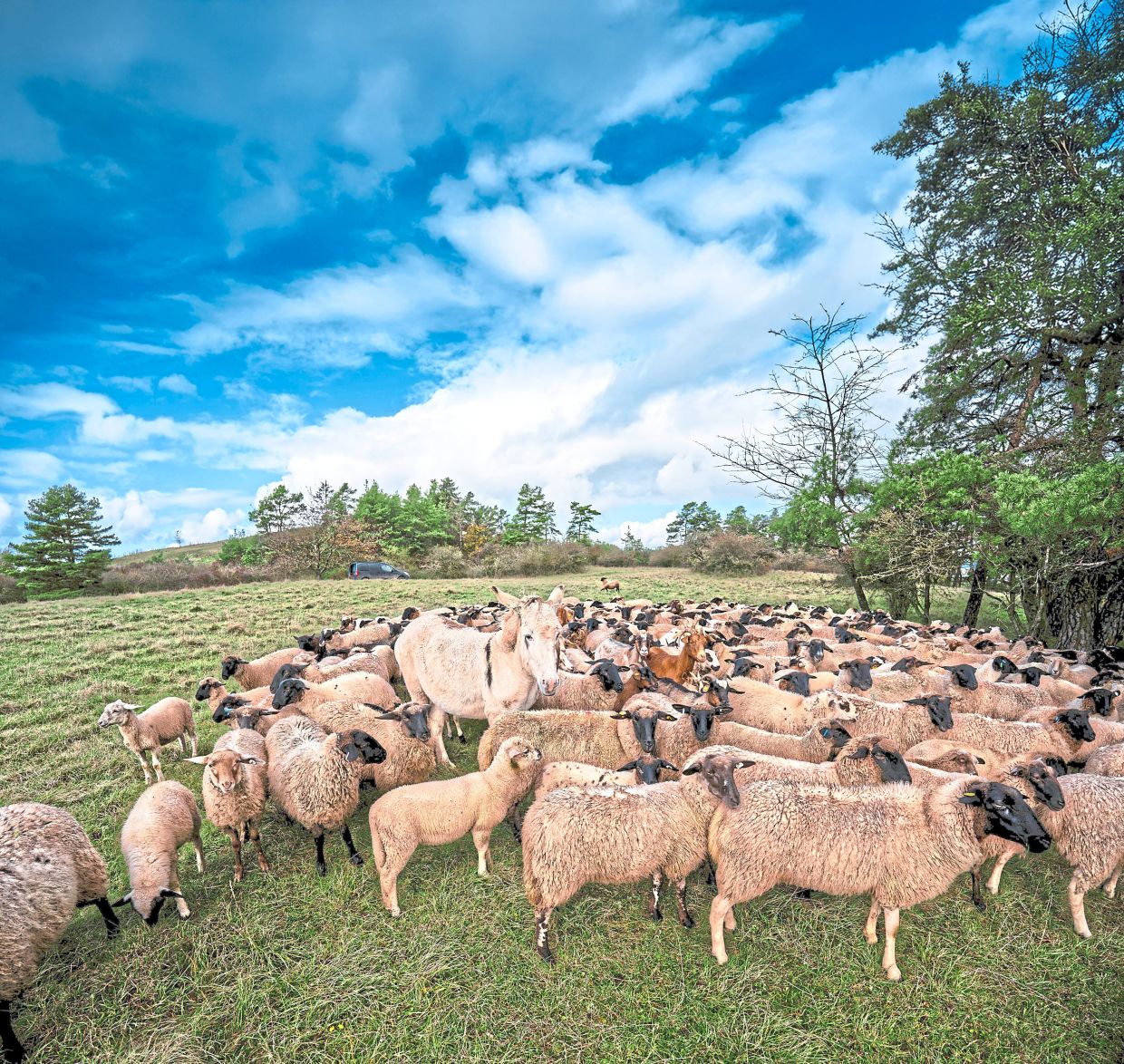
So it is not possible to use livestock guarding dogs in this area. Instead, the two donkeys do the job and are less aggressive than guard dogs.
There have not yet been any attacks by wolves on grazing animals in this part of the Rhon, but there have been elsewhere in the mountain range.
No fear of wolves
What would a donkey do if a wolf approached?
"Pauline and Tessa wouldn't be afraid of a single wolf. They would stand in front of the herd and make a real racket," says Oliver.
"The wolf would then probably move on and look for its prey elsewhere." He concedes that the donkeys could not hold off a whole pack of wolves however.
The two donkey mares are harmonious and relaxed in their work, they are actually very different in terms of their characters, the couple notes.
Four-year-old Pauline prefers sheep to humans and only wants to spend time with her charges. She is calmer and more focussed than her partner, Tessa, two.
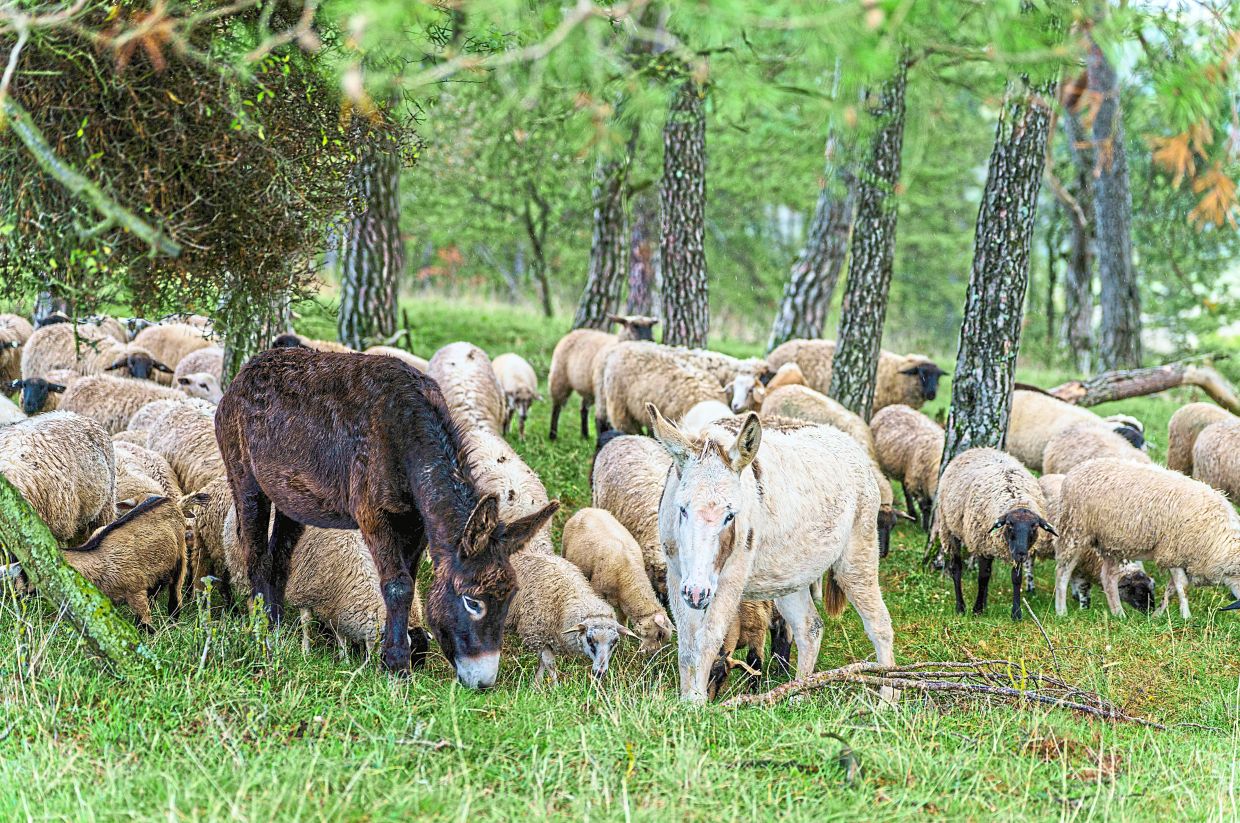
It is Tessa's first time joining the tour. She is brisker, more curious, interested in walkers and eager to play with children. "She especially likes it when you stroke her between the ears," says the shepherd.
He trained the donkeys himself. Pauline and Tessa were born on another sheep farm so had already encountered sheep before starting at his farm.
That is an essential prerequisite for their later career as herding donkeys, Oliver says.
Clear chain of command on the pasture
There is a clear hierarchy within the herd, with the shepherd at the top, followed by the herding dogs, then the herding donkeys and finally the sheep and goats.
The herding dogs recognise the two donkeys as deputy sheriffs, in a way, says Oliver. "And the sheep accept the donkeys as bosses and know exactly: they look after us."
The state agriculture ministry in Hesse, which borders part of the Rhon highlands where the flock grazes, says donkeys are very versatile animals. They support keeping donkeys, even together with flocks of sheep – provided the conditions are met from an animal welfare perspective.
Donkeys offer a certain degree of protection for smaller herds of grazing animals against attackers, as they are "comparatively strong and able to raise the alarm."
Versatile but limited
"The ability of donkeys to protect sheep from attacks by wolves, even by crying loudly, has not been proven as a reliable form of defence against a wolf attack," the agriculture ministry says.
The state helps farmers financially in buying and keeping dogs.
The ministry notes, unlike trained livestock guarding canines, "donkeys cannot provide effective basic protection against wolf attacks." That means they cannot therefore replace other herd protection measures.
Also, keeping donkeys is fairly demanding from an animal welfare perspective, the ministry explains further. Regular hoof care and at least one other donkey is required, as they have a natural need for closeness.
Also, donkeys must be provided with a shelter with a dry standing area if they are kept on pasture all day.But donkeys are helping herd sheep around the world, too, for the same reasons: They eat the same feed as the herds they guard. They are inexpensive, low-maintenance and don't need extensive training.
In terms of care, they need merely routine shots and treatments for parasites alongside the trimming of their hooves.
So from Jefferson City, Missouri, to Peckham farm, Rhode Island, in the United States, to New South Wales in Australia, donkeys are seeing off intruders while maintaining a close bond with herds. – By MICHAEL BAUER/dpa