There it was, its beady eyes flickering in the eerie light. Craggy reptilian scales glimmered as the large crocodile slithered out of sight into the undergrowth, leaving a splash in its wake in the muddy water.
You would think this is a scene from the middle of a jungle.
But the 36-second video, which went viral over TikTok and Facebook early in December 2022, was captured from inside a car in the middle of a flooded road in Kampung Air Hitam, Kuantan, a village that is not exactly remote.

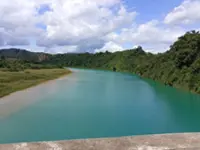
Kampung Air Hitam, as Perhilitan explains, is located near Sungai Air Hitam, a tributary of Sungai Belat in Pahang, which – like Sungai Kuantan – is a known habitat of crocodiles. Floods, brought on by incessant rain from the north-east monsoon, caused Sungai Air Hitam to spill over its banks, taking the reptile along.
The inundation is not only bringing crocodiles out into the open but also other animals like snakes, rats and insects that are also fleeing the floodwaters.
Animal crossing
In Sabah, where there has reportedly been an increase in the number of crocodile sightings, the animal has become enmeshed in controversy, particularly when there are human deaths and injuries involved.
On Dec 10, Sabah Wildlife Department director Augustine Tuuga told The Star that it had received reports of 29 sightings in Lahad Datu, at least six in Kota Kinabalu, three in Sandakan and at least one in Tawau.
The animals were spotted at beachfronts – including Likas Bay which is popular with picnickers – housing areas, retention ponds and in waters around a marine police base.
The reports came following a Dec 1 attack in which a crocodile snatched a one-year-old boy from a boat he was in with his father near the marine police jetty in Lahad Datu. The toddler is still missing.
A few days after that attack, a seven-year-old boy in the same district escaped a crocodile mauling with multiple bite wounds.
On Dec 23, Tuuga announced that 26 crocodiles had either been caught or shot dead in Sabah this year.
But in light of recent attacks, is this enough or has the time come for the hunting and even – as some politicians have suggested – the commercial harvesting of crocodiles in Sabah?
In a while, crocodile

In Peninsular Malaysia, where the animal is considered threatened in the wild, it is protected under the Wildlife Conservation Act; in Sabah, it is protected under the state’s Wildlife Conservation Enactment. Only in Sarawak is a controlled trade allowed in crocodile meat and skin after the animal was downlisted from Appendix I to Appendix II of Cites (the Convention on International Trade in Endangered Species of Wild Fauna and Flora) in 2016.
Its protected status in Sabah means that while the state Wildlife Department director has the discretion to issue licences for hunting, including collecting bulls for breeding in crocodile farms, activities such as egg and baby collection are banned.
Croc sightings in Sabah aren’t actually new, having been reported in the Likas area even in the 1990s, points out Prof Dr Abdul Hamid Ahmad of Universiti Malaysia Sabah’s Institute for Tropical Biology and Conservation.
“One actually made a nest near a residential area then.
“Throughout the years, some animals have been trapped within city limits, and we have an especially increased number of sightings this year, even before the unfortunate Lahad Datu case,” he says in an e-mail interview.
Asked if the reports of increased sightings in Sabah could be due to a tandem rise in the size of the animal’s population, Prof Abdul Hamid says the number has been increasing since 1984 when the first systematic crocodile survey was carried out in the state.
“The increase has been proven several times by systematic surveys carried out by various parties, including the Sabah Wildlife Department and Universiti Malaysia Sabah,” he says.
In 1984, the density of crocodiles was around 0.2 animals per kilometre; this rose to around 2.2 animals per km in around 2000, which is a 10-fold increase.
“Here we are in 2022, so we should expect this number to be higher,” declares Prof Abdul Hamid.
The crocodile population, he elaborates, will naturally increase given that Sabah’s waterways are still healthy and that hunting, which was thought to be the single factor that depleted the wild stock, has been controlled since 1986.
Not so placid
In the wild, large specimens of crocodiles are difficult to see, says Prof Abdul Hamid, who is also a member of the crocodile specialist group under the Species Survival Commission of the IUCN-The World Conservation Union.
During spotlight surveys – so- called because they are carried out using a powerful spotlight to see eye reflections above the water surface on dark nights during low tides along rivers – large crocodiles are rarely seen.
“So when we see more crocodiles – and large ones – in open places, even public beaches, it should point to only one thing: there are more large crocodiles now than before,” he says.
Crocodiles, Prof Abdul Hamid explains, grow in size – albeit slowly – throughout their lives, and the reptiles have a long lifespan of up to 70 years.

The crocodile’s protected status in Sabah and healthy breeding activity are further indications of higher numbers now, surmises Prof Abdul Hamid.
“The crocodiles that were small 40 years ago are large today. And large crocodiles 40 years ago are still alive and much larger today,” he says.
However, Prof Abdul Hamid adds that, while he is happy that Sabah’s habitats are supporting healthy populations, the state now has to deal with the other extreme tailend: the distribution of large crocodiles now covers a larger area, and that includes many parts where they were previously not known to be common.
Crocodiles larger than 5m in length, he warns, must be considered dangerous, and he urges people to stay away from areas where they are known to be present.
Crocodile’s death roll?
However, Danau Girang Field Centre director Prof Benoit Goosens disagrees that there has been a big increase in the number of crocodiles in the state. (The centre is undertaking a reforestation and carbon mitigation project by Regrow Borneo, led by Cardiff University’s Sustainable Places Research Institute and community ecotourism cooperative Kopel Bhd.)
Prof Goosens says that the results of the centre’s surveys over three years, from 2017 to 2020, of 10 rivers in Sabah showed the total estimated population size to be 2,886 individuals, with the Lower Kinabatangan Wildlife Sanctuary having the largest population at 1,368 crocodiles.
Another study, he says, demonstrated that harvesting or culling would be detrimental to the population, while simulations based on survey data indicated a potentially allowable sustainable harvest of only five adults a year from Sungai Kinabatangan and zero from all other rivers.
“All other rivers surveyed indicated that any harvesting level will be detrimental to the survival of their crocodile populations and will result in a high extinction probability of the entire metapopulation,” he writes in an e-mail in response to questions from The Star.
The results of the centre’s study, Prof Goosens elaborates, also suggested that there has been no substantial evidence of an increase in overall population size in the past 20 years.
“(And this) is unlikely to be the determining factor in any increased reports of HCC (human-crocodile conflict),” he contends.
Prof Goosens believes that the increase in such cases is mostly due to the lack of large prey in the wild – such as bearded pigs, whose numbers have been affected by an African swine flu outbreak last year – as well as habitat loss from expansion of human activities such as settlements, oil palm agriculture and the exploitation of riparian reserves.
“It is crucial that the crocodile population in Sabah is further monitored and managed,” he stresses, adding that this is to ensure that they are not extirpated from several rivers.
Beneath still waters
Sarawak used to be the place with many fatal crocodile attacks, especially in the 1980s, but more recently, Sabah has overtaken its neighbouring state, observes Prof Abdul Hamid.
“Earlier on, we know that more people lived by and used rivers in Sarawak than in Sabah. But beginning in the 1990s, more forest areas were opened for plantations in Sabah, bringing more people into the interior, and more river activities took place too,” he explains.
This then led to crocodile attacks in plantations and remote villages in Paitan and Serudong.
“It is different, however, when attacks take place near cities and large crocodiles are seen in open spaces such as beaches.
“That said, in tragic human- animal conflicts like this, a large section of the community becomes very emotionally charged,” says Prof Abdul Hamid.
There are groups, he says, who are against the shooting of large crocodiles on beaches, saying that these animals should instead be relocated far from human settlements.
However, crocodiles have an “open” population, in that it is fluid and every individual animal can and will roam freely.
“A crocodile living in a lake can and will one day move out, either on its own or during floods. Simi-larly, others may move in and occupy areas that have been vacant of crocodiles for tens of years. That is what the animal does and this is natural.
“So the idea of relocating large crocodiles to areas far away from human settlements is basically unfounded,” he says.
Prof Abdul Hamid is, however, all for the legal hunting and the selective taking of large animals posing a danger to the public.

Prof Abdul Hamid also feels that those living in crocodile-infested areas and who have to put up with these animals should have a fair share in the economic benefits of this “resource”, such as the rights to egg or baby collection.
This is so that the people will see crocodiles as a benefiting resource, he says, not something to be wiped out.
“This is not a new idea, it is being practised in many countries – Australia is a good example of it.”
For Prof Goosens, however, any culling, if necessary, should only be carried out by the Sabah Wildlife Department with proper assessment of the risks to human population and proper monitoring.
Culling a crocodile in a conflict area, he maintains, will only give people a sense of false safety.
“A large crocodile removed from an area can be replaced by another one,” he says, adding that there is instead a need to increase awareness in conflict areas and to avoid using rivers without proper safety measures.
As an apex predator in Malaysia’s rivers, crocodiles play an important role in the ecosystem of our waterways, including cleaning and eating up carcasses.
With Sabah already having lost – and continuing to lose – much of its wildlife to human development and encroachment, can we make peace with the crocodiles? Or do we have to resort to more extreme measures?
Whatever the solution is, it has to be found quickly before more lives – crocodile and human – are lost.

Already a subscriber? Log in
Get 20% OFF The Star Digital Access
Cancel anytime. Ad-free. Unlimited access with perks.