From Seoul to Dubai, some of the world's initiatives for cutting food waste


By AGENCY
Accumulation of food waste is a problem around the world. One way to curb it is to compost kitchen waste. — AFP

Food waste is a global problem. Each year, an estimated 1.3 billion tonnes of consumable foodstuffs are thought to be thrown away. And that figure could turn out to be twice as high, according to a study carried out by researchers in the Netherlands, published in February 2020 in The Lancet.

Food waste is therefore a major issue – one that many countries are trying to tackle by introducing measures on a national scale.

In Seoul, consumers foot the bill for the food they waste.

A champion when it comes to food recycling, South Korea is often cited as an example in the fight against food waste. In fact, this Asian country has a well-established system in place, where residents can incur extra taxes relating to the weight of their food waste.

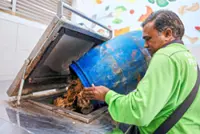
Each household has a smart card that they scan when discarding of waste in a smart dumpster provided by local authorities. Once they have emptied their waste into the dumpster, the weight of that waste is displayed on a small screen. This is then added to the bill of the household linked to the card. This mandatory and paid-for measure encourages residents to throw away less.

In place since 2013, this system has apparently helped make budget savings of some 7mil euro (RM34mil) in terms of waste collection in the city of Seoul, the South Korean capital. This government measure may seem radical, but it seems to be working.

Elsewhere in the world, other initiatives are taking shape. Dubai, for example, in the United Arab Emirates, is often singled out for the immense levels of waste linked to mass tourism in the city. In January 2017, Sheikh Mohammed bin Rashid Al Maktoum, Vice President and Prime Minister of the UAE, and ruler of Dubai, launched a food bank programme seeking to reduce food waste from the city’s hotels by distributing unsold food free of charge to the local population in need.

Sale of expired foods

Denmark and Italy also stand out with measures seeking to reduce food waste. Originating from an extensive funding programme launched in 2016, Denmark has legalised the sale of expired food items, so long as these products comply with strict labeling guidelines and do not pose any health risks.

Italy has adopted a measure similar to France, banning supermarkets from throwing out unsold food items. These laws are designed to facilitate the donation of unsold items to charities, associations and companies, even when food has technically expired. – AFP Relaxnews

Get 20% OFF The Star Digital Access

Monthly Plan

RM 13.90/month

RM 11.12/month

Billed as RM 11.12 for the 1st month, RM 13.90 thereafter.

Best Value

Annual Plan

RM 12.33/month

RM 9.87/month

Billed as RM 118.40 for the 1st year, RM 148 thereafter.

Follow us on our official WhatsApp channel for breaking news alerts and key updates!
Food waste

Next In Living

US ranch supports mental health through therapeutic horse riding programmes
Celebrity chef Michael Mina shares an Alexandria-inspired steak sandwich recipe
This professor won the competition to design a toilet for the Gropius House
Heart And Soul: A tribute to Nana, my father, whose values live on in us
Bangsar wellness restaurant Fittie Sense unveils new menu of uplifting meals
Congolese chefs put high-end spin on traditional cuisine
Palace of the Republic: The rise and fall of an East German landmark
Climate change-fuelled storm decimated world's rarest great ape: study
'Admin dates': Getting together to pay bills and complete to-do lists
How digital accessibility is empowering Malaysians with disabilities

Others Also Read