Sitting on a four-hour flight to Xiamen, China, I couldn’t help imagining the trepidation my grandfather must have felt as a teenager embarking on his month-long voyage across the South China Sea in the opposite direction – leaving Fujian for Muar, Johor, in search of a better life.
I grew close to my grandfather, Tan Seng Kay, after returning from Britain in 1998. At dawn, half-dazed, I would drive to his favourite breakfast spot, where he’d already be seated at his usual table with a pot of Tie Guan Yin tea and steaming plates of bao.
He was a quiet man, and our conversations were brief, his Hokkien coloured by a thick Fujian accent. Yet his lessons stayed with me: Success, he said, came only through hard work and perseverance.
“Never cut corners,” he would remind me, “for fleeting gains mean nothing.”
I deeply respected my grandfather – humble, unassuming, and resilient, a man who built a thriving furniture business while raising eight sons and six daughters. He passed away in 2003, just months after my wedding. A close friend later confided that he had been holding on to see me married – a gesture of love I will always cherish. I was thankful that I had the opportunity to get to know him better during his final years.
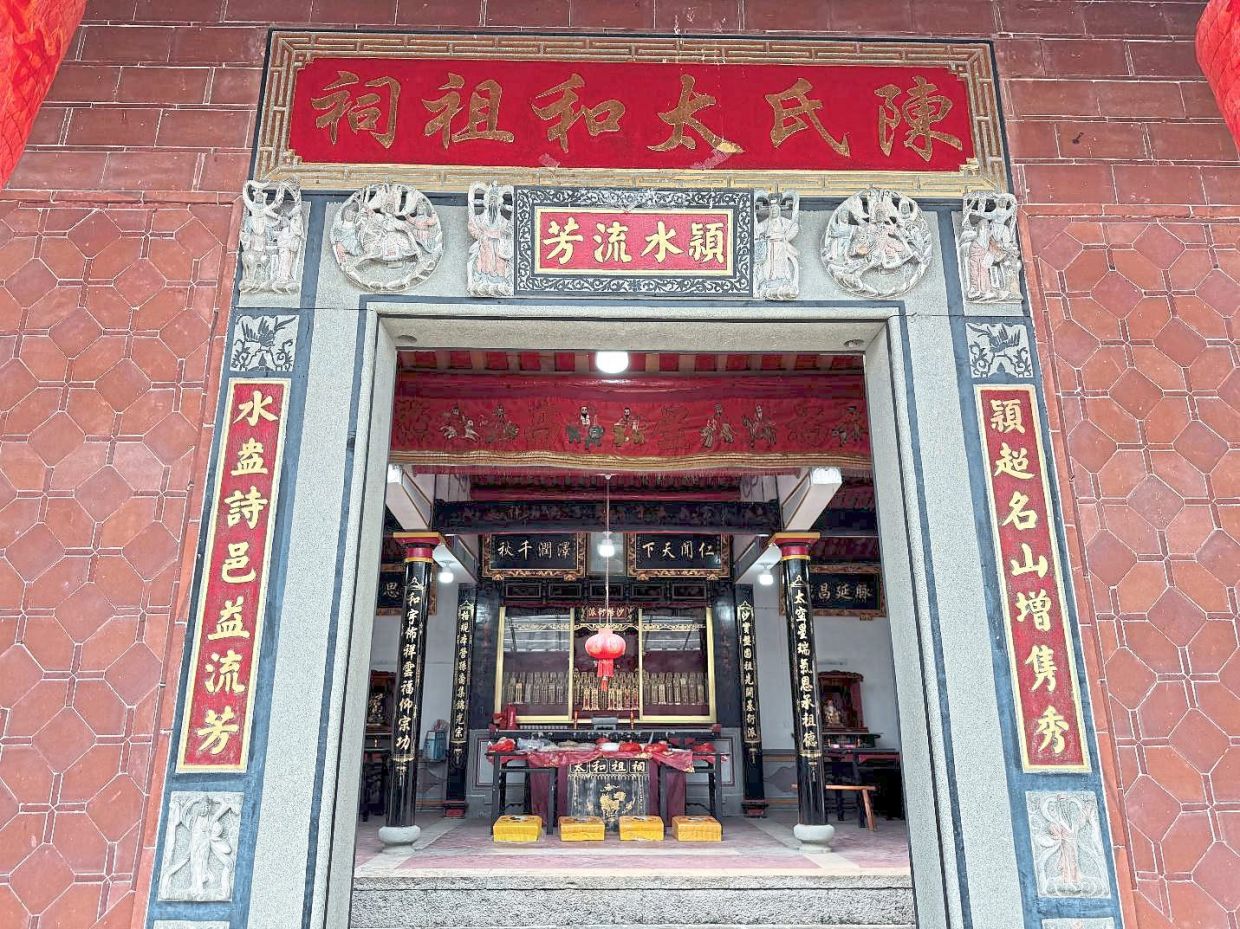
My long-held wish to visit San’er, the village where my grandfather was born, finally came true after I managed to contact his only remaining relatives there. I was thrilled to learn that they still remembered him fondly – he had regularly sent money home to support his family in China.
The drive from Xiamen to San’er took about two hours. Leaving the bustling coastal city behind, we passed through quiet towns before reaching the scenic countryside. A stone marker announced our arrival, and minutes later, the Tan Taihe Ancestral Hall came into view.
Waiting to greet us were Madam Lin Huiying, my grandfather’s niece by marriage, and her daughter, Xiaoyan.
Though we were meeting for the first time, our reunion felt warm and genuine. Madam Lin, beaming with joy, guided us through the ancestral rites. Before the altar laden with Hokkien dishes, wine and joss paper, we knelt and prayed for our forefathers’ blessings.
After the ceremony, Madam Lin showed us where my grandfather once lived. The old mud brick homes were long replaced by modern ones, framed by golden padi fields and distant green hills – a serene beauty that deepened my understanding of what my grandfather had sacrificed in leaving behind, to escape poverty.
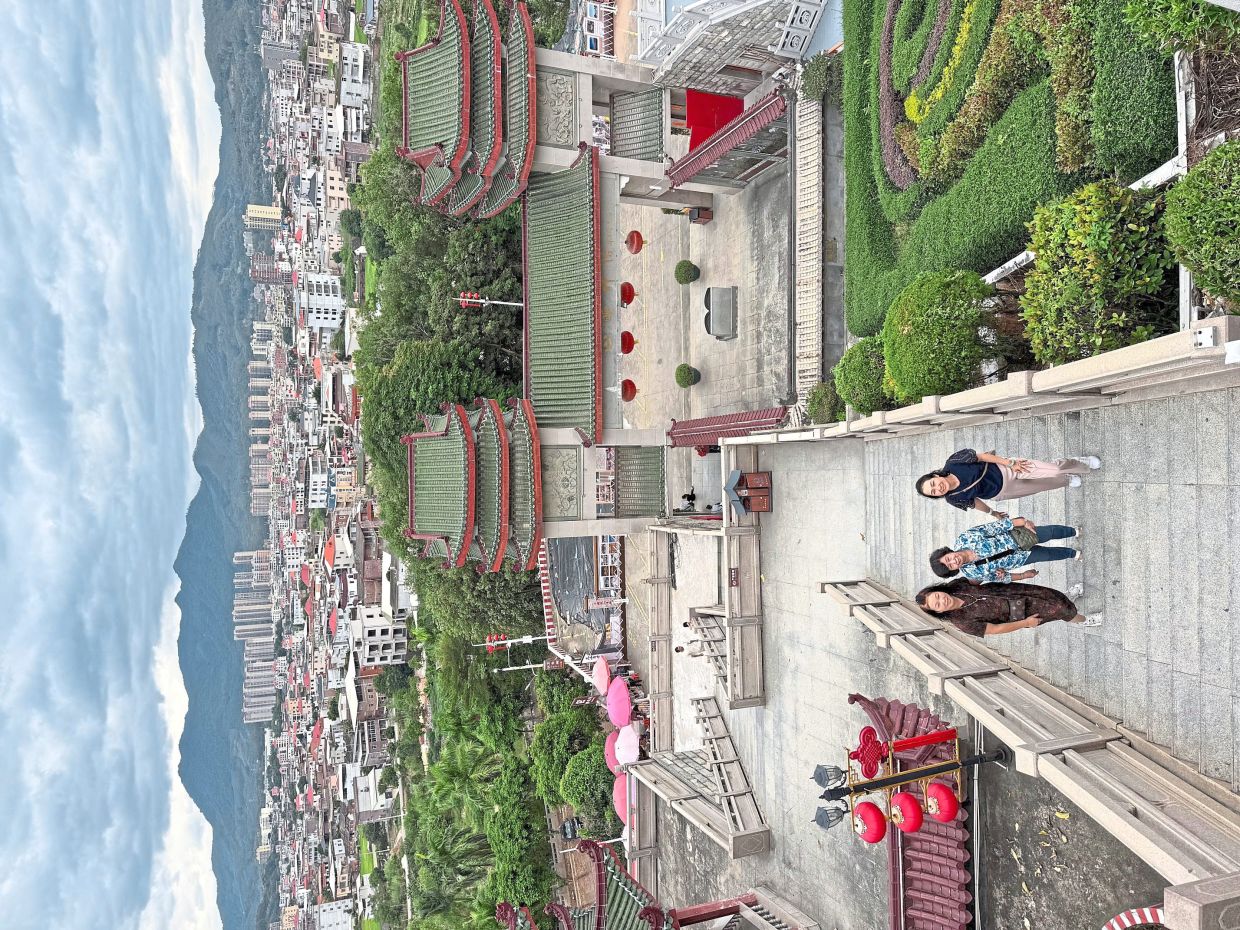
My late father’s old friend, Datuk Ng Kok Hwa, insisted that we visit Fengshan Temple, a revered shrine among the local community, to seek blessings for the family. By the time we ascended the hundreds of steps to its main gate, the temple was already bustling with worshippers offering incense and food to Guan Ze Zun Wang, the resident deity. Its magnificent roofs, adorned with colourful glazed tiles and intricate dragon motifs, stood as a testament to the region’s enduring faith and artistry.
After our prayers at Fengshan Temple, it was time to bid farewell to Madam Lin and her daughter, Xiaoyan. It felt like a fitting end to our pilgrimage, and I promised to return someday with our children so they, too, could understand and appreciate their ancestral origins.
The trip was bittersweet – joyful in rediscovering my grandfather’s birthplace, yet tinged with regret that I hadn’t made this journey earlier with him and my father. How meaningful it would have been for three generations of the Tan family from Muar to return together and pay homage to our forebears.
Still, I am deeply grateful to have retraced our roots and to honour my grandfather’s foresight and courage. It is because of him that we, his descendants, have had the privilege of being born and raised in this wonderful country, Malaysia, where our roots now run deep.
“Thank you, Ah Kong.”