In the lung clinic, you come across patterns.
Some weeks, there’s no one in the waiting room.
During others, every other consultation may sound the same: a tightness in the chest, a cough that will not settle, inhalers that do not appear to work.
Usually, the patients have not changed, but what they breathe in has.
Later this year (2026), the air is likely to change a great deal.
The World Meteorological Organization has flagged a clear shift in the equatorial Pacific, with global climate models converging on the onset of an El Niño event between mid-2026 and early 2027.
The US National Oceanic and Atmospheric Administration (NOAA) puts the odds of El Niño emerging during the Northern hemisphere summer (June to August) at around 60%, with a roughly one-in-four chance of it reaching what meteorologists call “very strong” status – a so-called super or (my second favourite kaiju) Godzilla El Niño.
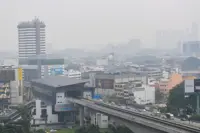
The Asean Specialised Meteorological Centre has already warned of elevated transboundary haze risk between June and the latter half of 2026.
The Malaysian Meteorological Department’s long-range outlook anticipates dry conditions across western and southern Peninsular Malaysia, and parts of Sarawak.
By late March, more than 800 fire hotspots had been detected across Indonesia and Malaysia – the highest count for that period in seven years.
Health effects
We have been here before, and the medical record is unambiguous about what comes next.
Haze is not just smoke.
The fine particulate matter it carries, PM2.5, is small enough to bypass the upper airway’s defences and travel deep into the alveolar sacs, where oxygen meets blood.
Once there, it inflames the airway lining, narrows the bronchi, and provokes the immune system into overdrive.
Children are particularly vulnerable: repeated PM2.5 exposure during the years of lung development is associated with reduced adult lung function, and during haze season, paediatric emergency presentations rise alongside adult ones.
For someone with asthma, this is the biological equivalent of pouring petrol on a smouldering fire.
For someone with chronic obstructive pulmonary disease (COPD), it is an invitation to acute decompensation (i.e. sudden, severe worsening of symptoms).
Repeated exposure also raises the long-term risk of cardiovascular events such as heart attacks and stroke.
Economic effects
The Malaysian data is telling.
A literature review in the Malaysian Journal of Public Health Medicine documented that hospital admission costs from haze-related illness rose from RM1.8mil during the 2005 haze to RM118.9mil during the 2013 haze.
The broader economic toll on Malaysia from the 2013 haze, including medical leave and lost productivity, exceeded RM1.7bil.
During the 2019 transboundary haze, more than a third of asthma exacerbations admitted to two Klang Valley tertiary hospitals (including my own) were directly attributed by patients to the haze.
In Singapore, a peer-reviewed study estimated the 2015 haze cost the country SGD1.83bil (RM5.66bil) around 0.45% of its GDP (gross domestic product).
The OECD (Organisation for Economic Cooperation and Development) estimates that air pollution more broadly shaves between 1% and 2.5% off GDP annually across affected Asian economies.
Treatment issues
These are not abstract numbers.
According to the 2023 National Health and Morbidity Survey (NHMS), asthma affects 6.2% of Malaysian adults.
Earlier surveys estimated that one in five adults with asthma visits the emergency department for an acute exacerbation in any given year, with one in 10 admitted.
National data also shows that only around a third of patients in our public clinics achieve good asthma control.
A super El Niño does not create new asthmatics.
It exposes the ones we already have, particularly those whose disease is not optimally controlled.
Here, the calendar offers us an opportunity.
For World Asthma Day, which was observed on May 5, the Global Initiative for Asthma chose its 2026 theme deliberately, i.e. “Access to Anti-inflammatory Inhalers for Everyone with Asthma – Still An Urgent Need”.
The campaign argues, with strong evidence behind it, that every person with asthma should be on an inhaled corticosteroid or a combination inhaled corticosteroid-reliever inhaler.
These medications treat the underlying airway inflammation, prevent attacks, and reduce hospital admissions and deaths.
Reliever-only inhalers (the kind many Malaysian patients still rely on) relieve symptoms, but leave the inflammation untreated, and overuse is associated with worse long-term outcomes.
ALSO READ: Don't rely only on your blue inhaler to treat asthma
Many patients stop their preventer inhalers the moment they feel well, often without speaking to a doctor.
This is understandable, but not without its risks.
Asthma is a chronic inflammatory disease that does not disappear simply because symptoms have settled.
Stopping or reducing preventer therapy should always be a clinical decision, made with your doctor, based on a structured review of control over time.
Self-discontinuation is one of the most common reasons patients arrive in our emergency departments during haze episodes.
Getting ready
The economics of getting this right are favourable.
A regional study of asthma costs in Asia-Pacific found that in Malaysia, urgent care (defined as emergency visits, admissions, ICU stays) accounted for the majority of per-patient direct costs, while preventer medication accounted for only a small fraction.
International data is consistent: regular inhaled corticosteroid use reduces total cost of asthma care, driven almost entirely by fewer emergency visits and admissions.
There is a clear, constructive role for the Health Ministry to lead here.
A coordinated pre-haze asthma readiness campaign could focus on three things.
First, active case-finding and clinical review for known asthma patients in the public health clinics (Klinik Kesihatan), ensuring that those who need inhaled corticosteroids are prescribed and dispensed them, with attention to inhaler technique.
Second, a public-facing message via media outlets, community pharmacies and schools that reframes the inhaler conversation away from “use when breathless” toward “take daily, especially before haze” as a preventive act.
Third, a focused effort on those least likely to access regular care: outdoor workers, the elderly, and children from lower-income households.
For families, the practical preparations are straightforward.
Speak to your doctor now about your respiratory action plan, replace expired inhalers, and vaccinate against influenza and pneumococcal disease.
For the room where vulnerable family members sleep, consider an air purifier with a HEPA (High-Efficiency Particulate Air) filter.
Stock properly-fitted N95 or KN95 masks (bearing in mind that surgical masks are inadequate for PM2.5).
It’s coming
A super El Niño is, in many respects, a public health event with a long warning notice attached.
The Pacific Ocean has been telling us what is coming since the start of this year.
World Asthma Day reminded us earlier this month what the most cost-effective intervention looks like.
The patients in my clinic do not need persuading.
They can feel it on the worst days, in the way their chest tightens and their world narrows to the next breath.
The rest of us still have time to listen and a window in which the right preparation could prevent thousands of avoidable hospital visits, and in some cases, save lives.
Dr Helmy Haja Mydin is a consultant respiratory physician and co-founder of asthma advocacy group Asthma Malaysia. For further information, email starhealth@thestar.com.my. The information provided is for educational and communication purposes only. The Star does not give any warranty on accuracy, completeness, functionality, usefulness or other assurances as to the content appearing in this column. The Star disclaims all responsibility for any losses, damage to property or personal injury suffered directly or indirectly from reliance on such information.