If you suffer from asthma, do ensure that your disease is well controlled during this Covid-19 pandemic.
“People often ask if asthma patients are at risk of getting Covid-19, and if they do get it, are their symptoms more severe?
“According to data from China and the US Centers for Disease Control and Prevention (CDC), those with chronic respiratory diseases make up 2.4% of the patient cohort, and the figure is actually lower if we compare it to the general population, so they’re not at higher risk of contracting Covid-19.
“But are patients with airway diseases more likely to experience severe symptoms of Covid-19?
“The answer is yes! Those with chronic respiratory diseases (which include asthma) have a mortality (death rate) of 6.3%, compared to the overall mortality of 2.3%, and 0.9% for those without any illness.
“So they are more likely to die of the disease,” says Universiti Malaya Medical Centre (UMMC) senior consultant respiratory physician Associate Professor Dr Pang Yong Kek.
An acute asthma attack is also likely to be triggered if the patient has a viral respiratory infection such as Covid-19, making them more susceptible to developing complications.
The Malaysian Thoracic Society president adds, “About 80% of acute wheezing in school children and 50%-75% of adults with acute exacerbation are due to viral infections.
“Even patients with mild asthma can have a severe asthma attack.”
To reduce the risk of complications, asthmatics have to minimise the risk of being infected by taking appropriate measures (e.g. social distancing, wearing a face mask in an enclosed environment and maintaining good hand hygiene) and ensuring that their asthma is well controlled.
A widespread condition
Asthma is a long-term disease of the lungs that causes the airways to become inflamed and narrow, making it difficult to breathe.
“Patients with asthma typically present with a history of respiratory symptoms such as wheezing, shortness of breath, chest tightness and cough, that vary in intensity and over time.
“They also demonstrate expiratory airflow limitation (reduced breathing out or exhalation), which tends to vary over time.
“If we were to perform a spirometry test, we can see if the patient has airflow limitation,” explains Assoc Prof Pang.
A spirometry test assesses how well your lungs work by measuring how much air you inhale, how much you exhale and how quickly you exhale.
In 2018, asthma affected about 339 million individuals worldwide and accounted for one in 250 deaths, which was mainly attributed to the lack of proper treatment.
In Malaysia, asthma affects two million individuals yearly – both children and adults – with respiratory diseases being the second most common cause of death in public hospitals.
One of the key treatments of asthma is to reduce the airway inflammation, which can be done by avoiding allergens or irritants (dust mites, animal dander, pollen, stress, pollution, smoking, etc), and taking medications.
Poor control

There are two types of medications given to treat asthmatics: short-acting beta agonists (Saba) for relief; and long-acting beta agonists (Laba) and inhaled/oral corticosteroids (ICS/OCS) or other agents for control and prevention.
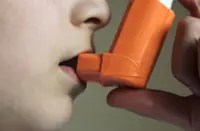
The reliever inhaler, also known as the blue inhaler, is for immediate rescue when you are experiencing symptoms such as chest tightness or shortness of breath.
It contains a short-acting bronchodilator known as salbutamol, which quickly opens the airways during an asthma attack.
Salbutamol is sometimes given in tablet, capsule or syrup form for patients who can’t use an inhaler well.
To manage asthma, most patients are prescribed a controller medication in an inhaler to treat the underlying inflammation, as well as a separate Saba reliever medication in the blue inhaler.
Unfortunately, Saba does not address the underlying cause of an asthma attack, especially if the patient does not take their controller medication at all.
This leaves patients with poor control of their condition and increases asthma-related death.
Assoc Prof Pang says, “Many patients think if they have mild symptoms, then their asthma is not too bad, so they just rely on the blue inhalers, but studies have shown that if you look into their airway, it is actually inflamed, and one day, it can flare up further.
“How patients interpret their symptoms also vary widely.”
According to consultant respiratory physician Dr Helmy Haja Mydin, there is a tendency in Malaysia to overuse the blue inhaler when there is an attack.
“The problem is that it can mask underlying issues. When you use it over and over again, you may be giving yourself a false sense of reassurance.
“Blue inhalers act fast, but if used alone, it can worsen airway inflammation.
“Studies have shown that Saba helps open up the airways, but it’s not necessarily the right medication to decrease inflammation.
“Patients who reach for their reliever inhalers more than twice a week are considered not well-controlled and this poses an increased risk of a severe asthma attack.
“Furthermore, patients also suffer when they do not adhere to or comply with the use of their controller inhalers, resulting in little control, prolonged asthma conditions and increased complications.
“Most asthma-related deaths are preventable,” says the co-founder of the non-profit website Asthma Malaysia.
Intercontinental Medical Statistics data shows that 3.3 million Saba inhalers were dispensed in Malaysia in 2019, out of which, 1.55 million units were dispensed at pharmacies and 1.49 million units at public hospitals.
In addition, and more shockingly, 10.9 million Saba tablets were dispensed, with the bulk of them from pharmacies (5.18 million) and clinics (4.38 million).
Dr Helmy says, “I never prescribed Saba tablets until I came back to Malaysia, because globally, we are moving away from the tablet as it doesn’t go to the airways directly.
“Patients also suffer from side effects such as heart palpitations.”
Last year, the Global Initiative for Asthma (Gina) released an updated guideline that addresses the dangers of patients’ over-reliance on the blue inhaler.
Following years of research, the organisation no longer recommends reliever inhalers as monotherapy (the sole treatment) as their use can worsen airway inflammation when used in isolation.
Instead, the latest guidelines recommend a combination of ICS to address the underlying inflammation and the Laba formoterol, which acts fast, as the preferred reliever.
“This is the first time in 30 years that Gina has updated its guidelines for asthma management to include the use of ICS as needed.
“Studies have demonstrated that this treatment reduces the risk of severe exacerbations by about two-thirds, compared with Saba-only treatment,” says Dr Helmy.
One thing that has changed during this pandemic he points out, is the use of the nebuliser, which is a drug delivery device that turns liquid medicine into a very fine mist that a person can inhale through a face mask or mouthpiece.
When the patient is experiencing severe asthma symptoms, nebulisers can be more effective at delivering medication slowly into the airways.
The current concern about nebulisers is that if they are used by a patient with a respiratory infection, the nebuliser could aerosolise droplets containing the virus the patient is infected with, allowing it to stay in the air longer.
He says, “It is very important that if you have a patient with Covid-19 or is suspected of having Covid-19, who is using a nebuliser at home, to keep in mind that the virus may persist in droplets in the air for one to two hours.
“Therefore, the patient should only use the nebuliser in a location that minimises exposure to non-infected members of the household.
“The location could be outside on a porch or patio, or in a garage, where air is not recirculated into the home and surfaces can be cleaned easily if necessary.”
A patient reflects

Adreena Sharwin Abdul Ghaffar was diagnosed as being asthmatic when she was seven, and has been using nebulisers and inhalers to control her wheezing episodes ever since.
“My attacks would come on and off, and until two years ago, I was a smoker.
“I didn’t really take care of myself as I led a bad lifestyle, so my condition deteriorated.
“Everything began to trigger my attacks – the air-conditioned environment, the outdoor pollution, etc.
“That’s when I started getting worried and searched online to find more information, because I only knew about the blue inhalers.
“But instead of finding the right answer, I discovered so many other things that could be wrong with me – including suffering a heart attack, which worried me further!” shares the 29-year-old who works in a bank.
Eventually, she sought medical advice and was put on controller medications.
When her condition was bad, even walking was laborious as Adreena would be gasping for air.
It also took time for her family and husband to understand her condition as no one in the family had asthma.
“Now I’ve been using controllers diligently twice a day and have made changes to my lifestyle, so my attacks are less.
“I’ve stopped smoking and am slowly learning my triggers.
“My advice to other patients is to listen to your body as it will send you the warning signs.
“Don’t ignore them, and find out more information from credible sources – don’t just search online like what I did!” she says.
To address concerns by asthmatics, Asthma Malaysia has collaborated with pharmaceutical company AstraZeneca in rolling out the Asthma Malaysia On-Air campaign, featuring videos and webinars with various healthcare experts.
Healthcare professionals ranging from chest physicians to pharmacists have taken to social media to share information on asthma management and empower patients to take charge of their condition.
Patients are also encouraged to participate in the Breathe EaSY Patient Counselling Programme by filling out a questionnaire to ascertain their asthma knowledge and control, after which, trained nurses will reach out to them for treatment counselling.
Assoc Prof Pang concludes: “Given the current pandemic, many patients are apprehensive about heading to the hospital or seeing a doctor.
“In UMMC, any patient with acute asthma attack and respiratory infection is isolated.
“For those with lower respiratory tract infection, all of them will have to do a swab test (for Covid-19) if they require admission.
“We believe that social media is the way to reach out to patients – we can help alleviate concerns and provide guidance on managing their asthma at home.
“By equipping themselves with the right information, asthma patients can reduce their risk of exacerbations and avoid visits to the hospital, thus reducing pressure on the healthcare system.”
Already a subscriber? Log in
Get 20% OFF The Star Digital Access
Cancel anytime. Ad-free. Unlimited access with perks.