
Governments across the world are wrestling with the same dilemma: how to cushion vulnerable citizens against rising living costs without building sprawling, unsustainable welfare states.
In Malaysia, one tool is Sumbangan Asas Rahmah (Sara).
At its core, Sara provides eligible Malaysians with monthly credits, which can be spent on essential goods at participating retailers, delivered directly through the national identity card.
The government also has introduced a one-off universal RM100 credit for all adults.
The scheme complements Malaysia’s broader cash-assistance architecture, helping households pay for staples such as rice, eggs, cooking oil, hygiene products, basic medicines and school supplies.
It does not look revolutionary.
Yet in a world increasingly enamoured with grand industrial strategies and splashy technology investments, Sara helps with something more fundamental – improving public health through everyday economics.
More than a welfare programme
To put it non-medically, poverty is the root cause of a heck of a lot of health issues.
Public health professionals have long understood that poverty is among the strongest predictors of illness.
The unavailability of fresh food raises the risk of diabetes and heart disease; financial stress worsens mental health; poor living conditions aggravate respiratory illness.
These are not abstract correlations – they are causal chains.
Seen through this lens, Sara is not merely a welfare programme.
It is also preventive medicine.
Many countries have pursued similar goals through different mechanisms.
The United States’ Snap programme restricts spending largely to food.
Brazil’s Bolsa Família links payments to school attendance and health check-ups.
Europe’s minimum-income schemes typically provide cash with few conditions.
Malaysia has opted for a hybrid with guided spending within essential categories, but with meaningful room for personal judgement.
That balance matters.
A household caring for an elderly diabetic will shop differently from one with young children.
A mother who feeds her child instant noodles can opt for frozen nuggets.
An infant who drinks watered-down condensed milk can have a powdered option (true stories).
Choice allows families to align purchases with their own health needs, which is an under-appreciated feature of effective social policy.
Reducing friction
One of Sara’s most important features is administrative in nature.
There is no new application process – no forms to fill and no digital portals to navigate.
Eligibility is verified centrally and credits are accessed by simply presenting a national identity card at checkout.
Across the world, complex registration systems are a major source of exclusion.
The poorest households are often the least able to manage paperwork or online applications.
Automatic enrolment dramatically improves uptake and reduces stigma.
By leveraging an identity system that already covers nearly the entire population, Malaysia has avoided building parallel welfare infrastructure.
For rural residents, older citizens and digitally marginalised groups, this lowers barriers in ways that policy dashboards rarely capture.
From a public health perspective, such frictionless access is essential.
Assistance delayed is assistance denied.
Small sums, large effects
Critics point out that RM100 does not stretch far, especially in urban supermarkets. That may be true but some.
But it also misses the point.
For families living on the edge, even small, predictable support can stabilise food budgets, prevent skipped meals and reduce stress.
International evidence consistently shows that modest transfers often deliver outsized improvements in nutrition, school attendance and mental well-being.
There has also been debate over Sara’s inclusion of frozen foods.
From an urban middle-class vantage point, this may seem questionable.
But this is precisely where policy risks becoming city-centric.
In many low-income or rural communities, frozen protein is the most affordable and reliable source of nutrition.
The alternative is not organic produce; it is often no protein at all.
Social policy must be judged by the realities of poverty, not the preferences of armchair commentators.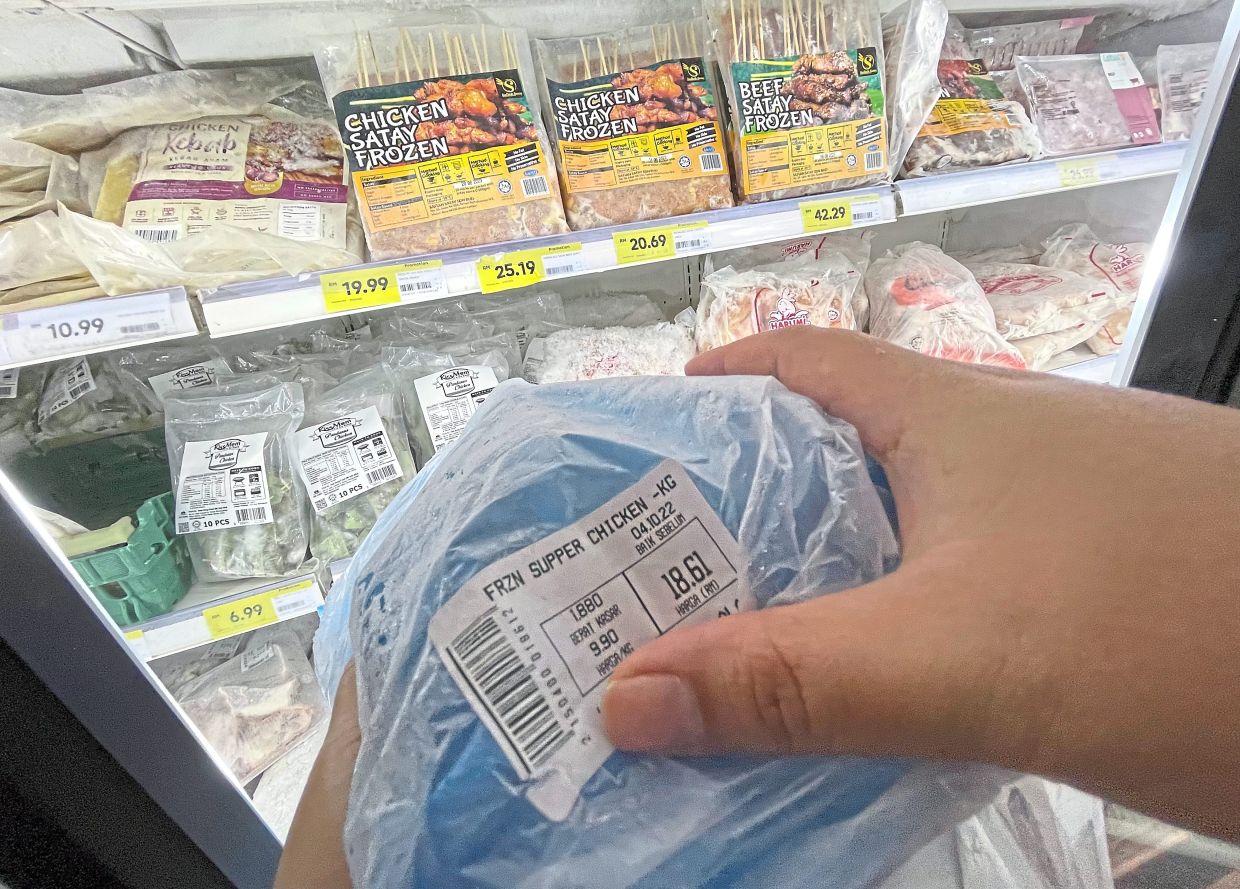
Global lessons
Malaysia’s restrained approach contrasts sharply with more ambitious and riskier experiments elsewhere.
In Indonesia, President Prabowo Subianto campaigned on providing free meals to all schoolchildren nationwide.
The intention is laudable: improving child nutrition while reducing household costs.
But early implementation has exposed the brutal arithmetic of universal generosity.
The programme’s price tag has strained public finances, contributed to market unease and forced difficult trade-offs in other areas of government spending.
This is a central lesson of social policy: good intentions must be matched by fiscal reality.
Universal programmes create powerful political constituencies, but they also lock governments into recurring obligations.
Without careful targeting, they risk crowding out investment in healthcare, education and infrastructure, all of which are foundations of long-term well-being.
Sara avoids this trap by combining a small universal component with deeper, sustained support for low-income groups.
It is not trying to do everything at once.
Instead, it prioritises those most at risk, while maintaining a sense of collective inclusion.
This restraint matters.
In an era of tightening budgets and ageing populations, sustainability is not a technocratic detail; it is the difference between durable reform and fiscal regret.
Improving Sara
None of this means the programme is beyond refinement.
First, benefit levels are not formally indexed to living costs.
Inflation erodes purchasing power slowly but surely.
Linking credits to a basic-needs price basket would protect recipients from becoming poorer on paper while staying poor in practice.
Second, nutritional standards could be sharpened.
Allowing choice does not preclude nudging behaviour.
Clearer prioritisation of nutrient-dense foods, especially for children and pregnant women, would strengthen Sara’s public-health impact without turning it into a paternalistic maze.
Third, retail access remains uneven.
Although thousands of outlets participate, coverage is thinner in remote areas.
Partnerships with a wider range of shops and mobile vendors could help close this gap.
These are design refinements, not structural flaws.
Lessons beyond Malaysia
What Sara illustrates is that effective social protection does not require endless bureaucracy or ideological purity about cash versus in-kind aid.
It requires three things: accessibility, agency and realism.
Accessibility comes from automatic delivery via national identity infrastructure.
Agency comes from allowing people to choose what they buy.
Realism comes from recognising that poverty looks different in Bangsar than it does in Kampung Kerinchi, both in Kuala Lumpur, and designing accordingly.
Many governments talk about “whole-of-society” approaches to health.
Fewer operationalise them.
Sara does by recognising that rice, soap and school stationery are as much part of public health as clinics and hospitals.
In an age when policymakers are distracted by artificial intelligence and geopolitical competition, Malaysia’s unglamorous experiment in dignity-preserving assistance offers a reminder: sometimes the most effective health intervention is simply making sure people can afford a meal.
Dr Helmy Haja Mydin is a consultant respiratory physician and Social & Economic Research Initiative chairman. For further information, email starhealth@thestar.com.my. The information provided is for educational and communication purposes only. The Star does not give any warranty on accuracy, completeness, functionality, usefulness or other assurances as to the content appearing in this column. The Star disclaims all responsibility for any losses, damage to property or personal injury suffered directly or indirectly from reliance on such information.