Malaysia shares healthcare experience in three UN High-Level Meetings


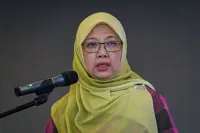
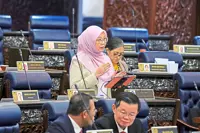
Malaysia was represented at the High-Level Meetings on health topics by Dr Zaliha at the UNGA. — Bernama

The 78th session of the United Nations General Assembly (UNGA) took place from Sept 18-26 (2023) in New York City amidst increasingly troubling news of global humanitarian and climate-related crises.

This brought about additional focus on the health-related aspects of these challenges, which are legion and necessitate a targeted response in order to minimise the toll on our communities.

Alongside Prime Minister Datuk Seri Anwar Ibrahim, Health Minister Dr Zaliha Mustafa was also invited to the UNGA.

She shared her thoughts with colleagues from across the globe on three important issues, namely, pandemic prevention, preparedness and response (PPPR), the fight against tuberculosis (TB) and universal health coverage (UHC).

Prevent, prepare and respond

The Covid-19 pandemic has demonstrated the importance of preparation and resilience in the face of systemic public health challenges.

Our experience should not be lost to memory, but serve as an opportunity to prepare for the next pandemic.

After a crisis, it is essential that we make continuous improvements in standard operating procedures (SOPs), guidelines, surveillance, and responses at all levels.

Regular national and state level exercises need to be conducted from time to time to ensure the level of preparation is optimised.

Multi-source surveillance provides a holistic picture of population health, boosts decision- making confidence, and enhances public health decision-making.

It is important to note that case-based surveillance testing has its limitations.

Additional surveillance – including alternative or unconventional sources of data, such as environmental surveillance – can overcome the limitation of case-based surveillance testing and contribute to improved estimates of transmission.

In Malaysia, the utilisation of digital technology has been an important tool in curbing the transmission of the SARS-CoV-2 virus.

The pandemic helped accelerate digital transmission and created a landscape that will hopefully continue to encourage innovation and technological adoption.

Dr Zaliha has committed to ensuring that Malaysia will continue to utilise digital technology to provide support, medical consultations and healthcare services; to track the spread of pathogens; and for contact-tracing and the monitoring of infectious diseases.

The TB challenge

TB remains an important public health challenge in Malaysia.

Last year (2022), we had a TB notification rate of 78 per 100,000 population and a death rate of 7.9 per 100,000 population.

There is a common misconception that TB is extinct in Malaysia, although our country does indeed have a National Strategic Plan (NSP) to End TB by 2030.

The principle of the NSP is simple: early diagnosis and treatment.

The implementation of this principle is far less straightforward as TB is significantly influenced by socioeconomic issues.

At a government level, it is acknowledged that TB can be eliminated by ensuring universal access to high-quality diagnosis, prompt treatment and proper care.

We have a number of tools at our disposal, ranging from very committed public health experts and staff to technological tools, which need to be utilised to diagnose TB as early as possible by reaching all vulnerable and at-risk populations.

For example, we have a digital TB plan care module through the MySejahtera mobile application.

A lesser-known condition called latent TB, also poses a public health risk.

Latent TB is diagnosed when the TB germ is found within the body, but is not actively causing any harm.

However, there is a risk of it becoming active, particularly in high-risk individuals, such as those with chronic medical conditions and poor immunity.

The same principle applies when managing latent TB, i.e. early diagnosis and treatment.

This can be expanded by appropriate public-private cooperation, especially with occupational health departments within government-linked companies (GLCs) and multinational corporations (MNCs).

As with any other communicable disease, cooperation also has to occur at the regional and international levels.

This is particularly relevant when it comes to research through various platforms, networks and innovations with other stakeholders.

Healthcare for all

Race, religion, gender, sexuality, political affiliation, socioeconomic status – none of these should be a factor when determining if an individual has access to the best management for physical and mental health.

Achieving UHC embodies the human right to quality, accessible, affordable health services, without suffering financial hardship.

Healthcare is, and should always be considered, an investment, as opposed to a cost.

What happens to one person may have a multitude of effects on others, particularly in the realm of communicable diseases (as demonstrated by Covid-19 and TB).

However, rather than ostracising patients, we need to not only empower them, but also to lay the groundwork for quality affordable care.

Malaysia is fortunate in that healthcare is available to all, albeit with improvements that can be made as we face a smorgasbord of challenges from an ageing population to healthcare inflation.

As per the recently-launched Health White Paper, we will need to rethink the manner in which we finance healthcare sustainably, and also work to encourage greater public-private partnership.

For now, we have the PeKa B40 initiative (health screening for the B40) and the recently-introduced Skim Perubatan Madani (free treatment for the B40 for mild cases seen by private general practitioners, or GPs).

These can serve as starting points from which we can learn for continuous improvement.

Ultimately, it is evident that a strong health system that prioritises the patient and healthcare staff is vital in ensuring that we are well-prepared for any crisis.

This is also embodied by the Madani philosophy – which encompasses sustainability, prosperity, innovation, respect, trust and compassion – that believes in humanity and principles such as fair, just and effective governance.

Dr Helmy Haja Mydin is a consultant lung specialist, CEO of the Social & Economic Research Initiative and a Special Advisor to the Health Minister. For further information, email starhealth@thestar.com.my. The information provided is for educational and communication purposes only. The Star does not give any warranty on accuracy, completeness, functionality, usefulness or other assurances as to the content appearing in this column. The Star disclaims all responsibility for any losses, damage to property or personal injury suffered directly or indirectly from reliance on such information.

Get 20% OFF The Star Digital Access

Monthly Plan

RM 13.90/month

RM 11.12/month

Billed as RM 11.12 for the 1st month, RM 13.90 thereafter.

Best Value

Annual Plan

RM 12.33/month

RM 9.87/month

Billed as RM 118.40 for the 1st year, RM 148 thereafter.

Follow us on our official WhatsApp channel for breaking news alerts and key updates!
United Nations , UNGA , healthcare , pandemic , TB

Next In Health

When water takes lives�
What is a head spa?
How elections can affect our emotions
Nutrition during the golden years�
When you're trapped by an earthquake
No, creatine won't make you go bald
Doctors, please treat the woman, not just her cancer
Rabies reemerges in Europe due to disruptions in wildlife vaccinations
Pack these essentials when you're working out outdoors
Faking an illness to gain sympathy

Others Also Read