Have you ever felt this niggling pain at the back of your foot, which just won’t go away no matter what you do?
Chances are, you could have injured your Achilles tendon, the largest and strongest tendon in the body that attaches your calf muscles to your heel bone or calcaneus.
Symptoms include a sharp, aching pain, swelling, loss of range of motion, and tight or weak calf muscles.
The inflamed part is tender to touch and more painful after exercising.
Often, the injury is labelled as Achilles tendinitis, and it is caused by overuse, repetitive stress, a sprained ankle or not using supportive footwear.
Unlike plantar fasciitis, where pain is usually felt on the bottom of the foot near the heel, pain in Achilles tendinitis is typically felt in the back of the heel, where the Achilles tendon attaches to the heel bone, or higher up in the tendon in the lower leg.
Left untreated, it can become chronic, leading to reduced mobility and more severe complications such as tendon rupture.
Conservative treatment involves temporarily stopping all strenuous physical activities that aggravate the tendon, applying ice therapy, wearing shoes with good ankle support, and taking pain-relieving medication if necessary.
Recovering from this injury – depending on how bad it is – could be a slow and frustrating process.
While ligaments can stretch a little bit, tendons cannot although they are highly resistant.
That’s why when they are strained (stretched to the point of partial tearing), the journey to heal takes a long time.
Also, because the Achilles tendon bears a lot of pressure whenever you’re upright, it plays a critical part even in the simple act of walking.
Really, it never gets a chance to rest.
Slow road to recovery
Having experienced Achilles tendinitis firsthand, I know what it feels like.
Mine came about from intense ballet rehearsals for a performance and I started feeling a strain at the back of my right leg, which eventually worsened because I continued to dance (as artists will tell you, the show must go on).
Despite icing the affected area religiously after activity, it didn’t get better; I struggled to walk fast and my choreographer whisked me off to see a sports medicine specialist.
After confirming the diagnosis, I was sent to a physiotherapist who treated me with iontophoresis therapy, where a drug containing 4% acetic acid is delivered using a voltage gradient on the skin, i.e. similar to electric pulses.
As I couldn’t miss rehearsals, it took three months before I completely recovered, and that too, with plenty of simple exercises and stretches to relax the tightened calf muscles.
After that episode almost two decades ago, I stretch my calves and use proper footwear all the time – no more taking my feet for granted!
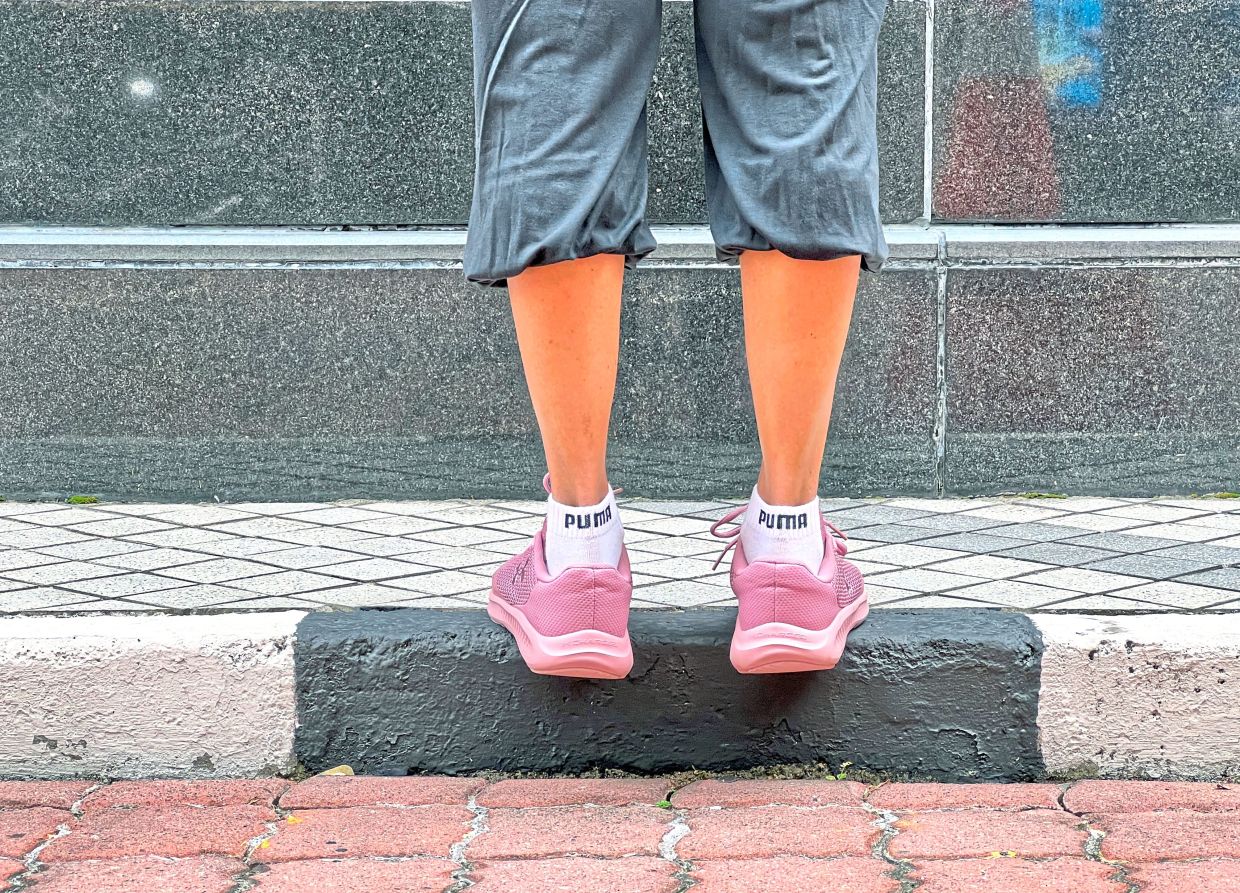
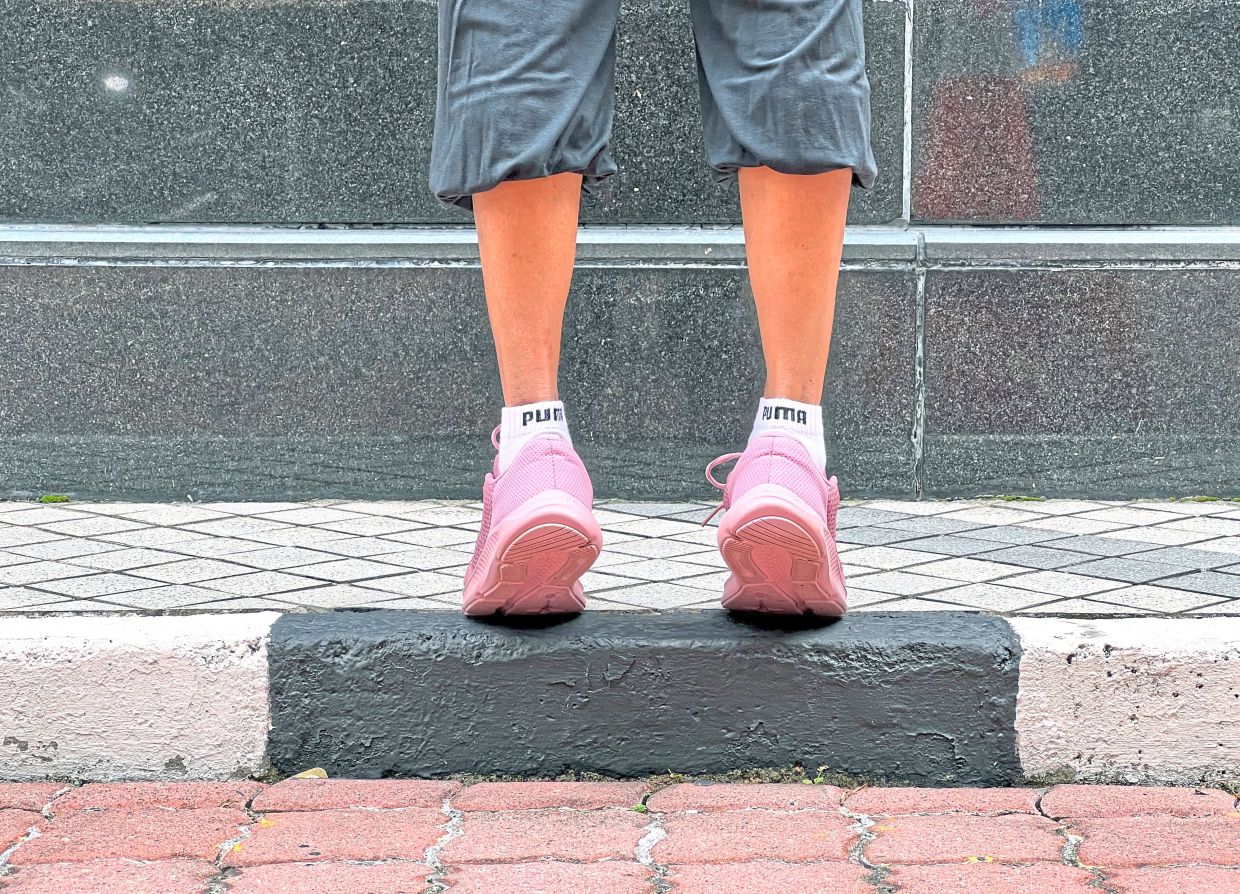
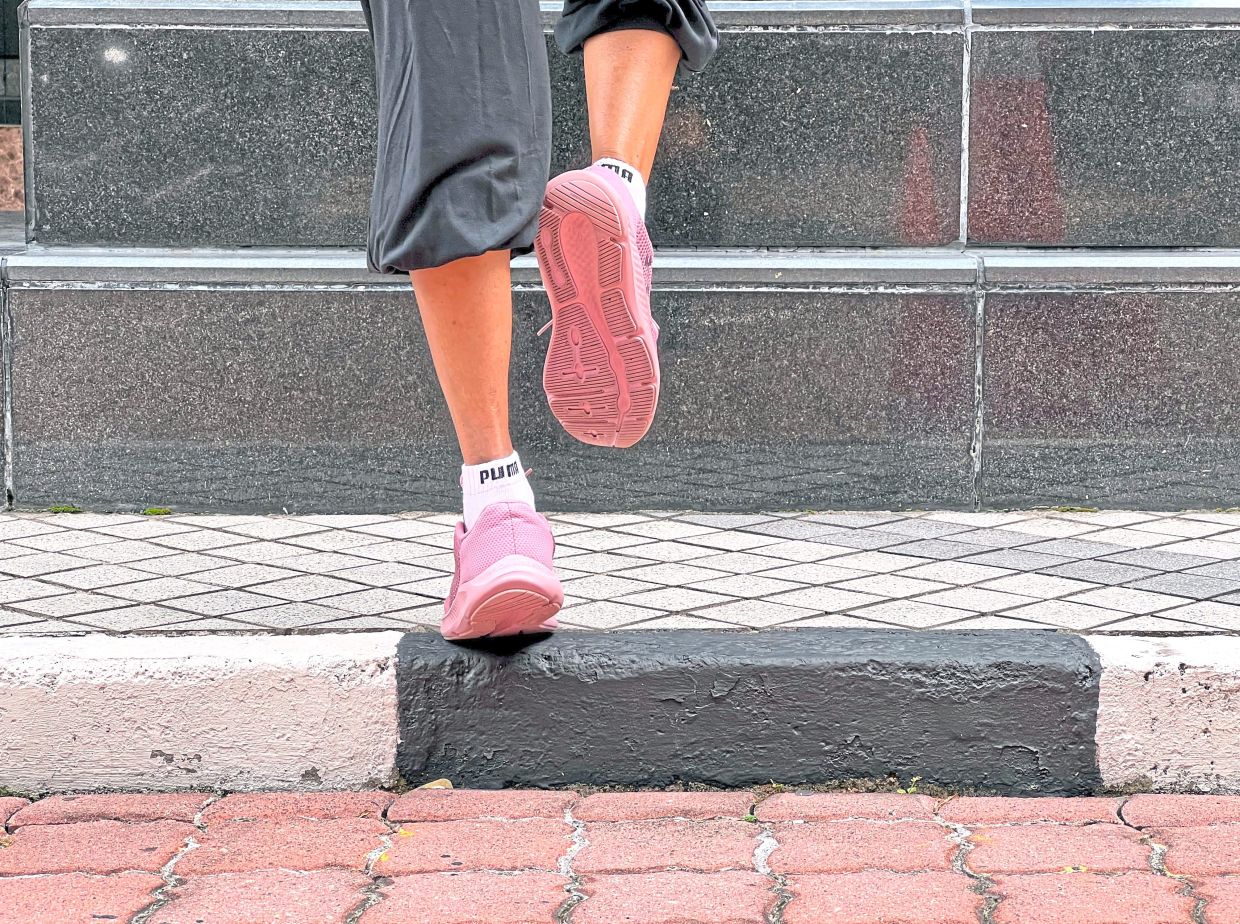
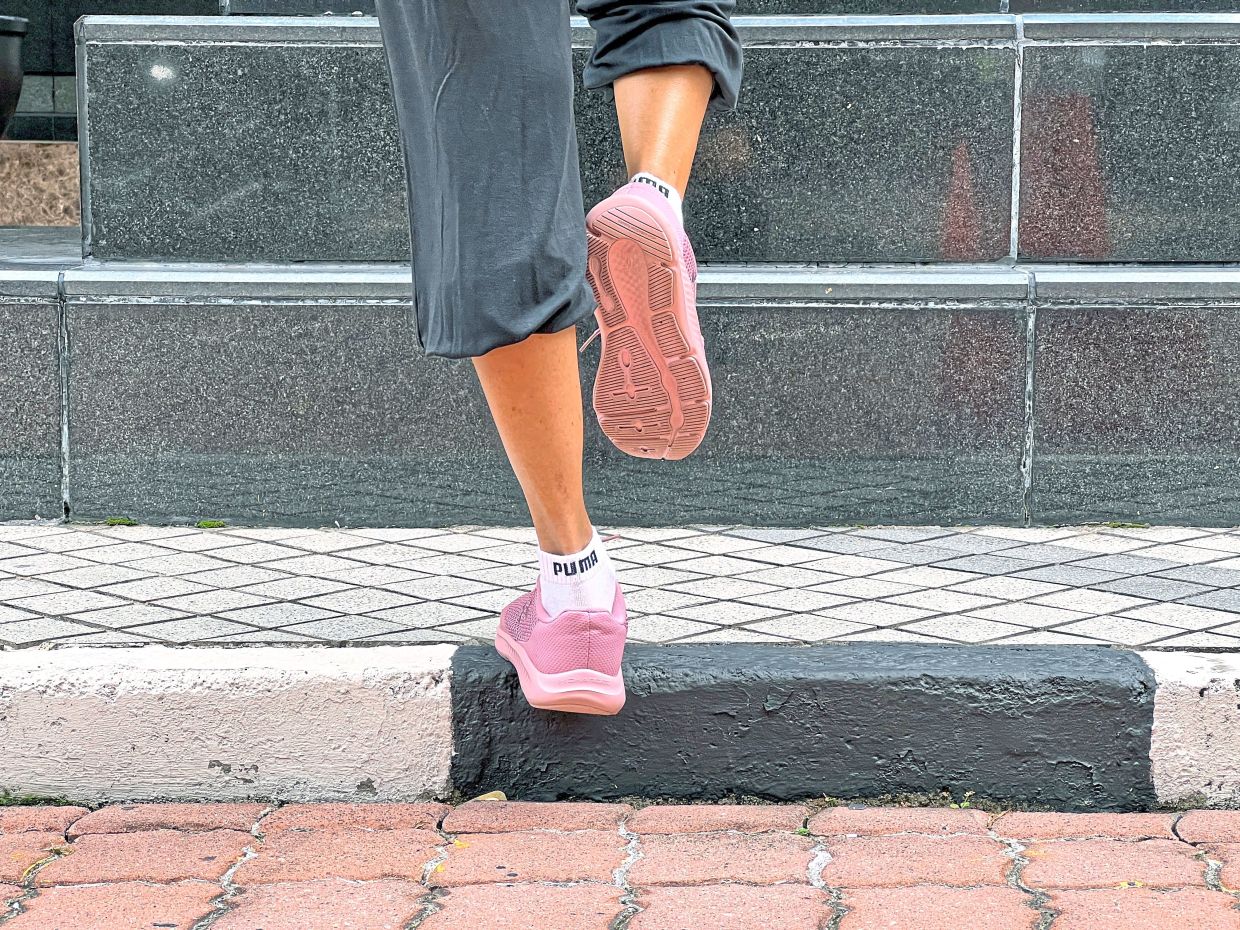
If you’ve gotten a diagnosis and once your pain subsides, try this exercise below called single leg eccentric calf raises, which is often used to rehabilitate Achilles tendon injuries and improve lower leg strength and stability.
It emphasises the lengthening of the calf muscles under tension, specifically during the lowering phase of the calf raise.
Start slowly and if the pain persists or worsens, lay off and try again in a few weeks.
Even those without Achilles tendinitis can do this to strengthen the ankle as it also enhances athletic performance.
Revathi Murugappan is a certified fitness trainer who tries to battle gravity and continues to dance to express herself artistically and nourish her soul. For more information, email starhealth@thestar.com.my. The information contained in this column is for general educational purposes only. Neither The Star nor the author gives any warranty on accuracy, completeness, functionality, usefulness or other assurances as to such information. The Star and the author disclaim all responsibility for any losses, damage to property or personal injury suffered directly or indirectly from reliance on such information.
Already a subscriber? Log in
Get 20% OFF The Star Digital Access
Cancel anytime. Ad-free. Unlimited access with perks.