Protecting children under five (and ineligible for vaccines) against Covid-19


By AGENCY
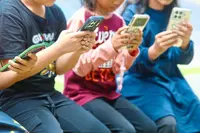
We need to remember that there are groups of people, including young children, who are unable to be vaccinated against Covid-19 and need our help to protect them from getting the infection. — ZULHAIMI BAHARUDDIN/The Star

Just before my son’s nine-month checkup, my wife and I debated whether or not to postpone it.

It was a “well baby visit”, but the potential threats to his health felt real.

The last time he went to the paediatrician in November (2021), the air inside the office was stuffy and the waiting room was crowded with children from schools in and around St Louis, Missouri, United States, all waiting to get their Covid-19 vaccine shots.

By showing up to get their children vaccinated, the families were all following the guidance from the US Centers for Disease Control and Prevention (CDC) for children ages five to 11 years.

But we were trying to follow the US CDC guidance too.

And for children too young for the vaccine, that means avoiding crowded or poorly-ventilated places – like the paediatrician’s waiting room.

As we grappled with the decision, the news was bleak: Covid-19 positivity rates and hospitalisations were reaching record levels in St Louis and across the US.

We decided to go ahead with the visit after my wife called the office and learned that the Covid-19 testing had moved outside to the parking lot and that we could complete the check-in process over the phone, instead of in the waiting room.

These are the risk analyses we must constantly do while waiting to hear when our baby will be eligible for a Covid-19 vaccine.

The latest crumb of hope is the news that the Pfizer-BioNTech vaccine may be available for children under five as soon as the end of February (2022).

Compliance an issue

Meanwhile, it feels as though many other Americans are impatient to move on.

The current surge due to the SARS-CoV-2 Omicron viral variant means safety precautions and face mask rules have been rolled back into place, and that has left many people frustrated.

Compliance has always been a problem in many parts of the US.

Where I live in Missouri, I often see people without masks in public indoor spaces, despite the contagiousness of the Omicron variant.

There’s a particular grocery store clerk whose checkout line we try to avoid.

At our neighbourhood butcher, a guy behind the counter also refuses to mask up.

Not to mention all the shoppers who choose to flaunt the mask guidance on any given day.

During a recent trip to the pharmacy, my wife, Emma, spent 20 minutes in line in front of a man whose mask was dangling from one ear.

She wanted to simply turn around and say, “Hey, do you mind putting on your mask? I have a baby at home who’s unvaccinated.”

But that type of request hasn’t been well received in our experience.

A washer repairman tried to refuse to wear a mask in our house, as did the dishwasher delivery team. (We’ve had bad luck with our appliances recently.)

To be the parent of an unvaccinated kid these days is to feel constantly at the mercy of the whims of strangers.

That’s why our son has been inside only seven buildings since the day he was born.

That I can count them on two hands surprises me.

I also worry about the experiences and interactions he’s never had – all the little things in life he’s missing.

More willing to vaccinate

Swofford plays a game with her children – one way the family passes the time at home now that she no longer feels safe bringing them out, especially with a four-year-old not eligible for a Covid-19 vaccine. — Photos: TNS


Laura Swofford is another St Louis-area parent with two kids, ages four and six.

For a brief moment last spring (2021), she felt OK taking her kids out, for trips to (US department store) Target, the library or other everyday destinations that adults might find mundane, but are still “shiny” and exciting to young kids.

“It’s a really big deal, and it gives you sanity in your day,” she said of those little outings and errands.

But that era of freedom was short-lived.

Swofford started feeling uncomfortable again in May (2021), after the US CDC released guidance that said the fully-vaccinated could stop masking indoors.

There was no enforcement and masks seemed to swiftly disappear from most faces, even though vaccination rates in Missouri were low at the time (and remain in the bottom third in the US).

Then the SARS-CoV-2 Delta viral variant arrived, and cases surged again.

Next came Omicron.

Health officials in Missouri urged everyone to be more vigilant about wearing masks, but a lot of residents ignored them.

Missouri has never had a statewide mask mandate and the state attorney-general Eric Schmitt has filed a series of lawsuits against cities, counties and school districts that issue their own.

Swofford said she often wishes she could stand up in the middle of a crowd, wave her arms, and remind people that there are parents who can’t vaccinate their children.

In a January (2022) survey of parents with children younger than five years, the number who said they would get their child vaccinated “right away” was similar to the number who said they would “wait and see” how the vaccine works for other young children.

That latest survey from the Kaiser Family Foundation (KFF) Covid-19 Vaccine Monitor showed an increase in the percentage of the most willing parents.

Thirty-one percent said they’d seek out the vaccination as soon as possible after it is authorised for children younger than five, up from 23% in September 2021.

Socialising issues

Friends and relatives usually understand our plight, but any kind of socialising typically involves questions about vaccine statuses and detailed negotiating about safety protocols.

I got an invitation to the karaoke bar.

Sounded fun, but I’m not comfortable with that yet.

Play date with old friends and their kids?

Well, maybe we could do something outside, weather permitting.

The arrival of winter made it that much harder.

For those who want to socialise indoors, it’s amazing how quickly Covid-19 rapid antigen tests for adults can add up to US$500 (RM2,093.75).

To have another couple over for dinner requires at least four tests.

For a guest list of 10 adults for Christmas, that’s 10 tests.

And at US$12 (RM50.25) a pop, the costs add up quickly.

That’s assuming the tests are in stock to purchase.

The US federal government recently launched a website where Americans can order four free at-home tests.

I wish that had been an option over the holidays.

Balancing risks and benefits

As the Omicron surge pummelled communities and hospitals, the sense of being forgotten intensified.

Aguilar with her four children, (from left) Luna, Athena, Jio and Mauro, during a hike last August. Aguilar and Luna spent four hours in line waiting for a Covid-19 test in January.

More specific guidance from officials for parents like us, with kids younger than two years, would be nice.

“Unfortunately, there’s nothing revolutionary,” said St. Louis Children’s Hospital paediatric infectious disease specialist Dr Rachel Orscheln.

The guidance for families like ours remains the same: to protect unvaccinated kids, try to form a cocoon of safety around them.

The surrounding adults need to get vaccinated, get a flu shot, wear a mask, socialise outdoors when possible, and avoid contact with sick people.

Collectively, we could all advocate for policies that reduce transmission.

Day care can be a particularly brutal puzzle for parents.

Dr Orscheln said that when cases surge, families are forced into a game of balancing risk and benefits.

Throughout the pandemic, most kids with Covid-19 have had mild cases, although there are very real, if rare, complications that require hospitalisation.

Some infected children have developed a post-viral illness known as multisystem inflammatory syndrome.

Other kids have shown symptoms of long Covid.

Those risks have to be balanced against other concerns and needs, she said, like the developmental benefits of socialising or whether parents can alter their child care plans.

Another parent I spoke to, Chicago obstetrician and gynaecologist Dr Ashish Premkumar, has a four-year-old in day care and a one-year-old at home with a nanny.

He and his wife considered pulling the four-year-old out of day care until the Omicron case count eased, but before they could even decide, Covid-19 swept through the family.

Difficulty testing

Another obstacle is at-home testing.

Both current available rapid tests are intended for people two years and older.

So, if parents suspect a child younger than two might have Covid-19, they must go to the paediatrician or a clinic for a test.

Many parents don’t have the time or the job flexibility to arrange that.

“The whole process just is not friendly,” Dr Premkumar said.

“And this far into a pandemic, it should just be simple: I need a Covid test, can it just be sent to my house?

“And can I get a result back in a timely fashion to be able to organise my life?”

Families all over the country have struggled with long waits at community testing sites.

Maria Aguilar of Los Banos, California, recently spent four hours in line getting a test for her four-year-old daughter, after the girl’s Head Start programme closed for two weeks because of a Covid-19 outbreak.

Aguilar works as a community health worker in Merced, doing door-to-door canvassing and outreach.

Her job allowed her to take time off to care for her daughter, but many of the people she serves don’t have that flexibility.

We will protect him

Is an infected child really that big of a deal?

I’ve encountered that question many times.

It’s true that most kids who get sick from Covid-19 do not die; they survive.

And the symptoms of Omicron are supposed to be mild – or at least milder than those of the Delta variant.

Plus, many people point out that an infection could have a silver lining: It would give the kid some natural immunity while waiting for the vaccine, no?

I find myself answering these questions again and again.

Meanwhile, many Americans seem to be shrugging their shoulders, saying that getting infected with the coronavirus is inevitable for us all.

My wife and I are not ready to give up the fight.

We’re not going to shrug off the risks for our baby, however rare they may be.

As we enter the third year of this pandemic, we will keep fighting to keep the virus away from him until he can get vaccinated.

We continue to take precautions, and we continue to wait.

And it seems he might be unprotected for a while still. – By Bram Sable-Smith/Kaiser Health News/Tribune News Service

Kaiser Health News is a US national newsroom that produces in-depth journalism about health issues. Together with Policy Analysis and Polling, it is one of the three major operating programmes at the KFF, which is an endowed non-profit organisation providing information on health issues to the US.

Get 20% OFF The Star Digital Access

Monthly Plan

RM 13.90/month

RM 11.12/month

Billed as RM 11.12 for the 1st month, RM 13.90 thereafter.

Best Value

Annual Plan

RM 12.33/month

RM 9.87/month

Billed as RM 118.40 for the 1st year, RM 148 thereafter.

Follow us on our official WhatsApp channel for breaking news alerts and key updates!

Next In Health

When water takes lives�
What is a head spa?
How elections can affect our emotions
Nutrition during the golden years�
When you're trapped by an earthquake
No, creatine won't make you go bald
Doctors, please treat the woman, not just her cancer
Rabies reemerges in Europe due to disruptions in wildlife vaccinations
Pack these essentials when you're working out outdoors
Faking an illness to gain sympathy

Others Also Read