
Malaysia's health system is evolving in response to advances in technology and the changing needs of its people.
The Health White Paper sets out a long-term direction for services that are equitable, accessible, affordable and sustainable, with care shaped around people and their communities.
This direction reflects a wider principle of health equity.
The World Health Organization (WHO) describes it as enabling everyone to achieve their full potential for health and well-being.
In practice, this means making sure people can access and benefit from the care they need, including the information and support provided through pharmacy services.
Understanding the challenges
Ensuring that health services are inclusive also means considering the needs of people with disabilities.
Under Malaysia’s Persons with Disabilities Act 2008, this includes people with long-term physical, mental, intellectual or sensory impairments, which when interacting with various barriers, may hinder their full and effective participation in society.
In the use of medicines, these barriers can take different forms.
People with hearing impairments may find it difficult to understand spoken instructions from pharmacy staff.
Those with visual impairments may have difficulty reading medicine labels, packaging or patient information leaflets.
Furthermore, measuring liquid medicines can also be challenging, sometimes resulting in spills or inaccurate doses.
Some may take the medicine directly from the bottle to avoid spilling it.
These barriers can affect medication safety.
Taking the wrong medicine, using an incorrect dose or method, or using a medicine after it has expired may make treatment less effective, and in some cases, lead to unwanted effects.
Every patient, including people with disabilities, has the right to clear information about a medicine’s name, purpose, dose and instructions for use.
Making this information accessible is part of equitable healthcare and reflects the WHO’s principle of health equity.
For the sight-impaired
Internationally, various approaches have been explored to help people with disabilities, especially those with visual or hearing impairments, manage their medicines.
These include audio-based medicine information, smartphone applications and videos with sign language instructions.
Some tools make medicine directions easier to access, while others support people in organising or taking their medicines.
Malaysia has also taken steps to respond to these needs.
Launched in early 2023, the Visually Impaired Friendly Medicine Label (Label Ubat Mesra OKU Penglihatan) initiative provides Braille labels at 250 selected government health facilities nationwide.
Attached to medicine envelopes or boxes, the labels explain how the medicine should be taken and what it is used for.
The initiative aims to help people with visual impairments identify and use their medicines correctly and safely.
To better understand the needs of people with visual impairments, the Health Ministry conducted a national qualitative study involving individuals from this community.
Through focus group discussions, the study explored their experiences and challenges in managing medicines.
It also identified strategies to improve pharmacy services and make medicine use safer and more manageable for them.
One practical intervention informed by the study’s findings is the Pendispensan Ubat Minum Dalam Pek Unit Dos bagi Pesakit OKU Penglihatan (Dispensing Oral Medicines in Unit-Dose Packs for Patients with Visual Impairments).
Under this service, oral liquid medicines, such as cough medicines, are supplied in individual packs containing the amount required for one dose.
The idea originated from the Bawa Balik For You (Bring Back For You) initiative.
This initiative helps people with visual impairments take their medicines more easily, safely and accurately.
For the hearing-impaired
Alongside these efforts, the Health Ministry has expanded accessible medicine information through the Label Ubat Mesra OKU 2.0 (Accessible Medicine Label for Persons with Disabilities 2.0).
Building on the earlier Braille label, it features a QR code that links to videos demonstrating how to take medicines.
The instructions are delivered in Malaysian Sign Language and through audio narration, making the videos accessible to people with hearing or visual impairments.
A total of 87 videos have been produced, and the initiative began expanding to eligible public hospitals and health clinics last month.
Direct communication is another important part of supporting people with hearing impairments.
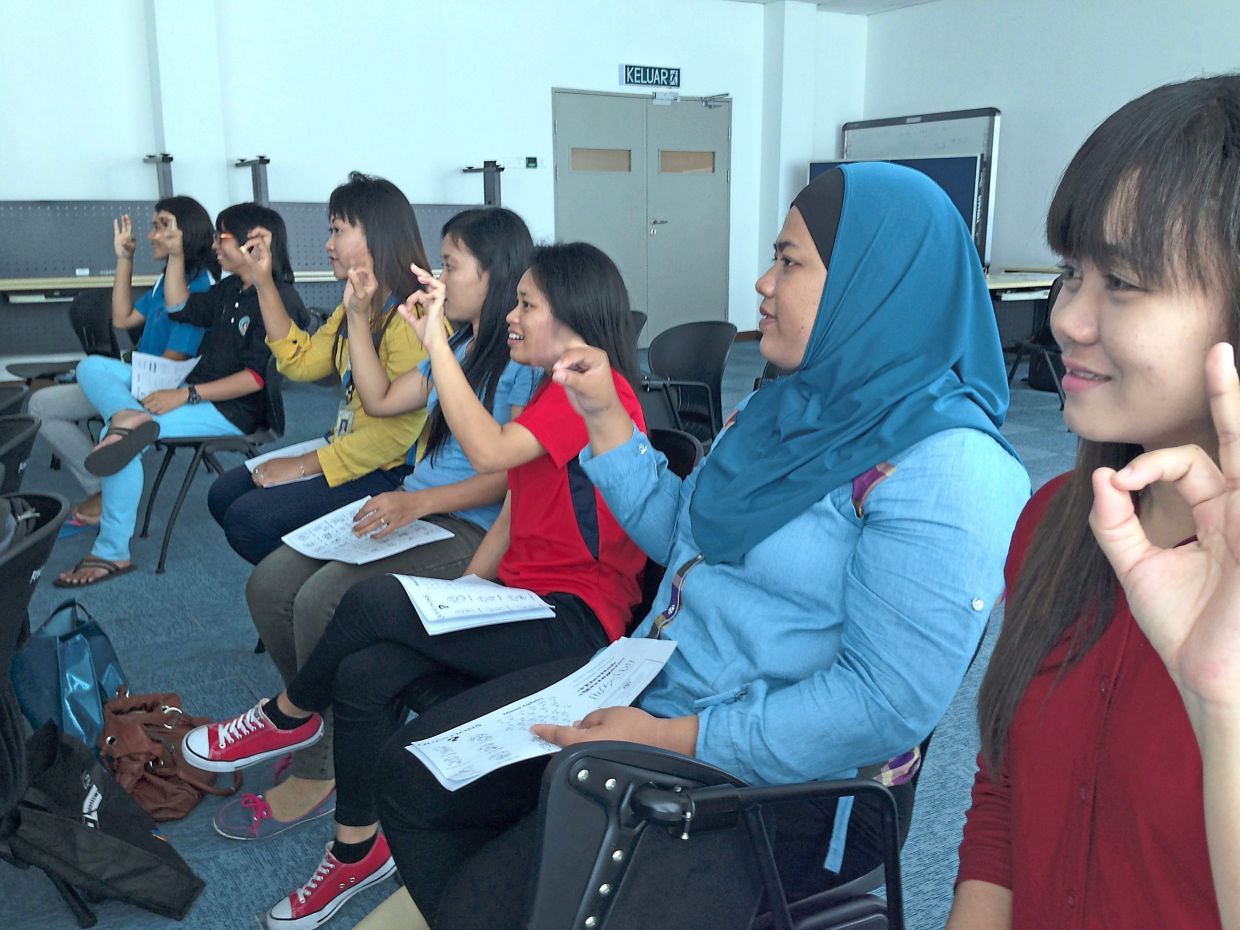
The Health Ministry is gradually providing basic sign-language training to pharmacy staff to strengthen communication when they share medicine information with hearing-impaired patients.
The ministry has also introduced the Drug Information for Deaf Community service, a dedicated medicine enquiry channel for people with hearing impairments.
Users can direct medicine-related questions to pharmacists and receive reliable information.
The service is available via WhatsApp at 012-658 0627 from 8.30am to 4.30pm, Monday to Friday (except public holidays), or online here.
Involving the community
Community involvement can help sustain medicine education and encourage positive changes in health behaviour.
To support this, the Health Ministry provides interested community representatives with basic training on the quality use of medicines before appointing them as Know Your Medicines Ambassadors.
They can then share what they have learnt within their communities and act as a link between the ministry and the people they serve.
Since 2024, the programme has also included ambassadors with visual or hearing impairments, who share basic medicine information within their respective communities.
Delivering these initiatives calls for coordinated efforts between government agencies, healthcare institutions, non-governmental organisations (NGOs) and the private sector.
By sharing their expertise and resources, these partners can help ensure that pharmacy services are practical to deliver and responsive to the needs of people with disabilities.
Overall, access to clear and understandable medicine information is essential for safe treatment.
When pharmacy services take individual needs into account, people with disabilities can make informed decisions and manage their medicines with greater confidence.
This is an important step towards more equitable healthcare for all.
For further inquiries, contact the National Pharmaceutical Call Centre (NPCC) at 1-800-88-6722, Monday to Friday, from 8am to 5pm (except on public holidays).
Tho Li Yan is a pharmacist with Hospital Ampang, Selangor. This article is courtesy of the Health Ministry’s Pharmacy Practice and Development Division. For more information, email starhealth@thestar.com.my. The information provided is for educational and communication purposes only, and should not be considered as medical advice. The Star does not give any warranty on accuracy, completeness, functionality, usefulness or other assurances as to the content appearing in this article. The Star disclaims all responsibility for any losses, damage to property or personal injury suffered directly or indirectly from reliance on such information.